Healthy aging & functional mobility · November 27, 2026
Higher diet quality linked to mobility recovery in middle-aged and older adults: multi-state Markov model analysis of 6,838 participants
Evaluating 6,838 participants aged 50 and older from the Health and Retirement Study, researchers modeled transitions between robust health, mobility limitations, and daily living dependency. A higher adapted healthy eating score was associated with a 14% higher likelihood of recovering from mobility limitations, although links to preventing deeper functional decline proved less consistent in sensitivity analyses.
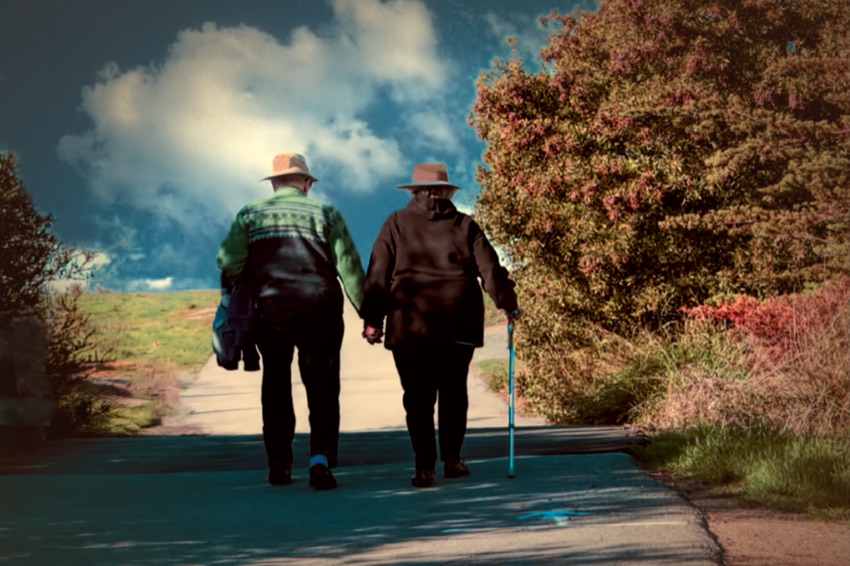
Age-related loss of physical mobility and independence rarely follows a simple, irreversible downward slope; older adults frequently fluctuate between periods of mild physical impairment and functional recovery. While overall dietary patterns correlate with longevity, how diet quality influences forward and backward transitions across progressive stages of functional limitation remains less clearly mapped.
In a longitudinal investigation published in Nutrients, Haoran Wu, Xinyi Xu, Xiaolei Liu, and Chichen Zhang analyzed data from 6,838 community-dwelling adults aged 50 years and older enrolled in the U.S. Health and Retirement Study (HRS) and its Health Care and Nutrition Study. Diet quality was quantified using an adapted 13-component score based on Healthy Eating Index-2015 (HEI-2015) guidelines.
Using a continuous-time multi-state Markov model, the authors mapped nine distinct transition paths between four clinical states: no functional limitations (State 1), mobility limitations without impairment in activities of daily living (State 2), ADL limitations (State 3), and death (State 4). Each 1-standard deviation higher diet quality score (11.82 points) was associated with a 14.1% higher transition intensity for recovering from mobility limitations back to no limitations (HR = 1.141, 95% CI 1.067–1.220) and an 11.1% higher rate of improving from ADL limitations back to isolated mobility limitations (HR = 1.111, 95% CI 1.021–1.209).
Higher diet quality was also linked in the primary model to lower odds of developing initial mobility limitations (HR = 0.921, 95% CI 0.867–0.977) and lower mortality among individuals with ADL limitations (HR = 0.901, 95% CI 0.824–0.984). However, across rigorous sensitivity tests, only the recovery transition from mild mobility restriction to unhindered function (State 2 to State 1) remained robustly significant. The researchers cautioned that observational modeling cannot demonstrate causality.
Multi-state Markov analysis of diet quality and physical functional transitions
6,838 Adults
participants aged ≥50 tracked across multi-year Health and Retirement Study survey waves
HR 1.141
hazard ratio for recovery from mobility limitation to fully unimpaired status per 1-SD diet score increase
11.82 Points
one standard deviation increment on the 13-component adapted HEI-2015 diet quality scale
Single Transition
only the mobility recovery path (2→1) retained statistical significance across all sensitivity models
Multi-state Markov cohort analysis published in Nutrients, 25 November 2026 (doi: 10.3390/nu18233956).
- Multi-state Markov models allow epidemiologists to assess bidirectional health changes, capturing recovery rather than treating disability as a one-way endpoint.
- The Healthy Eating Index-2015 assesses adherence to dietary guidelines across adequacy components like fruits and greens, as well as moderation components like added sugars and sodium.
- Activities of Daily Living (ADLs) evaluate core self-care capacities such as dressing, eating, bathing, and getting in and out of bed.
- Diet Quality and Functional State Transitions Among Middle-Aged and Older Adults: A Multi-State Markov Model AnalysisNutrients · Cohort study by Haoran Wu et al. Published 25 November 2026.
- File:Couple walking (16267925833).jpgWikimedia Commons · Photo by Garry Knight via Wikimedia Commons, CC BY 2.0.
Educational summary of nutrition research, not personal medical advice. Speak to your doctor or dietitian before changing your diet or supplements, especially if you are pregnant, take medicines or have a medical condition.
Analysis by NutroPractic from the sources listed. Written for general readers; it does not replace advice from your own doctor.
From our articles
Our guides on this subject
Plain-language guides on nutrition and wellness, backed by research.

Medicines and nutrition
CoQ10 and statins: what the muscle symptom trials found, and who might benefit
Statin-associated muscle symptoms lead up to 30% of patients to discontinue life-saving cholesterol therapy. While statins deplete circulating CoQ10 by 16% to 54%, randomized clinical trials show mixed results for myalgia relief. Explore the trials, ubiquinone vs ubiquinol bioavailability, recommended doses, and clinical guideline recommendations.
14 Nov 2026

Women's wellness and nutrition
Creatine for women: cognitive performance, menstrual cycle phases, and bone density beyond muscle building
Creatine is widely stereotyped as a bodybuilding supplement for men, but female physiology tells a very different story. Women exhibit 70% to 80% lower endogenous creatine stores, reduced dietary intake, and cyclical fluctuations in brain creatine kinase across the follicular and luteal phases. Robust clinical trials demonstrate that 3 to 5 grams of daily creatine monohydrate enhances cognitive performance during sleep deprivation, augments clinical response in unipolar depression, preserves femoral neck bone geometry in postmenopausal women, and causes cellular intracellular hydration rather than subcutaneous bloating.
13 Nov 2026

Healthy ageing
Creatine beyond the gym: what it does for older adults and women, and what it doesn't
Across 22 trials, adults in their late fifties to seventies who took creatine while doing resistance training gained about 1.4 kg more lean mass than those who trained without it. Two two-year trials found it did nothing for bone density after menopause. Where the evidence is solid, where it's early (memory, short nights), how much to take, and who should leave it alone.
10 Oct 2026
Newsfeed for your website
Want this feed on your website?
Add it to any site with one copy-and-paste snippet. No sign-up, and it updates itself every hour.
Start with a virtual consultation
Tell Dr. Triveni what you want to change. You will leave with a clear next step, whether you are in Toronto, London, New York or Chennai.