Microbiome methodology & cardiometabolic evidence evaluation · November 22, 2026
Five-level evidence framework warns diet-microbiome trials against mistaking taxonomic shifts for realized metabolic function
A methodological framework published in Frontiers in Nutrition introduces a five-tier evidence hierarchy for diet-microbiome research, demonstrating that taxonomic shifts in bacterial abundance (Level 1) or predicted metagenomic capacity (Level 2) cannot be equated with realized biochemical output (Level 3), host clinical linkage (Level 4), or proven causal mediation (Level 5) in cardiometabolic trials.

The rapid explosion of high-throughput genetic sequencing has transformed human nutrition, establishing the gut microbiome as an essential intermediary between dietary intake and human cardiometabolic health. Hundreds of clinical trials have investigated how diverse dietary patterns—ranging from Mediterranean diets and high-fiber interventions to fermented foods—reshape microbial populations. However, the scientific literature has increasingly suffered from an interpretive gap: researchers frequently make sweeping causal claims about clinical disease reversal based solely on minor shifts in bacterial relative abundance.
To establish rigorous reporting standards and prevent scientific overreach, researchers Shekoufeh Salamat and Alireza Jahan-Mihan published a landmark methodological paper in Frontiers in Nutrition. The authors demonstrated that nutritional microbiome studies frequently commit logical fallacies: treating changes in 16S rRNA taxonomic abundance as functional biochemical changes, inferring active metabolic pathways from predicted computational algorithms, or attributing systemic improvements in insulin sensitivity to the microbiome without demonstrating direct causal mediation.
The authors introduced a deliberate five-level evidence framework structured as an ascending staircase: Level 1 (Composition: taxonomic identity and relative abundances, such as 16S amplicon sequencing); Level 2 (Functional Potential: metagenomic gene cataloging indicating what the community could theoretically express); Level 3 (Realized Function: metatranscriptomics and measured metabolite concentrations like short-chain fatty acids, bile acids, or trimethylamine); Level 4 (Host Linkage: statistical and temporal alignment with host cardiometabolic biomarkers); and Level 5 (Causal Attribution: experimental proof of mediation via gnotobiotic transfer or mechanistic blockers).
A central finding of the framework is that these biological layers are not interchangeable. For instance, the absence of a taxonomic shift at Level 1 does not imply the absence of a metabolic benefit at Level 3, because distinct bacterial taxa frequently share overlapping metabolic pathways and can alter transcriptional output without changing cell numbers. Conversely, an increase in a beneficial genus does not prove higher circulating short-chain fatty acids or lowered blood pressure. The authors concluded that nutritional claims must stop where the measurements stop, urging trialists and peer reviewers to align clinical conclusions strictly with their evaluated biological tier.
Five-level evidence framework for diet-microbiome trials (Frontiers in Nutrition, Nov 2026)
Level 1
Composition: Taxonomic presence via 16S rRNA; does not establish metabolic activity
Level 2
Functional potential: Predicted metagenomic genes; reflects theoretical capacity only
Level 3
Realized function: Quantified microbial metabolites (SCFAs, secondary bile acids)
Level 4 & 5
Host phenotypic linkage and proven causal mechanistic mediation in disease
Methodological evidence framework by Salamat and Jahan-Mihan published in Frontiers in Nutrition (19 November 2026, doi: 10.3389/fnut.2026.1983372).
- 16S ribosomal RNA sequencing identifies bacterial taxonomy but cannot distinguish between living, metabolically active bacteria and dead microbial fragments.
- Computational tools like PICRUSt predict metabolic gene pathways from taxonomy, but predicted genes are often not actively transcribed in living host intestines.
- Functional redundancy means dozens of unrelated bacterial species can produce the same short-chain fatty acids (acetate, propionate, and butyrate) from dietary fiber.
- Proving that the microbiome mediates a clinical dietary benefit requires demonstrating that blocking the microbial pathway abolishes the observed health improvement.
- Matching claims to measurements in diet-microbiome trials: a five-level evidence framework with applications to cardiometabolic researchFrontiers in Nutrition · Primary methodological framework paper. Published 19 November 2026.
- Healthy Lentil SaladWikimedia Commons · Photo by James Sutton, CC0 public domain dedication.
Educational summary of nutritional biochemistry and microbiome research methodology. Individuals seeking gut health interventions should consult a qualified gastroenterologist and registered dietitian.
Analysis by NutroPractic from the sources listed. Written for general readers; it does not replace advice from your own doctor.
From our articles
Our guides on this subject
Plain-language guides on nutrition and wellness, backed by research.

Gut health
Probiotic capsules: which ones have trial evidence, what they can do, and when to skip them
Children on antibiotics: 8% got diarrhoea with a probiotic, 19% without. Older hospital patients: 10.8% with, 10.4% without. Which capsules have evidence, what three guidelines say about IBS, what a course costs per case prevented, and who shouldn't take them.
2 Nov 2026
Gut health
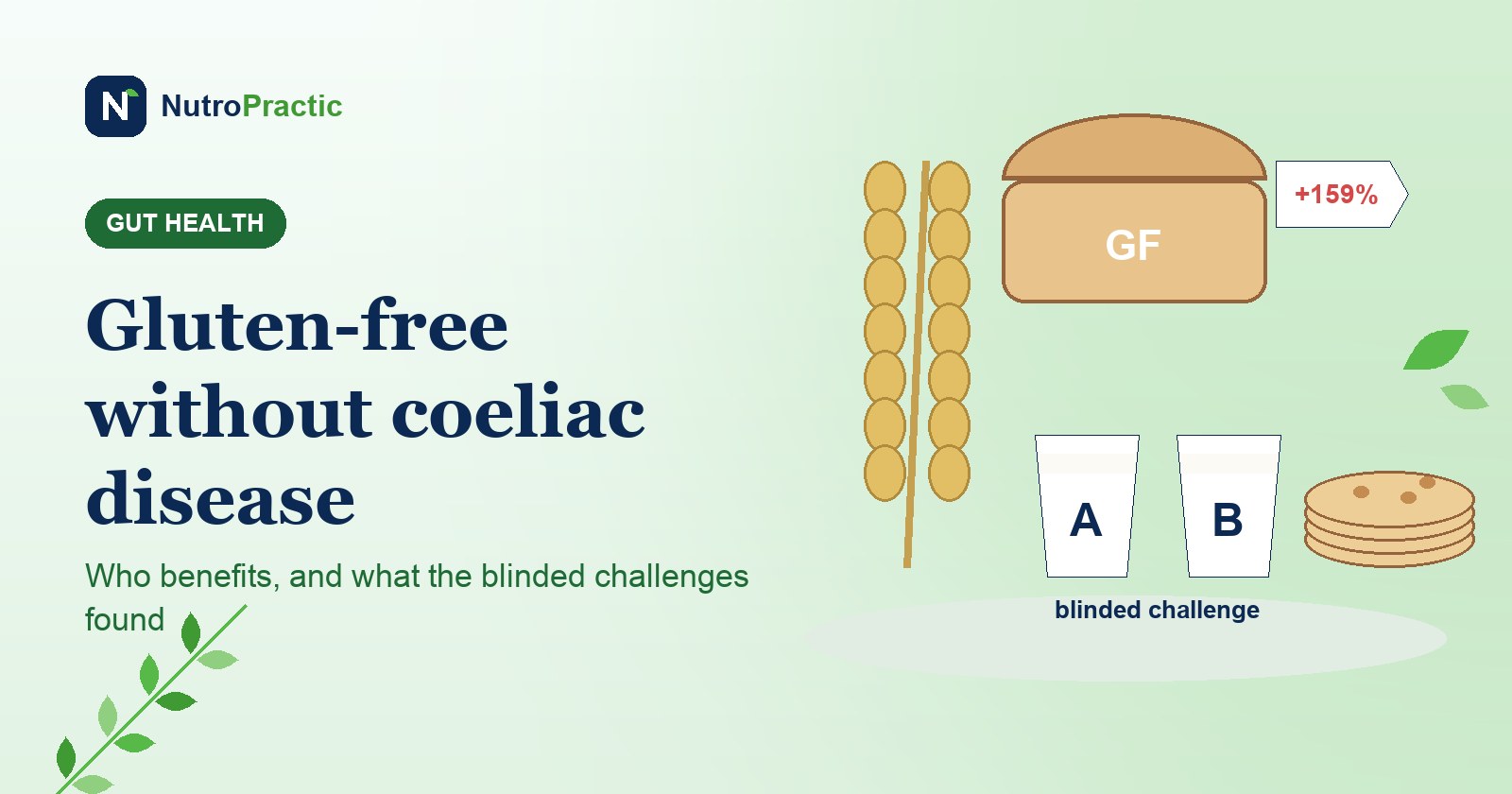
Gluten-free without coeliac disease: who actually benefits, and what the blinded gluten challenges found
In blinded trials only 16% of people who said gluten made them ill reacted to gluten rather than placebo, and in Oslo fructans caused more bloating than gluten. Who really needs to avoid it, how to get tested before you stop, how much gluten is in a slice of bread or a roti, and what gluten-free food costs (159% more in the UK) and lacks.
1 Nov 2026

Gut health
Lactose intolerance: how much milk most people can actually tolerate, and which dairy is easiest
Most adults who don't digest lactose well still handle about 12 g at once, roughly a 250 ml glass of milk, in blinded trials. What the 12 g studies found, a lactose table for milk, yoghurt, cheese, chai and dahi, how lactase tablets and A2 milk compare, why the famous 68% figure was retracted, and how to keep calcium up if you cut back.
25 Oct 2026
Newsfeed for your website
Want this feed on your website?
Add it to any site with one copy-and-paste snippet. No sign-up, and it updates itself every hour.
Start with a virtual consultation
Tell Dr. Triveni what you want to change. You will leave with a clear next step, whether you are in Toronto, London, New York or Chennai.