Women's health & herbal supplements · November 28, 2026
Date palm pollen for postmenopausal sexual health: a placebo-controlled trial in 130 women, with caveats
An Iranian double-blind trial gave 130 postmenopausal women date palm pollen or placebo for two months. Scores for sexual function, satisfaction and quality of life improved more with pollen, but the authors flag baseline imbalances and short follow-up.
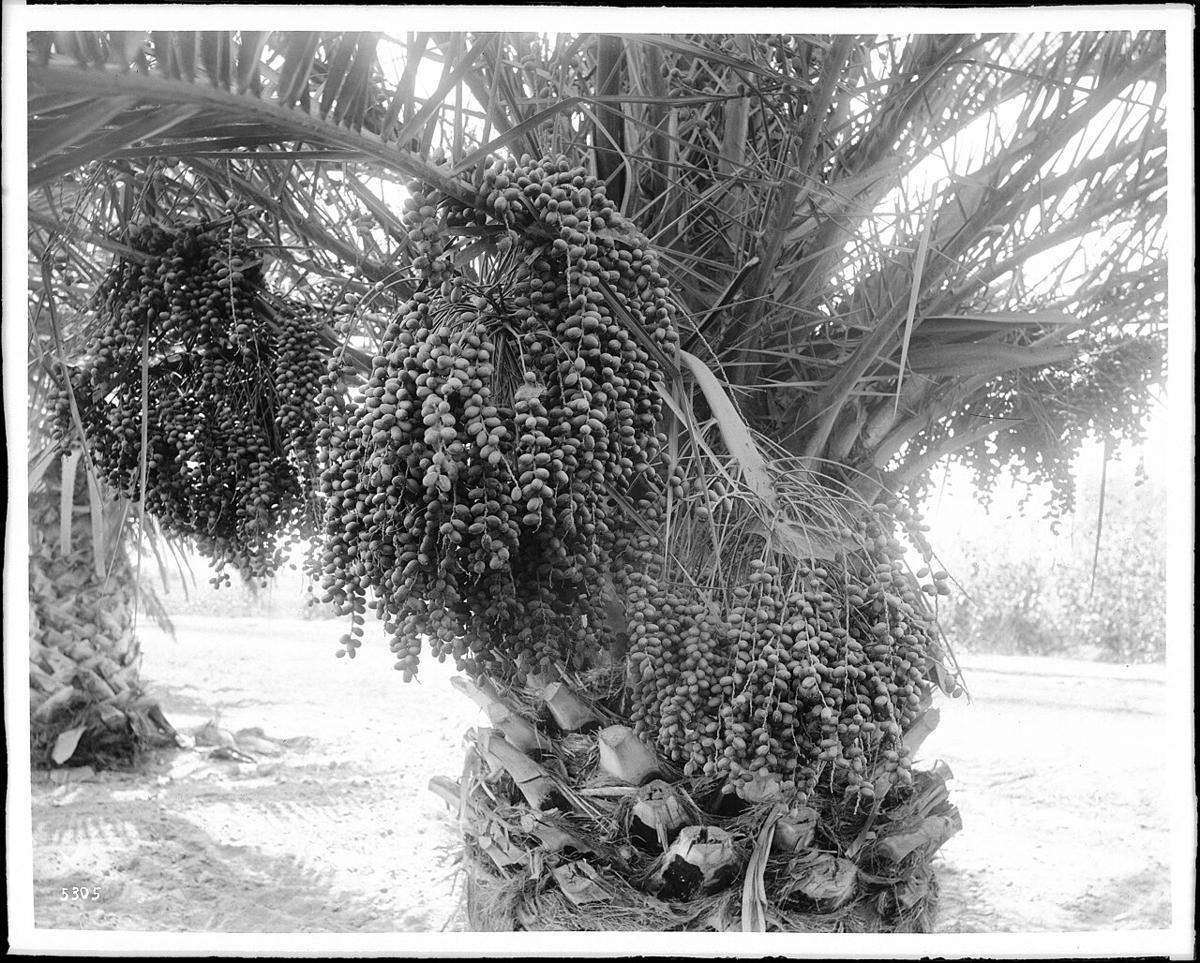
Menopause often brings changes in sexual function and satisfaction. This trial tested date palm pollen, a traditional remedy, against placebo.
In BMC Complementary Medicine and Therapies, Fatemeh Aali and colleagues ran a double-blind randomised clinical trial in 130 postmenopausal women (65 per group, mean age 52.3±3.1 years). Sexual function, satisfaction and sexual quality of life were measured with validated questionnaires at baseline, one month and two months, and analysed with a nonparametric longitudinal method.
There were significant group-by-time interactions for all three outcomes (all p < 0.001). In the pollen group, median sexual function scores rose from 18.5 to 26.2, satisfaction from 84 to 106 and sexual quality of life from 71 to 91.5; scores in the placebo group stayed relatively stable or dipped slightly.
The authors themselves ask for caution because of baseline imbalances between groups and the short two-month follow-up. Dose, hormone levels and long-term safety were not settled, and results come from one population and self-reported questionnaires.
Date palm pollen vs placebo in postmenopausal women (two months)
130
postmenopausal women (65 per group), mean age 52.3 years
18.5 to 26.2
median sexual function score, pollen group, baseline to two months
84 to 106
median sexual satisfaction score, pollen group
71 to 91.5
median sexual quality of life score, pollen group
Double-blind randomised trial in BMC Complementary Medicine and Therapies, 14 Nov 2026. Baseline imbalances and short follow-up noted by the authors; registered with the Iranian Registry of Clinical Trials.
- Questionnaire scores were not normally distributed, so the team used a nonparametric longitudinal analysis.
- Placebo scores stayed relatively stable or slightly decreased over the two months.
- Date palm pollen supplementation and sexual health in postmenopausal women: a double-blind randomized placebo-controlled trialBMC Complementary Medicine and Therapies, 14 Nov 2026 · Abstract.
This article is general information about published research, not medical advice. It does not diagnose, treat or replace care from a qualified health professional. Talk to your doctor before starting a supplement or changing your diet, especially if you are pregnant, have a medical condition or take medicines.
Analysis by NutroPractic from the sources listed. Written for general readers; it does not replace advice from your own doctor.
From our articles
Read, then eat a little better
Plain-language guides on nutrition and wellness, backed by research.
Gut health
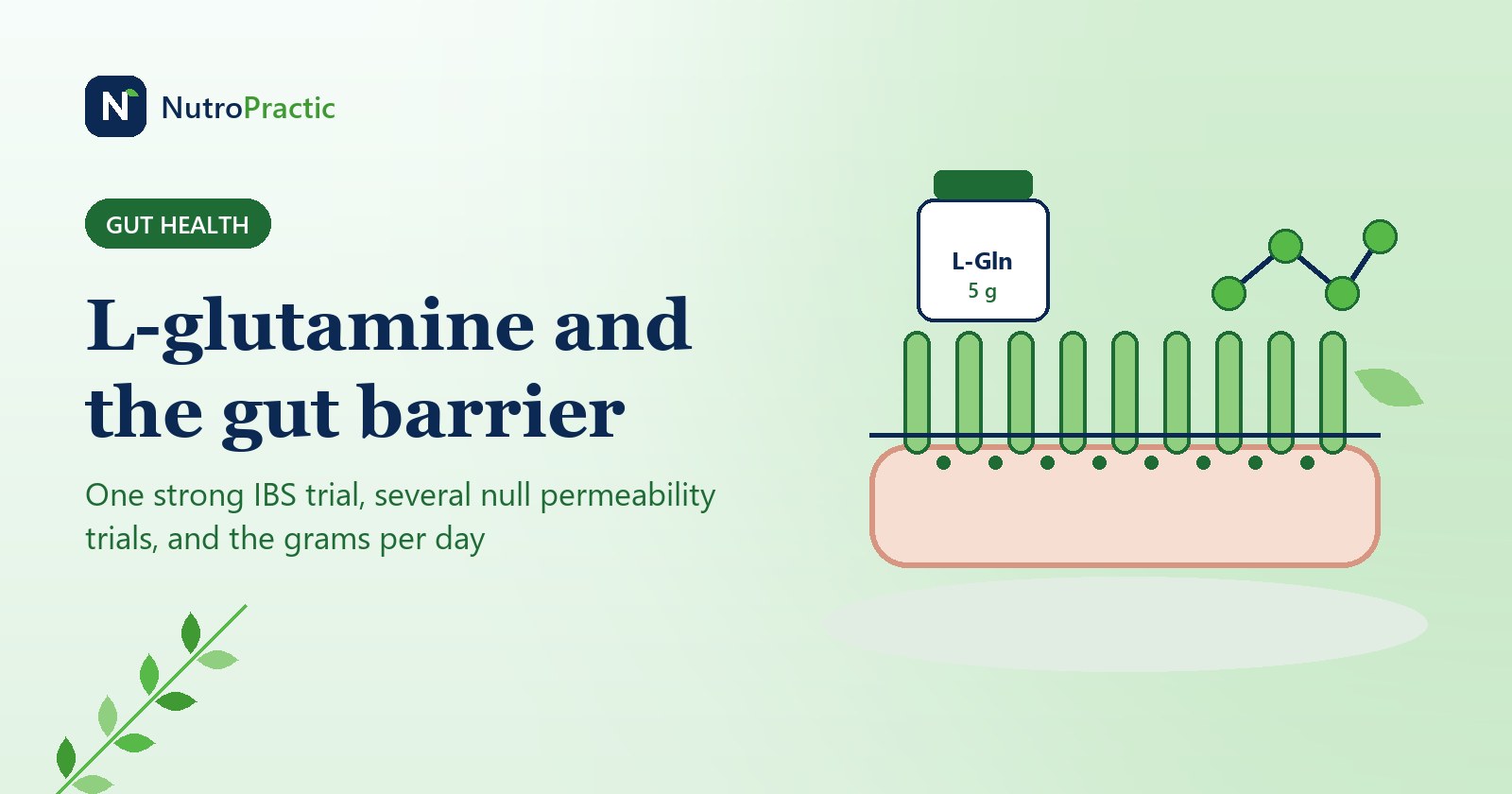
L-glutamine for gut barrier integrity: what the post-infectious IBS and permeability trials measured, and the dose in grams
At 15 g a day, glutamine took 79.6% of post-infection IBS-D patients to a clinical response against 5.8% on placebo. Trials that measured gut permeability directly in Crohn's, pancreatitis and heat stress found no clear benefit, and a 10-trial meta-analysis found none overall. The doses, the 14 g a day safe level, and who might try it.
27 Nov 2026
Supplements and vitamins
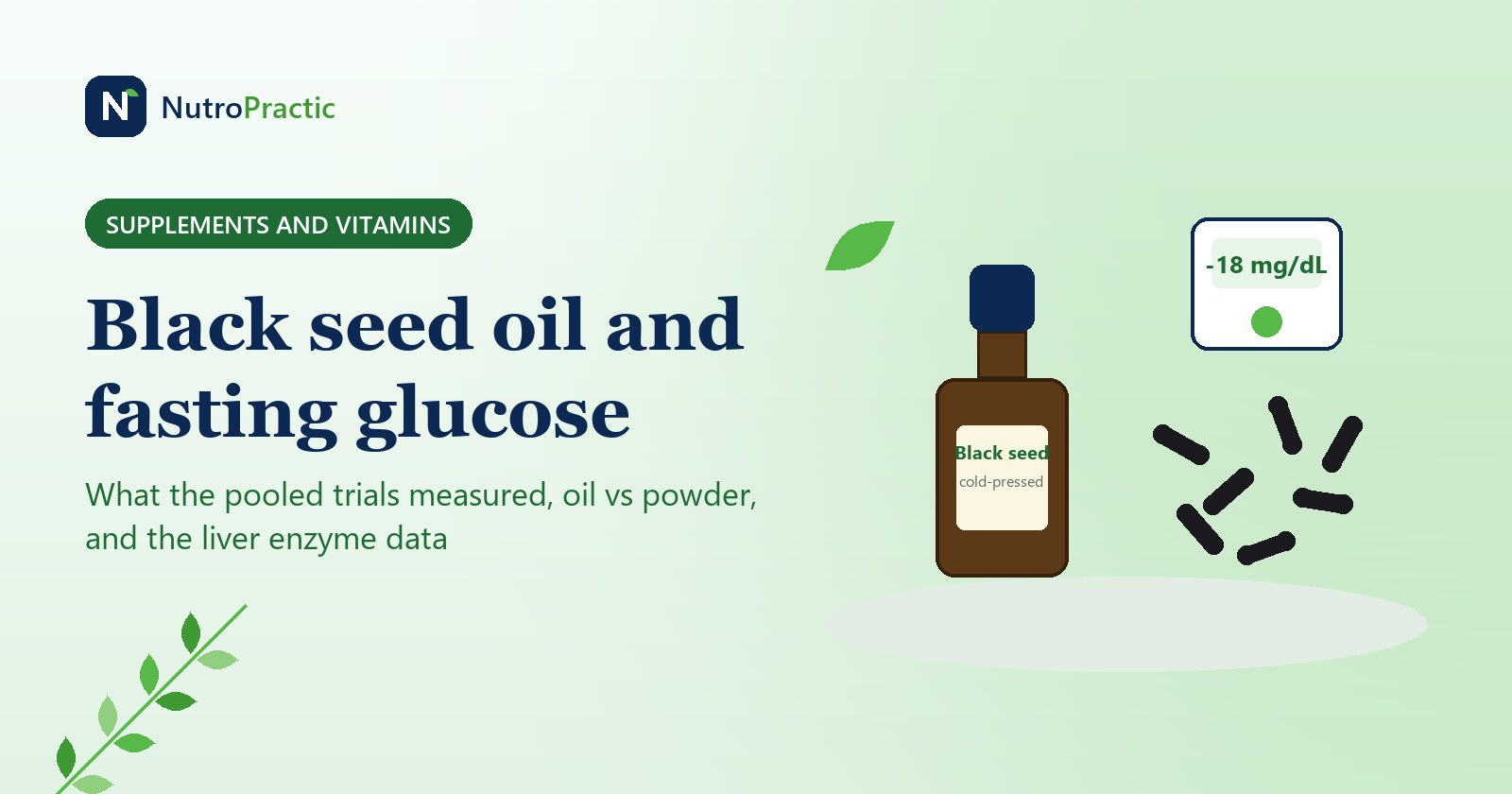
Black seed oil (Nigella sativa) and fasting glucose: what the pooled trials measured, oil vs powder doses, and the liver enzyme data
Meta-analyses of randomised trials put black seed's effect at roughly 10 to 20 mg/dL lower fasting glucose and about half a point of HbA1c, mostly as an add-on to diabetes tablets. The 1 to 3 g a day doses tested, why two bottles can differ 263-fold in thymoquinone, and what the liver and kidney markers showed.
27 Nov 2026
Supplements and vitamins
Chlorella and detox claims: what the human studies measured on hair metals, dioxins and vitamin B12, and what they did not
We found no placebo-controlled trial of chlorella removing mercury or lead. One 16-person study saw hair mercury and lead fall 39% on a chlorella-seaweed mix with no control group; breast-milk dioxin was about 30% lower in Japanese mothers; B12 ranges from under 0.1 to 415 micrograms per 100 g between brands.
26 Nov 2026
Newsfeed for your website
Want this feed on your website?
Add it to any site with one copy-and-paste snippet. No sign-up, and it updates itself every hour.
Start with a virtual consultation
Tell Dr. Triveni what you want to change. You will leave with a clear next step, whether you are in Toronto, London, New York or Chennai.