Gut health · October 21, 2026
19 trials of plant compounds for inflammatory bowel disease: curcumin came out ahead in ulcerative colitis, with odds ratios that look far bigger than the evidence behind them
Curcumin, resveratrol, ginger, aloe vera, bilberry, milk thistle and a Persian yarrow have all been tested as add-ons for ulcerative colitis and Crohn's disease. A new review pooled every randomised trial it could find. Curcumin had the most trials and the best results in ulcerative colitis, but the trials were small and short, and Crohn's disease has almost nothing.
Ulcerative colitis and Crohn's disease, together called inflammatory bowel disease (IBD), come and go in flares and are treated with drugs such as mesalamine, steroids, biologics and newer pills. Some patients never respond to these, others stop responding, and many look for something extra. Polyphenols, the plant compounds behind the colour of turmeric and berries, have been tried in small trials for two decades because lab work shows they can damp down inflammatory signals. A team at Anhui University of Chinese Medicine in China set out to pool every randomised trial of a polyphenol in people with IBD.
The review, published in Nutrients on 12 October, searched eight databases in English and Chinese up to 20 August 2026 and found 21 reports from 19 separate trials with 1,048 people. Seven products were covered: curcumin (the main active compound in turmeric), resveratrol, ginger powder, a bilberry anthocyanin extract, aloe vera gel, silymarin from milk thistle, and Achillea wilhelmsii, a yarrow used in Iranian traditional medicine. Twelve of the 19 trials tested curcumin. Many gave the product on top of usual treatment such as mesalamine, and most ran for 4 to 12 weeks.
In ulcerative colitis, the results leaned clearly one way. Across eight trials with 375 patients, people given a polyphenol had about five times the odds of a clinical response (odds ratio 4.90) and about six times the odds of going into remission (5.98) compared with the control groups. Symptom scores on a standard colitis questionnaire were 1.3 points lower and quality-of-life scores 5.6 points higher. Curcumin on its own, in seven trials of active disease with 335 patients, gave an odds ratio for remission of 7.36.
Those odds ratios look huge partly because the trials were small and remissions few, and the authors warn that such estimates say more about the direction of the effect than its size. The clearest example is healing seen on a colonoscopy: four trials with 170 patients gave an odds ratio of 10.81, but with a likely range from 1.67 to 69.93, and taking out one trial with heavy dropout pushed it to 24.62. Blood markers of inflammation, CRP and TNF-alpha, showed no clear change at all. Of the 19 trials, only 4 were judged at low risk of bias and 6 at high risk, mostly because people who dropped out were left out of the results.
The other products rest on one small trial each. Ginger lowered a marker of oxidative damage and symptom scores in 46 patients; the bilberry extract missed its main goal in a trial cut short by COVID-19; aloe vera helped symptoms in 44 patients but not what doctors saw on the scope; the yarrow did no better than placebo. Resveratrol's two trials pointed in opposite directions on CRP. For Crohn's disease there were only two curcumin trials, in different settings: one in 30 people with active disease saw remission in 8 of 20 on a curcumin formulation and none of 10 on placebo, and one after bowel surgery found no fewer relapses on the scope.
The trials also used very different products, from 100 mg a day of an absorption-boosted curcumin to 3 g a day of plain curcumin, one as a nightly enema and one mixed with QingDai, a traditional Chinese herbal powder with its own effects on the gut. Side effects were reported patchily and were mostly minor, but the authors say the trials were too small and short to rule out rarer harms. Their conclusion is that curcumin has the most evidence as an add-on in mild-to-moderate ulcerative colitis, that it should never replace or delay standard treatment, and that evidence in Crohn's disease is still lacking. The work was funded by provincial research grants in Anhui, and the authors declare no conflicts of interest.
Dietary polyphenols as add-on treatment for inflammatory bowel disease: systematic review and meta-analysis of 19 randomised trials, 1,048 patients
19 trials, 1,048 people
Randomised trials found (21 reports), covering 7 polyphenol products; 12 of the 19 tested curcumin
OR 4.90
Odds of clinical response in ulcerative colitis, polyphenol vs control, 8 trials, 375 patients (95% CI 3.04 to 7.89)
OR 5.98
Odds of remission during induction in ulcerative colitis, 8 trials (95% CI 3.08 to 11.59)
OR 7.36
Odds of remission with curcumin in active disease, 7 trials, 335 patients (95% CI 3.75 to 14.44)
1.67 to 69.93
95% CI around the odds ratio of 10.81 for healing seen on colonoscopy, 4 trials, 170 patients: direction clear, size not
−1.32 points
Difference in the Simple Clinical Colitis Activity Index, 5 trials, 261 patients (95% CI −1.81 to −0.83)
No clear change
Blood CRP (6 trials) and TNF-alpha (3 trials), two markers of inflammation
4 low, 9 some, 6 high
Trials judged at low risk of bias, some concerns and high risk, mostly from dropouts left out of the analysis
Study: Dong Y, Xu H, Zhang D, Ren X, Wu X, Zheng Z, Yu Q, Shen Y, 'Dietary Polyphenols as Adjunctive Therapy for Inflammatory Bowel Disease: A Systematic Review and Meta-Analysis of Randomized Controlled Trials', Nutrients 2026, 18(20):3335, published 12 October 2026, doi 10.3390/nu18203335 (open access, CC BY). PROSPERO CRD420261451126. Databases: PubMed/MEDLINE, Embase, Web of Science, Cochrane Library, CNKI, Wanfang, ClinicalTrials.gov, to 20 August 2026; 1,377 records, 30 full texts, 21 reports from 19 trials. Risk of bias by Cochrane RoB 2. Products: curcumin (12 trials, doses from 50 mg twice a day of a self-microemulsifying formulation to 3 g a day; one rectal enema; one CurQD with QingDai; one with piperine; one with probiotics in post-surgical pouchitis, kept out of the pooled analyses), resveratrol (2), and one trial each of ginger, bilberry anthocyanins, aloe vera gel, silymarin and Achillea wilhelmsii (a three-arm trial with curcumin, resveratrol and Mediterranean diet arms is counted under resveratrol). Ulcerative colitis: clinical response OR 4.90 (3.04 to 7.89), 209 vs 166 patients, I² 8%; induction remission OR 5.98 (3.08 to 11.59), I² 22.6%, 7.31 after excluding two high-risk trials; strict endoscopic remission OR 10.81 (1.67 to 69.93), 93 vs 77, I² 69.4%, 24.62 (7.76 to 78.15) excluding Biedermann; SCCAI MD −1.32 (−1.81 to −0.83), 261 patients; IBDQ-9 MD 5.57 (2.88 to 8.26), 169 patients; CRP SMD 0.29 (−0.32 to 0.90); TNF-alpha SMD −0.15 (−0.63 to 0.34). Curcumin-specific: response OR 5.39 (3.20 to 9.09), 6 trials; remission OR 7.36 (3.75 to 14.44), 7 trials, 181 vs 154. Crohn's disease: Sugimoto (Theracurmin 360 mg/day, 12 weeks) remission 8/20 vs 0/10; Bommelaer (curcumin 3 g/day plus thiopurine after ileocaecal resection) endoscopic recurrence 21/31 vs 18/31, serious adverse events 5/31 vs 2/31. Silymarin maintenance trial: remission kept in 35/38 vs 21/32 completers (OR 6.11), 35/42 vs 21/38 counting dropouts as failures (OR 4.05). No formal GRADE rating. Funded by Anhui Province clinical research and higher-education grants; no conflicts declared. The percentages in 'did you know' are our arithmetic from the published counts.
- An odds ratio is not 'times as many people'. In the milk thistle trial, 92% of patients who finished on silymarin stayed in remission against 66% on placebo. That is an odds ratio of 6.11, but the share in remission was only about 1.4 times higher.
- Curcumin is poorly absorbed from the gut, so supplement makers add piperine from black pepper or use special formulations. The US National Center for Complementary and Integrative Health notes that highly bioavailable curcumin products may harm the liver.
- Ulcerative colitis inflames only the lining of the large intestine and rectum, while Crohn's disease can affect any part of the digestive tract and go through the full thickness of the bowel wall.
- The trials in the review came from Iran, Israel, Japan, India, Brazil, France, Switzerland, Türkiye, Greece, Cyprus, Hong Kong, China and the UK. The oldest, a British trial of aloe vera gel, was published in 2004.
- Dietary Polyphenols as Adjunctive Therapy for Inflammatory Bowel Disease: A Systematic Review and Meta-Analysis of Randomized Controlled TrialsNutrients, October 2026 · The study: full text, open access
- CRD420261451126 review protocolPROSPERO, University of York · The review's registered protocol
- TurmericUS National Center for Complementary and Integrative Health · What is known about turmeric and curcumin, including piperine and liver safety
- Ulcerative ColitisUS National Institute of Diabetes and Digestive and Kidney Diseases · Symptoms, diagnosis and standard treatment
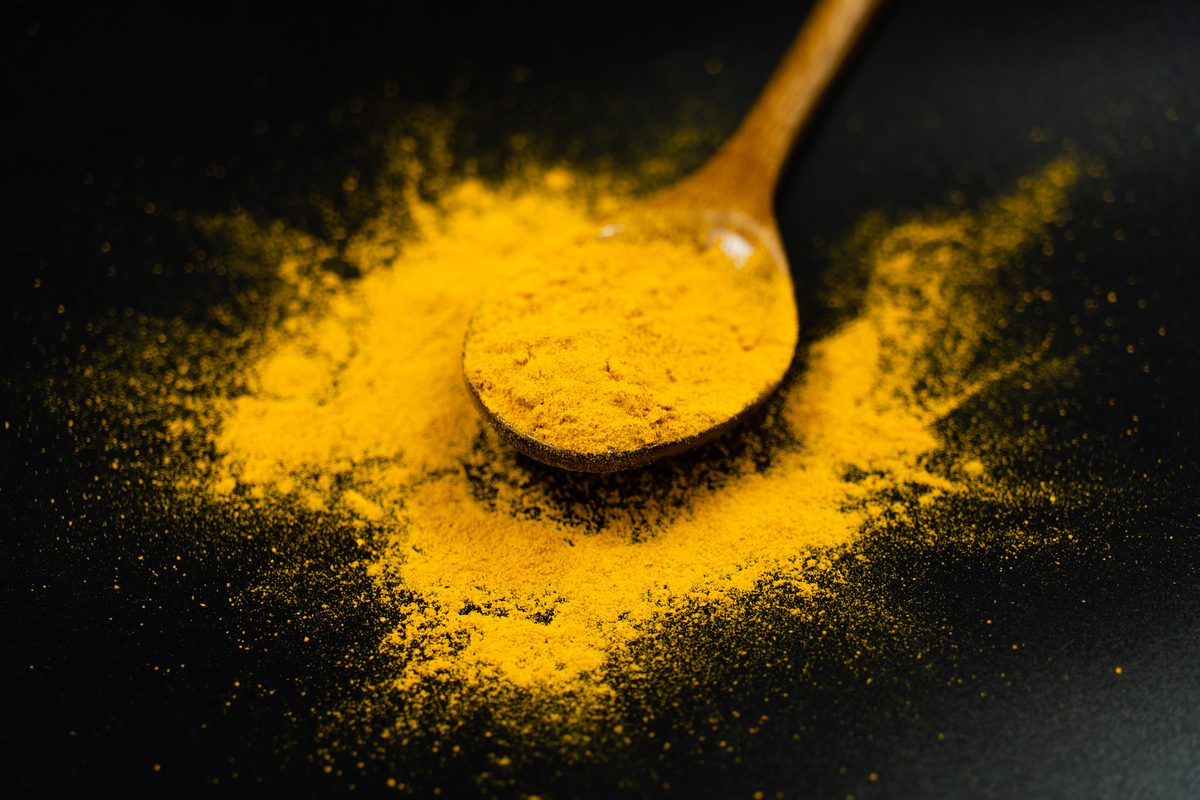
- Turmeric Powder on a Spoon - Black BackgroundWikimedia Commons · The photo, CC BY 2.0 (formulatehealth)
General information, not medical advice. The trials in this review were small and short, used many different products and doses, and mostly tested them alongside standard treatment, not instead of it. Curcumin supplements, especially absorption-boosted ones, can interact with medicines and have been linked to liver injury. If you have ulcerative colitis or Crohn's disease, talk to your gastroenterologist before adding any supplement, and never stop or delay prescribed treatment.
Analysis by NutroPractic from the sources listed. Written for general readers; it does not replace advice from your own doctor.
From our articles
Our guides on this subject
Plain-language guides on nutrition and wellness, backed by research.

Gut health
Probiotic capsules: which ones have trial evidence, what they can do, and when to skip them
Children on antibiotics: 8% got diarrhoea with a probiotic, 19% without. Older hospital patients: 10.8% with, 10.4% without. Which capsules have evidence, what three guidelines say about IBS, what a course costs per case prevented, and who shouldn't take them.
2 Nov 2026
Gut health
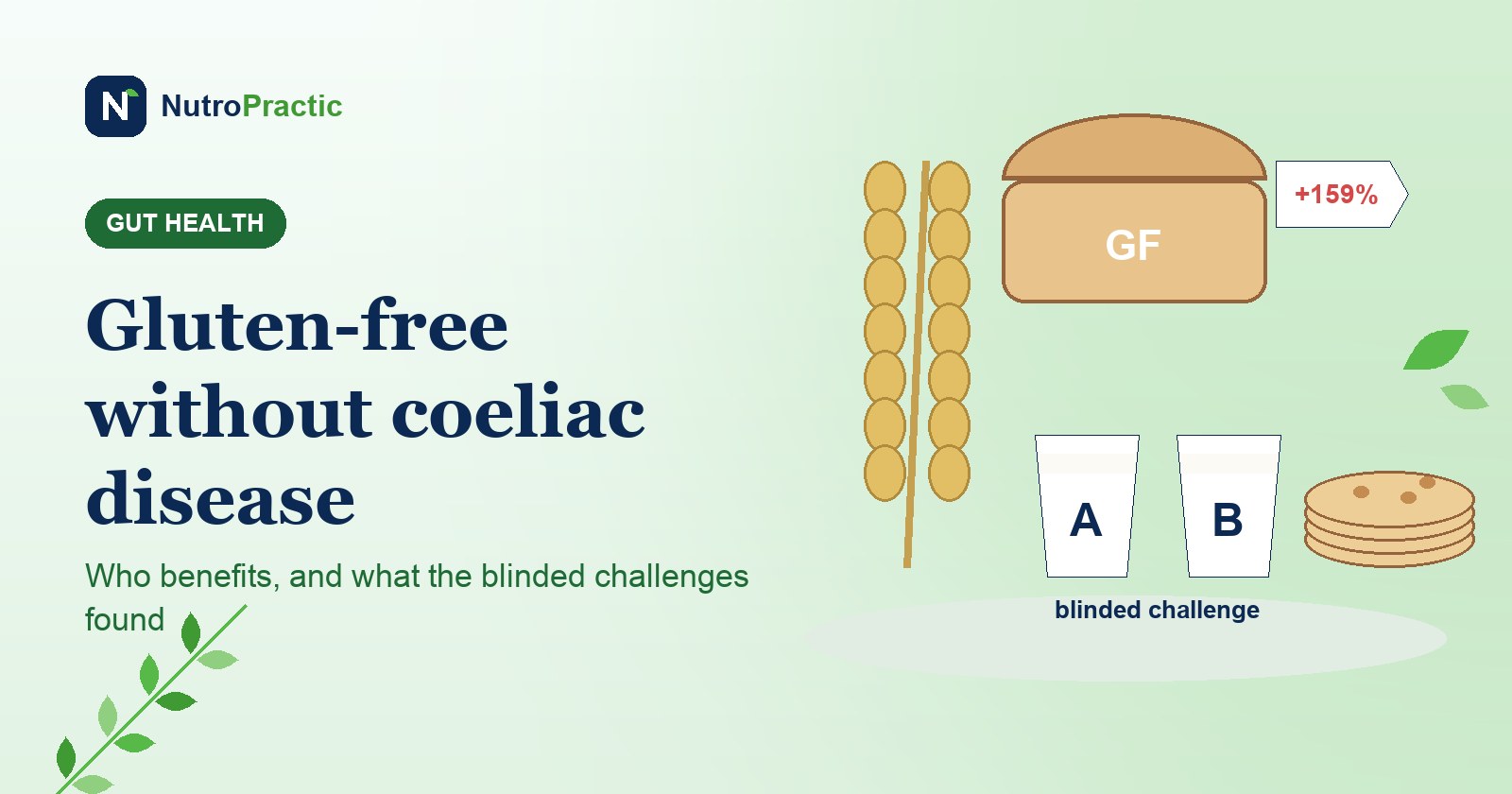
Gluten-free without coeliac disease: who actually benefits, and what the blinded gluten challenges found
In blinded trials only 16% of people who said gluten made them ill reacted to gluten rather than placebo, and in Oslo fructans caused more bloating than gluten. Who really needs to avoid it, how to get tested before you stop, how much gluten is in a slice of bread or a roti, and what gluten-free food costs (159% more in the UK) and lacks.
1 Nov 2026
Gut health
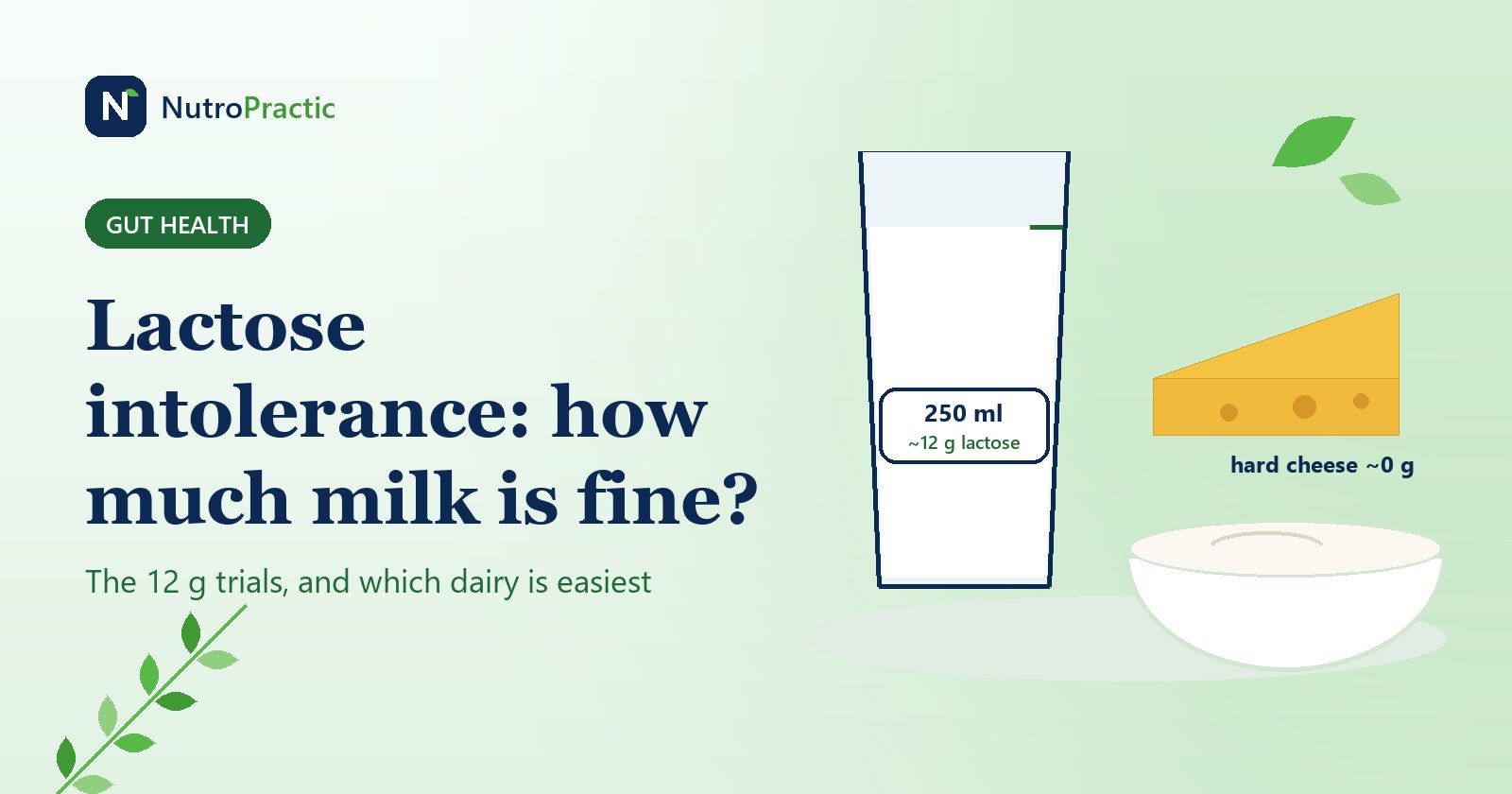
Lactose intolerance: how much milk most people can actually tolerate, and which dairy is easiest
Most adults who don't digest lactose well still handle about 12 g at once, roughly a 250 ml glass of milk, in blinded trials. What the 12 g studies found, a lactose table for milk, yoghurt, cheese, chai and dahi, how lactase tablets and A2 milk compare, why the famous 68% figure was retracted, and how to keep calcium up if you cut back.
25 Oct 2026
Newsfeed for your website
Want this feed on your website?
Add it to any site with one copy-and-paste snippet. No sign-up, and it updates itself every hour.
Start with a virtual consultation
Tell Dr. Triveni what you want to change. You will leave with a clear next step, whether you are in Toronto, London, New York or Chennai.