Gut health · November 9, 2026
A whole-food diet halved a gut-inflammation marker in 71% of 29 people at higher Crohn’s risk — but nobody was shown to avoid the disease
Eight weeks on the Tasty & Healthy diet lowered faecal calprotectin more than habitual eating in a small crossover trial of symptom-free first-degree relatives.
Researchers enrolled 29 first-degree relatives of people with Crohn’s disease. They did not have diagnostic Crohn’s disease, but repeated stool tests showed faecal calprotectin above 70 micrograms per gram, a sign of low-grade intestinal inflammation. Fourteen started with the Tasty & Healthy whole-food diet and 15 with their habitual diet for eight weeks, then the groups crossed over for another eight weeks.
After the first period, median calprotectin was 64 micrograms per gram on the intervention and 112 on habitual eating. Across both periods, 71% achieved at least a 50% fall on the intervention versus 27% on habitual eating. The modelled averages fell 61%, from 185 to 72, on the intervention and 38%, to 114, on habitual eating. Seventy-nine percent called the diet acceptable and 83% had good or complete adherence at eight weeks.
This is encouraging biomarker evidence, not proof of prevention. The trial was small, each diet lasted only eight weeks, and calprotectin can vary for reasons other than Crohn’s disease. Participants were a selected high-risk group with raised results, so the findings do not apply to everyone with a relative who has Crohn’s. Longer trials must test whether the marker change lasts and whether it changes diagnoses or symptoms.
A larger marker change during the whole-food phase
29
First-degree relatives randomized in the crossover trial
8 + 8 weeks
Two diet periods, with every participant assigned to both
71% vs 27%
At least a 50% calprotectin fall, intervention versus habitual diet
64 vs 112 µg/g
Median calprotectin after the first period
83%
Good or complete adherence at week 8
Randomized crossover trial in a narrowly selected group. The endpoint was a stool inflammation marker, not development of Crohn’s disease.
- Faecal calprotectin comes mainly from neutrophils and is used to help distinguish intestinal inflammation from functional gut symptoms.
- A crossover design lets each participant act as their own comparison, but time and carry-over effects can still matter.
- First-degree relatives include parents, siblings and children.
- A raised calprotectin result is not by itself a Crohn’s diagnosis.
- Tasty and Healthy Diet Reduces Fecal Calprotectin in High-Risk First-Degree Relatives of Patients With Crohn’s Disease: PIONIR Randomized Crossover TrialGastroenterology, 26 October 2026 · Primary trial report; sample, design, marker results, adherence and limits checked against the abstract.
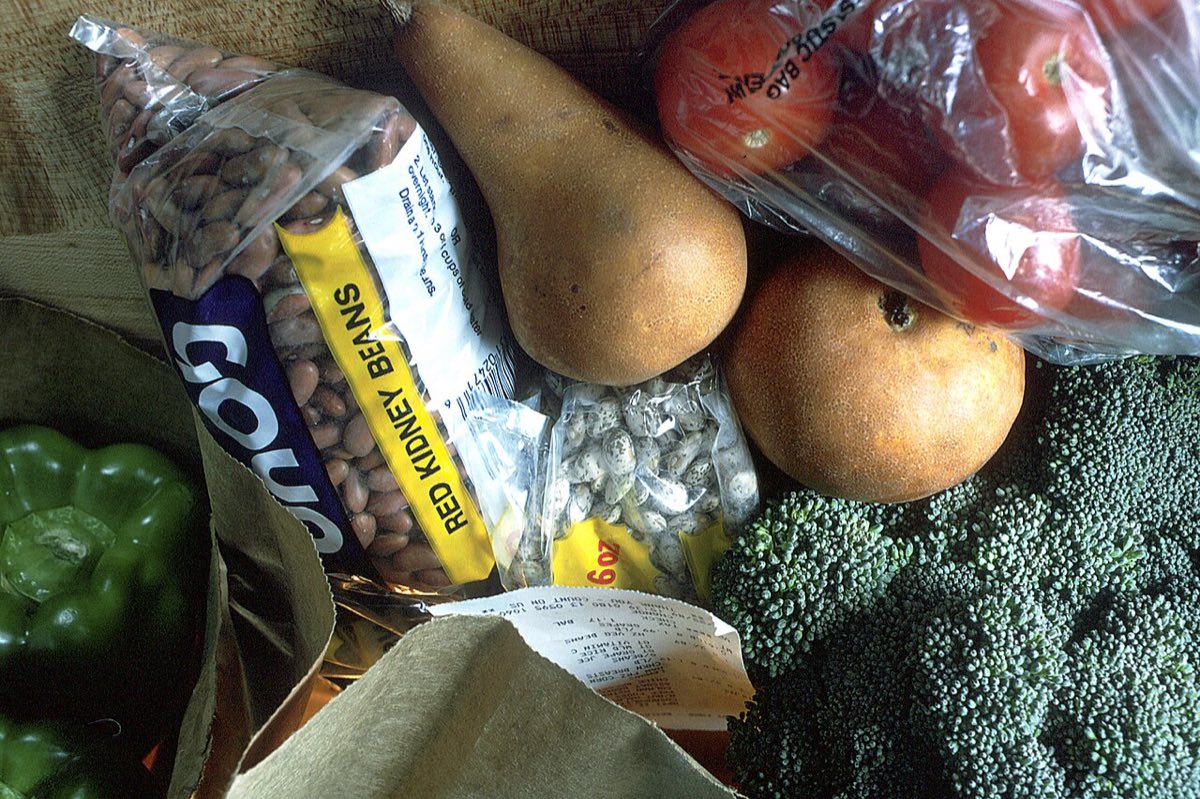
- Grocery bag of healthy foodsWikimedia Commons · Bill Branson, US National Cancer Institute; public domain; general illustration only.
General information, not medical advice. Do not use a diet or stool marker to diagnose, prevent or treat Crohn’s disease without a gastroenterologist and qualified dietitian.
Analysis by NutroPractic from the sources listed. Written for general readers; it does not replace advice from your own doctor.
From our articles
Our guides on this subject
Plain-language guides on nutrition and wellness, backed by research.

Gut health
Probiotic capsules: which ones have trial evidence, what they can do, and when to skip them
Children on antibiotics: 8% got diarrhoea with a probiotic, 19% without. Older hospital patients: 10.8% with, 10.4% without. Which capsules have evidence, what three guidelines say about IBS, what a course costs per case prevented, and who shouldn't take them.
2 Nov 2026
Gut health
Gluten-free without coeliac disease: who actually benefits, and what the blinded gluten challenges found
In blinded trials only 16% of people who said gluten made them ill reacted to gluten rather than placebo, and in Oslo fructans caused more bloating than gluten. Who really needs to avoid it, how to get tested before you stop, how much gluten is in a slice of bread or a roti, and what gluten-free food costs (159% more in the UK) and lacks.
1 Nov 2026
Gut health
Lactose intolerance: how much milk most people can actually tolerate, and which dairy is easiest
Most adults who don't digest lactose well still handle about 12 g at once, roughly a 250 ml glass of milk, in blinded trials. What the 12 g studies found, a lactose table for milk, yoghurt, cheese, chai and dahi, how lactase tablets and A2 milk compare, why the famous 68% figure was retracted, and how to keep calcium up if you cut back.
25 Oct 2026
Newsfeed for your website
Want this feed on your website?
Add it to any site with one copy-and-paste snippet. No sign-up, and it updates itself every hour.
Start with a virtual consultation
Tell Dr. Triveni what you want to change. You will leave with a clear next step, whether you are in Toronto, London, New York or Chennai.