Blood pressure · October 18, 2026
Three months of Chios mastic, a Greek tree resin, in 106 adults whose blood pressure was already under control: the 24-hour readings did not come down. On the lower dose, one of them went up
Earlier small studies had hinted that the resin lowers blood pressure. An Athens trial with dummy tablets that even smelled of mastic found no benefit in people already treated, and the paper's own tables raise a few questions.
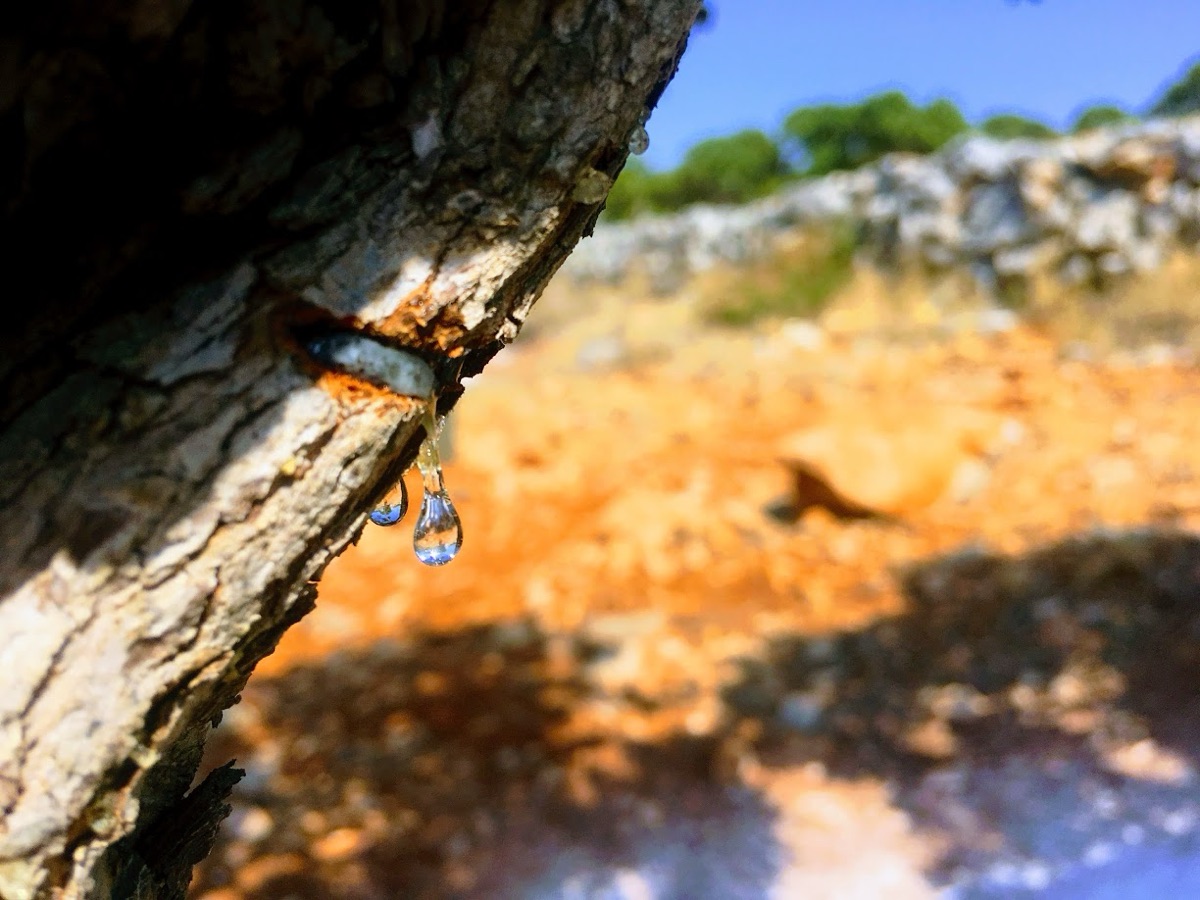
On the Greek island of Chios, farmers cut small slits in the bark of a shrubby relative of the pistachio every summer and wait for it to weep. The drops harden into translucent 'tears' of mastic, a resin that has been chewed, cooked with and taken as a remedy for centuries. In recent years small studies have suggested it might also lower blood pressure. A team from universities and research institutes in Athens set out to test that properly, and published the result in Pharmacology Research & Perspectives on 15 October 2026.
The HYPER-MASTIC trial ran from April 2022 to February 2024 at Alexandra General Hospital in Athens. It recruited adults aged 40 to 80 whose high blood pressure was already well controlled, confirmed by a 24-hour monitor. The 106 people randomised took either 1,500 mg of mastic a day, 2,800 mg a day, or dummy tablets for three months. The dummies were the same size and shape and were sprayed with mastic scent, so nobody could tell by smell. Blood tests for two compounds unique to mastic rose step by step with the dose, which shows people really did take their tablets.
The main question, set in advance, was whether 24-hour systolic and diastolic blood pressure changed differently between the groups. It did not. Average 24-hour systolic pressure went from 121.7 to 122.4 mmHg on placebo, from 123.4 to 124.1 on the high dose, and from 122.9 to 126.4 on the low dose. That low-dose rise was significant within the group, and the one measure where the groups did differ, central 24-hour systolic pressure (the pressure near the heart, estimated by the cuff), was driven by the low-dose group going up. Markers of oxidative stress and of the cell's protein clean-up system, which the team had expected mastic to improve, did not change either.
The authors read this as a ceiling effect: blood pressure that is already well treated has little room to fall. That is plausible, and the people in the trial were indeed close to normal, at around 122/76 over 24 hours. They put the low-dose rise down to that group being younger and more likely to have a family history of high blood pressure. But a ceiling effect explains no benefit; it does not obviously explain a rise, and the trial is too small to say whether that rise means anything.
A careful reader will notice a few other things. Twenty-five of the 106 people, about one in four, withdrew or were missing follow-up readings and were left out, against the 15% the sample-size plan allowed for. In the main results table the placebo group's central systolic pressure is exactly the same at the start and at three months, to two decimals and including the spread, which looks like a copying slip. The text says office diastolic pressure rose by 2.47 mmHg in the high-dose group, while the table shows it falling from 79.6 to 77.2. The high-risk subgroup is 59 people in the text and 70 in a supplementary table. And the paper cites no trial registration. The tablets were made by a pharmaceutical company in the project consortium, which also included the Chios Mastic Growers Association; the authors declare no conflicts of interest, and the funding came from EU regional development and Greek national funds.
The trial's most hopeful finding is also its least practical: in higher-risk participants, mastic changed the activity of genes involved in how blood-vessel lining cells hold together. Changes in blood gene activity are a long way from fewer heart attacks. For now, the plain reading is that mastic is a lovely flavour with a long history and, in people whose blood pressure is already treated, no measurable effect on it over three months. The proven ways to lower blood pressure are still the medicines a doctor prescribes, less salt, more vegetables, fruit and potassium, regular activity, less alcohol and, for many people, some weight loss.
Chios mastic (1,500 or 2,800 mg a day) vs placebo for 3 months: double-blind randomised trial in 106 adults with well-controlled high blood pressure, Athens, Greece
106 → 81
Adults randomised, and those analysed (31 placebo, 25 low dose, 25 high dose)
No difference
Change in 24-hour systolic and diastolic blood pressure between groups, the main outcome
121.7 → 122.4
24-hour systolic pressure (mmHg) on placebo, start to 3 months
122.9 → 126.4
24-hour systolic pressure (mmHg) on the low dose: a rise within the group
123.4 → 124.1
24-hour systolic pressure (mmHg) on the high dose
p = 0.017
The one 24-hour measure where groups differed: central systolic pressure, rising on the low dose
No change
Oxidative stress and proteasome activity in blood cells
141 vs 74
Genes whose activity changed on mastic vs placebo, high-risk subgroup only
Figures from Kalafati IP, Kyriazopoulou-Korovesi AA, Mentsiou-Nikolaou E and colleagues, 'Chios Mastic in Well-Controlled Hypertension: Findings From the HYPER-MASTIC Randomized Controlled Trial', Pharmacology Research & Perspectives 2026;14(6):e70322, published 15 October 2026, doi 10.1002/prp2.70322 (Tables 1 to 3 and Results). Blood pressure values are group means; analyses were adjusted for age and sex and included only people who completed the three months. The paper does not report a trial registration number.
- The know-how of growing mastic on Chios was added to UNESCO's list of the Intangible Cultural Heritage of Humanity in 2014. From mid-June the ground under each tree is swept and levelled so the fallen resin can be gathered, and from July the bark is cut with an iron tool.
- Mastic comes from Pistacia lentiscus var. Chia, a close relative of the tree that gives us pistachios. The same shrub grows all around the Mediterranean, but it is the trees of southern Chios that are tapped for resin.
- To keep the trial blind, the placebo tablets were sprayed with mastic scent. Mastic has a strong, resinous, pine-like smell that would otherwise have given the game away.
- Researchers checked that people took their tablets by measuring masticadienonic and isomasticadienonic acids in their blood, two compounds characteristic of mastic. Levels rose on the low dose and roughly three times further on the high dose.
- A 24-hour blood pressure monitor takes readings automatically through the day and night, which avoids the 'white coat' rise some people get in a clinic. That is why it was used for the main outcome.
- Chios Mastic in Well-Controlled Hypertension: Findings From the HYPER-MASTIC Randomized Controlled TrialPharmacology Research & Perspectives, 15 October 2026 · The trial paper (open access, CC BY): design, doses, results, funding and limitations
- Full text of the trial paperPubMed Central · Same paper, free to read, with the results tables
- Know-how of cultivating mastic on the island of ChiosUNESCO Intangible Cultural Heritage · How mastic is grown and harvested, inscribed in 2014
- High Blood Pressure: TreatmentUS National Heart, Lung, and Blood Institute (NIH) · Plain-language guide to the lifestyle changes and medicines that lower blood pressure
General information, not medical advice. This trial tested Chios mastic tablets for three months in adults whose high blood pressure was already treated and well controlled. Do not stop or change blood pressure medicine without talking to your doctor, and check with a doctor or pharmacist before adding a supplement, especially if you take several medicines, are pregnant, or have ever reacted to mastic.
Analysis by NutroPractic from the sources listed. Written for general readers; it does not replace advice from your own doctor.
From our articles
Our guides on this subject
Plain-language guides on nutrition and wellness, backed by research.
Heart and blood pressure
Beetroot juice and dietary nitrate: what the blood-pressure trials measured, and who should be careful
Drinking 250 ml of beetroot juice dropped clinic systolic blood pressure by 7.7 mmHg in 4-week clinical trials. Here is how tongue bacteria convert dietary nitrate to nitric oxide, why antiseptic mouthwash blocks it completely, and the oxalate kidney stone warning.
18 Nov 2026
Everyday eating
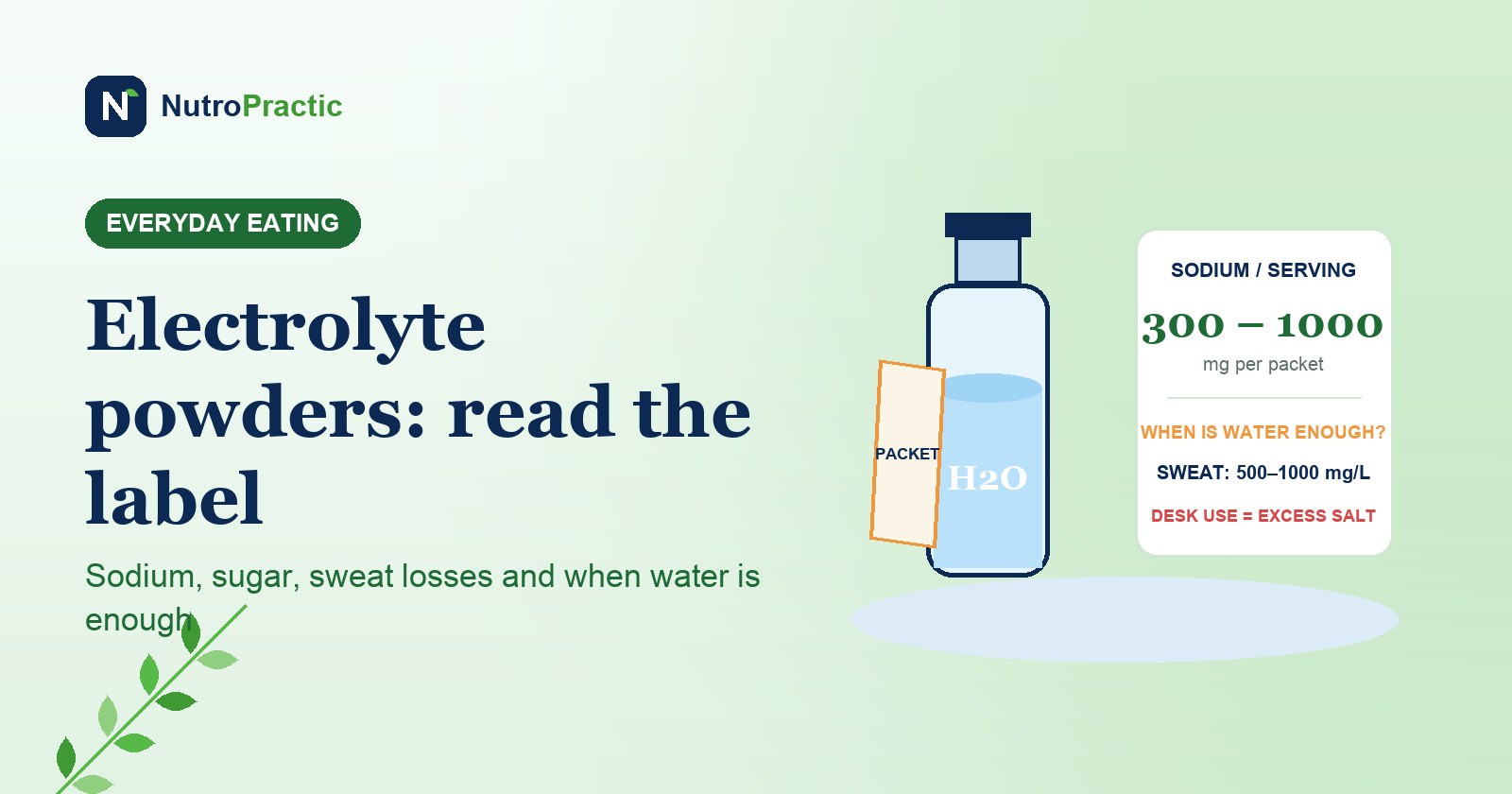
Electrolyte powders: sodium and sugar per bottle, and when water is enough
Packets deliver 300 to 1,000 mg sodium and up to 11 g sugar. Here is how popular drink mixes compare with actual sweat losses—and who actually needs them.
10 Nov 2026

Everyday eating
Instant noodles: the sodium in the whole packet, and what actually reduces it
Three official labels range from 750 to 1,520 mg sodium per packet. Here is the whole-pack arithmetic, what the broth study measured, and how to turn noodles into a more complete meal.
6 Nov 2026
Newsfeed for your website
Want this feed on your website?
Add it to any site with one copy-and-paste snippet. No sign-up, and it updates itself every hour.
Start with a virtual consultation
Tell Dr. Triveni what you want to change. You will leave with a clear next step, whether you are in Toronto, London, New York or Chennai.