Nuts · October 21, 2026
Six months of Chilean hazelnuts in a Mediterranean-style diet: the immune cells of 81 adults with high cholesterol showed far less oxidative damage. So did the cells of the people simply told to cut fat
A trial in Concepción, Chile, gave one group 30 g a day of a native nut, Gevuina avellana, on a diet with about 40% of calories from fat, and another a standard low-fat plan. In white blood cells, the main markers of damaged fat and damaged protein fell by more than half in both groups and antioxidant enzymes rose. The nut diet pulled ahead on three of the 14 measures, which shows how hard it is to credit any of this to the nut.
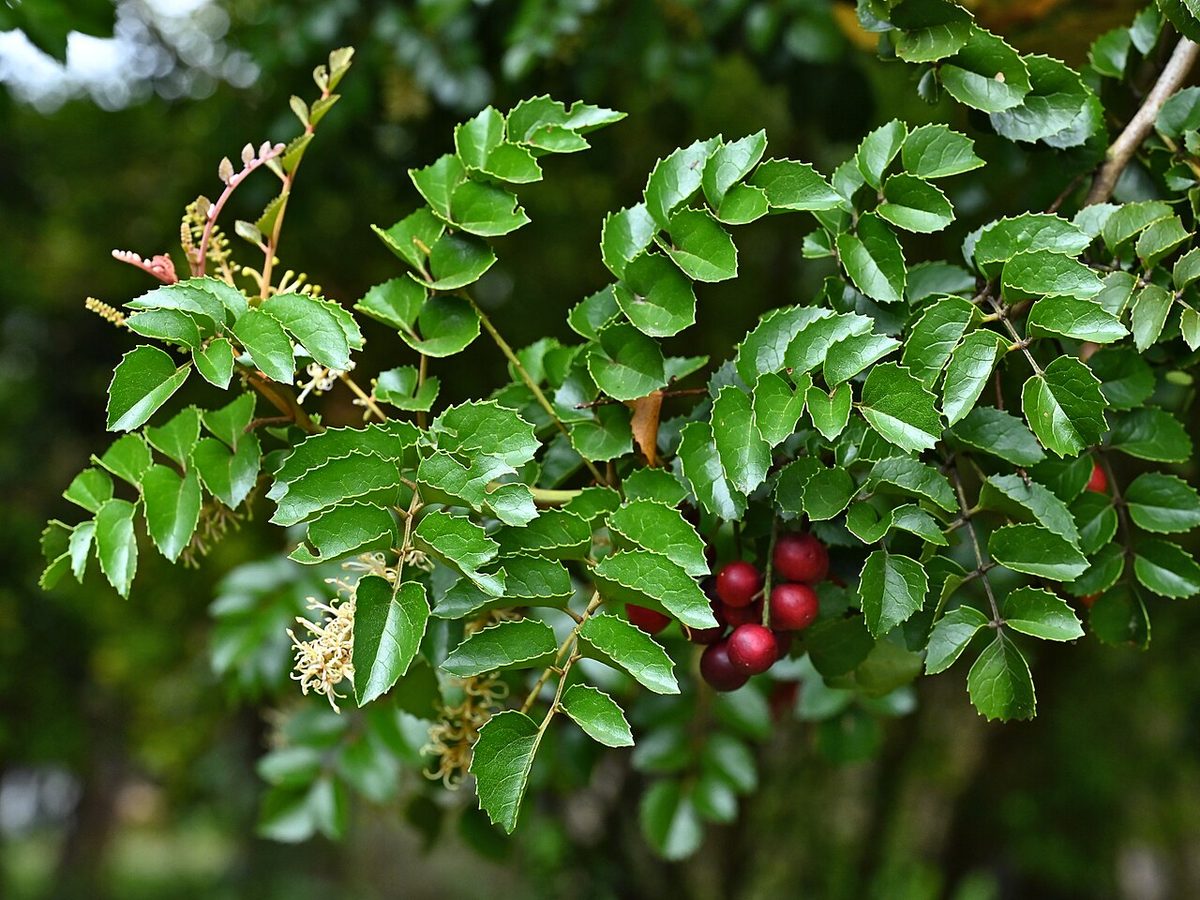
Outside Chile, almost nobody has eaten Gevuina avellana. It is sold there as avellana chilena, the Chilean hazelnut, but it is not a hazel at all. It grows on an evergreen tree from the protea family, the same family as the macadamia, and its kernels are mostly monounsaturated fat, like an almond's. A team from the University of Concepción and the University of the Balearic Islands wanted to know whether a daily portion, as part of a Mediterranean-style diet, would calm the oxidative stress that goes with high cholesterol. Their latest results came out in Nutrients on 16 October.
The trial ran in 2022 in the Concepción region. 106 adults aged 18 to 60 with total cholesterol above 200 mg/dL were randomised. None were taking cholesterol medicine, and anyone with diabetes, high blood pressure, or liver or kidney disease was left out. On average they were about 39, mildly overweight, with total cholesterol around 241 to 247 mg/dL. Half were put on a Mediterranean-style diet built from Chilean foods (vegetables, legumes, whole grains, fish, olive oil) with 30 g of Chilean hazelnuts a day, handed out in monthly packs, and about 40% of calories from fat. The other half were put on the low-fat diet that Chile's health ministry recommends for high cholesterol, with under 30% from fat. Both groups had the same number of counselling sessions, and neither diet was meant to cause weight loss.
The lipid results from this trial were reported earlier this year in a separate paper: both diets improved blood fats. This paper looks at something more specialised, the white blood cells known as PBMCs, the lymphocytes and monocytes circulating in the blood. Blood was drawn before and after six months, and the researchers measured how much reactive oxygen the cells produced when provoked with three different triggers, how much damaged fat (malondialdehyde) and damaged protein (carbonyls, nitrotyrosine) they carried, how active three antioxidant enzymes were, and how strongly five genes were switched on.
The striking part is how much changed in both groups. Malondialdehyde fell by 55% on the low-fat diet and by 65% on the nut diet. Protein carbonyls fell by 56% and 58%. Superoxide dismutase activity rose by 73% and 82%, and catalase activity more than doubled in both. When the cells were provoked with zymosan, a yeast extract that mimics a fungal attack, they released 42% less reactive oxygen after the low-fat diet and 55% less after the nut diet.
Where the groups differed, it was in the nut diet's favour, but only on three measures: the larger fall in malondialdehyde and the larger drops in reactive oxygen after the zymosan and bacterial-toxin (LPS) triggers. On the other 11, including the two inflammation genes, IL-10 and TNF-alpha, which did not move in either group, there was no clear difference. Not everything pointed the same way: after the third trigger, a chemical called PMA, the cells produced more reactive oxygen in both groups, and nitrotyrosine fell only on the low-fat diet. The abstract says no significant differences between the groups were seen, while the results section reports the three; the discussion describes them as greater reductions on the nut diet that need more study.
There are good reasons for caution. The trial was sized to detect a change in cholesterol, not in these cell markers. 25 of the 106 people dropped out, and by the authors' figures 37% of the low-fat group left against 10% of the nut group, although an analysis that included everyone randomised gave similar results. Food intake was self-reported. There was no group that kept eating as before, so the shared improvements could partly reflect the counselling, the season or simply being in a study. And the two diets differed in far more than the nuts: total fat, olive oil, legumes, vegetables and whole grains all changed together, which the authors say makes it impossible to tell whether the hazelnut, the diet around it, or both made the difference. The trial was registered on ClinicalTrials.gov in July 2025, almost three years after it ended. It was funded by Chilean and Spanish public research grants, and the authors declare no conflicts of interest.
What it does show is something that still surprises people: a diet with 40% of calories from fat, much of it unsaturated fat from nuts and olive oil, did not leave cells with more oxidised fat than a low-fat diet. It left them with less. Fat quality and the overall pattern of eating seem to matter more than the fat total, which fits the larger Mediterranean diet trials that used nuts.
Oxidative stress in white blood cells (PBMCs) of 81 Chilean adults with high cholesterol after six months on a low-fat diet or a Mediterranean-style diet with 30 g of Chilean hazelnuts a day (2022)
-55% / -65%
Malondialdehyde (damaged fat) in the cells: low-fat diet / hazelnut diet. The bigger fall on the hazelnut diet was significant (p = 0.010)
-56% / -58%
Protein carbonyls (damaged protein): low-fat / hazelnut, no difference between the diets
+170% / +142%
Catalase activity, an antioxidant enzyme: low-fat / hazelnut, no difference between the diets
-42% / -55%
Reactive oxygen released when the cells were provoked with zymosan: low-fat / hazelnut (difference p = 0.006)
3 of 14
Cell measures on which the two diets differed; all three favoured the hazelnut diet
37% vs 10%
Dropout rates given by the authors: low-fat group against hazelnut group (25 of 106 left in all)
Study: González-Contreras C, Ramos-Pardo S, Valdebenito EA, Ramírez-Alarcón K, Zuniga FA, Quetglas-Llabrés MM, Sureda A, Martorell M, 'Effects of a Chilean Hazelnut-Supplemented Diet on Oxidative Stress and Cytokine Expression in PBMCs of Hypercholesterolemic Adults: A Randomized Controlled Trial', Nutrients 2026, 18(20):3400, published 16 October 2026, doi 10.3390/nu18203400 (open access, CC BY). Open-label randomised trial in Concepción, Chile, enrolment February to March 2022, follow-up to September 2022; ClinicalTrials.gov NCT07087704 (registered July 2025). Adults 18 to 60, total cholesterol above 200 mg/dL, no lipid-lowering treatment, diabetes, hypertension or liver/kidney disease. 106 randomised, 81 analysed (hazelnut 47, low-fat 34). Hazelnut diet: Chilean-adapted Mediterranean pattern, about 40% energy from fat, 30 g/day Gevuina avellana supplied monthly; low-fat diet: under 30% energy from fat (Chilean Ministry of Health guidance). Both normocaloric with identical counselling. PBMC outcomes were pre-specified secondary outcomes; the trial was powered for total cholesterol. Changes low-fat vs hazelnut: MDA -55.2% vs -64.7% (time x group ratio 0.62, 95% CI 0.43 to 0.89, p = 0.010); carbonyls -55.7% vs -58.2% (p = 0.903); nitrotyrosine -15.2% vs no significant change (p = 0.141); zymosan-stimulated ROS -42.4% vs -55.2% (ratio 0.68, 0.52 to 0.89, p = 0.006); LPS-stimulated ROS fell significantly only on the hazelnut diet (ratio 0.76, 0.59 to 0.97, p = 0.029); PMA-stimulated ROS +50.0% vs +29.6% (p = 0.708); SOD activity +72.7% vs +82.4%; CAT activity +170% vs +142%; GRd activity unchanged; IL-10 and TNF-alpha expression unchanged. The 14 measures counted here are the 3 ROS triggers, 3 damage markers, 3 enzyme activities and 5 gene expressions. Analysis on completers with repeated-measures ANCOVA adjusted for age and sex; a mixed-model sensitivity analysis of all randomised participants gave consistent results. Funded by ANID FONDECYT and the University of Concepción, with Spanish public support for co-authors; no conflicts declared.
- Despite the name, the Chilean hazelnut is not related to the European hazelnut, which grows on a shrub in the birch family. Gevuina avellana belongs to the protea family, which also gives us the macadamia.
- In the large Spanish PREDIMED trial, people told to follow a Mediterranean diet with 30 g of mixed nuts a day (walnuts, hazelnuts and almonds) had about 28% fewer heart attacks, strokes and cardiovascular deaths than people given low-fat diet advice.
- Malondialdehyde, the main damage marker in this trial, forms when polyunsaturated fats are attacked by oxygen, which is why researchers had worried that a diet richer in unsaturated fats might raise it. Here it fell further on the higher-fat diet.
- Chile's 2016 to 2017 national health survey found that 27.7% of adults had total cholesterol above 200 mg/dL, the threshold used to recruit people into this trial.
- Effects of a Chilean Hazelnut-Supplemented Diet on Oxidative Stress and Cytokine Expression in PBMCs of Hypercholesterolemic Adults: A Randomized Controlled TrialNutrients, October 2026 · The study: full text, open access
- Effect of a Chilean diet supplemented with Gevuina avellana Molina versus a low-fat diet on cardiometabolic, oxidative stress, and inflammatory biomarkers in Chilean adults with hypercholesterolemia: A randomized controlled trialNutrition, Metabolism and Cardiovascular Diseases, 2026 · The same trial's results for blood fats and plasma markers
- Effects of a Chilean Diet Supplemented With Gevuina Avellana on Lipid Profile in Humans With Hypercholesterolemia (NCT07087704)ClinicalTrials.gov · Trial registration: dates and planned outcomes
- Primary Prevention of Cardiovascular Disease with a Mediterranean Diet Supplemented with Extra-Virgin Olive Oil or NutsNew England Journal of Medicine, 2018 · The PREDIMED trial, republished after a re-analysis
- Gevuina avellana kz08Wikimedia Commons · The photo, CC BY 4.0 (Krzysztof Ziarnek, Kenraiz)
General information, not medical advice. This was a small trial in adults with high cholesterol who were not on medication, and it measured markers in blood cells, not heart attacks or strokes. If your cholesterol is high, talk to your doctor or dietitian before changing your diet or stopping any treatment, and skip nuts if you are allergic to them.
Analysis by NutroPractic from the sources listed. Written for general readers; it does not replace advice from your own doctor.
From our articles
Our guides on this subject
Plain-language guides on nutrition and wellness, backed by research.
Heart health
Oats and beta-glucan: how many grams lower LDL, and how much steel-cut, rolled and instant oats it takes
The 3 g a day of beta-glucan behind the FDA and EFSA claims lowers LDL by about 0.25 mmol/L (10 mg/dL). That is roughly 60 to 68 g of dry oats or 50 g of oat bran a day. Grams per portion, glycaemic index by oat type and the gluten caveat.
17 Nov 2026
Medicines and nutrition
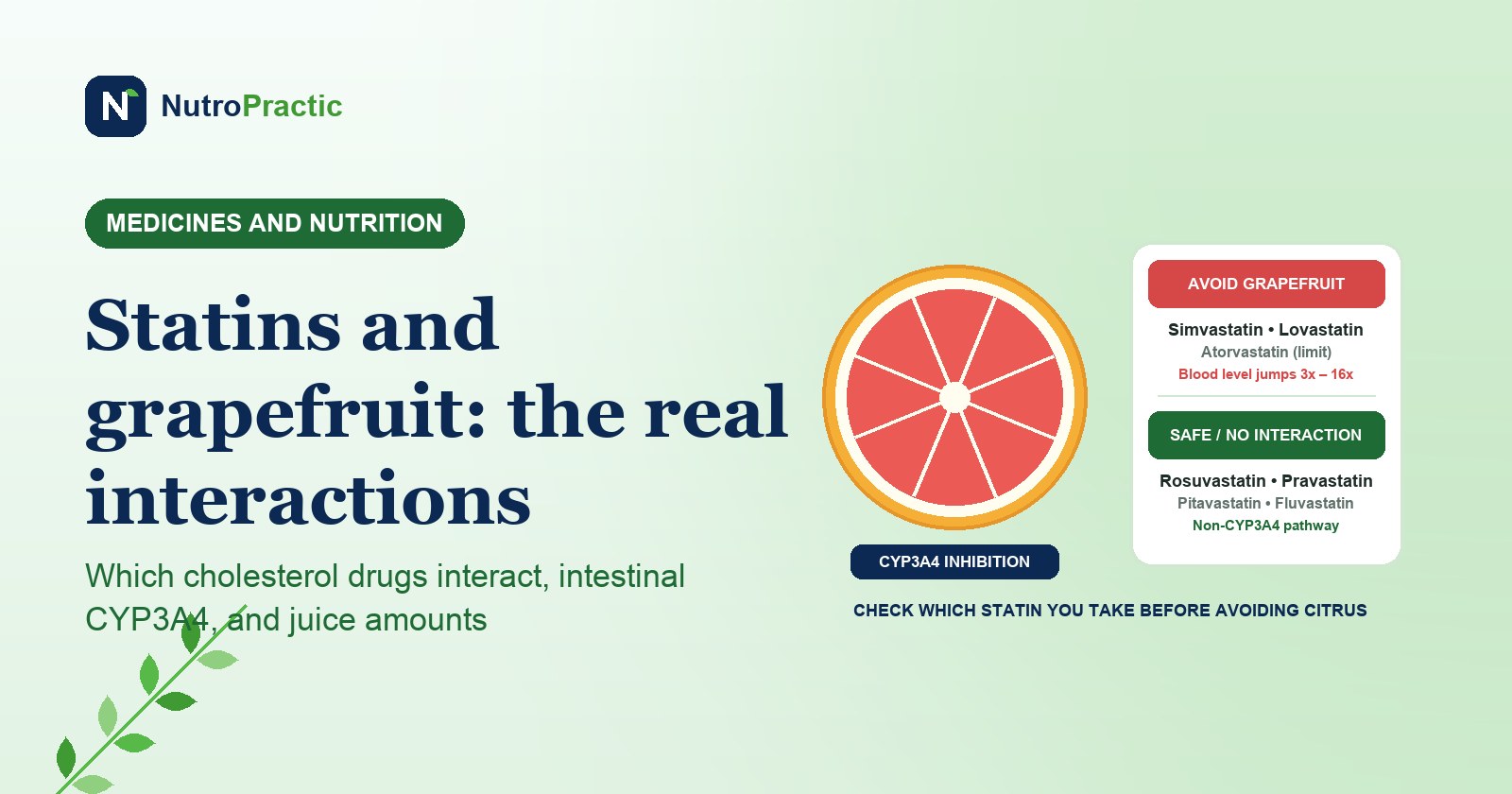
Statins and grapefruit: which cholesterol medicines actually interact, and how much fruit matters
A blanket ban on grapefruit is one of the most common warnings given to statin users, yet several widely prescribed cholesterol drugs do not interact with it at all. Learn the science of intestinal CYP3A4, actual AUC multipliers, portion thresholds, timing myths, and which statins allow you to safely enjoy citrus.
14 Nov 2026

Cardiovascular wellness
Psyllium husk: how much soluble fibre lowers LDL cholesterol and stabilizes post-meal glucose in clinical trials
Viscous soluble fibre forms a thick gel matrix in the small intestine that binds bile acids and blunts post-meal glucose spikes. Across dozens of randomized controlled trials, 7 to 10.2 grams of psyllium daily lowers LDL cholesterol by 6% to 12% without stripping HDL, while reducing postprandial glucose surges by 15% to 25% in metabolic syndrome and type 2 diabetes. Discover the bile acid sequestration mechanism, trial meta-analyses, exact timing before meals, water ratios, and titration protocols to avoid gas and cramping.
13 Nov 2026
Newsfeed for your website
Want this feed on your website?
Add it to any site with one copy-and-paste snippet. No sign-up, and it updates itself every hour.
Start with a virtual consultation
Tell Dr. Triveni what you want to change. You will leave with a clear next step, whether you are in Toronto, London, New York or Chennai.