Food science · November 7, 2026
Camel-milk kefir shifted gut bacteria in mice — but sequencing used only three animals per group. The stronger result was that its live microbes stayed above 10 million per millilitre
The fermented milk remained microbiologically stable for 14 refrigerated days and changed the mouse-colon profile after 21 days. No human health outcome was tested.
Researchers fermented camel milk with three concentrations of kefir grains, then measured acidity, microbes, taste and refrigerated stability. They also fed the middle formulation to healthy mice for 21 days, comparing it with pasteurised camel milk and no milk treatment.
Fermentation lowered pH from 6.54 to between 3.5 and 3.9. Lactic acid bacteria, bifidobacteria and yeasts remained above 7 log10 colony-forming units per millilitre through 14 days at 4°C — more than ten million viable organisms per millilitre on the culture count scale. Grain concentration did not clearly change the sensory scores.
Mice given kefir had the highest cultured faecal lactic-acid-bacteria counts and the lowest yeast and mould counts of the three groups. Sequencing suggested a shift from a Bacteroidota-dominated to a Bacillota-dominated colon community and enrichment of the Lachnospiraceae NK4A136 group, which is often associated with butyrate production.
The eye-catching microbiome result rests on only three sequenced mice per group. Overall within-sample diversity did not differ, and changing the relative abundance of a bacterial group is not automatically a health benefit. The experiment tested healthy mice, not people with digestive disease, and did not test symptoms, inflammation or clinical outcomes. It shows that this food can be fermented consistently and can alter a small mouse microbiome sample — not that camel-milk kefir treats the human gut.
A stable fermented food, followed by a tiny animal comparison
2%, 3%, 4%
Kefir-grain concentrations tested in camel milk
22 hours
Fermentation time at 25°C
6.54 to 3.5–3.9
Change from starting milk pH to the fermented formulations
>7 log10
Lactic bacteria, bifidobacteria and yeast CFU per mL maintained over 14 refrigerated days
21 days
Mouse feeding period for kefir, pasteurised camel milk or no treatment
3 mice/group
Animals whose colonic contents were sequenced
Food-characterisation study plus a small healthy-mouse experiment. Culture counts and relative microbial abundance do not establish a health effect, and three sequenced animals per group provide limited precision and generalisability.
- Kefir grains are communities of bacteria and yeasts held in a polysaccharide matrix; they are not cereal grains.
- A one-unit fall in pH represents a tenfold rise in hydrogen-ion activity, so the change from 6.54 to below 4 is substantial acidification.
- Alpha diversity describes variety within a sample; beta diversity describes differences in community composition between samples.
- A bacterial group associated with butyrate production is not proof that butyrate increased; the study would need to measure the metabolite.
- Microbiological and sensory characterization of kefir produced from camel milk and its modulation of the gut microbiota in miceFrontiers in Nutrition, 5 November 2026 · Primary open-access study record; fermentation, storage, sensory testing, animal comparison and sequencing sample size checked against the abstract.
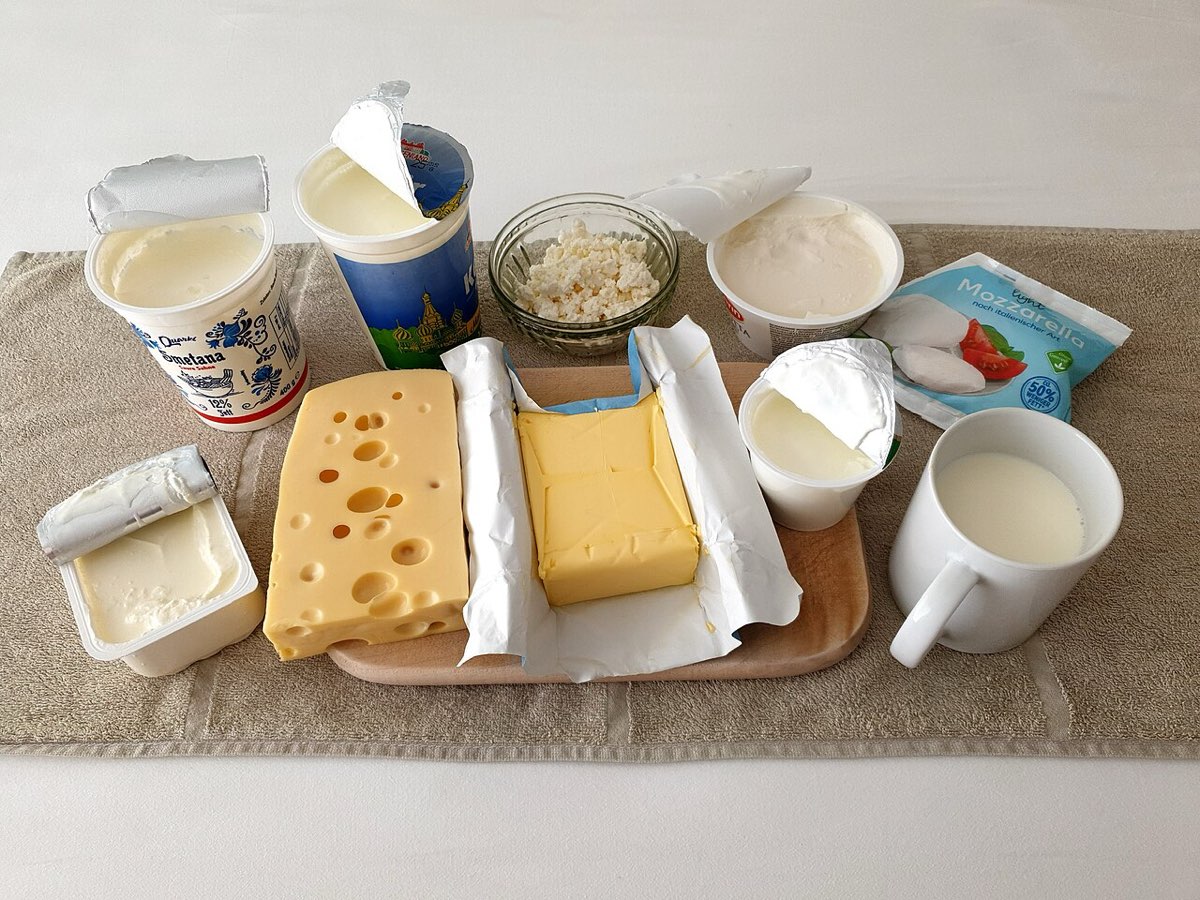
- Dairy productsWikimedia Commons · Photograph by Alexschneider250, CC0; general fermented-dairy illustration only.
General information, not medical advice. A small mouse microbiome experiment cannot show that camel-milk kefir benefits people or treats digestive disease. Anyone with milk allergy, intolerance or a weakened immune system should seek individual clinical advice.
Analysis by NutroPractic from the sources listed. Written for general readers; it does not replace advice from your own doctor.
From our articles
Our guides on this subject
Plain-language guides on nutrition and wellness, backed by research.

Gut health
Probiotic capsules: which ones have trial evidence, what they can do, and when to skip them
Children on antibiotics: 8% got diarrhoea with a probiotic, 19% without. Older hospital patients: 10.8% with, 10.4% without. Which capsules have evidence, what three guidelines say about IBS, what a course costs per case prevented, and who shouldn't take them.
2 Nov 2026
Gut health
Gluten-free without coeliac disease: who actually benefits, and what the blinded gluten challenges found
In blinded trials only 16% of people who said gluten made them ill reacted to gluten rather than placebo, and in Oslo fructans caused more bloating than gluten. Who really needs to avoid it, how to get tested before you stop, how much gluten is in a slice of bread or a roti, and what gluten-free food costs (159% more in the UK) and lacks.
1 Nov 2026

Gut health
Lactose intolerance: how much milk most people can actually tolerate, and which dairy is easiest
Most adults who don't digest lactose well still handle about 12 g at once, roughly a 250 ml glass of milk, in blinded trials. What the 12 g studies found, a lactose table for milk, yoghurt, cheese, chai and dahi, how lactase tablets and A2 milk compare, why the famous 68% figure was retracted, and how to keep calcium up if you cut back.
25 Oct 2026
Newsfeed for your website
Want this feed on your website?
Add it to any site with one copy-and-paste snippet. No sign-up, and it updates itself every hour.
Start with a virtual consultation
Tell Dr. Triveni what you want to change. You will leave with a clear next step, whether you are in Toronto, London, New York or Chennai.