Sports nutrition · November 7, 2026
Caffeine helped sprints and jumps in a 97-study review, not match skills or fatigue. With 1,516 athletes, the clearest result was how uneven the benefits were
Small pooled gains appeared for eight performance categories, while lower-limb skills, real-match technique and endurance did not clearly improve. The analysis could not identify one best dose or format.
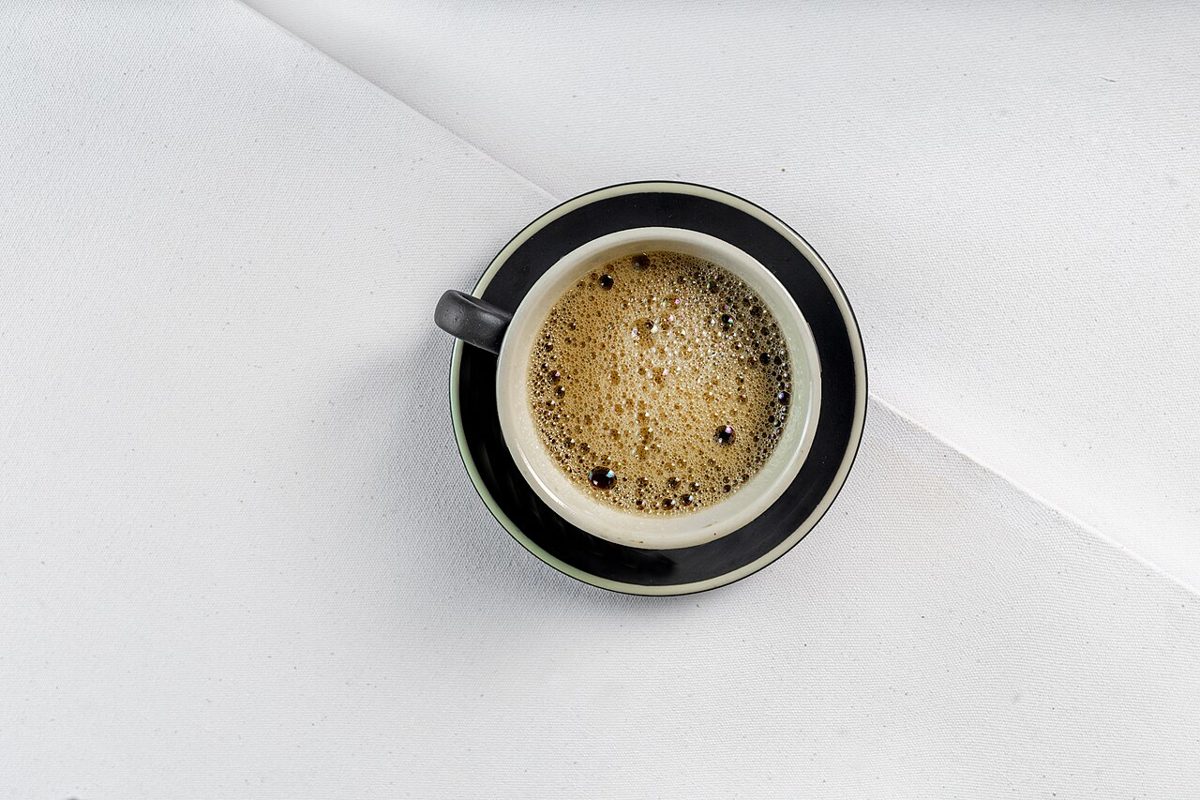
A new meta-analysis gathered 97 randomised crossover studies involving 1,516 team-sport athletes. Each athlete typically tried caffeine and a comparison condition on different occasions, letting researchers pool outcomes across 17 categories: technical skills, laboratory performance, on-field performance and perceived fatigue.
Caffeine showed statistically significant small pooled effects in eight categories. Upper-limb technical skills improved by a standardised effect of 0.25; match-play physical output by 0.23; single-jump performance by 0.29; strength by 0.20; and power output by 0.33. Sprint time, repeated-sprint ability and agility each had an effect of −0.34, where a lower time is better.
The missing gains matter just as much. The review found no clear pooled effect on lower-limb technical skills, technical performance during actual matches, endurance-related outcomes or how fatigued athletes felt. A quicker sprint test does not guarantee more accurate passing, shooting or decision-making under pressure.
The team also examined dose, caffeine form, sport, sex and training level. After correcting for the many moderator questions, no overall moderator effect remained statistically significant. Subgroups backed by fewer than five studies were treated as exploratory. That means the review cannot name one dose, gum-versus-drink choice or athlete profile that reliably works best.
Standardised effects help combine unlike tests, but they are not seconds, watts or goals and may be hard to translate into a specific match. Crossover trials can also reveal caffeine through familiar sensations, weakening blinding. For an athlete, sleep, anxiety, stomach symptoms, medication interactions and competition rules matter alongside performance. The evidence supports a possible small boost in selected physical tasks, not a promise of better all-round play.
Where pooled caffeine effects appeared — and where they did not
97 studies
Randomised crossover studies included in the review
1,516
Team-sport athletes represented across the included studies
17
Outcome categories spanning skills, physical tests, match play and fatigue
g=−0.34
Pooled standardised effect for sprint time, repeated sprints and agility; lower time is better
g=0.33
Pooled effect for power output; upper-limb skill was 0.25 and single jump 0.29
No clear effect
Lower-limb skills, match-play technical performance, endurance outcomes or perceived fatigue
Three-level random-effects meta-analysis of crossover trials. Hedges' g is a standardised difference, not a percentage improvement. Significant pooled effects were small and category-specific. Moderator findings did not survive global correction, so the review does not establish an optimal dose, formulation or protocol.
- In a crossover trial, the same athlete receives both conditions, which reduces noise from natural differences between people.
- A negative effect for a timed test can favour caffeine because fewer seconds is a better result.
- Perceived fatigue did not clearly improve even when some physical outputs did; feeling unchanged does not mean the workload was unchanged.
- Caffeine stays in the body for hours. A late performance dose can disrupt sleep, which may erase a small training benefit the next day.
- Caffeine content varies widely across coffee, energy drinks, capsules and gum, so a product name alone does not identify the dose.
- Effects of Acute Caffeine Ingestion on Sport-Specific Skills, Physical Performance, On-Field Competition Performance, and Perceived Fatigue in Team Sport Athletes: A Systematic Review and Meta-AnalysisFrontiers in Nutrition, 5 November 2026 · Primary open-access review; search date, study and athlete counts, pooled categories, effect sizes, moderator correction and conclusions checked against the abstract.
- Espresso Coffee 01Wikimedia Commons · Photo by Jubair1985, CC0; reused as a general caffeine illustration.
General information, not medical or performance advice. Caffeine can affect sleep, heart rate, anxiety, digestion and medicines, and is not appropriate for everyone. Athletes should test any strategy safely in training and seek qualified advice where needed.
Analysis by NutroPractic from the sources listed. Written for general readers; it does not replace advice from your own doctor.
From our articles
Our guides on this subject
Plain-language guides on nutrition and wellness, backed by research.
Women's health
Eating while breastfeeding: extra calories, iodine, caffeine, fish and alcohol, with the actual numbers
Breastfeeding usually adds about 330–400 kcal a day, but the smaller numbers can matter more: 290 mcg iodine, 400 IU vitamin D for baby, 8–12 oz fish a week, and a caffeine total you can actually add up.
6 Nov 2026
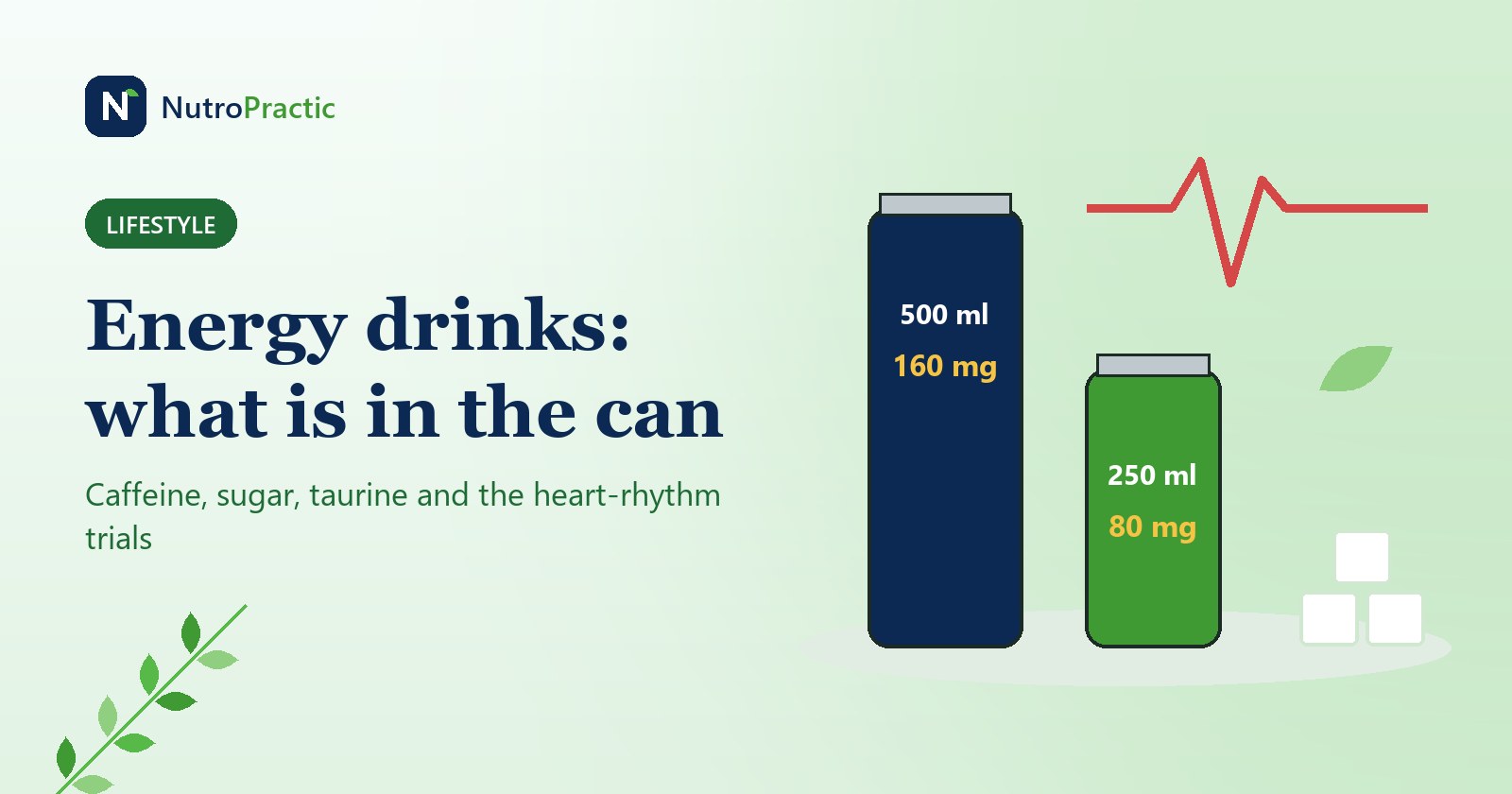
Lifestyle
Energy drinks: caffeine, sugar and taurine per can, and what the emergency-visit and heart-rhythm studies found
From 80 mg to 300 mg of caffeine, and up to 55 g of sugar in one can. The numbers by brand, what they mean for a 50 kg teenager, what the QT and blood pressure trials measured, the old emergency-visit data and England's coming under-16 ban.
4 Nov 2026
Liver health
Fatty liver (MASLD): how much weight loss reverses it, and what coffee and alcohol do
About one adult in three has a fatty liver, and most find out by accident on a scan. Biopsy studies show how much weight loss clears the fat, calms the inflammation and even shrinks scarring. Here are the numbers, what diet and drinks do, the new medicines and the one blood test worth asking for.
30 Oct 2026
Newsfeed for your website
Want this feed on your website?
Add it to any site with one copy-and-paste snippet. No sign-up, and it updates itself every hour.
Start with a virtual consultation
Tell Dr. Triveni what you want to change. You will leave with a clear next step, whether you are in Toronto, London, New York or Chennai.