Infant nutrition · October 9, 2026
Does a toddler's sweet tooth start in breast milk? Hormones in the milk at six months lined up with tastes a year later
Researchers in Argentina measured four appetite and stress hormones in breast milk and in babies' blood at six months, then offered the same children bottles of sweet and fatty drinks at 18 months. The hormones lined up with what the toddlers drank and ate, though not always in the direction you'd guess, and only 28 children made it to the end.
Breast milk carries more than nutrients. It also holds hormones, among them insulin, leptin (a fullness signal made by fat tissue), the stress hormone cortisol, and a newer one called LEAP2, which works against ghrelin, the body's hunger signal. A team at a children's hospital in La Plata, Argentina, working with colleagues in Sweden and France, asked whether these hormones in the first months of life have anything to do with how much a child later likes sweet and fatty food. Their paper appeared in the Journal of Neuroendocrinology on 1 October 2026.
At the six-month check-up, mothers gave a milk sample and their babies a blood sample. At 18 months the toddlers came back after a four-hour fast for a taste test: four bottles, each offered for 45 seconds, water, then two of a lightly sweet lactose drink at the strength found in breast milk, then water again. The same was done with a plain oil-in-water emulsion. The bottles were weighed to see how much each child drank, and a researcher who didn't know which drink was which scored the child's face and body language on a five-point scale from strong rejection to strong acceptance. Parents also recalled everything the child ate the day before, and foods were sorted by whether they are 'hyperpalatable', combining fat, sugar or salt in ways that make them hard to stop eating.
The links pointed in several directions at once. More insulin in the milk went with toddlers drinking less of the sweet drink and liking it less. More leptin in the milk went with more interest in the sweet drink, yet also with a smaller share of hyperpalatable foods in the day's diet, the strongest link in the study. Cortisol in the milk went with drinking more of both the sweet and fatty drinks. The baby's own hormones often told a different story from the milk's: higher cortisol in the baby's blood went with eating more hyperpalatable food, while higher LEAP2 went with eating less of it. The team tested whether the milk hormones worked by raising the baby's own levels and found no sign of that. Weight at 18 months mostly stood apart: the share of hyperpalatable food and the fat scores weren't linked to it, and the one link found ran the unexpected way, with toddlers who liked the sweet drink more being slightly lighter for their length.
The size of the study is the first thing to keep in mind. Of 725 mother and baby pairs who volunteered, 82 were enrolled and 51 came back at 18 months, but many toddlers refused the bottle or didn't finish the test, leaving 28 in the analysis. Many hormone and outcome pairs were tested, each hormone was measured once, and the day's diet came from a single recall, which the authors list among their limits along with the observational design. The 'hyperpalatable' list at this age was mostly ordinary toddler food: milk, bread, yogurt, crackers, cheese and sweet biscuits. So this is an early map of possible pathways, not a reason for any mother to worry about what is in her milk. What it does suggest is that the appetite system is already being shaped before a child can ask for a biscuit, and that breast milk may be one of the signals involved.
A small cohort: hormones at 6 months, taste test and diet at 18 months
725 → 28
Mother and baby pairs who volunteered, and toddlers who completed the taste test and were analysed
4
Hormones measured in milk and in the baby's blood: insulin, leptin, cortisol and LEAP2
28%
Average share of the food items eaten in a day at 18 months that counted as hyperpalatable
p = .001
Strongest link: more leptin in breast milk, a smaller share of hyperpalatable foods at 18 months
0.42
Average sweet ingestion ratio (above 0.5 means the toddler drank more of the sweet drink than water)
1 of 5
Taste and diet measures linked to weight (BMI z-score) at 18 months: only sweet liking, and inversely
Figures from the open-access paper in the Journal of Neuroendocrinology (published online 1 October 2026, CC BY 4.0), prospective cohort at the HIAEP Sor María Ludovica children's hospital, La Plata, Argentina, registered as NCT05798676. Associations come from multiple linear regression adjusted for maternal and infant factors; the study is observational and does not show cause and effect. Funding: Argentina's FONCyT, the Novo Nordisk Foundation and the Wenner-Gren Foundations; the funders had no role in the study and the authors declare no conflicts of interest.
- The sweet drink in the taste test was lactose, the main sugar in breast milk, mixed at the strength it naturally has in human milk.
- WHO and UNICEF recommend breast milk only for the first six months, then breastfeeding alongside other foods up to two years or beyond; only about 47% of babies under six months worldwide were exclusively breastfed in 2018 to 2025.
- US dietary guidance says infants and young children under two should have no added sugars at all.
- Fat was the harder sell: on average the toddlers drank less of the oil emulsion than of water, and their expressions said the same.
- Milk and infant plasma hormone concentrations predict sweet and fat taste acceptance and later food intakeJournal of Neuroendocrinology, 1 October 2026 · The study (open access); design, numbers, results and limits in this item come from its full text
- Abstract on PubMed (PMID 42823632)PubMed, US National Library of Medicine · Free abstract with the p-values for each hormone link
- Study registration NCT05798676ClinicalTrials.gov · The registered cohort
- Infant and young child feedingWorld Health Organization · Breastfeeding recommendations and the global exclusive breastfeeding rate
- Foods and drinks to limitUS Centers for Disease Control and Prevention · No added sugars for infants and young children
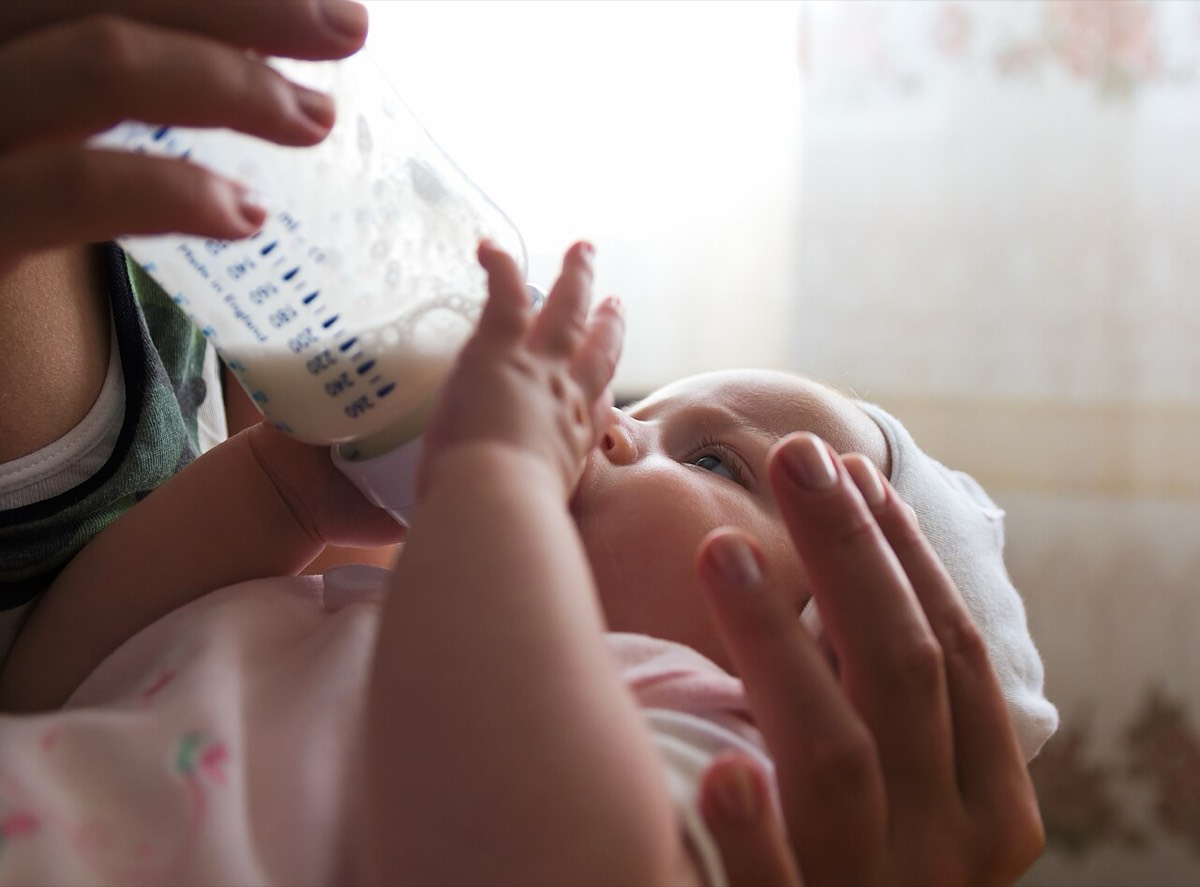
- Baby and baby milk bottle, Baby feeding, Moscow, Russia (photo)Vyacheslav Argenberg, via Wikimedia Commons · CC BY 4.0 image
General information, not medical advice. This small observational study shows associations, not cause and effect, and gives no reason to change how you feed your baby. Questions about breastfeeding, formula or starting solid foods are best taken to your child's doctor, a lactation consultant or a qualified nutrition professional.
Analysis by NutroPractic from the sources listed. Written for general readers; it does not replace advice from your own doctor.
Newsfeed for your website
Want this feed on your website?
Add it to any site with one copy-and-paste snippet. No sign-up, and it updates itself every hour.
Start with a virtual consultation
Tell Dr. Triveni what you want to change. You will leave with a clear next step, whether you are in Toronto, London, New York or Chennai.