Clinical nutrition · November 8, 2026
Two routine blood tests sharpened risk prediction after heart-valve treatment — not enough to diagnose muscle loss
Among 465 TAVI patients, a creatinine–cystatin C index improved a prediction model's concordance from 0.696 to 0.736. It was not compared with measured muscle mass.
A prospective study followed 465 people receiving transcatheter aortic valve implantation for symptomatic aortic stenosis. The median age was 72, 62% were men and 59 people died during a median 2.8 years.
Each standard-deviation increase in two creatinine- and cystatin C-derived indices tracked with roughly 70% lower adjusted mortality hazard. Adding the stronger index, creatinine multiplied by cystatin-C eGFR, lifted the model's concordance index from 0.696 to 0.736 and improved statistical reclassification.
The marker is a prognostic calculation, not a direct measure of muscle or proof that nutrition treatment changes survival. Kidney function, inflammation and illness can influence both blood tests, the study came from one clinical population, and an association with mortality does not validate a sarcopenia diagnosis.
Prediction improved inside one cohort
465
TAVI patients followed
72 years
Median age
2.8 years
Median follow-up
59
Deaths from any cause
0.696 → 0.736
Model concordance after adding the strongest index
Prospective observational study. The indices were derived from creatinine and cystatin C rather than direct body-composition measurements.
- Creatinine partly reflects muscle metabolism, while cystatin C is used as another filtration marker.
- A concordance index describes ranking of risk, not how many deaths a model prevents.
- The authors tested several indices, and not all differed between survivors and non-survivors.
- Better prediction does not show that changing the marker will change the outcome.
- Serum creatinine- and cystatin C-derived sarcopenia-related indices and the risk of all-cause mortality in patients undergoing transcatheter aortic valve implantationFrontiers in Nutrition, 6 November 2026 · Primary open-access prospective study; population, follow-up, deaths, hazard ratios and prediction metrics checked against the full paper.
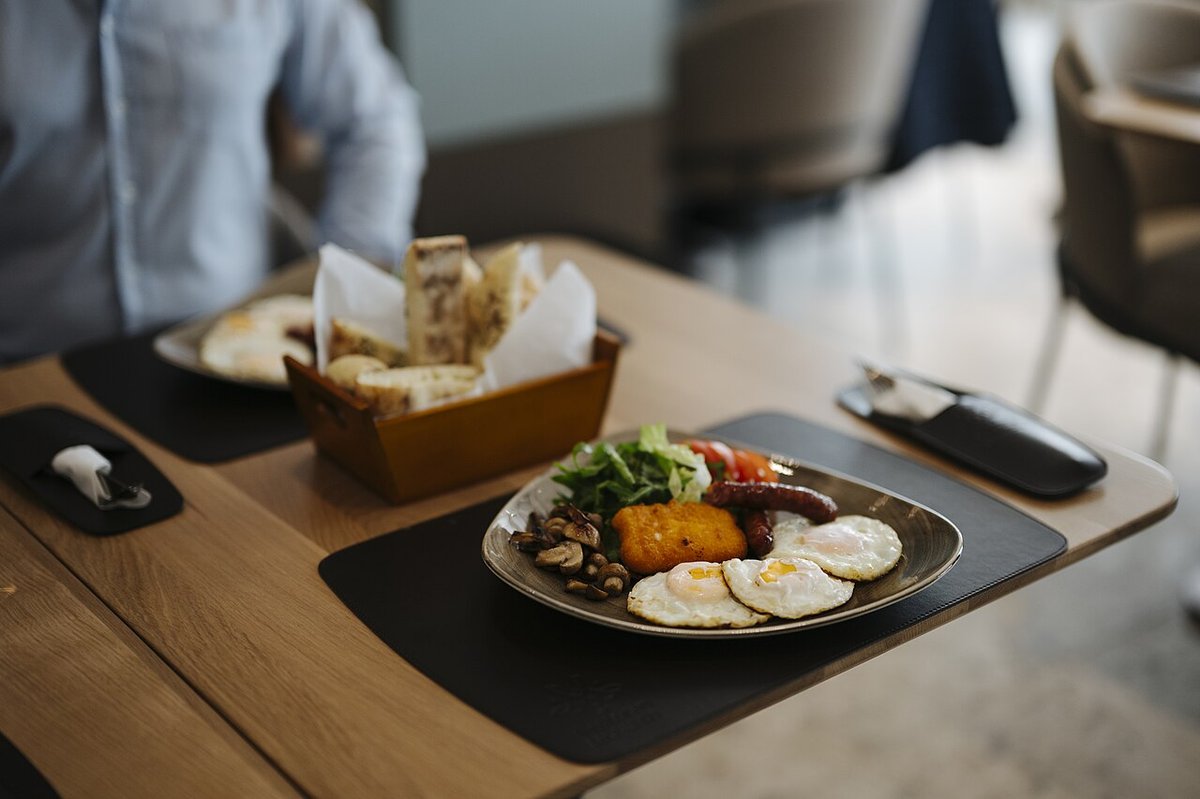
- Fresh breakfast served with eggs, sausage, vegetables, and toastWikimedia Commons · CC BY-SA 4.0 photograph; general nutrition illustration only.
General information, not medical advice. Sarcopenia and nutrition risk require clinical assessment of strength, function, body composition, illness and intake.
Analysis by NutroPractic from the sources listed. Written for general readers; it does not replace advice from your own doctor.
From our articles
Our guides on this subject
Plain-language guides on nutrition and wellness, backed by research.

Medicines and nutrition
CoQ10 and statins: what the muscle symptom trials found, and who might benefit
Statin-associated muscle symptoms lead up to 30% of patients to discontinue life-saving cholesterol therapy. While statins deplete circulating CoQ10 by 16% to 54%, randomized clinical trials show mixed results for myalgia relief. Explore the trials, ubiquinone vs ubiquinol bioavailability, recommended doses, and clinical guideline recommendations.
14 Nov 2026

Women's wellness and nutrition
Creatine for women: cognitive performance, menstrual cycle phases, and bone density beyond muscle building
Creatine is widely stereotyped as a bodybuilding supplement for men, but female physiology tells a very different story. Women exhibit 70% to 80% lower endogenous creatine stores, reduced dietary intake, and cyclical fluctuations in brain creatine kinase across the follicular and luteal phases. Robust clinical trials demonstrate that 3 to 5 grams of daily creatine monohydrate enhances cognitive performance during sleep deprivation, augments clinical response in unipolar depression, preserves femoral neck bone geometry in postmenopausal women, and causes cellular intracellular hydration rather than subcutaneous bloating.
13 Nov 2026

Healthy ageing
Creatine beyond the gym: what it does for older adults and women, and what it doesn't
Across 22 trials, adults in their late fifties to seventies who took creatine while doing resistance training gained about 1.4 kg more lean mass than those who trained without it. Two two-year trials found it did nothing for bone density after menopause. Where the evidence is solid, where it's early (memory, short nights), how much to take, and who should leave it alone.
10 Oct 2026
Newsfeed for your website
Want this feed on your website?
Add it to any site with one copy-and-paste snippet. No sign-up, and it updates itself every hour.
Start with a virtual consultation
Tell Dr. Triveni what you want to change. You will leave with a clear next step, whether you are in Toronto, London, New York or Chennai.