Sports nutrition · October 28, 2026
Caffeine wins the morning, beetroot juice the afternoon: across five back-to-back judo bouts, 35 athletes threw more early on caffeine but faded by the fifth, while beetroot juice held them up late and the two together did both
In a double-blind crossover trial that recreated a five-match judo tournament day, caffeine added about one throw per test in the first three bouts and then left athletes worse than placebo by the fifth. Nitrate-rich beetroot juice did little early but helped late. Taken together, the early lift stayed and the late slump went away.
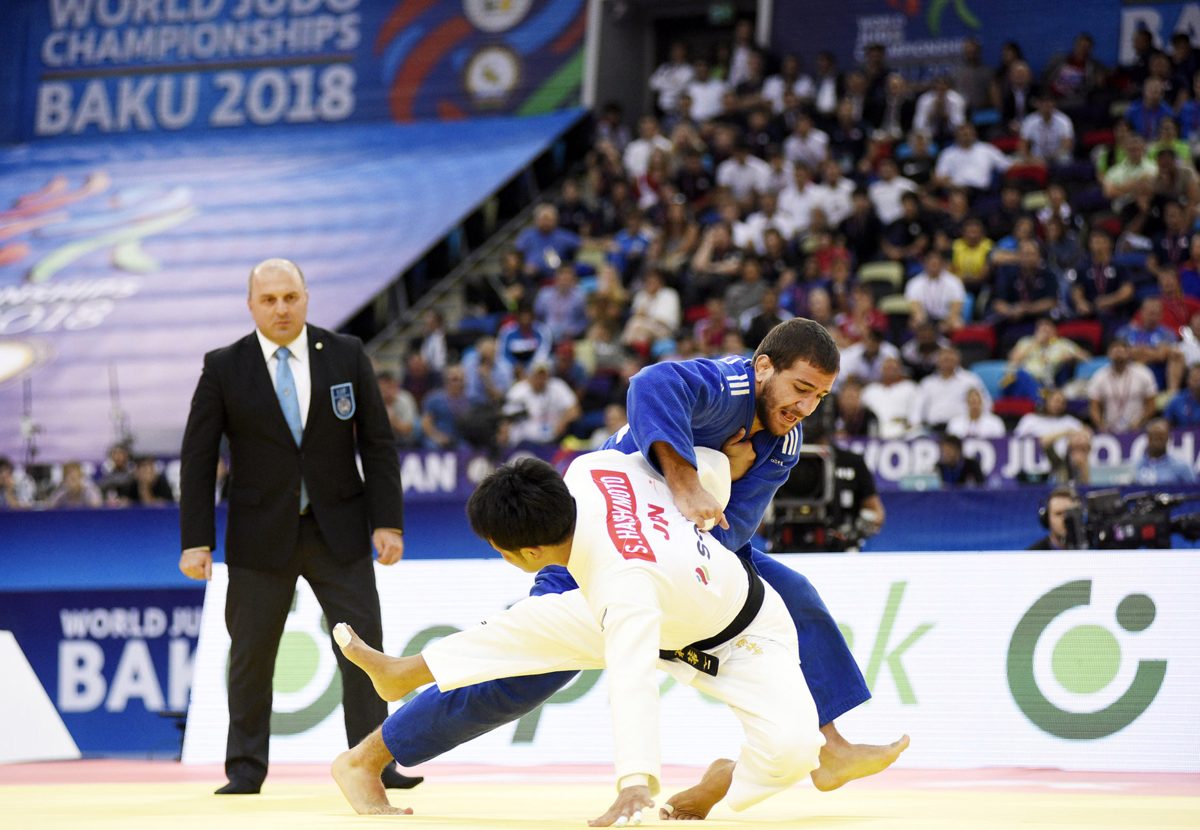
Caffeine and dietary nitrate, usually taken as concentrated beetroot juice, are two of the few supplements sports scientists agree can help performance. Caffeine works mainly on the brain, blocking adenosine so athletes feel more alert and push harder; nitrate is turned into nitric oxide, which widens blood vessels and can lower the oxygen cost of exercise. Most studies test them over a single effort. A judo tournament is different: athletes often fight five to seven matches in a day with short breaks, and earlier work has hinted that caffeine's boost may not last, or may even backfire, over repeated bouts. A trial published on 21 October in the European Journal of Sport Science set out to test both, alone and together, across a simulated competition day.
Thirty-five competitive judo athletes (23 men and 12 women, average age 23, all with at least three years of competition) took part, picked from 47 volunteers. All were light caffeine users and cut down to under 25 mg a day for a month before testing. Each came in four times, at least 10 days apart, in a random order: once with nitrate-rich beetroot juice, once with caffeine, once with both and once with placebos (a beetroot juice with the nitrate removed and a sugar capsule), so neither they nor the testers knew which was which. The juice was a 70 mL shot with about 6.4 mmol of nitrate at 7 am, repeated after the second bout; caffeine was a 3 mg per kg capsule an hour before the first bout, repeated after the third.
Each test day ran from 7 am to about 12:30. Athletes fought five rounds, 20 minutes apart, each a 4-minute all-out randori against a partner of similar weight and level followed straight away by the Special Judo Fitness Test, which counts how many shoulder throws they can make in 75 seconds of work. A sixth fitness test came 25 minutes after the last round. Jump height, grip strength and a reaction-time test were taken after every round, along with blood lactate, glucose, nitrate, nitrite and caffeine.
Caffeine worked fast. Compared with placebo it added about one throw per test in the first three rounds (from 27 to 28 in round one), raised jump height and grip strength, and cut lapses of attention on the reaction test. By round five the picture flipped: on caffeine alone athletes made fewer throws than on placebo (23 against 24 on average), rated the effort as harder, had more attention lapses and showed higher lactate and lower blood pH. Beetroot juice alone did little in the first rounds but came through late, with more throws than placebo in the fifth and sixth tests, lower heart rates a minute after several of the tests and better muscle oxygen recovery. Taken together, the two kept caffeine's early gains and avoided its late drop: throws were above placebo in rounds one, two, three, five and six, and jump height was higher in all five rounds.
The differences were small, mostly around one throw out of 24 to 28, and the authors say none passed the stricter threshold for a change that can be detected with confidence in a single athlete, although all were above the smallest change they judged worthwhile. The day was a simulation: athletes went all out in every bout instead of pacing, faced the same partners each time and drank the same sports drink after each round, which may have evened out some differences. Only one caffeine dose was tested, and all the athletes were low caffeine users, so people who drink a lot of coffee may respond differently. No more than 40% guessed their drink correctly in any condition, which suggests the blinding held.
Beetroot juice, caffeine or both on a simulated judo competition day, 35 trained judo athletes
35
Competitive judo athletes (23 men, 12 women), each tested in all four conditions
+1.06
Extra throws with caffeine vs placebo in the first fitness test (95% CI 0.60 to 1.52)
-0.57
Throws with caffeine vs placebo by the fifth test (95% CI -1.14 to -0.005)
+1.2
Throws with beetroot juice vs caffeine in the fifth test (95% CI 0.71 to 1.68)
5 of 6
Fitness tests in which beetroot juice plus caffeine beat placebo on throws (all but the fourth)
6.4 mmol / 3 mg/kg
Nitrate per 70 mL juice shot and caffeine per capsule; each taken twice in the day
Randomised, double-blind, placebo-controlled crossover trial with a counterbalanced order and at least 10 days between sessions; registered with the Iranian Registry of Clinical Trials (IRCT20231004059615N5). Each session: five rounds of 4-minute randori plus the Special Judo Fitness Test, 20 minutes apart, then a sixth test 25 minutes later. Average throws per test fell from 27 in round one to 24 in round five on placebo. All 35 athletes finished and no side effects were reported. Small, short-term study in trained, low-caffeine athletes; it does not show effects in real tournaments or in other sports. Published online 21 October 2026, open access (CC BY 4.0).
- The Special Judo Fitness Test has three work periods of 15, 30 and 30 seconds with 10-second rests, in which the athlete throws two partners in turn with ippon-seoi-nage, a one-arm shoulder throw.
- Participants avoided antibacterial mouthwash for 48 hours before each session, because bacteria on the tongue help turn nitrate from food into nitrite, the step before nitric oxide.
- For an athlete of the group's average weight, 74 kg, a 3 mg per kg dose of caffeine is about 220 mg.
- Heart rate straight after each fitness test ran about 2 to 5 beats a minute higher on caffeine than on placebo, in every round.
- Twelve of the 47 volunteers were turned away, five of them because they normally took in more than 1 mg of caffeine per kg of body weight a day.
- The Effect of Acute Beetroot Juice and Caffeine Supplementation on Specific Judo Performance During a Simulated Competition Day in Judo AthletesEuropean Journal of Sport Science · The study, published online 21 October 2026; figures from the full text and Table 1
- PubMed record (PMID 42905127)PubMed · Abstract and author details
- Full text (PMC13685822)PubMed Central · Open access full text with methods, results and limitations
- Semi-final bout of 2018 World Judo ChampionshipsWikimedia Commons · The image, CC BY 4.0
General information, not medical advice. Caffeine can raise heart rate and blood pressure and interact with some medicines, and concentrated nitrate products are not suitable for everyone. Talk to your doctor before using supplements, especially if you have a heart condition, are pregnant or take regular medication.
Analysis by NutroPractic from the sources listed. Written for general readers; it does not replace advice from your own doctor.
From our articles
Our guides on this subject
Plain-language guides on nutrition and wellness, backed by research.

Food and nutrition
L-theanine and caffeine: what cognitive trials measured on sustained attention, and milligrams in matcha vs green tea
Combining L-theanine with caffeine produces clean focus without caffeine jitters. Here is what randomized trials measured on attention-switching, EEG alpha brain waves, and the exact milligrams across ceremonial matcha, culinary powder, gyokuro, and sencha.
20 Nov 2026
Women's health
Eating while breastfeeding: extra calories, iodine, caffeine, fish and alcohol, with the actual numbers
Breastfeeding usually adds about 330–400 kcal a day, but the smaller numbers can matter more: 290 mcg iodine, 400 IU vitamin D for baby, 8–12 oz fish a week, and a caffeine total you can actually add up.
6 Nov 2026
Lifestyle
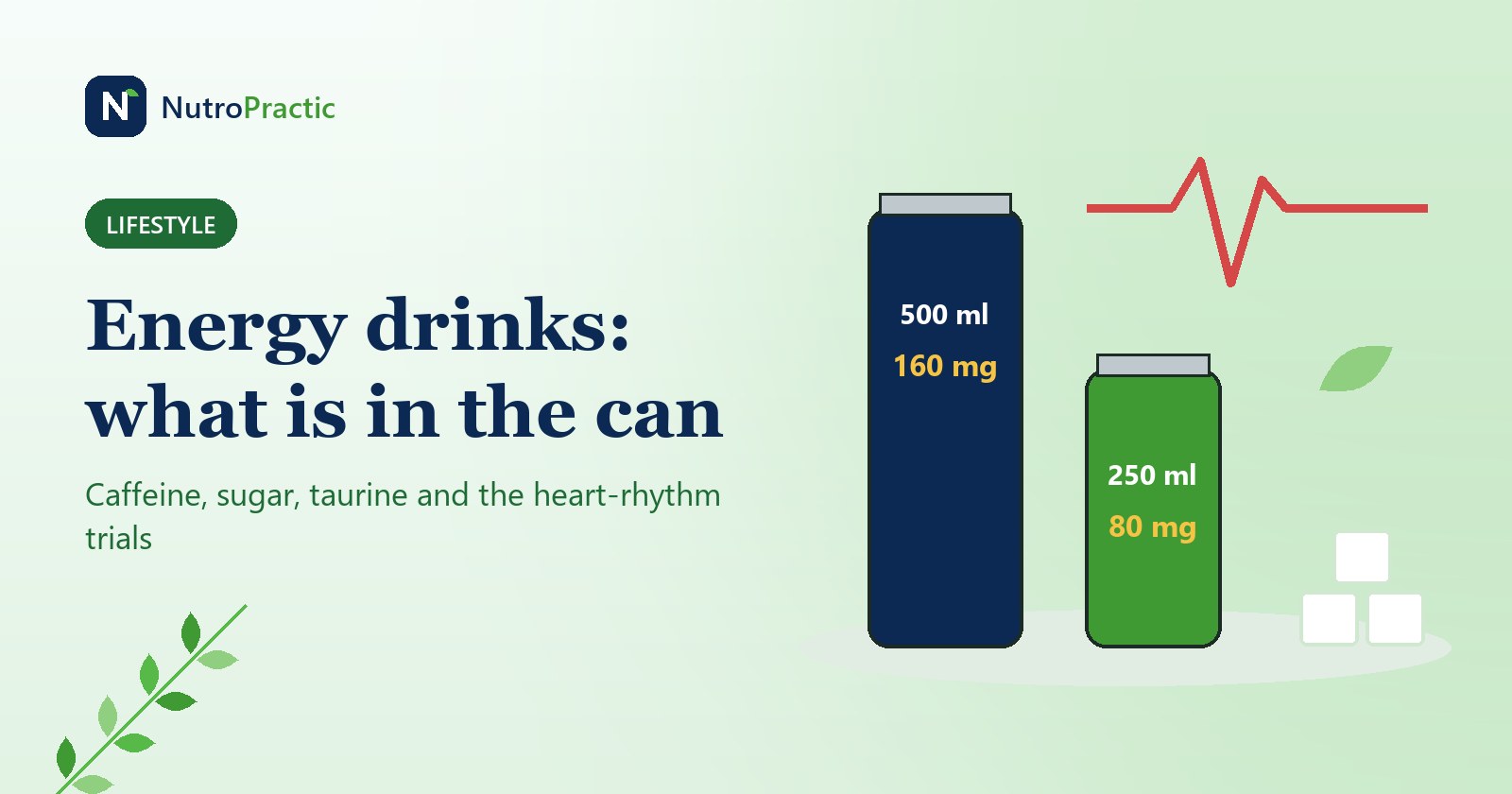
Energy drinks: caffeine, sugar and taurine per can, and what the emergency-visit and heart-rhythm studies found
From 80 mg to 300 mg of caffeine, and up to 55 g of sugar in one can. The numbers by brand, what they mean for a 50 kg teenager, what the QT and blood pressure trials measured, the old emergency-visit data and England's coming under-16 ban.
4 Nov 2026
Newsfeed for your website
Want this feed on your website?
Add it to any site with one copy-and-paste snippet. No sign-up, and it updates itself every hour.
Start with a virtual consultation
Tell Dr. Triveni what you want to change. You will leave with a clear next step, whether you are in Toronto, London, New York or Chennai.