Exercise and diet · October 26, 2026
40 Brazilian teens played beach tennis twice a week for 12 weeks; the half who also got a weekly 30-minute food class saw triglycerides fall from 73 to 46
Everyone got the sport, and everyone's 'good' HDL cholesterol rose. But only the group that also learned about food labels and ultra-processed food trimmed their waists, body fat and top blood pressure number, without being put on a diet. A small trial, with healthy kids, but a neat one.

Beach tennis is tennis without the bounce: two pairs volley a slow ball over a net on sand with solid paddles, and the point ends when the ball touches the ground. It started on Italian beaches in the 1970s and is now one of Brazil's favourite beach sports, easy to learn and played in pairs. A team at the Hospital de Clínicas de Porto Alegre and the Federal University of Rio Grande do Sul wondered whether it could do for teenagers' hearts what formal exercise programmes do, and whether adding a little nutrition teaching would make a difference. Their randomised trial was published in Archives of Endocrinology and Metabolism on 20 October.
Between February and June 2025 they enrolled 40 children aged 11 to 14 from public and private schools in Porto Alegre, southern Brazil; two-thirds were girls and 45% were overweight or obese. All of them played beach tennis for an hour twice a week for 12 weeks. Half, picked at random, also had a 30-minute group session each week with a registered dietitian, based on Brazil's national dietary guidelines: how processed different foods are, how to read labels for fat, sugar and salt, games and practical swaps. Nobody was given a diet plan or a calorie target. Turnout was good, 86% of tennis sessions and 83% of food sessions, and 32 children finished every assessment.
Both groups ended with higher HDL, the 'good' cholesterol: about 42 to 46 mg/dL with tennis alone and 42 to 48 with tennis plus the food sessions, a difference between groups too small to be sure of. The rest of the picture split. In the food-class group, average triglycerides (a blood fat that tends to track sugar intake) fell from 73 to 46 mg/dL, waist size from 80 to 75 cm, body fat from 34% to 33% and systolic blood pressure from 103 to 94 mmHg. In the tennis-only group those numbers barely moved, and systolic pressure edged up from 103 to 107. Fasting glucose fell slightly, from 85 to 82 mg/dL, only with the food sessions. LDL cholesterol, total cholesterol and insulin didn't change in either group.
The researchers also counted how many children improved by a clinically meaningful amount. A drop of at least 10% in triglycerides happened in 94% of the food-class group against 42% of the tennis-only group, and a fall of at least 5 mmHg in systolic pressure in 78% against 21%. Overall, 83% of children in the food-class group improved on three or more of the five heart-risk measures, against 16% with tennis alone. Their two food diaries suggest one way it happened: the food-class group cut about 8 g of carbohydrate a day while total calories stayed the same.
This is a small trial in children whose numbers were mostly healthy to begin with, which leaves little room for change, and it lasted only three months, so it can't say whether the gains last or prevent heart disease later. The children and coaches knew who was in which group, though the people doing the measurements did not. Weight and lean mass went up in both groups, as you'd expect in growing teenagers, which is why the scans of body fat matter more here than weight. The study was funded by Brazil's CAPES agency and the hospital's research fund, and the authors reported no conflicts of interest. We read the full paper; the figures here are from it.
Beach tennis alone vs beach tennis plus weekly nutrition sessions, 40 adolescents aged 11 to 14, 12 weeks, Porto Alegre, Brazil (Archives of Endocrinology and Metabolism, 20 October 2026)
73 → 46 mg/dL
Average triglycerides with tennis plus food sessions, a 37% fall (tennis alone: 71 → 70)
103 → 94 mmHg
Average systolic (top) blood pressure with the food sessions (tennis alone: 103 → 107)
80 → 75 cm
Average waist with the food sessions (tennis alone: 79 → 78)
+4 and +6 mg/dL
Rise in HDL ('good') cholesterol, tennis alone and with food sessions, from 42 in both
83% vs 16%
Children who improved on 3 or more of 5 heart-risk measures, food sessions vs tennis alone
86% / 83%
Share of tennis sessions and food sessions attended
Source: Pereira DM, Jung N, Pedroso R, Heck GP, Holstein LF, Irigoyen APO, Fontana CR, Ferrari R, 'The impact of recreational beach tennis associated with nutritional counseling on cardiometabolic risk factors in adolescents: a randomized clinical trial', Archives of Endocrinology and Metabolism 2026;70(6):e260124, published 20 October 2026, doi 10.20945/2359-4292-2026-0124 (open access). Design: parallel randomised trial, 20 per group, stratified by sex and BMI; beach tennis 2 × 60 min a week; nutrition counselling 1 × 30 min a week (12 sessions, Dietary Guidelines for the Brazilian Population, no diet or calorie restriction); outcome assessors and analysts blinded; intention-to-treat with multiple imputation (blood tests and DEXA body composition from 37 children; 32 completed the programme). Values are means at baseline and 12 weeks from Table 2. Group-by-time interactions favoured the food-session group for triglycerides (p<0.01), waist (p<0.001), body fat % (34 → 33, p<0.05) and systolic pressure (p<0.001); HDL rose in both (abstract: +3.8 and +5.9 mg/dL) with no difference between groups. Responders (Table 3, 19 vs 18 children): triglycerides down ≥10% 42.1% vs 94.4%; systolic down ≥5 mmHg 21.1% vs 77.8%; waist down ≥5 cm 5.3% vs 33.3%; composite ≥3 of 5 components 15.8% vs 83.3%. Diet (two 24-hour recalls): carbohydrate −8.1 g a day with food sessions vs +0.7 g; energy unchanged. 37% fall is our arithmetic ((73 − 46) ÷ 73). Two minor injuries (ankle and wrist bruises). Funding: CAPES (Finance Code 001) and FIPE-HCPA; no conflicts reported.
- US paediatric guidelines (NHLBI, 2011) call triglycerides under 90 mg/dL acceptable and 130 or more high for 10 to 19-year-olds, and HDL above 45 mg/dL acceptable, 40 to 45 borderline and under 40 low. Both groups in this trial started at a borderline HDL of 42 and ended above 45.
- WHO says 80% of adolescents worldwide don't meet the recommended levels of physical activity.
- Beach tennis began in the early 1970s at Lido degli Estensi, Comacchio, in Italy, when holidaying tennis players borrowed the beach volleyball nets. It is now most popular in Italy, Brazil and Spain, and is played with a depressurised ball that must never touch the sand.
- Weight and lean mass went up in both groups during the trial. In growing teenagers, weight and BMI can rise even while body fat falls, which is why this team measured body fat with DEXA scans.
- The impact of recreational beach tennis associated with nutritional counseling on cardiometabolic risk factors in adolescents: a randomized clinical trialArchives of Endocrinology and Metabolism · The study, published 20 October 2026
- Full text (PMC13689496)PubMed Central · Methods, Tables 2 and 3, diet results, funding and limitations
- Expert Panel on Integrated Guidelines for Cardiovascular Health and Risk Reduction in Children and Adolescents: summary reportNHLBI / Pediatrics, 2011 · Triglyceride and HDL cut-offs for children and teenagers
- Physical activity: fact sheetWorld Health Organization · 80% of adolescents don't meet recommended activity levels
- Beach tennisWikipedia · Origins and rules of the sport
- Raquete de Beach TennisWikimedia Commons · The photo, CC0
General information, not medical advice. This trial tested a group exercise and nutrition-education programme in mostly healthy children; it isn't a treatment plan. If your child has high cholesterol, high blood pressure, diabetes or a weight concern, talk to your doctor or a registered dietitian before changing their diet or exercise, and don't put a growing child on a calorie-restricted diet without professional advice.
Analysis by NutroPractic from the sources listed. Written for general readers; it does not replace advice from your own doctor.
From our articles
Our guides on this subject
Plain-language guides on nutrition and wellness, backed by research.
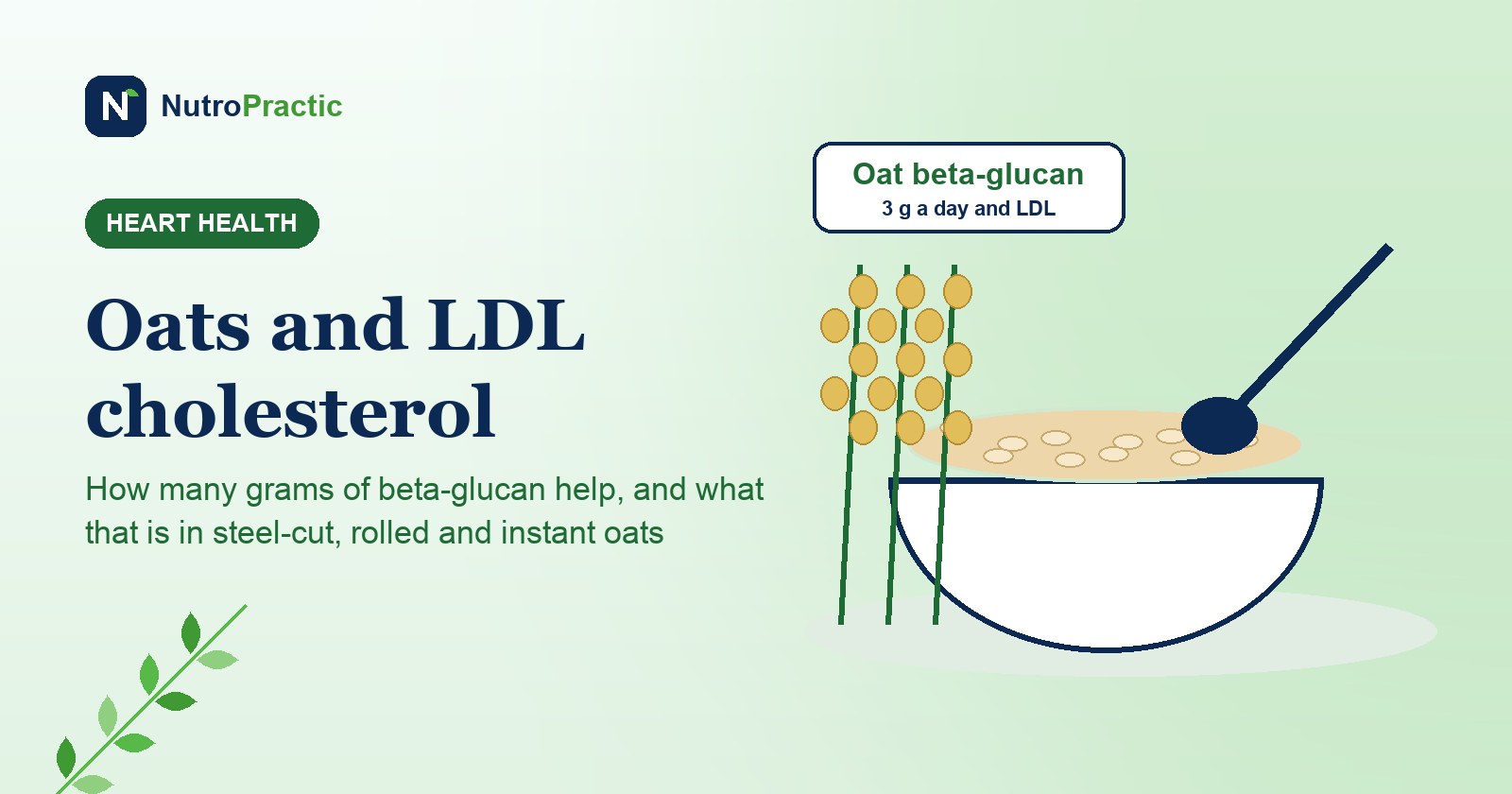
Heart health
Oats and beta-glucan: how many grams lower LDL, and how much steel-cut, rolled and instant oats it takes
The 3 g a day of beta-glucan behind the FDA and EFSA claims lowers LDL by about 0.25 mmol/L (10 mg/dL). That is roughly 60 to 68 g of dry oats or 50 g of oat bran a day. Grams per portion, glycaemic index by oat type and the gluten caveat.
17 Nov 2026
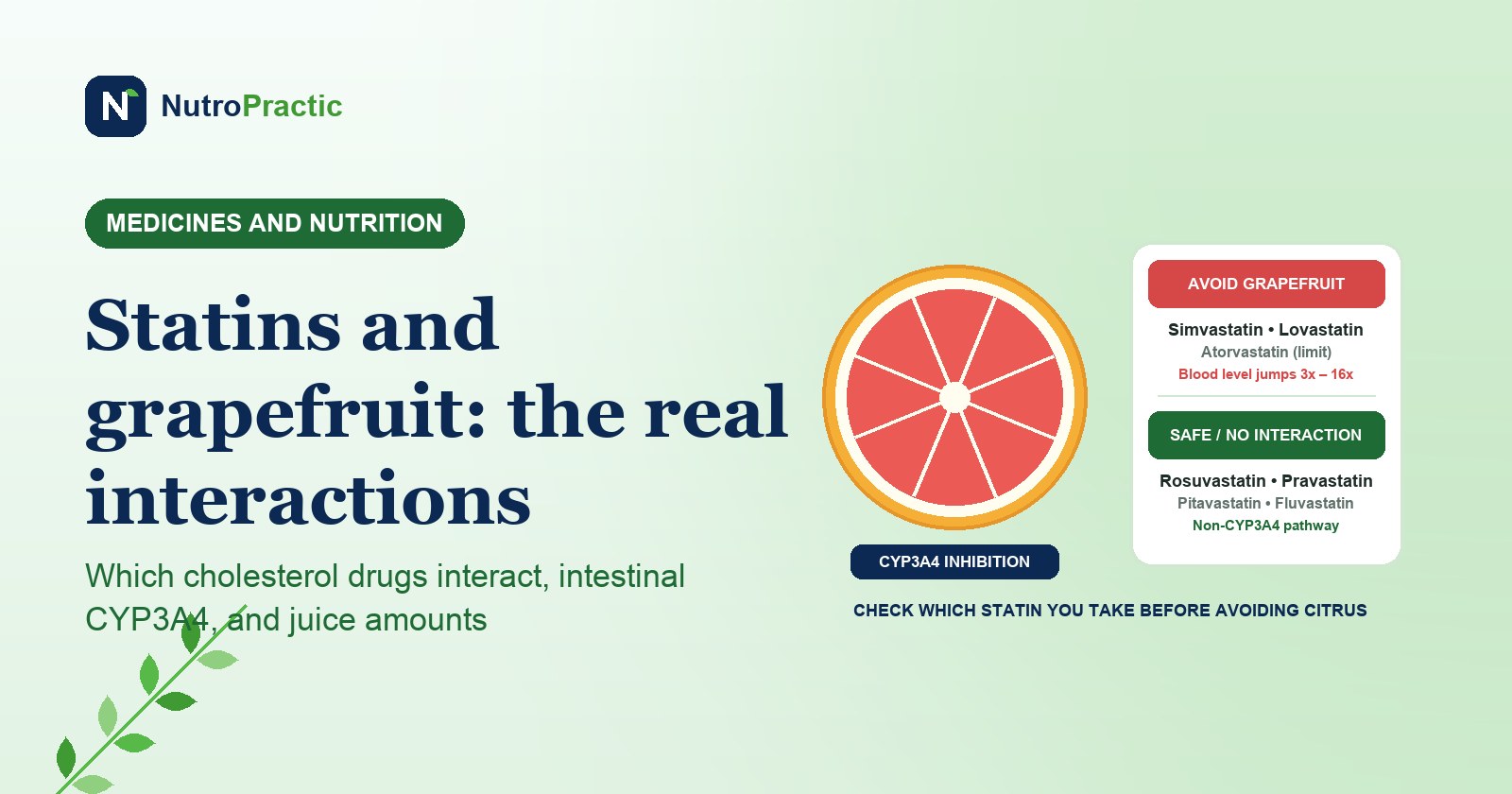
Medicines and nutrition
Statins and grapefruit: which cholesterol medicines actually interact, and how much fruit matters
A blanket ban on grapefruit is one of the most common warnings given to statin users, yet several widely prescribed cholesterol drugs do not interact with it at all. Learn the science of intestinal CYP3A4, actual AUC multipliers, portion thresholds, timing myths, and which statins allow you to safely enjoy citrus.
14 Nov 2026

Cardiovascular wellness
Psyllium husk: how much soluble fibre lowers LDL cholesterol and stabilizes post-meal glucose in clinical trials
Viscous soluble fibre forms a thick gel matrix in the small intestine that binds bile acids and blunts post-meal glucose spikes. Across dozens of randomized controlled trials, 7 to 10.2 grams of psyllium daily lowers LDL cholesterol by 6% to 12% without stripping HDL, while reducing postprandial glucose surges by 15% to 25% in metabolic syndrome and type 2 diabetes. Discover the bile acid sequestration mechanism, trial meta-analyses, exact timing before meals, water ratios, and titration protocols to avoid gas and cramping.
13 Nov 2026
Newsfeed for your website
Want this feed on your website?
Add it to any site with one copy-and-paste snippet. No sign-up, and it updates itself every hour.
Start with a virtual consultation
Tell Dr. Triveni what you want to change. You will leave with a clear next step, whether you are in Toronto, London, New York or Chennai.