Supplements and sleep · October 8, 2026
Morning ashwagandha, evening magnesium and theanine: in a two-week trial, the night-time sleep capsules didn't add anything, and taking both was no better than the morning ones alone
A placebo-controlled trial gave 115 healthy, active adults a morning stress blend, an evening sleep blend, both or neither. The morning capsules nudged stress, mood and how well people felt they slept; the evening blend did little on its own, and the overall sleep score didn't move in any group. The study was paid for by the company that made the capsules.
Stress and sleep supplements are often sold in pairs now: something to take the edge off the day, and something else to help you wind down at night. Ashwagandha and rhodiola, two herbs marketed as 'adaptogens', usually fill the daytime slot; magnesium, L-theanine (an amino acid found in tea) and apigenin (a plant compound best known from chamomile) fill the evening one. Most of the trials behind these ingredients were run in people who were stressed or sleeping badly. Researchers at the University of South Carolina wanted to know what the combination does for people who are neither, and whether stacking the two blends helps. Their results were published in the Journal of the International Society of Sports Nutrition on 4 October 2026.
They recruited healthy, physically active adults with an average age of about 35 and split them into four groups. One took the morning blend (600 mg ashwagandha and 300 mg rhodiola root extract) with dummy evening capsules; one took the evening blend (2 g magnesium L-threonate, giving 145 mg of magnesium, plus 200 mg L-theanine and 50 mg apigenin) with dummy morning capsules; one took both; and one took dummies twice a day. That meant five capsules morning and evening for everyone, for two weeks, between a baseline week and a week off. People rated their stress, mood and sleep on standard questionnaires, and a wearable device recorded their sleep each night. Of 115 people randomised, 103 finished.
The morning-only group came out best. Compared with placebo, their perceived stress fell a little over the two weeks, they reported fewer daytime problems from poor sleep by the second week, and the wearable showed slightly less time awake during the night. A week after stopping, their positive mood was still rising, though their stress scores had crept back up. The evening-only group was hard to tell apart from placebo on almost everything. And the group taking both blends did no better than the morning group; on some measures, such as how well they rated their sleep, they did worse. The authors can only guess why, suggesting the ingredients may work against each other or that the effect simply wore off after stopping.
There are good reasons to hold these results loosely. The overall sleep quality score (the Pittsburgh index) did not change in any group, and most participants started below the score of 5 usually taken to mean poor sleep, so there was little room to improve. Two weeks is short, the stress measures were all self-reported, and the effects that reached significance were small. The wearable lost enough data that 11 people were left out of the device analysis, so the authors call those results exploratory. Two men in the morning group dropped out after possible side effects, one with diarrhoea and one with dizziness and mild muscle weakness. And the trial was funded by Momentous, the supplement company that produced the capsules; the authors declared no competing interests.
Two weeks, four groups, five capsules twice a day
115
Healthy, physically active adults randomised (average age about 35); 103 finished
4
Groups: morning blend, evening blend, both, or placebo morning and evening
600 + 300 mg
Ashwagandha plus rhodiola root extract in the morning capsules
14 days
Time on the capsules, between a baseline week and a week off
0
Groups whose overall Pittsburgh sleep quality score changed
2
People in the morning group withdrawn after possible side effects
From the open-access paper (CC BY 4.0) in the Journal of the International Society of Sports Nutrition, published 4 October 2026; registered as NCT06889584. Funded by Momentous LLC, which made the study products; one author was also supported by an NIH training grant. Objective sleep results are exploratory because of missing wearable data.
- The placebo capsules were filled with microcrystalline cellulose, a plant-derived powder that is often used as a filler in ordinary tablets.
- Of 543 people who filled in the screening questionnaire, 277 met the first eligibility checks, and 115 were eventually randomised.
- Magnesium L-threonate is one of many forms of magnesium sold as supplements; the 2 g dose used here supplies 145 mg of actual magnesium, well under the amount most adults are advised to get from food each day.
- Modulating stress and sleep through a multi-compound dietary supplement: a randomized, double-blind, placebo-controlled trialJournal of the International Society of Sports Nutrition, 4 October 2026 · Open access; all figures in this item
- Full text on PubMed CentralPMC, US National Library of Medicine · Methods, results tables, funding and safety
- Trial registration NCT06889584ClinicalTrials.gov · Prospective registration
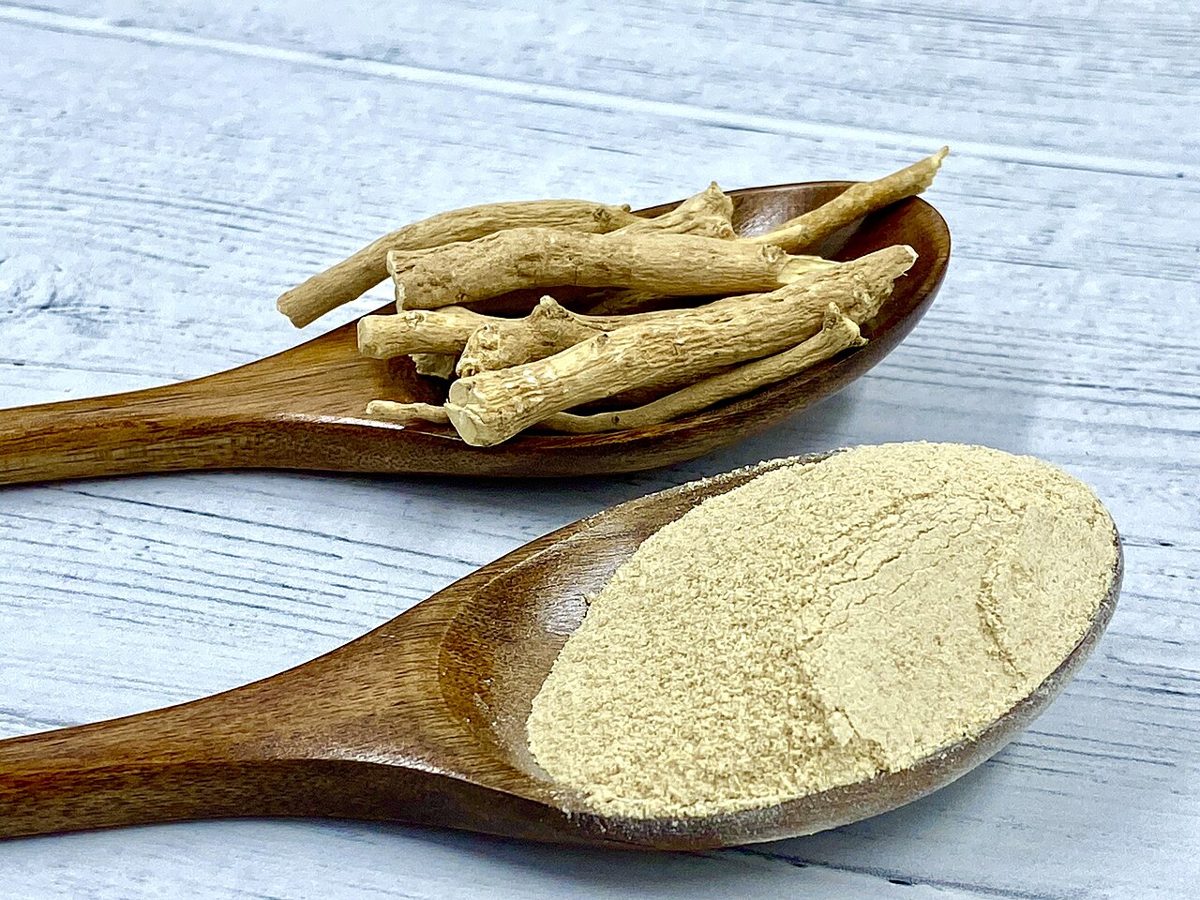
- Ashwagandha powder and root on spoons (photo)formulatehealth, via Wikimedia Commons · CC BY 2.0 image
General information, not medical advice. Herbal supplements such as ashwagandha and rhodiola can cause side effects and interact with medicines, including those for thyroid conditions, blood pressure, diabetes, depression and sleep, and ashwagandha is not recommended in pregnancy. Talk to your doctor or pharmacist before starting a supplement, and see a doctor about ongoing stress or sleep problems.
Analysis by NutroPractic from the sources listed. Written for general readers; it does not replace advice from your own doctor.
Newsfeed for your website
Want this feed on your website?
Add it to any site with one copy-and-paste snippet. No sign-up, and it updates itself every hour.
Start with a virtual consultation
Tell Dr. Triveni what you want to change. You will leave with a clear next step, whether you are in Toronto, London, New York or Chennai.