Infant feeding · October 28, 2026
Pakistani babies under one who lived on cow or buffalo milk, with no breast milk or solid food, were more often stunted and wasted. After the first birthday, milk with meals pointed the other way
Thirteen national and provincial surveys, 96,736 children aged 6 to 23 months. Before age one, animal or formula milk on its own went with about 1.5 times the odds of stunting and 1.9 times the odds of wasting, compared with breast milk plus solid food. In the second year, milk alongside food went with lower odds of both. But poverty outweighed every feeding pattern, and these are snapshots, not proof of cause.
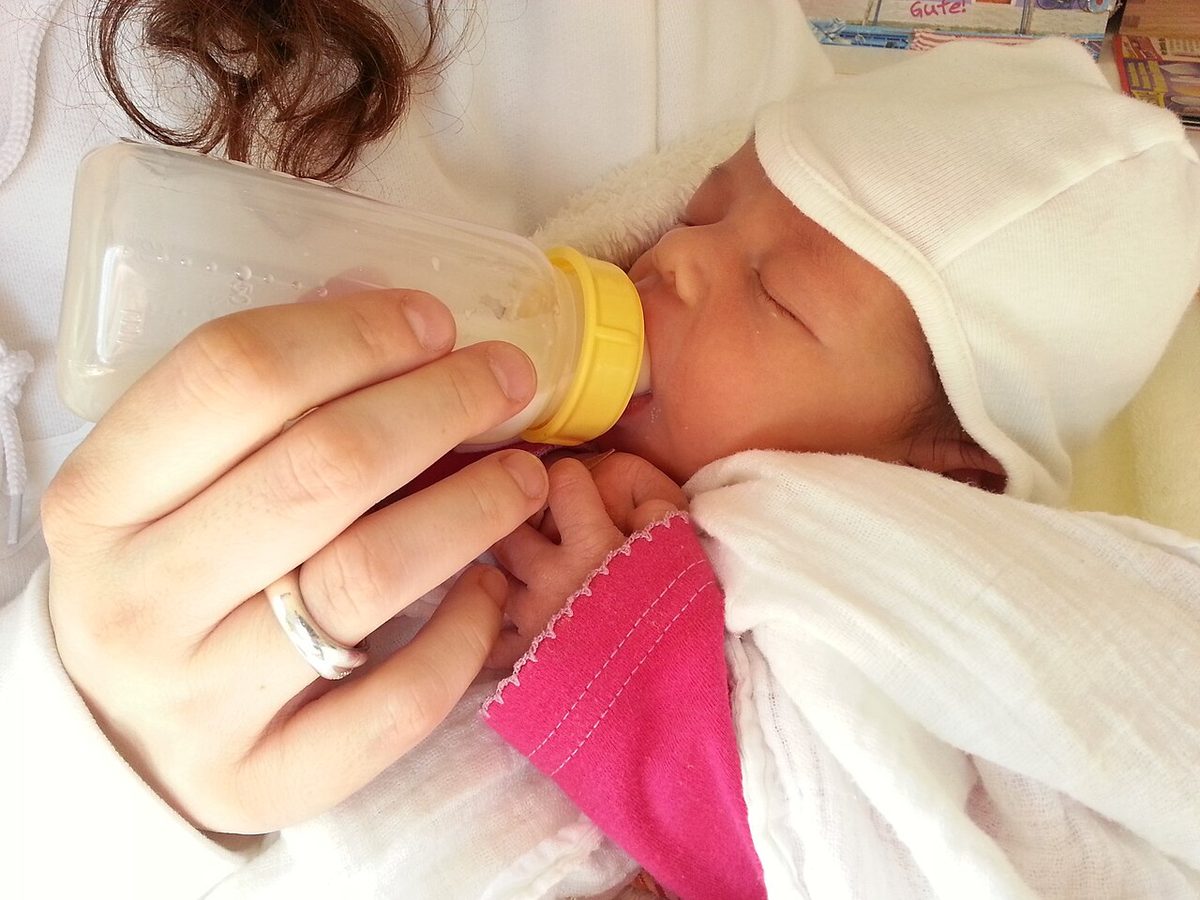
In much of Pakistan, a young child's milk is as likely to come from a buffalo as from the mother. A study published on 16 October in the journal Nutrients asked how the mix of milks and food in a child's day lines up with growth, using every large national survey the country ran between 2010 and 2020. The authors are at the Aga Khan University in Karachi and the Hospital for Sick Children in Toronto.
They pooled 13 surveys (two Demographic and Health Surveys, two National Nutrition Surveys and nine provincial Multiple Indicator Cluster Surveys) covering Punjab, Sindh, Khyber Pakhtunkhwa and Balochistan. Of 128,049 children under two, 96,736 were aged 6 to 23 months, the window when solid food should be joining milk. Each child was sorted by what the carer said they had eaten the day before: breast milk, non-human milk (animal milk or formula, merged because so few had formula), solid food, or a mix. Breast milk plus solid food, the pattern the World Health Organization recommends, was the yardstick. Children were measured, and stunting (short for age) and wasting (thin for height) were counted against WHO growth standards.
The pattern flipped with age. Among babies aged 6 to 11 months, those on non-human milk alone had 1.54 times the odds of stunting and 1.86 times the odds of wasting after allowing for province, household wealth, housing, water and sanitation, the mother's education, birth size and other factors. Nearly a quarter of them (24.2%) were wasted, against 14.1% of babies on breast milk plus food. Unlike most of the other links, these held up or grew slightly stronger as more factors were added. Breast milk alone also went with higher stunting odds at this age (1.32 times), which the authors think is mostly reverse causation: carers tend to keep breastfeeding children who are sick or growing poorly, and those children may refuse solids.
In the second year, children who had animal or formula milk together with solid food had lower odds of stunting (0.73 times) and wasting (0.80 times) than the breast milk plus food group. The authors say full-fat buffalo milk may help growth once iron-containing food is in the diet, but they warn that this does not make other milks better than breast milk: the odds ratios shrank a lot as household factors were added, and unmeasured advantages such as owning livestock or having more food at home could explain part of it. The same milk-plus-food group also had 1.35 times the odds of three or more micronutrient deficiencies.
The biggest factor was not feeding at all. Children aged 12 to 23 months in the poorest fifth of households had 2.47 times the odds of stunting of those in the richest fifth, and Balochistan and Sindh stood out against Punjab. Blood tests in the 2011 and 2018 nutrition surveys showed how much was missing: in 2018, 59.1% of children in this age range were anaemic, 50.4% had low ferritin (iron stores) and 63.1% were short of vitamin D, up from 39.4% in 2011. Zinc deficiency halved, from 37.2% to 18.7%. Anaemia and low iron stores were most common in children who got milk but no solid food.
The authors list the limits plainly. Every survey is a snapshot, so the study cannot tell which came first, the feeding or the poor growth. Feeding comes from a single day's recall, and a child who is unwell that day may refuse food and be counted as milk-only. Animal milk and formula had to be merged even though they differ a great deal in iron and other nutrients. Odds ratios exaggerate the size of the risk when an outcome is as common as stunting is here. Some regions, including Islamabad and Gilgit-Baltistan, were left out. The pooled analysis had no outside funding; the original nutrition surveys were run by Pakistan's health ministry and UNICEF, and the authors declare no conflicts of interest.
Milk and food patterns and child growth, 96,736 children aged 6-23 months, 13 Pakistani surveys, 2010-2020
96,736
Children aged 6-23 months across 13 national and provincial surveys, 2010-2020
1.54×
Odds of stunting at 6-11 months on animal or formula milk alone vs breast milk plus solid food (range 1.20-1.96), fully adjusted
1.86×
Odds of wasting for the same group (range 1.42-2.45); 24.2% wasted vs 14.1% on breast milk plus food
0.73×
Odds of stunting at 12-23 months on animal or formula milk plus solid food vs breast milk plus food (range 0.66-0.80)
2.47×
Odds of stunting at 12-23 months, poorest fifth of households vs richest (range 2.16-2.83)
59.1% / 63.1%
Children aged 6-23 months with anaemia / vitamin D deficiency in the 2018 National Nutrition Survey
Pooled cross-sectional surveys (Demographic and Health Surveys, National Nutrition Surveys 2011 and 2018, Multiple Indicator Cluster Surveys) from Punjab, Sindh, Khyber Pakhtunkhwa and Balochistan. Feeding from a single 24-hour recall; animal milk and formula merged as non-human milk. Odds ratios from survey-weighted logistic regression adjusted for area, household, maternal and child factors; blood markers from the two nutrition surveys only. Associations, not cause and effect. Open access (CC BY 4.0).
- In the 6-11 month group, 47.6% of babies had animal milk the day before the survey but only 10.3% had formula, which is why the two had to be counted together.
- WHO's 2023 complementary feeding guideline says babies of 6-11 months who are not breastfed can have formula or animal milk (full-fat if animal), and that children of 12-23 months should have animal milk rather than follow-up formula. Flavoured or sweetened milks are out at any age.
- Only 14.2% of Pakistani children aged 6-23 months met WHO's minimum dietary diversity in the 2018-20 surveys, up from 6.0% in 2011-12.
- Wasting in this age group was steady at roughly 20% until 2018, then dropped to 13% in the 2018-19 survey round.
- 'The weanling's dilemma' is the old name for the bind behind the breastfeeding paradox: babies who struggle are kept on the breast longer, so in a snapshot survey breastfeeding can look linked to poor growth when it is not the cause.
- Complementary Feeding Practices and Nutritional Status Among Pakistani Children Aged 6–23 Months: A Pooled Analysis of Nationally Representative SurveysNutrients · The study, open access, published 16 October 2026; figures, funding and limitations from the full text
- Full text (PMC13708651)PubMed Central · Open-access copy of the paper
- WHO Guideline for complementary feeding of infants and young children 6-23 months of ageWorld Health Organization (2023) · The recommendations behind the study's yardstick
- WHO guideline for complementary feeding of infants and young children 6–23 months of ageEmergency Nutrition Network, Field Exchange 72 · Summary of the milk recommendations for children who are not breastfed
- Infant drinks milk from bottleWikimedia Commons · The image, CC0 (Beeki)
General information, not medical advice. How and when to give other milks and solid foods depends on the child, so talk to a paediatrician, health visitor or dietitian about your baby's feeding, especially if they are growing slowly or often unwell.
Analysis by NutroPractic from the sources listed. Written for general readers; it does not replace advice from your own doctor.
From our articles
Our guides on this subject
Plain-language guides on nutrition and wellness, backed by research.
Women's health
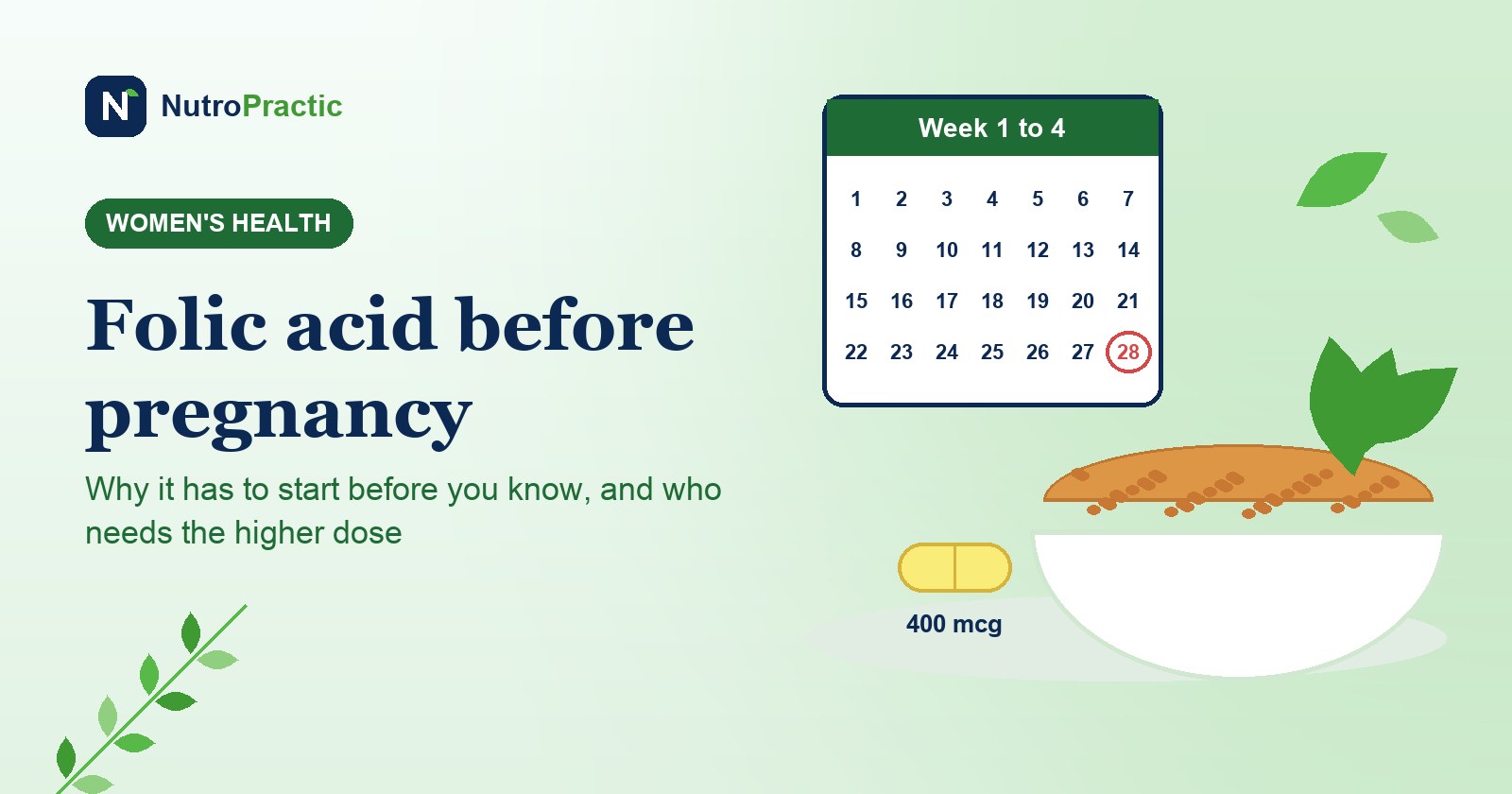
Folic acid before pregnancy: why it has to start before you know, and who needs the higher dose
The neural tube closes 26 to 28 days after conception, about six weeks after the last period and before many people know they are pregnant. Folic acid cut neural tube defects by about 72% in the 1991 MRC trial, yet only about a third of women take it beforehand. The dose, who needs 4 or 5 mg, what changed for higher BMI, fortified flour from the US to the UK's 2026 law, folate foods and the B12 link.
25 Oct 2026
Women's health
Eating while breastfeeding: extra calories, iodine, caffeine, fish and alcohol, with the actual numbers
Breastfeeding usually adds about 330–400 kcal a day, but the smaller numbers can matter more: 290 mcg iodine, 400 IU vitamin D for baby, 8–12 oz fish a week, and a caffeine total you can actually add up.
6 Nov 2026
Women's health
Nausea in pregnancy: ginger, vitamin B6, small meals and when it's hyperemesis, from the trials
Only 1.8% of women in one diary study had nausea just in the morning. Ginger at 1 g a day, B6 at 30 to 75 mg and doxylamine with B6 each have trial data, while diet advice has none. The score to track it, the doses, and the signs that mean a phone call.
5 Nov 2026
Newsfeed for your website
Want this feed on your website?
Add it to any site with one copy-and-paste snippet. No sign-up, and it updates itself every hour.
Start with a virtual consultation
Tell Dr. Triveni what you want to change. You will leave with a clear next step, whether you are in Toronto, London, New York or Chennai.