Sports nutrition & muscle recovery · November 26, 2026
Oral angiotensin-(1–7) peptide reduces muscle damage markers after eccentric squats in cyclists: randomized trial
A double-blind, placebo-controlled crossover trial in 12 trained cyclists finds that oral HPβCD-complexed angiotensin-(1–7) lowers circulating creatine kinase and alters inflammatory cytokines after heavy eccentric squats, though it does not improve sprint performance or muscle soreness.
Strenuous eccentric resistance exercise induces structural micro-damage in skeletal muscle fibers, sparking local inflammatory cascades, proteolysis, and transient functional impairment. The renin-angiotensin system plays an intricate role in skeletal muscle plasticity, where the Mas receptor agonist peptide angiotensin-(1–7) [Ang-(1–7)] counteracts classic angiotensin II-mediated catabolism and oxidative stress. However, oral delivery of native peptides is hindered by rapid gastrointestinal degradation.
In a randomized, double-blind, placebo-controlled crossover study published in Nutrients, researchers evaluated the effects of oral hydroxypropyl-β-cyclodextrin-complexed angiotensin-(1–7) (HPβCD–Ang-(1–7)), a cyclodextrin formulation that enhances peptide stability. Twelve trained male amateur cyclists completed two experimental bouts separated by a 15-day washout period. In each trial, participants performed 10 sets of 10 barbell squats at 75% of one-repetition maximum (1RM) to induce muscle damage, receiving 2 mg oral Ang-(1–7) formulation or matched placebo immediately post-exercise and again 24 hours later.
At 48 hours post-exercise, cyclists receiving the Ang-(1–7) peptide demonstrated significantly lower circulating creatine kinase levels (p = 0.039) and significantly higher plasma oxygen radical absorbance capacity (ORAC, p = 0.009) compared with placebo. Furthermore, circulating tumor necrosis factor (TNF) was reduced at 24 and 48 hours, while anti-inflammatory interleukin-10 (IL-10) was higher and pro-inflammatory interleukin-8 (IL-8) lower at 48 hours. Expression of the ubiquitin-conjugating proteolytic enzyme gene UBE2B in peripheral blood mononuclear cells was also markedly attenuated (fold change = 0.33, p = 0.034).
Crucially, the authors report important null findings regarding functional recovery: supplementation produced no statistically significant differences in Wingate anaerobic cycling performance, pressure pain threshold (muscle soreness), or vastus lateralis muscle thickness at 48 hours. The intervention mitigated circulating biochemical and proteolytic markers without translating into immediate performance gains or soreness relief in this small athlete cohort.
Biochemical and functional outcomes in the crossover squat trial
12 Cyclists
trained male amateur cyclists in a double-blind, crossover trial with a 15-day washout
p = 0.039
statistically significant reduction in serum creatine kinase at 48 hours with Ang-(1–7)
0.33 Fold
lower UBE2B proteolytic gene expression in peripheral blood mononuclear cells (p = 0.034)
Null Effects
no detectable differences in Wingate anaerobic power, pain threshold, or muscle thickness
Randomized crossover trial data published in Nutrients (DOI: 10.3390/nu18233922), 24 November 2026.
- Cyclodextrin inclusion complexes (HPβCD) entrap peptide molecules inside a hydrophobic cavity, protecting them from digestive enzymes and allowing oral bioavailability.
- Angiotensin-(1–7) acts via the G-protein coupled Mas receptor, which opposes the vasoconstrictive, fibrotic, and pro-inflammatory signaling of angiotensin II.
- Eccentric contractions—where muscles lengthen under load, such as lowering into a squat—cause considerably higher mechanical fiber disruption than concentric contractions.
- Acute Oral HPβCD-Angiotensin-(1–7) Supplementation Attenuates Muscle Damage Biomarkers and Modulates Proteolytic Gene Expression Following Eccentric Exercise in Amateur Trained Cyclists: A Randomized, Double-Blind, Placebo-Controlled TrialNutrients · Primary randomized crossover trial in 12 trained cyclists, trial registration RBR-3bhkdg2. Published 24 November 2026.
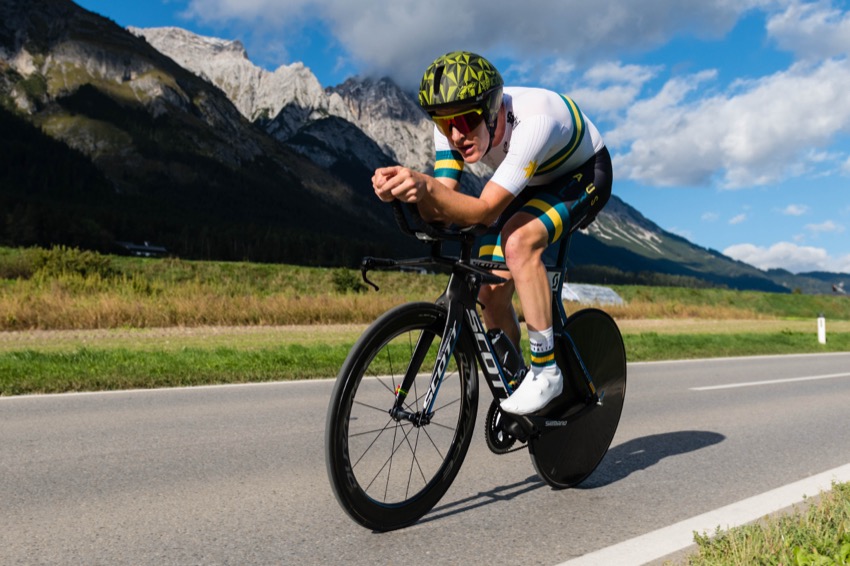
- File:20180924 UCI Road World Championships Innsbruck Men U23 ITT Callum Scotson 850 8281.jpgWikimedia Commons · Photograph by Granada, licensed under CC BY-SA 4.0.
Educational summary of nutrition research, not personal medical advice. Speak to your doctor or dietitian before changing your diet or supplements, especially if you are pregnant, take medicines or have a medical condition.
Analysis by NutroPractic from the sources listed. Written for general readers; it does not replace advice from your own doctor.
From our articles
Our guides on this subject
Plain-language guides on nutrition and wellness, backed by research.

Healthy ageing
Creatine beyond the gym: what it does for older adults and women, and what it doesn't
Across 22 trials, adults in their late fifties to seventies who took creatine while doing resistance training gained about 1.4 kg more lean mass than those who trained without it. Two two-year trials found it did nothing for bone density after menopause. Where the evidence is solid, where it's early (memory, short nights), how much to take, and who should leave it alone.
10 Oct 2026
Women's health
Eating through menopause: what changes for your bones, muscle and heart, and what to put on the plate
Around the final period, bone density at the spine drops by about 2% a year and LDL cholesterol jumps within a year or two. Hot flushes get the attention, but these quieter changes are where food and strength training do the most. Targets for protein, calcium and vitamin D, an honest look at soy, and a week you can start on Monday.
8 Oct 2026

Medicines and nutrition
CoQ10 and statins: what the muscle symptom trials found, and who might benefit
Statin-associated muscle symptoms lead up to 30% of patients to discontinue life-saving cholesterol therapy. While statins deplete circulating CoQ10 by 16% to 54%, randomized clinical trials show mixed results for myalgia relief. Explore the trials, ubiquinone vs ubiquinol bioavailability, recommended doses, and clinical guideline recommendations.
14 Nov 2026
Newsfeed for your website
Want this feed on your website?
Add it to any site with one copy-and-paste snippet. No sign-up, and it updates itself every hour.
Start with a virtual consultation
Tell Dr. Triveni what you want to change. You will leave with a clear next step, whether you are in Toronto, London, New York or Chennai.