Child nutrition · October 30, 2026
Half the schoolchildren in a Peruvian desert province were overweight, and one in four was anaemic. One in ten was both
Researchers weighed, measured and finger-pricked 656 children aged 5 to 13 at six schools around Ica, on Peru's southern coast. Stunting had almost disappeared, but excess weight and low haemoglobin were both common, sometimes in the same child. The school kiosks sold sugary drinks, fried food and sweets, and fruit was harder to find.
For decades the worry about children's nutrition in Peru was that they were too short and too thin. A study published in Frontiers in Nutrition on 28 October suggests the picture in school-age children around Ica, a farming and agro-export province on the southern coast, now looks very different. The researchers, from the University of Valencia in Spain and the National University San Luis Gonzaga in Ica, call it the double burden of malnutrition: too much weight and too little of a key nutrient, side by side.
Between April and December 2025, trained nurses visited six schools in five districts, chosen to cover the city of Ica and the farming districts around it. They measured 656 children aged 5 to 13 (411 at rural schools, 245 at urban ones; average age 8.9), checked their haemoglobin with a finger-prick device and asked parents about water, sanitation and housing. They also went through each school kiosk with the Ministry of Health's checklist for healthy school food.
Classic undernutrition was rare: 1.4% of the children were stunted (too short for their age), 0.5% underweight and 1.1% thin. Excess weight was the norm. By the WHO's BMI-for-age charts, 26.2% were overweight and 24.7% obese, 50.9% in all, and the same share had a waist more than half their height, a simple sign of belly fat. At the same time, 23.5% were anaemic, nearly one in four, and 65 children (9.9%) were both anaemic and overweight or obese.
Rural children came off worse on two counts. Anaemia was more common at the rural schools (26.0% against 19.2%), and so was a large waist (55.0% against 44.1%), even though overall excess weight was much the same (49.1% rural, 53.9% urban). Children whose homes had no flush toilet were about twice as likely to be overweight after adjusting for age, sex and area, and those without piped water were more likely to carry belly fat. None of the household or demographic factors predicted which children had both problems at once.
One finding runs against a common idea. Elsewhere, obesity has been linked to iron deficiency, because the low-level inflammation that comes with excess fat raises hepcidin, a hormone that blocks iron absorption. In Ica it went the other way: anaemic children were less likely to be overweight (adjusted odds ratio 0.63). The authors suggest that anaemia here may mark a poorer or smaller diet overall. They didn't measure what the children ate, or test for iron deficiency or parasites, which are common causes of anaemia in Peruvian children, so the reason is unknown.
At the kiosks, sugary drinks, fried foods, sweets and packaged biscuits were widely on sale, and fruit, vegetables and healthy prepared food were less common, even though Peru's healthy-eating law for children (Law 30021) says school kiosks should favour healthy food and limit products high in sugar, salt and fat. None of the six schools showed any sign of restricting unhealthy products, and none displayed healthy-eating material. The study has clear limits: a snapshot rather than a follow-up, six schools chosen because they agreed to take part, and a kiosk check that recorded what was for sale, not what children bought. It was funded by Spanish public research programmes and the Ica university.
The double burden of anemia and excess weight among schoolchildren in Southern Peru: prevalence, associated factors, and the school food environment (Frontiers in Nutrition, 2026)
656
Schoolchildren aged 5 to 13 at six schools in Ica province, Peru (411 rural, 245 urban), measured April to December 2025
50.9%
Overweight or obese by WHO BMI-for-age (26.2% overweight, 24.7% obese); the same share had a waist-to-height ratio of 0.5 or more
23.5%
Anaemic by WHO haemoglobin cut-offs (26.0% at rural schools vs 19.2% at urban ones, p = 0.045)
9.9%
Anaemic and overweight or obese at the same time (11.4% rural vs 7.3% urban, difference not significant)
1.4%
Stunted (too short for age); 0.5% underweight and 1.1% thin
0.63
Adjusted odds of excess weight in anaemic children vs non-anaemic (95% CI 0.43 to 0.91); no flush toilet at home: 2.01 (1.11 to 3.62)
Cross-sectional study at six schools in five districts of Ica province (Ica, Subtanjalla, Salas, Tate, Santiago), chosen by convenience to cover urban and rural areas. Weight, height and waist measured by trained nurses; WHO growth references; central obesity = waist-to-height ratio 0.5 or more. Haemoglobin by HemoCue Hb 301+; anaemia under 11.5 g/dL at 5 to 11 years and under 12.0 g/dL at 12 to 14. Household data from a parent questionnaire. School kiosks assessed by direct observation with items from the Ministry of Health monitoring form (Ministerial Resolution 195-2019/MINSA). Multivariable logistic regression adjusted for age, sex and area, with household factors added if p < 0.20; sensitivity analysis for clustering within schools gave similar estimates. Diet, physical activity and causes of anaemia not assessed. Funded by CIBERINFEC (Instituto de Salud Carlos III, EU NextGenerationEU), Generalitat Valenciana PROMETEO grants, the University of Valencia and the Universidad Nacional San Luis Gonzaga.
- Ica is one of Peru's driest places: a coastal desert province where irrigated farms grow grapes for pisco and asparagus for export. The authors say the agro-export boom brought fast growth and a lot of migration.
- Waist-to-height ratio is one of the simplest checks of belly fat: if a child's waist measures more than half their height, the ratio is 0.5 or more.
- In Peru's Ica region, surveillance data cited by the authors put overweight at 36.7% and obesity at 38.2% among people aged 15 and over between 2014 and 2022.
- Peru's national school meal programme aims for school breakfasts to provide about 20% to 25% of a child's daily energy needs.
- The double burden of anemia and excess weight among schoolchildren in Southern Peru: prevalence, associated factors, and the school food environmentFrontiers in Nutrition · The study, published 28 October 2026 (CC BY); figures from the abstract, methods, Tables 1 to 6, discussion, limitations and funding statement
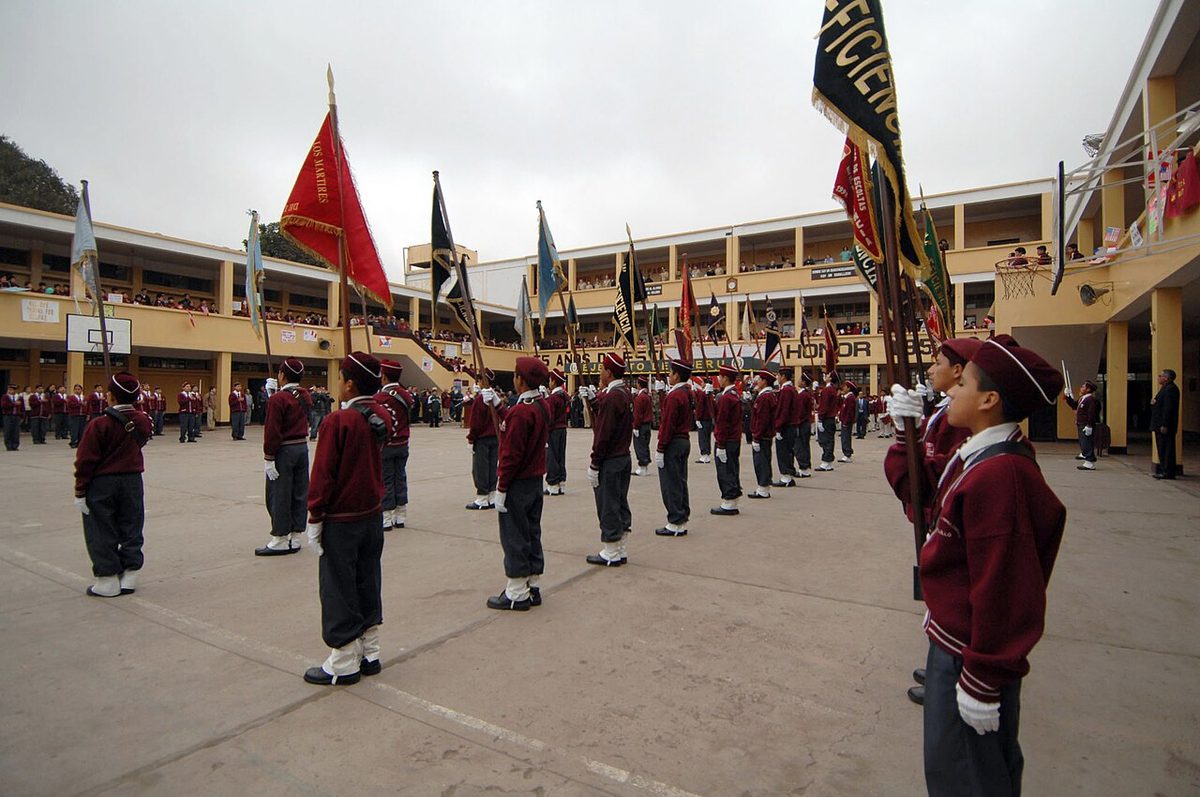
- Students attending Sanchez Carrion School in Salaverry, PeruWikimedia Commons · The image, public domain (U.S. Navy); taken in Salaverry on Peru's northern coast, not at the study schools
General information, not medical advice. This study describes children at six schools in one Peruvian province and can't show cause and effect. If you're worried about a child's weight, energy or paleness, talk to their doctor or a registered dietitian; anaemia has several causes and needs a proper test before treatment.
Analysis by NutroPractic from the sources listed. Written for general readers; it does not replace advice from your own doctor.
From our articles
Our guides on this subject
Plain-language guides on nutrition and wellness, backed by research.
Global data
Diabetes, obesity, child malnutrition and hunger, 1980 to 2050: what the numbers show
How diabetes, obesity, child malnutrition and hunger have changed since 1980, with sourced figures and a basic projection to 2050. Click a condition to explore the chart and its facts.
5 Oct 2026
Diabetes
Potatoes and blood sugar: boiled, cooled, mashed or fried, and what the cohorts and trials found
Fries were linked to 20% higher diabetes risk per three servings a week in 205,000 US adults; boiled, baked and mashed potatoes to almost none. GI by cooking method, resistant starch in grams after chilling, the glycaemic load of a potato against a cup of rice, and how to fit aloo into an Indian plate.
30 Oct 2026
Children's nutrition
Picky eaters aged 2 to 8: what feeding studies show works at the table
Fussy eating peaks between two and six and is usually a normal stage, not a parenting failure. Feeding trials show what moves it: small repeated tastes, eating together, no pressure and the right kind of reward. Here is how to use them, and the signs that mean it's more than picky eating.
30 Oct 2026
Newsfeed for your website
Want this feed on your website?
Add it to any site with one copy-and-paste snippet. No sign-up, and it updates itself every hour.
Start with a virtual consultation
Tell Dr. Triveni what you want to change. You will leave with a clear next step, whether you are in Toronto, London, New York or Chennai.