Pregnancy nutrition · October 18, 2026
A daily amaranth and chickpea flatbread for 306 pregnant women in rural Ethiopia: bigger arms, better weight gain, and a paper whose own tables can't agree on the numbers
Swap the usual maize bread for one made mostly of amaranth, and fewer mothers end pregnancy undernourished, a new trial reports. The direction looks solid. The size of the effect depends on which page you read.
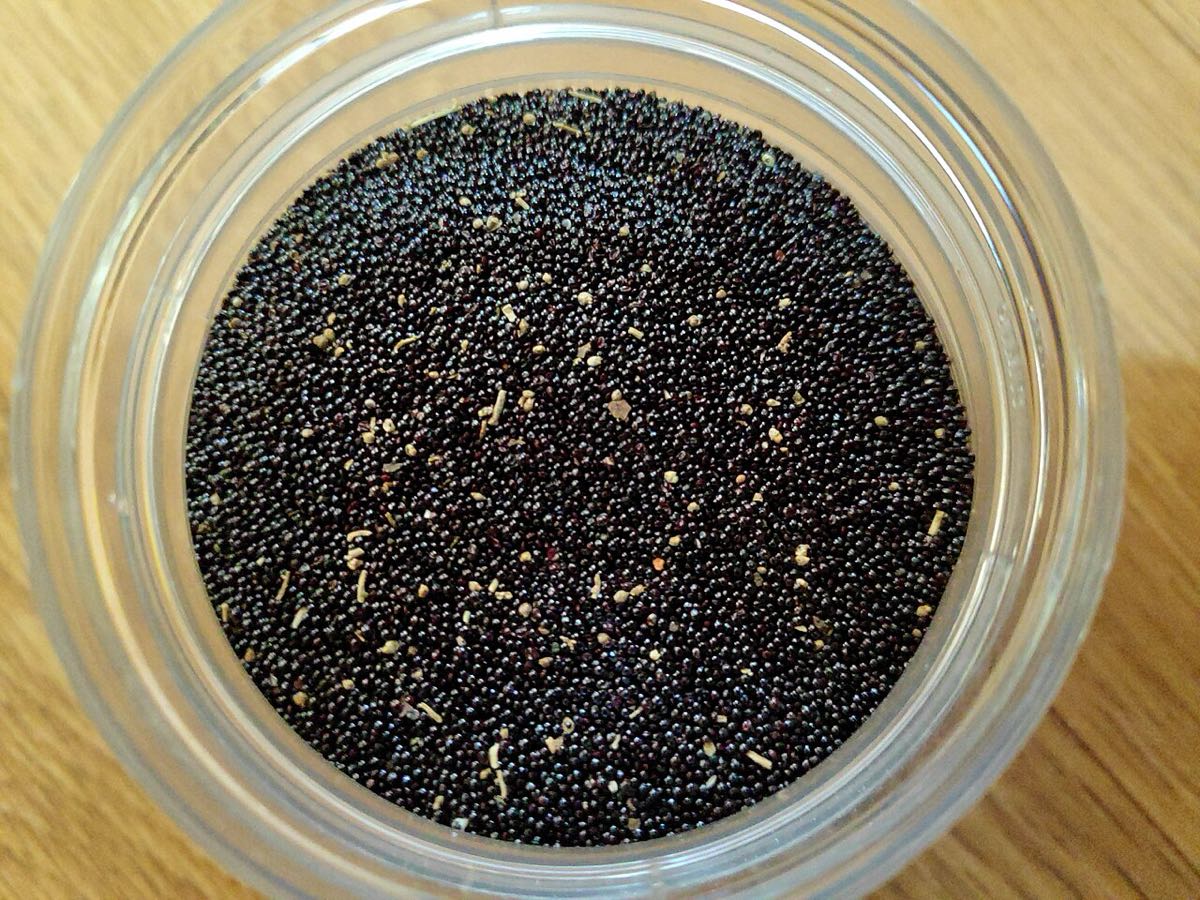
In Hawela Lida, a farming district in Ethiopia's Sidama region, many women go into pregnancy already short of iron and energy, and the daily bread is usually made from maize. A team from Hawassa University, working with the Public University of Navarra in Spain, asked a simple question: what if that bread were made from amaranth instead? Their trial, published in PLOS One on 8 October 2026, followed 306 pregnant women with mild-to-moderate anaemia from before 12 weeks of pregnancy to about 36 weeks or delivery.
Ten villages (kebeles, the smallest local units) were drawn at random, five got the new bread and five the old, and 31 women were picked in each. Every day for six months, someone brought each woman a 200 g flatbread to her home and watched her eat it. In the trial arm it was 70% amaranth grain and 30% chickpea, soaked, sprouted, roasted and fermented the traditional way; in the control arm it was plain maize. Both groups got the same nutrition counselling. The amaranth bread had more protein, iron and calcium, and about the same energy, according to the authors' lab tests.
By the end, the amaranth group was ahead on every measure. In the paper's results table, average mid-upper arm circumference, a quick tape-measure check of a mother's reserves, was 25.3 cm against 23.7 cm. Average weight gained in pregnancy was 8.1 kg against 5.9 kg. Only 12.3% of the amaranth group still had an arm circumference under 23 cm, the usual line for undernutrition, against 29.3% of the maize group; at the start it had been about 28% in both. And 64% of the amaranth group gained weight within the recommended range, against 41%. Attrition was low, 13 women out of 306, and no serious side effects were reported.
Now the awkward part. The paper gives different numbers for the same results in different places. The abstract puts the end-of-trial arm circumference at 26.1 cm against 24.3 cm and the weight gain at 8.4 kg against 6.1 kg, not the 25.3, 23.7, 8.1 and 5.9 in the results table. The abstract's adjusted effect on arm size is 1.72 cm; the adjusted table says 1.48 cm. The drop in undernutrition risk is given as 59% in one place and 65 to 68% in another. One table puts underweight at the end at 8.2% against 15.6%; the next puts it at 24.7% against 38.8%. Every version points the same way, but a reader can't tell which figures are final.
There are other limits to keep in mind. Only ten villages were randomised, and outcomes clustered strongly by village, so a few unusual villages could sway the result. The paper calls the trial double-masked, but a bread that is mostly amaranth and chickpea is not easy to pass off as maize bread. The authors did not measure everything else the women ate, and the bread may have changed how much else they ate, so the extra protein or simply extra food could explain part of the gain. Birth weight and the babies' health were not collected for everyone, so the trial can't say whether the babies did better. And this paper doesn't report the anaemia results, even though the trial's sample size was first worked out for anaemia.
What it does show is that a familiar food, made locally from a hardy crop and delivered every day, was eaten by almost everyone and moved mothers out of the undernourished range more often than maize bread did. That is a useful result for places where pregnancy supplements are costly or hard to keep supplied. How big the effect really is will need a corrected paper, or a second trial.
Amaranth-chickpea vs maize flatbread in pregnancy: cluster-randomised trial, 306 women with mild-to-moderate anaemia, 10 villages, Hawela Lida district, Sidama, Ethiopia, September 2024 to February 2025
306 → 293
Women enrolled, and women who finished the trial (95.8%)
200 g a day
Flatbread delivered to each woman's home for six months
12.3% vs 29.3%
Arm circumference still under 23 cm at the end, amaranth vs maize
8.1 vs 5.9 kg
Average weight gained in pregnancy, amaranth vs maize (results table)
64% vs 41%
Gained weight within the recommended range
25.3 vs 23.7 cm
Average arm circumference at the end (23.1 vs 23.0 cm at the start)
10
Villages randomised, five to each bread
95%
Women in both groups who ate the bread consistently, by the distributors' logs
Figures from Yoseph A, Mussie L, Belayneh M, Guillen-Grima F, 'Effect of amaranth flatbread on maternal anthropometry during pregnancy: Evidence from a cluster-randomized controlled trial in Southern Ethiopia', PLOS One 2026;21(10):e0360480, published 8 October 2026, doi 10.1371/journal.pone.0360480 (Tables 1, 2, 4 and 5). We use the unadjusted results table; the abstract and the adjusted tables give different values for the same outcomes (see the analysis). Arm circumference is mid-upper arm circumference (MUAC). Trial registration NCT06536153. Funded by the Nestlé Foundation; the authors declare no competing interests.
- Amaranth is a pseudocereal: its tiny seeds are cooked and milled like a grain, but the plant is not a grass like maize, wheat or barley.
- The authors chose amaranth partly because it is rich in lysine, an essential amino acid that maize is short of.
- Mid-upper arm circumference needs only a tape measure, which is why health workers use it to check mothers' nutrition where scales and charts are scarce. Under 23 cm usually counts as undernourished.
- The trial bread was soaked, sprouted, roasted and fermented before baking, traditional steps the authors used to cut the plant compounds that block iron absorption.
- An earlier trial in Southern Ethiopia, published in PLOS One in 2020, compared amaranth-containing bread with maize bread in anaemic children aged two to five.
- Effect of amaranth flatbread on maternal anthropometry during pregnancy: Evidence from a cluster-randomized controlled trial in Southern EthiopiaPLOS One, 8 October 2026 · The trial paper (open access): design, bread recipe, results tables and limitations
- Full text of the trial paperPubMed Central · Same paper, with the supplementary files, including the dataset and the bread's nutrient analysis
- Trial registration NCT06536153ClinicalTrials.gov · The trial's registered plan
General information, not medical advice. This trial tested a specific prepared bread in pregnant women with anaemia in rural Ethiopia, and its reported figures differ between sections of the paper. If you are pregnant, talk to your doctor, midwife or a registered dietitian before changing your diet or supplements.
Analysis by NutroPractic from the sources listed. Written for general readers; it does not replace advice from your own doctor.
From our articles
Our guides on this subject
Plain-language guides on nutrition and wellness, backed by research.
Women's health
Eating while breastfeeding: extra calories, iodine, caffeine, fish and alcohol, with the actual numbers
Breastfeeding usually adds about 330–400 kcal a day, but the smaller numbers can matter more: 290 mcg iodine, 400 IU vitamin D for baby, 8–12 oz fish a week, and a caffeine total you can actually add up.
6 Nov 2026
Women's health
Nausea in pregnancy: ginger, vitamin B6, small meals and when it's hyperemesis, from the trials
Only 1.8% of women in one diary study had nausea just in the morning. Ginger at 1 g a day, B6 at 30 to 75 mg and doxylamine with B6 each have trial data, while diet advice has none. The score to track it, the doses, and the signs that mean a phone call.
5 Nov 2026
Women's health
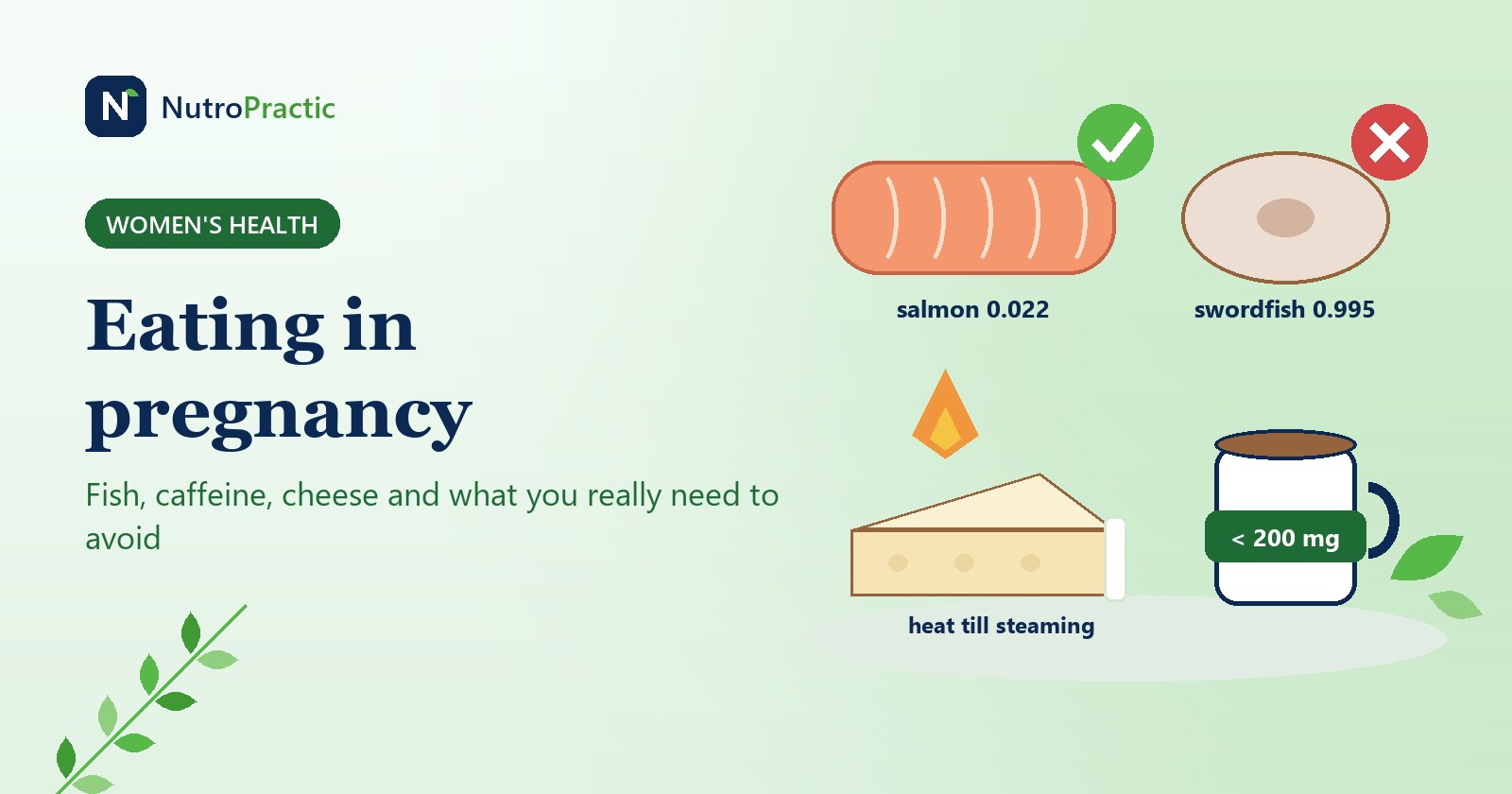
Eating in pregnancy: fish, caffeine, cheese and what you really need to avoid
Most fish is encouraged in pregnancy, not banned: 8-12 oz a week from the low-mercury list. The mercury numbers per fish, what 200 mg of caffeine looks like in real cups, which cheeses carry the listeria risk and how many cases there actually are, why liver is on the list, and how much weight to gain for your BMI.
29 Oct 2026
Newsfeed for your website
Want this feed on your website?
Add it to any site with one copy-and-paste snippet. No sign-up, and it updates itself every hour.
Start with a virtual consultation
Tell Dr. Triveni what you want to change. You will leave with a clear next step, whether you are in Toronto, London, New York or Chennai.