Heart health · October 26, 2026
Among 339,074 middle-aged Britons followed for 13 years, those who both moved for 150 minutes a week and hit most of seven food targets had about a third lower risk of death than those who did neither, and the link was strongest in people whose heart, kidney and blood sugar risks were already stacking up
Activity and diet each counted on their own, but only 13% of the group met five or more of the food targets, while 81% cleared the activity bar. The research team also found the benefit of extra exercise levelled off at roughly 90 minutes of brisk walking a day.

In 2023 the American Heart Association started describing heart disease, kidney disease, diabetes and obesity as one linked condition, cardiovascular-kidney-metabolic (CKM) syndrome, with five stages: stage 0 means no risk factors, stage 1 excess body fat or prediabetes, stage 2 diabetes, high blood pressure, high triglycerides or kidney disease, stage 3 a high predicted risk of heart disease on top of those, and stage 4 heart disease already diagnosed. Exercise and a good diet are advised at every stage, but whether they matter equally, and whether they work better together, had not been tested across the stages. A team at Fudan University in Shanghai did that with UK Biobank data, in a paper published online in JACC: Advances on 13 October.
UK Biobank recruited adults aged 40 to 69 in England, Scotland and Wales between 2006 and 2010. The analysis kept 339,074 people who could be staged, 51% of them women, average age 56. More than half (55%) were already at stage 2 and 6% at stage 4. Activity came from a short questionnaire: 'high' meant at least 150 minutes a week of walking or moderate-to-vigorous activity, or 75 minutes of vigorous activity. Diet came from a food questionnaire scored 0 to 7, one point each for at least four servings of fruit a day, four of vegetables, three of whole grains, two of fish a week, no more than one serving of processed meat and one and a half of red meat a week, and no more than one and a half servings of refined grains a day. A score of 5 to 7 counted as a high-quality diet. Over a median of 13.5 years there were 24,665 deaths, 8,258 of them from heart and circulation disease.
After allowing for age, sex, smoking, alcohol, deprivation, education, diabetes, high blood pressure and medicines, people with high activity had a 24% lower risk of dying from any cause than the less active (hazard ratio 0.76) and a 26% lower risk of a cardiovascular death. A high diet score went with 19% lower risks of both (0.81 each). Those who had both, 39,997 people, did best: a 36% lower risk of death from any cause (0.64), 39% lower for cardiovascular death (0.61) and 54% lower for death from heart failure (0.46), compared with the 11,659 people who were neither active nor eating well. For new cardiovascular disease the gaps were smaller, 17% lower for the combination (0.83). The benefit of activity flattened out at about 2,500 MET-minutes a week, which the authors put at roughly 90 minutes of brisk walking or 35 to 45 minutes of running a day.
The stage mattered for activity: its link with lower death and heart disease risk was generally stronger at the more advanced CKM stages, and the combination of activity and a good diet also stood out most there. Diet quality on its own did not vary by stage. The pairing was not entirely straightforward, though. On a relative scale activity and diet appeared to strengthen each other for heart failure, stroke death and overall cardiovascular disease, but on an absolute scale their combined effect was no bigger than the two added together, and in sensitivity checks the interaction held only for heart failure. Diet quality showed no link with stroke death or with atrial fibrillation.
This is an observational study, so it shows associations, not that exercise or diet caused the lower risks. Activity and diet were measured once, by self-report, more than a decade before many of the outcomes; the seven-point diet score is a simple tally that treats every food group as equal; some people will have been put in the wrong CKM stage because UK Biobank lacks some of the clinical measures needed; and UK Biobank volunteers are healthier than the UK population as a whole. Reassuringly, the activity results looked similar in 63,192 people who wore a wrist accelerometer for a week between 2013 and 2015. The authors reported no relevant relationships to disclose. We read the full paper; the figures here are from it.
Physical activity, diet quality and death or cardiovascular disease across CKM syndrome stages, UK Biobank, 339,074 adults followed for a median 13.5 years (JACC: Advances, 13 October 2026)
339,074
UK Biobank adults with a CKM stage (51.3% women, average age 56.4); 55% at stage 2, 6% at stage 4
0.76 / 0.81
Hazard ratio for death from any cause: high vs low activity / high vs low diet quality
0.64
Hazard ratio for death from any cause with both high activity and a high diet score, vs neither
0.46
Hazard ratio for heart failure death with both, vs neither
0.83
Hazard ratio for a first cardiovascular event with both, vs neither
81% vs 13%
Share meeting the activity bar vs share scoring 5 to 7 of the 7 food targets
~2,500
MET-minutes a week where the benefit of more activity levelled off (about 90 minutes of brisk walking a day)
Prospective cohort; UK Biobank, recruited 2006 to 2010 at ages 40 to 69. Excluded: insufficient data for CKM staging (75,574), activity (82,232) or diet (5,536). CKM stages per the 2023 American Heart Association definition (subclinical CVD = 10-year PREVENT risk of 20% or more, or very-high-risk CKD); stage counts 0: 55,919, 1: 69,906, 2: 187,662, 3: 4,992, 4: 20,595. The incident-CVD analysis excluded stage 4 (n = 318,479). Activity: IPAQ short form, high = at least 150 min/week walking or MVPA or 75 min vigorous; accelerometer subsample 63,192. Diet score 0 to 7 from a touchscreen food frequency questionnaire (fruit 4+ servings/day, vegetables 4+/day, fish 2+/week, processed meat 1 or fewer/week, red meat 1.5 or fewer/week, whole grains 3+/day, refined grains 1.5 or fewer/day); low 0 to 1, median 2 to 4, high 5 to 7. Joint groups: low activity + low diet 11,659; high activity + high diet 39,997. Events: 24,665 deaths (8,258 CVD), 47,495 incident CVD. Fully adjusted Cox models (age, sex, ethnicity, Townsend index, education, employment, alcohol, smoking, diabetes, hypertension, medication). High activity: all-cause death HR 0.76 (95% CI 0.74 to 0.79), CVD death 0.74 (0.70 to 0.77), incident CVD 0.90 (0.88 to 0.92). High diet: 0.81 (0.77 to 0.85), 0.81 (0.75 to 0.88), 0.87 (0.84 to 0.90); stroke death 1.09 (0.91 to 1.30). Both: all-cause death 0.64 (0.60 to 0.68), CVD death 0.61 (0.54 to 0.68), heart failure death 0.46 (0.36 to 0.58), incident CVD 0.83 (0.79 to 0.88), incident AF 0.98 (0.90 to 1.07). Multiplicative interaction for composite CVD, heart failure and stroke death (P 0.003 to 0.03); no additive interaction. Crude all-cause death rate per 1,000 person-years: low vs high activity 6.86 vs 5.28; low vs high diet 7.20 vs 4.99. Authors reported no relevant relationships.
- The American Heart Association set out CKM syndrome in a 2023 presidential advisory because heart disease, kidney disease and metabolic problems so often travel together and drive each other.
- Only 3.4% of the 339,074 people were both inactive and in the low diet group (a score of 0 or 1), fewer than the 11.8% who were active and scored 5 or more.
- Before any adjustment, the low-diet group died at 7.20 per 1,000 people a year against 4.99 in the high-diet group; part of that gap closed once smoking, alcohol and other differences were taken into account.
- The point where extra exercise stopped adding benefit, about 2,500 MET-minutes a week, is several times the 150-minute weekly minimum, so most of the gain came from getting off the bottom rung rather than from training hard.
- Associations of Physical Activity and Diet Quality With Mortality and Cardiovascular Disease in Cardiovascular-Kidney-Metabolic SyndromeJACC: Advances (American College of Cardiology, Elsevier) · The study, published online 13 October 2026
- Full text (PMC13685930)PubMed Central · Methods, Tables 1 to 3, joint analyses, sensitivity analyses and limitations
- Cardiovascular-Kidney-Metabolic Health: A Presidential Advisory From the American Heart AssociationCirculation · The 2023 definition of CKM syndrome and its stages
- Walking, Skating, CyclingWikimedia Commons (Garry Knight, Flickr) · The photo, CC BY 2.0
General information, not medical advice. This was an observational study, so it cannot show that exercise or diet changes caused the lower risks. If you have diabetes, kidney disease, high blood pressure or heart disease, ask your doctor or a registered dietitian how much activity is safe for you and which changes to your diet matter most.
Analysis by NutroPractic from the sources listed. Written for general readers; it does not replace advice from your own doctor.
From our articles
Our guides on this subject
Plain-language guides on nutrition and wellness, backed by research.

Cardiovascular wellness
Psyllium husk: how much soluble fibre lowers LDL cholesterol and stabilizes post-meal glucose in clinical trials
Viscous soluble fibre forms a thick gel matrix in the small intestine that binds bile acids and blunts post-meal glucose spikes. Across dozens of randomized controlled trials, 7 to 10.2 grams of psyllium daily lowers LDL cholesterol by 6% to 12% without stripping HDL, while reducing postprandial glucose surges by 15% to 25% in metabolic syndrome and type 2 diabetes. Discover the bile acid sequestration mechanism, trial meta-analyses, exact timing before meals, water ratios, and titration protocols to avoid gas and cramping.
13 Nov 2026
Diabetes
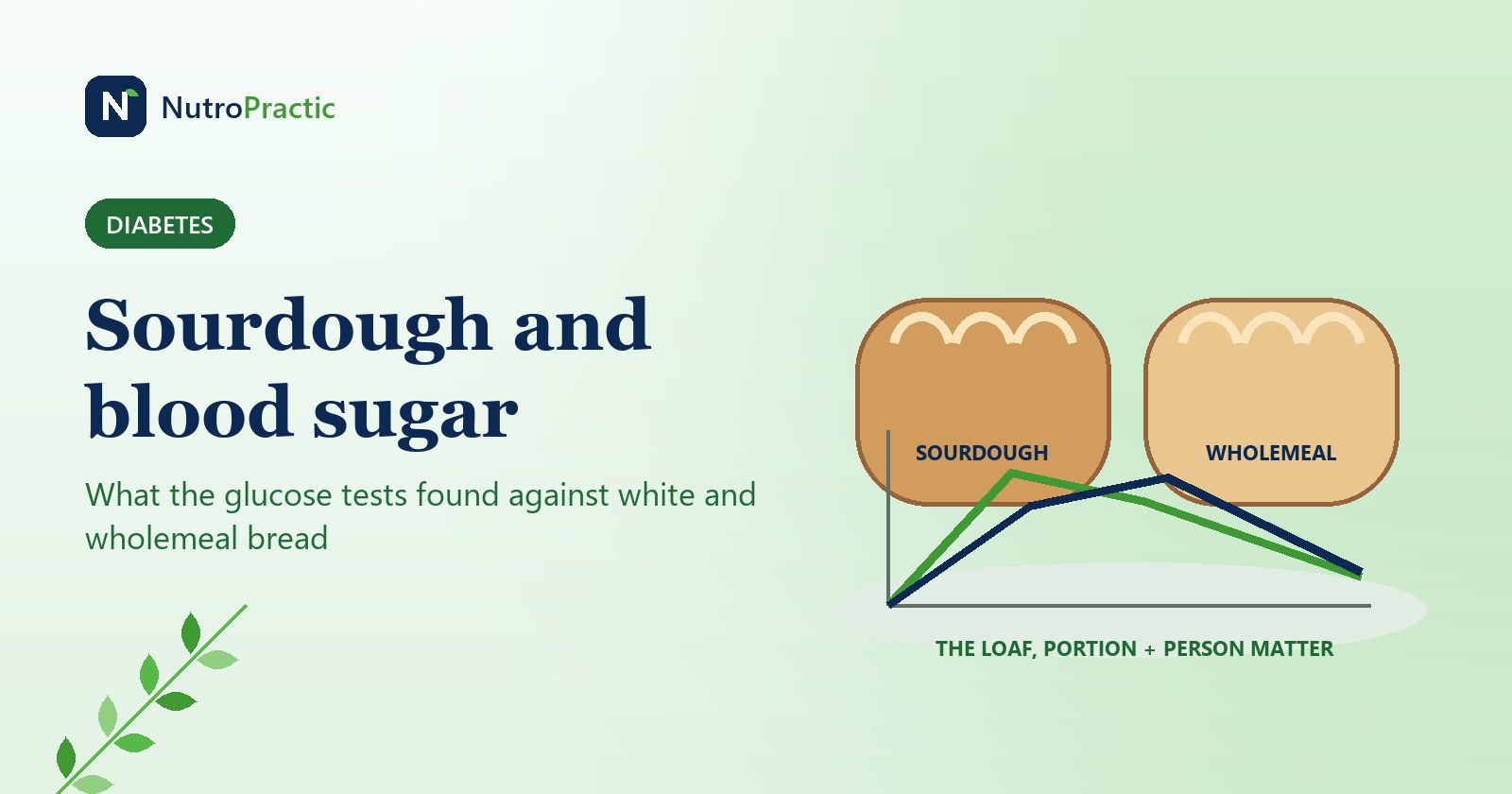
Sourdough and blood sugar: what the glucose tests found against white and wholemeal bread
Sourdough did not beat white bread on average in a 20-person crossover trial, and half responded better to white. A trial-by-trial look at fermentation, flour, portions, GI and how to test your own loaf fairly.
6 Nov 2026
Diabetes
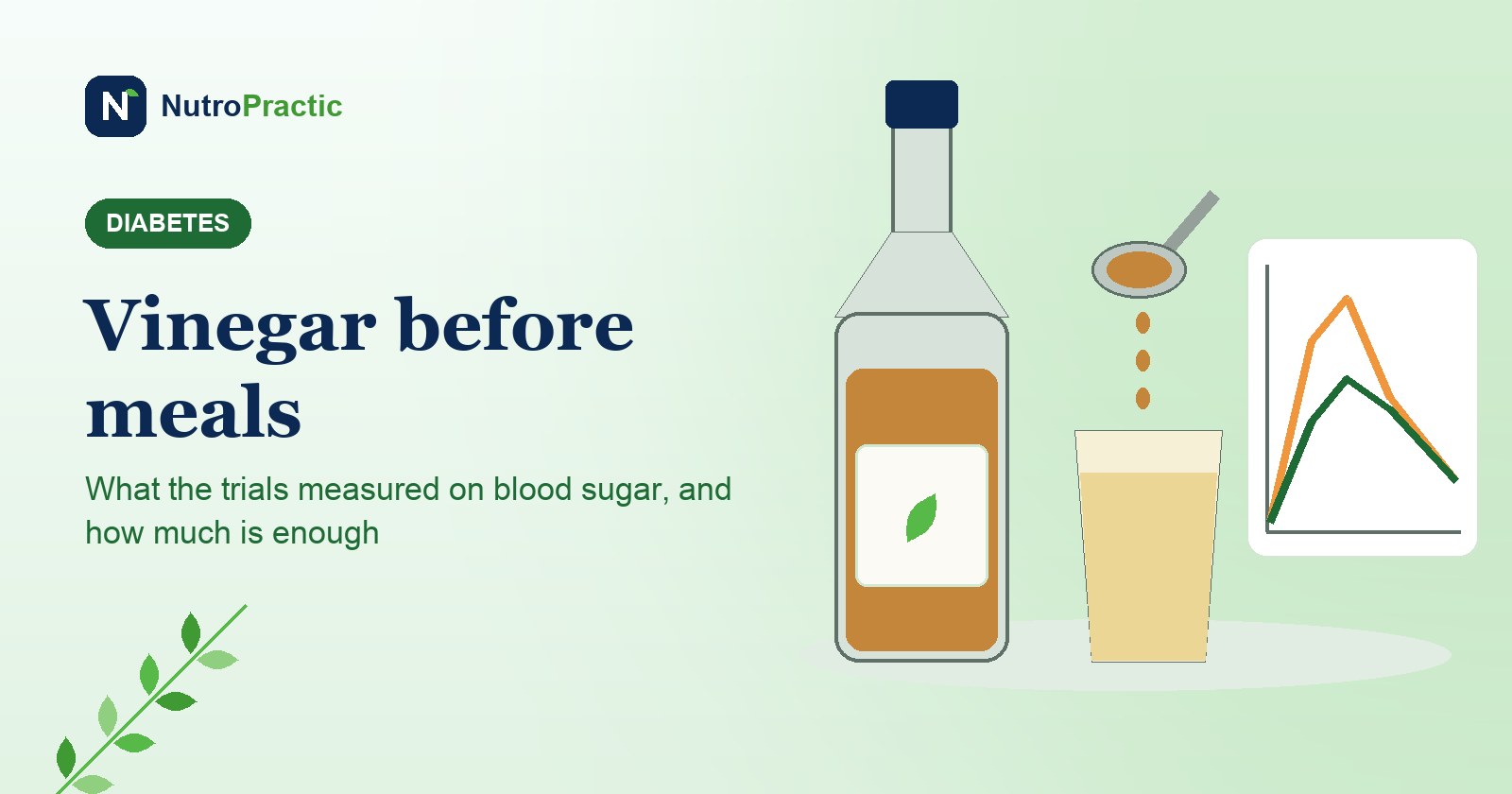
Vinegar before meals: what the trials measured on blood sugar, and how much is enough
Two teaspoons to a tablespoon with a starchy meal trims the glucose peak at 30 minutes, and the gap fades by two hours. HbA1c reviews range from -0.39 to -1.53, and we explain which to trust. Two gummies hold about 50 mg of acetic acid against 750 mg in a tablespoon.
5 Nov 2026
Newsfeed for your website
Want this feed on your website?
Add it to any site with one copy-and-paste snippet. No sign-up, and it updates itself every hour.
Start with a virtual consultation
Tell Dr. Triveni what you want to change. You will leave with a clear next step, whether you are in Toronto, London, New York or Chennai.