Nutrient absorption · October 8, 2026
Add eggs to a plate of cooked vegetables and women absorbed several times more of the vegetables' carotenoids
Carrots, tomatoes and greens are full of carotenoids, but the body needs fat to take them up. In a small feeding trial, two eggs with a vegetable meal lifted absorption three- to six-fold. The vitamin D story was less clear.
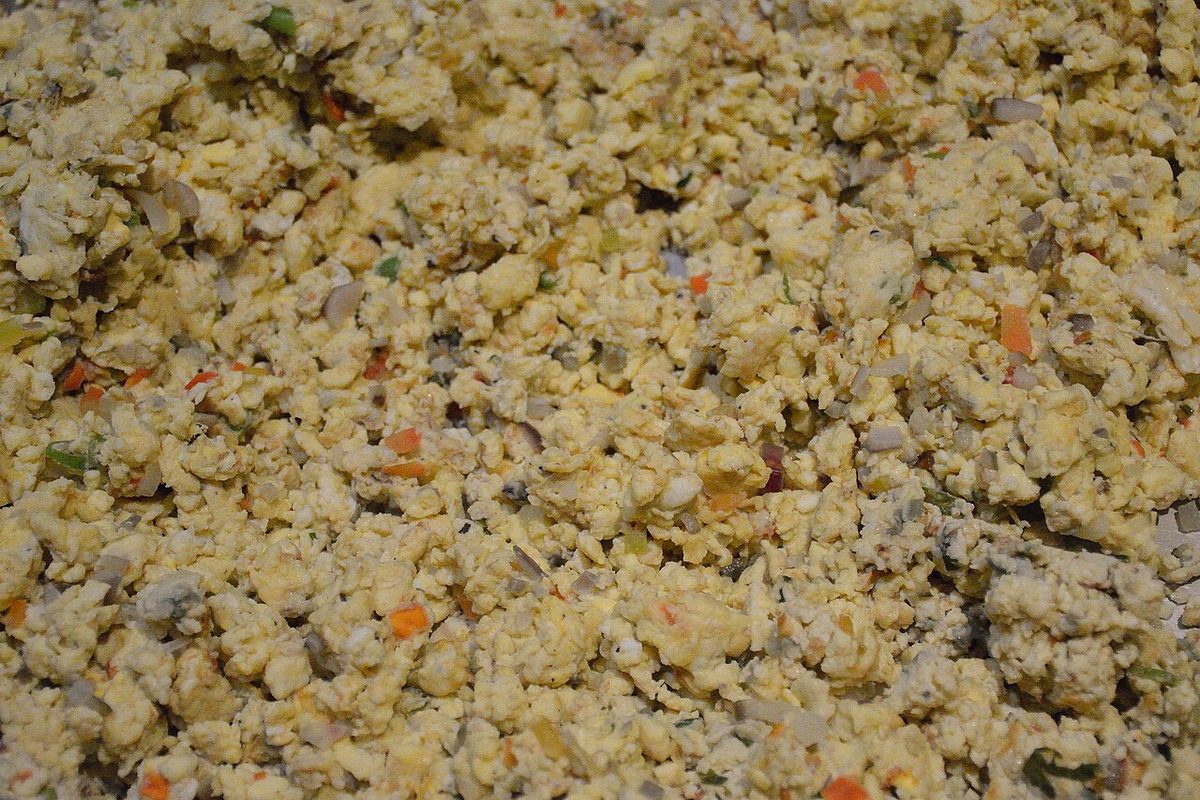
Carotenoids are the yellow, orange and red pigments in carrots, tomatoes, pumpkin and leafy greens. Some, like beta-carotene, are turned into vitamin A; others, like lutein, gather in the eye. They dissolve in fat rather than water, so how much the gut takes up depends partly on what else is on the plate. Whole eggs bring fat, a little vitamin D and some carotenoids of their own, which made researchers wonder whether eating eggs alongside vegetables helps.
A paper published online in Food & Function on 29 September 2026, from Purdue University, the National University of Singapore and Virginia Tech, tested this in 17 women: nine before menopause and eight after. Each woman did two eight-day rounds, seven days on a controlled diet and then a test day, with a three-week break in between. On the test day she ate a cooked vegetable meal, once with no egg and once with 100 g of cooked whole egg, about two eggs. The meal itself provided 27 mg of carotenoids and 600 IU of vitamin D, mostly vitamin D2 from fortified mushrooms; the eggs added only about 0.5 mg of carotenoids and 80 IU of vitamin D3. Blood was taken every hour for 10 hours to track nutrients arriving from the gut in newly absorbed fat particles.
With eggs, the carotenoids reaching the blood over 10 hours were about three and a half times higher in the women before menopause and about six times higher in those after menopause than with the vegetables alone. Since the eggs themselves carried less than 2% of the meal's carotenoids, most of that gain came from the vegetables. A vitamin D form (25-hydroxyvitamin D3) was also higher with eggs, but the difference was clear only in the post-menopausal group. The vitamin D2 from the mushrooms could not be detected at all, so the trial could not show any boost there. Menopause status did not change how the women responded.
This is one meal in 17 women, measuring absorption over a day rather than any health outcome, and the study did not compare eggs with another fat such as cooking oil, so it cannot say eggs work better than a spoon of oil would. What it does support is an old kitchen point: vegetables eaten with a source of fat give up more of their carotenoids than vegetables eaten on their own.
The trial at a glance
17
Women: 9 before menopause, 8 after
100 g
Cooked whole egg (about two eggs) added to a cooked vegetable meal
About 3.6 times
Carotenoid absorption with eggs vs without, before menopause (104.2 vs 29.2 units)
About 6 times
Carotenoid absorption with eggs vs without, after menopause (62.7 vs 10.1 units)
Not detected
Vitamin D2 from fortified mushrooms in the absorbed fat, with or without eggs
Checked on the journal abstract (Food & Function, published online 29 September 2026, via its PubMed record). Units are the area under the curve of carotenoids in triglyceride-rich lipoproteins over 10 hours (ng/mL x 10 h). Randomised crossover controlled feeding trial, ClinicalTrials.gov NCT02679794.
- Beta-carotene from carrots, pumpkin and mango is one of the body's main sources of vitamin A in mostly vegetarian diets.
- Mushrooms exposed to ultraviolet light make vitamin D2, which is why some packaged mushrooms are sold as a vitamin D source.
- Egg yolk gets its yellow colour from lutein and zeaxanthin, two carotenoids that also collect in the retina of the eye.
- Whole egg consumption effects on vitamin D and carotenoids bioavailability in pre- and post-menopausal females: a randomized crossover controlled feeding trialFood & Function, 29 September 2026 · Journal article
- PubMed record 42808212US National Library of Medicine · Abstract with all figures used here
- NCT02679794ClinicalTrials.gov · Trial registration
General information, not medical advice. If you have high cholesterol, an egg allergy or a condition that affects how you absorb nutrients, talk to your doctor or dietitian before changing your diet.
Analysis by NutroPractic from the sources listed. Written for general readers; it does not replace advice from your own doctor.
Newsfeed for your website
Want this feed on your website?
Add it to any site with one copy-and-paste snippet. No sign-up, and it updates itself every hour.
Start with a virtual consultation
Tell Dr. Triveni what you want to change. You will leave with a clear next step, whether you are in Toronto, London, New York or Chennai.