Children's drinks · October 24, 2026
A juice box or a glass of tap water in the dentist's waiting room: an hour later, 85% of children who drank the juice had raised insulin in their saliva, against 25% of those given water. In heavier children, the water's edge was much weaker
105 San Francisco children spat into a tube, drank what a sealed envelope told them to, or nothing at all, and spat again before their check-up. Water left saliva insulin lower than apple juice or an empty hand, and shifted hundreds of other molecules too. What that means for their bodies, rather than their mouths, nobody can say yet.
Children who come in for a dental check-up usually sit in a waiting room for a while. A team from the San Francisco Department of Public Health and the University of California, San Francisco used that hour to run a small experiment, and its second report appeared in Frontiers in Nutrition on 22 October. The question was simple: what happens inside a child in the hour after a drink of water, compared with a juice box or nothing at all?
Between 2022 and 2023, 105 healthy children aged 5 to 10 at one paediatric dental clinic took part, 60 of normal weight and 45 with overweight or obesity. All had the state's low-income dental insurance and 91% went to public school. Each gave a sample of saliva, then opened a sealed envelope that assigned them one of three things: a 500 mL serving of tap water, about what a school water bottle holds; a 200 mL box of 100% apple juice with no added sugar (94 kcal and 23 g of carbohydrate); or no drink. They sat with a parent filling in a questionnaire, and 45 to 60 minutes later gave a second sample. The team had hoped for 120 children, but the clinic's staff time ran out.
The headline result is about insulin, the hormone that rises when sugar enters the blood. The researchers used saliva insulin above 170 pg/mL, roughly 5 mU/L in blood terms, as their mark for 'raised'. Most children already sat above it when they arrived, since few had fasted. An hour later, among normal-weight children, 85% of the juice group and 70% of the no-drink group were above the mark, against 25% of the water group. Children given water had 17 times the odds of being below it compared with juice, and 7 times compared with nothing, though the confidence intervals were wide (3.5 to 83 for the juice comparison).
In children with overweight or obesity the picture was weaker. After water, about half (53%) were still above the mark; after juice, 87%; after nothing, 80%. Neither comparison on its own reached statistical significance, though pooled across both, water still came out ahead. The authors read this as a sign that body weight changes how a child responds, and argue that many school water programmes may have looked like failures because they ignored it: they cite a count of 83 out of 115 such programmes reporting no effect.
The new part of the paper is the metabolomics: a lab measured 362 small molecules in each saliva sample, 137 of them identified, from sugars and amino acids to fatty acids. Water changed the overall pattern significantly compared with juice in the normal-weight children, and compared with no drink in the heavier children, but not in the other two pairings. Dozens of molecules moved by 1.5-fold or more, and the team maps them onto pathways for glucose handling, amino acids and energy production. They are careful to call these hypotheses: the figures are relative peak heights, not concentrations, and a higher level cannot say whether a molecule was made faster or cleared slower.
There are several reasons for caution. Saliva is not blood, and its make-up depends on nerves, hormones and medicines as well as metabolism. The follow-up lasted an hour. The water serving was two and a half times the volume of the juice, so 'no sugar' and 'more fluid' are tangled together. Children and staff knew who drank what, and at baseline some groups differed, such as how many normal-weight children started with dilute saliva. The trial was funded by the California Society of Pediatric Dentistry, the Drinking Water Research Foundation and a UCSF grant, and the lead author reports unrestricted grants from the Drinking Water Research Foundation in the past five years.
Saliva insulin 45 to 60 minutes after water, apple juice or no drink, Saliva Insulin as Biomarker trial, San Francisco
105
Healthy children aged 5 to 10, randomised before a routine dental check-up in 2022 to 2023
500 vs 200 mL
Tap water serving against a 100% apple juice box (94 kcal, 23 g carbohydrate)
85% vs 25%
Normal-weight children with raised saliva insulin an hour later: apple juice against water
87% vs 53%
The same comparison in children with overweight or obesity (not statistically significant on its own)
17.0
Odds ratio for normal saliva insulin after water instead of juice, normal-weight children (95% CI 3.5 to 83.4)
362
Saliva molecules measured per sample, 137 of them identified
Source: Stookey JD, Cholera M, Cape R, 'Acute changes in saliva metabolomic profile after drinking water instead of apple juice or no drink signal improved insulin-related metabolism in healthy children: a randomized controlled trial', Frontiers in Nutrition, 22 October 2026, doi:10.3389/fnut.2026.1812940, open access (CC BY). Registered as NCT05211843. 'Raised' means saliva insulin of 170 pg/mL or more (about 5 mU/L). Percentages are from the Results; in the no-drink groups 70% (normal weight) and 80% (overweight or obesity) were raised at follow-up. Odds ratios are weight-specific logistic regression estimates; water against no drink was 7.0 (95% CI 1.7 to 28.2) in normal-weight children and 1.6 (0.2 to 11.5) in heavier children. Groups held 20 children in each normal-weight arm and 15 in each overweight or obesity arm; one child refused the juice and dropped out. Funding: California Society of Pediatric Dentistry, Drinking Water Research Foundation and UCSF CTSI; the lead author has received unrestricted grants from the Drinking Water Research Foundation.
- Blood insulin normally starts rising within 2 to 5 minutes of carbohydrate reaching the bloodstream, peaks between 30 and 60 minutes and returns to fasting levels in 2 to 3 hours, which is why this trial sampled at 45 to 60 minutes.
- US school meal rules allow 8 oz (about 240 mL) servings of 100% fruit juice. The juice in this trial measured pH 3.5, acidic enough to matter to teeth.
- Saliva can be collected without a needle, which is why public health teams are interested in it for school-based screening, even though it mirrors the blood only imperfectly.
- In San Francisco, 27% of kindergartners have already had tooth decay, and 35% of fifth graders have a body mass index above the healthy zone of the school fitness test, figures the authors give as reasons for the trial.
- In no group had more than one child in five gone 8 hours without food or drinks other than water before the study, so most children started with saliva insulin already above the trial's mark.
- Acute changes in saliva metabolomic profile after drinking water instead of apple juice or no drink signal improved insulin-related metabolism in healthy children: a randomized controlled trialFrontiers in Nutrition · The study, open access, published 22 October 2026
- Saliva Insulin as Biomarker trial, NCT05211843ClinicalTrials.gov · Trial registration
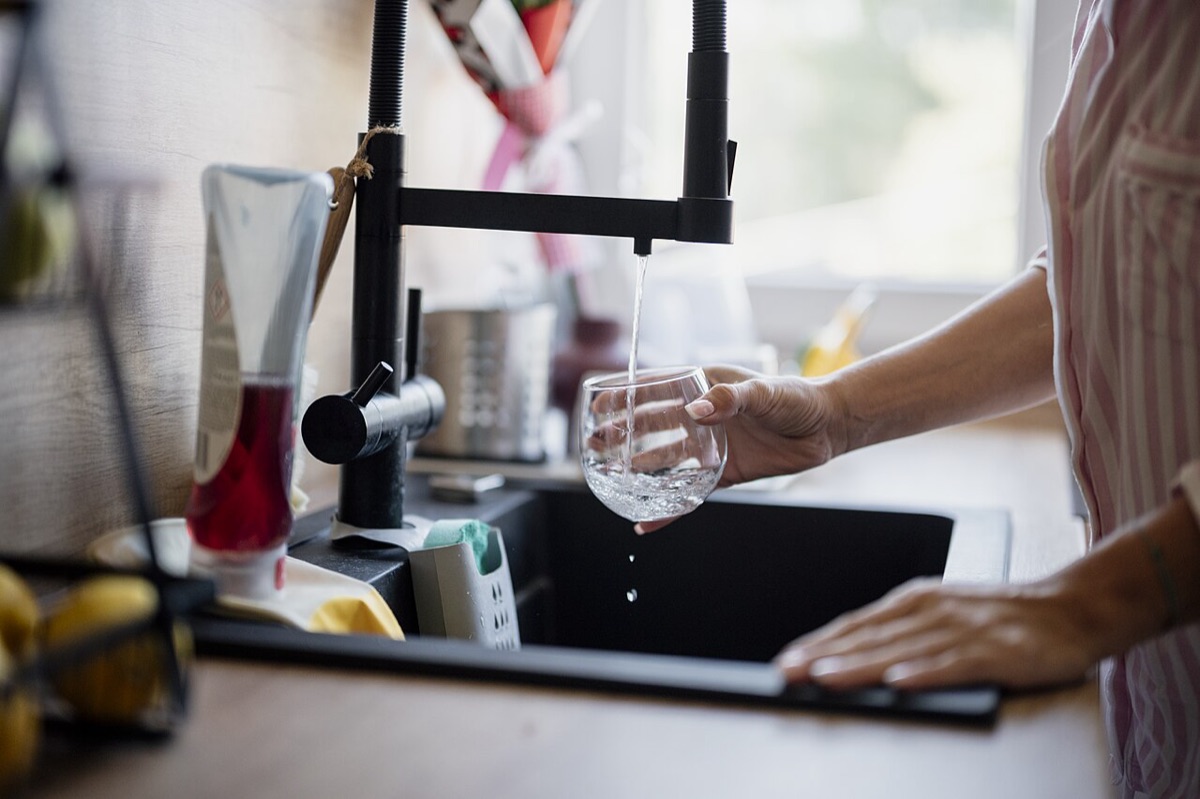
- Filling a glass with water in a kitchen sink, closeupWikimedia Commons · The photo, CC BY 2.0
General information, not medical advice. This small trial measured saliva for one hour after a single drink and does not show that swapping juice for water changes a child's long-term health. For advice on your child's drinks, weight or blood sugar, talk to your paediatrician, dentist or a registered dietitian.
Analysis by NutroPractic from the sources listed. Written for general readers; it does not replace advice from your own doctor.
From our articles
Our guides on this subject
Plain-language guides on nutrition and wellness, backed by research.
Global data
Diabetes, obesity, child malnutrition and hunger, 1980 to 2050: what the numbers show
How diabetes, obesity, child malnutrition and hunger have changed since 1980, with sourced figures and a basic projection to 2050. Click a condition to explore the chart and its facts.
5 Oct 2026

Cardiovascular wellness
Psyllium husk: how much soluble fibre lowers LDL cholesterol and stabilizes post-meal glucose in clinical trials
Viscous soluble fibre forms a thick gel matrix in the small intestine that binds bile acids and blunts post-meal glucose spikes. Across dozens of randomized controlled trials, 7 to 10.2 grams of psyllium daily lowers LDL cholesterol by 6% to 12% without stripping HDL, while reducing postprandial glucose surges by 15% to 25% in metabolic syndrome and type 2 diabetes. Discover the bile acid sequestration mechanism, trial meta-analyses, exact timing before meals, water ratios, and titration protocols to avoid gas and cramping.
13 Nov 2026
Diabetes
Sourdough and blood sugar: what the glucose tests found against white and wholemeal bread
Sourdough did not beat white bread on average in a 20-person crossover trial, and half responded better to white. A trial-by-trial look at fermentation, flour, portions, GI and how to test your own loaf fairly.
6 Nov 2026
Newsfeed for your website
Want this feed on your website?
Add it to any site with one copy-and-paste snippet. No sign-up, and it updates itself every hour.
Start with a virtual consultation
Tell Dr. Triveni what you want to change. You will leave with a clear next step, whether you are in Toronto, London, New York or Chennai.