Weight management · November 3, 2026
They swapped 150 g of staple food for walnuts. After 12 weeks, the waist-and-fat numbers looked better — but the two groups still did not differ at the finish
A small Chinese trial gave everyone a calorie-cutting diet, then made one version lower in carbohydrate by replacing staple foods with walnuts. The walnut group lost more fat within its own results. The headline needs a quieter reading: at week 12, the direct group-to-group tests for BMI and visceral-fat area were not significant.
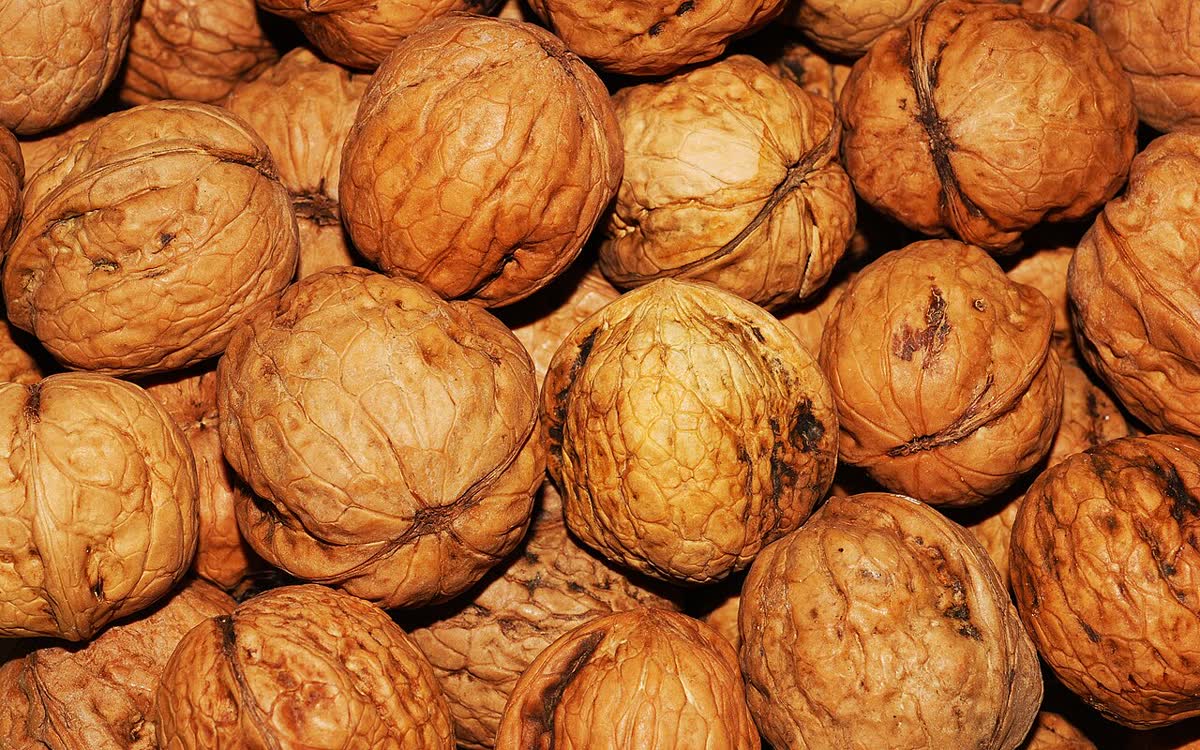
Take 150 grams of staple food out of a calorie-cutting eating plan and replace it with walnuts: that was the change tested in a small Chinese trial published in October. After 12 weeks, people in the walnut-based, lower-carbohydrate group had lower average BMI, less estimated visceral fat and a lower trunk-to-leg fat ratio than at the start. It sounds like a straightforward walnut result. The direct comparison at the end tells a more cautious story.
Eighty adults with central obesity were randomly assigned to one of two active diets. Both were designed to reduce daily energy intake, included vegetables, fruit, protein foods and a salt target, and came with five follow-ups. The comparison diet kept 100 grams of staple food at each meal. The walnut plan replaced 50 grams at each meal with walnuts — 150 grams per day. The researchers provided the nuts free only for the first two weeks; after that, participants paid for them. By the end, 35 people in the walnut group and 29 in the comparison group remained for the main analysis.
Both groups were eating far less by week 12. Reported energy intake fell from 1,746 to 1,162 calories per day in the walnut group, and from 1,892 to 1,211 in the comparison group. The bigger dietary separation was fat: it rose slightly in the walnut group, from 52 to 55 grams a day, while falling from 55 to 31 grams in the comparison group. Carbohydrate ended at 112 grams versus 175 grams a day. That means this was not walnuts added to an otherwise unchanged everyday diet. It was one part of two fairly intensive, low-energy programmes.
The walnut group’s estimated visceral-fat area moved from 113 to 97 square centimetres, and its average BMI from 27.6 to 26.1. The comparison group also changed, from 116 to 109 square centimetres and from 27.3 to 27.0. The authors’ repeated-measures model found that the pattern of change over time differed between groups. But when they compared the groups at the 12-week endpoint, the p values were 0.132 for visceral-fat area and 0.180 for BMI — not statistically significant by the study’s own conventional threshold. A faster-looking trend is not the same as a settled endpoint difference.
The dropouts make that distinction more important. Five of 40 people left the walnut group, compared with 11 of 40 in the comparison group. Four comparison participants were lost to follow-up, two left on their own, one became pregnant and one had poor adherence. The researchers also ran an intention-to-treat analysis that kept all 80 people in their original groups, using each person’s last measurement when an endpoint was missing. They say the broad findings were similar, but the complete-case analysis is still the clearer source for the eye-catching before-and-after numbers.
There are other limits. The study lasted 12 weeks, involved adults aged 18 to 60 in one Chinese setting, and used a bioelectrical-impedance device rather than a scan to estimate visceral fat. Food intake came from three-day records. The diets were not made equal in calories, and the authors list that as a limitation. The nuts were also an expense for most of the trial. So this is useful evidence that a walnut-based, lower-carbohydrate plan can be tested and may shift body-composition measures alongside calorie restriction. It does not show that walnuts alone melt abdominal fat, or that everyone should swap 150 grams of staple food for them. For someone considering a major diet change, the more durable question is whether the plan is safe, affordable and workable with their clinician or dietitian.
Effect of a walnut-based low carbohydrate diet on fat redistribution and visceral fat accumulation in people with central obesity (Asia Pacific Journal of Clinical Nutrition, 2026)
80 → 64
Adults randomised, then included in the main completed-study analysis after 12 weeks: 35 walnut-plan and 29 comparison-plan participants
150 g/day
Staple food replaced by walnuts in the lower-carbohydrate plan: 50 g at each of three meals
113 → 97.4
Estimated visceral-fat area in cm² in the walnut group, from baseline to week 12
116 → 109
Estimated visceral-fat area in cm² in the comparison group, from baseline to week 12
27.6 → 26.1
Average BMI in the walnut group, against 27.3 → 27.0 in the comparison group
p = 0.132 / 0.180
Direct week-12 group comparisons for visceral-fat area and BMI; neither was statistically significant
12.5% / 27.5%
Dropout rates in the walnut and comparison groups
1,162 / 1,211
Reported calories per day at week 12 in the walnut and comparison groups; both were lower than at baseline
All values are from the paper’s Tables 2 and 3 and participant flow. The study’s main completed-study analysis included 64 people, but its intention-to-treat analysis retained all 80 using last-observation-carried-forward for missing endpoint data. Visceral-fat area was estimated by a bioelectrical-impedance analyser, not directly measured by CT or MRI. The authors report significant group-by-time interactions for visceral-fat area (p = 0.014), trunk-to-leg fat ratio (p = 0.039) and BMI (p = 0.001); the endpoint p values above are the paper’s simple group comparisons. The authors report no conflicts; the study was funded by Suzhou City’s 2022 Medical and Health Technology Innovation Project.
- The walnut plan was lower carbohydrate, not ketogenic: its target energy split was about 39% carbohydrate and 42% fat. The comparison plan targeted about 57% carbohydrate and 24% fat.
- Both groups had a one-week period before the intervention when they avoided nut supplements, including walnuts, almonds and peanuts.
- At week 12, the walnut group had higher GLP-1 and PYY and lower C-peptide than the comparison group. All three measures remained within the stated normal ranges; the trial did not test whether those hormone differences caused the body-composition changes.
- The researchers excluded people with a nut allergy, pregnancy or breastfeeding, eating disorders, major organ disease, and medicines that can affect glucose metabolism.
- The trial was registered in China as ChiCTR2300068330. Recruitment ran from December 2022 to October 2023.
- Effect of a walnut-based low carbohydrate diet on fat redistribution and visceral fat accumulation in people with central obesity: A randomized controlled trialAsia Pacific Journal of Clinical Nutrition, October 2026 · Free full text. Trial design, diet, participant flow, outcome tables, limitations and funding.
- PubMed record: PMID 42815962National Library of Medicine · Journal citation, DOI and indexed abstract.
- Pile of walnutsWikimedia Commons · CC0 image by helee54 on Pixabay.
General information, not medical advice. This small, short trial tested two calorie-restricted diets and did not establish that walnuts alone reduce visceral fat. If you have diabetes, kidney disease, an eating disorder, a nut allergy, or take medicines that affect blood sugar, get individual advice before making a major diet change.
Analysis by NutroPractic from the sources listed. Written for general readers; it does not replace advice from your own doctor.
From our articles
Read, then eat a little better
Plain-language guides on nutrition and wellness, backed by research.
Everyday eating
Food label claims decoded: 'no added sugar', 'multigrain', 'natural' and 'high protein'
A no-added-sugar biscuit with only 13% fewer calories. A 7-grain loaf with refined flour listed first. A 'high protein' bar that clears the legal line at 21%. What each claim legally requires in the EU/UK, US and India, with worked reads of real packs.
2 Nov 2026

Gut health
Probiotic capsules: which ones have trial evidence, what they can do, and when to skip them
Children on antibiotics: 8% got diarrhoea with a probiotic, 19% without. Older hospital patients: 10.8% with, 10.4% without. Which capsules have evidence, what three guidelines say about IBS, what a course costs per case prevented, and who shouldn't take them.
2 Nov 2026
Gut health
Gluten-free without coeliac disease: who actually benefits, and what the blinded gluten challenges found
In blinded trials only 16% of people who said gluten made them ill reacted to gluten rather than placebo, and in Oslo fructans caused more bloating than gluten. Who really needs to avoid it, how to get tested before you stop, how much gluten is in a slice of bread or a roti, and what gluten-free food costs (159% more in the UK) and lacks.
1 Nov 2026
Newsfeed for your website
Want this feed on your website?
Add it to any site with one copy-and-paste snippet. No sign-up, and it updates itself every hour.
Start with a virtual consultation
Tell Dr. Triveni what you want to change. You will leave with a clear next step, whether you are in Toronto, London, New York or Chennai.