Child health · October 17, 2026
323 Canadian preschoolers with hard-to-control asthma got big doses of vitamin D or a dummy for seven months. Their blood levels went up. Their steroid-needing flare-ups barely moved
Two 100,000 IU doses of vitamin D plus a daily dose, in children aged 1 to 5 whose colds keep turning into asthma attacks: a triple-blind trial across nine hospitals found 0.67 rescue steroid courses per child against 0.71 on placebo. The pandemic cut the trial short, so the door isn't fully closed.
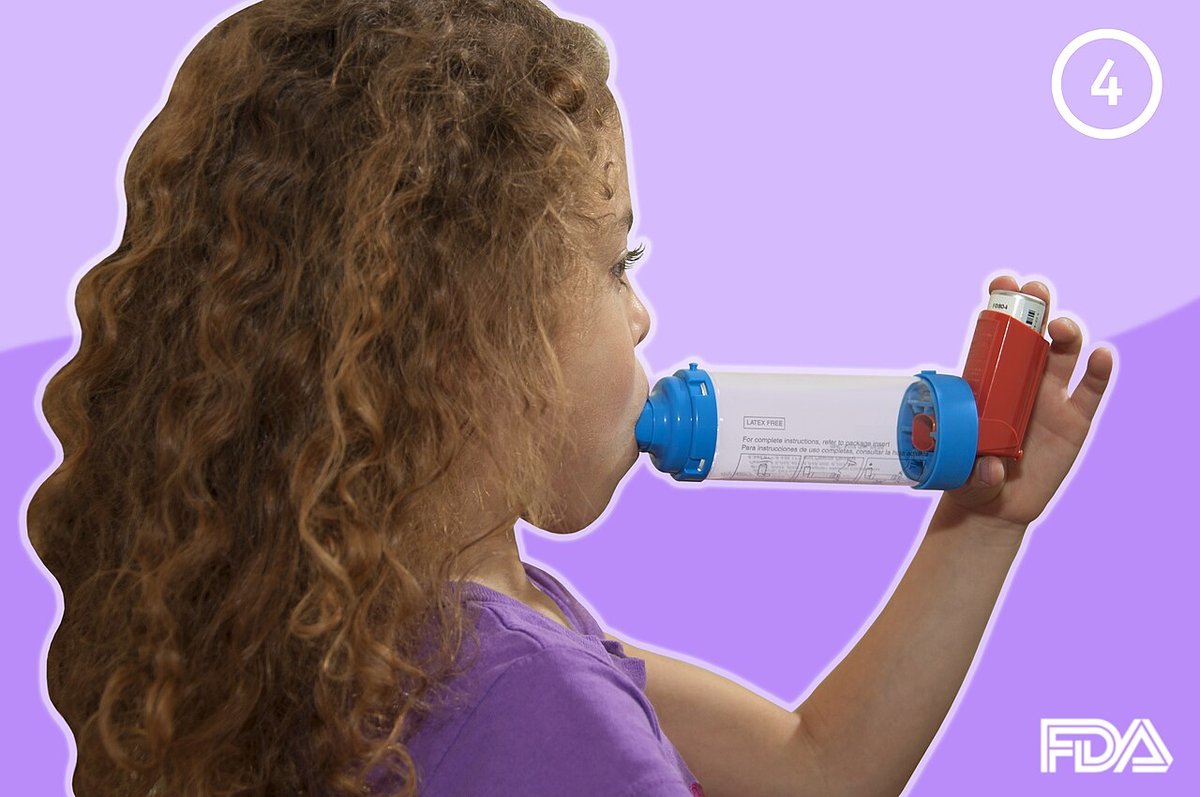
For many families of small children with asthma, the pattern is familiar: a cold arrives, the wheezing follows, and a few days later there is a course of oral steroids, or a night in the emergency department. Preschoolers catch six to ten colds a year, mostly in autumn and winter, and more than 60% of children's asthma attacks start with a viral infection. Vitamin D has long looked like a cheap way to break that chain. In 2017 two pooled analyses of trials suggested it cut steroid-treated asthma attacks by 26% and respiratory infections by 12%. Very few of the children in those trials were under five, or had severe asthma.
A trial published on 4 October 2026 in EClinicalMedicine, a Lancet journal, set out to fill that gap. The DIVA trial, led from the CHU Sainte-Justine and the University of Montreal, enrolled children aged 1 to 5 at nine paediatric asthma centres across Canada between 2018 and 2024. All had asthma set off mainly by colds, and all had needed oral steroids for an attack in the previous six months, or twice in the past year. Half of them had been admitted to hospital for asthma in the year before they joined. Almost all were already on daily inhaled steroid treatment.
Half the children got a 100,000 IU dose of vitamin D3 by mouth at the start and again three and a half months later, plus 400 IU every day. The other half got a dummy that looked and tasted the same. Neither the families, the doctors nor the analysts knew who got what. Over the seven months, the vitamin D group averaged about 1,350 IU a day, and it showed in their blood: ten days after the first dose their vitamin D level was 157 nmol/L higher than the placebo group's, and at the end of the trial 96% were at 75 nmol/L or above, against 62% on placebo.
The flare-ups did not follow. Children on vitamin D needed 0.67 rescue steroid courses each on average, against 0.71 on placebo, a 5% difference that could easily be chance (incidence rate ratio 0.95, 95% CI 0.70 to 1.30). In each group 69 children, about 43%, needed at least one course. Nasal swabs taken at each cold found nearly two lab-confirmed viral infections per child in both groups, mostly rhinovirus. Emergency visits, hospital stays, how long flare-ups lasted, how bad the symptoms were, how much reliever inhaler was used and how many days parents missed work were all about the same.
There are two caveats. First, the trial was meant to enrol 865 children and stopped at 323, 37% of the target, because COVID-19 made recruitment so slow. The authors are careful to say their result shows no benefit, not proof of no effect: the confidence interval still allows anything from a 30% drop to a 30% rise in steroid-treated attacks. Second, most of these children were not short of vitamin D to begin with. Only 6% had a level below 50 nmol/L, and children at high risk of deficiency were excluded for safety, so the trial says little about children who are actually deficient.
One subgroup stood out: children on the heaviest asthma treatment (GINA step 4) had about a third fewer steroid courses on vitamin D than on placebo. That was one of nine subgroup comparisons, the interaction test gave P = 0.059, and after correcting for testing many subgroups it was nowhere near significant. The authors say it is a reason for another trial, not for a change in treatment. On safety, the high doses caused no problems the team could find, though 14 children on vitamin D had a blood level above 250 nmol/L at some point, the ceiling the team watched for, against none on placebo.
The result fits the newer reviews, which, once more trials came in, no longer found that vitamin D prevents asthma attacks or respiratory infections. For a well-fed preschooler who is already getting enough vitamin D and is on proper inhaled treatment, extra-large doses are unlikely to keep the steroids away. Good controller treatment, used every day, remains the thing that works.
DIVA trial, nine paediatric asthma centres in Canada: 323 children aged 1 to 5 with cold-triggered asthma needing oral steroids, randomised to high-dose vitamin D3 or placebo for 7 months
323
Children randomised (160 vitamin D, 163 placebo); mean age 2.8 years, 65% boys
0.67 vs 0.71
Rescue oral steroid courses per child, vitamin D vs placebo (rate ratio 0.95, 95% CI 0.70 to 1.30)
1.73 vs 1.76
Lab-confirmed viral respiratory infections per child (rate ratio 0.99)
96% vs 62%
Children with blood vitamin D at 75 nmol/L or above at the end of the trial
37%
Share of the planned 865 children who could be enrolled before recruitment stopped
6%
Children whose vitamin D level was below 50 nmol/L at the start
Figures are from Ducharme, Tse, Daigneault and colleagues, 'High-dose vitamin D3 supplementation in the prevention of viral-induced asthma in high-morbidity preschoolers (DIVA): a randomised controlled trial in Canada', EClinicalMedicine, article 104216, doi 10.1016/j.eclinm.2026.104216, published online 4 October 2026 (open access, CC BY-NC-ND 4.0). Intervention: 100,000 IU vitamin D3 at randomisation and at 3.5 months plus 400 IU a day, about 1,352 IU a day on average; placebo matched. Primary outcome from Table 2, intention to treat, adjusted for site. Blood level gaps between groups of 157, 20 and 28 nmol/L at 10 days, 3.5 and 7 months; the 96% vs 62% figure is from the 59% of children with an end-of-trial blood test. GINA step 4 subgroup: interaction P = 0.059, 0.531 after Benjamini-Hochberg correction. Serious adverse events: 7 children (4%) on vitamin D, 13 (8%) on placebo. Recruitment ran Sept 2018 to April 2024 and was stopped early for slow accrual. Funded by the Canadian Institutes of Health Research; study drug and placebo supplied in kind by Euro-Pharm International Canada.
- Before joining, the children had a median of three acute care visits for asthma in the past year. During the seven-month trial the average was under half a visit per child in both groups, a drop the authors partly put down to better treatment and regression to the mean.
- Of 365 steroid courses recorded during the trial, only 223 counted. The biggest group of the rest were a second prescription to finish the same course, which would have counted one attack twice.
- Parents swabbed their child's nose on the second day of every cold or flare-up and kept the swab in the home freezer until the next clinic visit, where it was tested for ten respiratory viruses.
- The children's usual vitamin D intake from food and over-the-counter drops was about 300 IU a day, roughly half the 600 IU recommended for this age. For ethical reasons families in both groups could keep giving up to 400 IU a day of their own.
- A 2024 review of children's trials found a 38% drop in asthma attacks with vitamin D, with most of the benefit at doses under 2,000 IU a day, mainly in children who were not deficient. DIVA's average dose was in that range, and it still found none.
- High-dose vitamin D3 supplementation in the prevention of viral-induced asthma in high-morbidity preschoolers (DIVA): a randomised controlled trial in CanadaEClinicalMedicine, published online 4 October 2026 (open access, CC BY-NC-ND 4.0) · The trial: participants, dosing, results, safety and limitations
- PubMed record 42871976PubMed · Abstract and indexing
- Full text on PubMed CentralPMC (PMC13659669) · Open-access full text with the outcome and safety tables
- Trial registration NCT03365687ClinicalTrials.gov · Registered 7 December 2017, before the first child was enrolled
- Treating Kids with AsthmaWikimedia Commons · Image, public domain, by the U.S. Food and Drug Administration
General information, not medical advice. Don't change or stop a child's asthma medicines without talking to their doctor. High-dose vitamin D should only be given to children under medical supervision; ask your doctor or pharmacist about the right daily dose for your child's age.
Analysis by NutroPractic from the sources listed. Written for general readers; it does not replace advice from your own doctor.
From our articles
Our guides on this subject
Plain-language guides on nutrition and wellness, backed by research.
Micronutrients
Vitamin D and B12: two common gaps, from northern winters to vegetarian kitchens
Vitamin D runs low in Canadian and European winters, and surprisingly often in sunny India too. Vitamin B12 is a risk for vegetarians, people over 50 and people on certain medicines. Who is at risk, what the official advice is in North America, Europe and India, and where to get both.
3 Oct 2026
Supplements and vitamins
Spermidine from food or capsules: measured milligrams in wheat germ, soybeans and cheese, and what the one year-long trial found
Wheat germ holds about 22 to 34 mg of spermidine per 100 g, matured cheese about 0.12 mg. The only year-long capsule trial used 0.9 mg a day and found no memory benefit. Measured values, worked doses and safety.
22 Nov 2026

Supplements and vitamins
Zinc carnosine for the gut lining: what the two human trials gave, the zinc in each dose, and the copper catch
Zinc carnosine is only about 22.6% zinc, so 75 mg twice a day is roughly 34 mg of zinc a day. Here are the doses and results of the 10-person NSAID permeability trial and the 20-person aspirin pilot, and the copper cautions.
22 Nov 2026
Newsfeed for your website
Want this feed on your website?
Add it to any site with one copy-and-paste snippet. No sign-up, and it updates itself every hour.
Start with a virtual consultation
Tell Dr. Triveni what you want to change. You will leave with a clear next step, whether you are in Toronto, London, New York or Chennai.