Weight loss · October 8, 2026
Women at higher risk of breast cancer lost almost 11 kg in 12 weeks on shakes and vegetables. A year later most were still about 8 kg down, though only 4 of 47 had signed up to lower their cancer risk
In a Manchester programme, 47 women in their 30s and 40s living with obesity swapped their meals for 850 kcal a day of shakes and non-starchy vegetables for three months, then moved to a Mediterranean-style diet with remote dietitian support. Nearly eight in ten finished the year, but four in ten needed a 'reset' after regaining weight, and the strength exercises mostly didn't happen.
Carrying excess weight is one of the few risk factors for breast and womb (endometrial) cancer that a person can change, and studies suggest that losing 10% of body weight or more may matter more than smaller losses. Weight-loss surgery delivers that, but it is not something most people want or that health services can offer widely. A team at Manchester University NHS Foundation Trust and the University of Manchester tested a less drastic route: total diet replacement, in which ordinary meals are swapped for nutritionally complete shakes for a few months. Their report on how women coped with a year of it was published in BMJ Open on 28 September 2026.
The 47 women were aged 30 to 50, premenopausal and living with obesity (median BMI 35.9), and all were at increased risk of breast or endometrial cancer; most were recruited through a family-history breast cancer clinic. For 12 weeks they had about 850 kcal a day: three meal-replacement sachets plus five to eight portions of non-starchy vegetables. Over the next four weeks food came back in steps, from 1,000 to 1,500 kcal a day, and for the rest of the year they followed a portion-controlled Mediterranean-style diet, either every day or with one or two 850 kcal days a week. Support came remotely through an app and video or phone calls with a dietitian, with a psychologist for those who needed one. Anyone who regained 2 kg or more could go back on the shakes for two weeks.
Weight fell quickly and much of the loss lasted. The median woman weighed 98.3 kg at the start and was 10.8 kg lighter at three months, 11.5 kg lighter at six months and 8.4 kg lighter at 12 months, with waists about 13 cm smaller. At a year, 46% of the women still in the programme had lost at least 10% of their starting weight. They kept to the low-calorie days 93% of the time; birthdays, religious festivals, holidays, illness and stress were the usual reasons for a day off. Scores for weight-related quality of life and binge eating improved, while scores for depression, anxiety and physical activity did not change.
The harder parts were just as clear. Nineteen women (40%) needed at least one reset after regaining weight, most often between months six and nine. The resistance exercise plan, meant to protect muscle, was largely ignored: the median was zero sessions a week, and the women lost about 2.4 kg of fat-free mass by 12 months. Most joined to lose weight or gain energy; only four named lowering their cancer risk. The study had no comparison group for the full year (a delayed-start group served as controls only for the first three months), the women were mostly White British and well educated, and its main aim, changes in breast and womb tissue, will be reported separately. The authors say controlled trials with longer follow-up are needed before such programmes become routine in cancer-risk clinics.
A year on shakes, then food
47
Premenopausal women aged 30 to 50 with obesity and a raised risk of breast or womb cancer
850 kcal
Daily intake for the first 12 weeks: three meal-replacement sachets plus non-starchy vegetables
−10.8 kg
Median weight change at 3 months, from a starting median of 98.3 kg
−8.4 kg
Median weight change at 12 months, among the 37 women (79%) who completed the year
40%
Needed at least one two-week 'reset' on the shakes after regaining 2 kg or more
0
Median resistance exercise sessions a week during the shake phase, against three prescribed
Figures are medians from the open-access paper in BMJ Open (28 September 2026, CC BY 4.0). The 12-month figure counts only women who finished the programme. Part of the PROBE-TDR study (ISRCTN15358157), funded by Cancer Research UK and the NIHR Manchester Biomedical Research Centre; no competing interests declared.
- The women had gained a median of 30 kg since the age of 18, and their median estimated lifetime risk of breast cancer was 20.9%, above the 17% line that UK guidance uses for moderate risk.
- Of 897 women contacted by letter from the family-history clinic, 92 replied with interest, a reminder of how few people come forward for intensive diet programmes even when they are offered.
- About 68% of the women met the criteria for extra psychological support, most of them at the start; the psychologist's sessions aimed to spot what was getting in the way of sticking to the diet and to work out ways around it.
- Adherence and weight loss with a total diet replacement programme for increased cancer risk associated with obesity: a UK cohort studyBMJ Open, 28 September 2026 · Open access; all figures in this item
- Full text on PubMed CentralPMC, US National Library of Medicine · Methods, tables of weight change and adherence
- PROBE-TDR study registration (ISRCTN15358157)ISRCTN registry · Trial registration
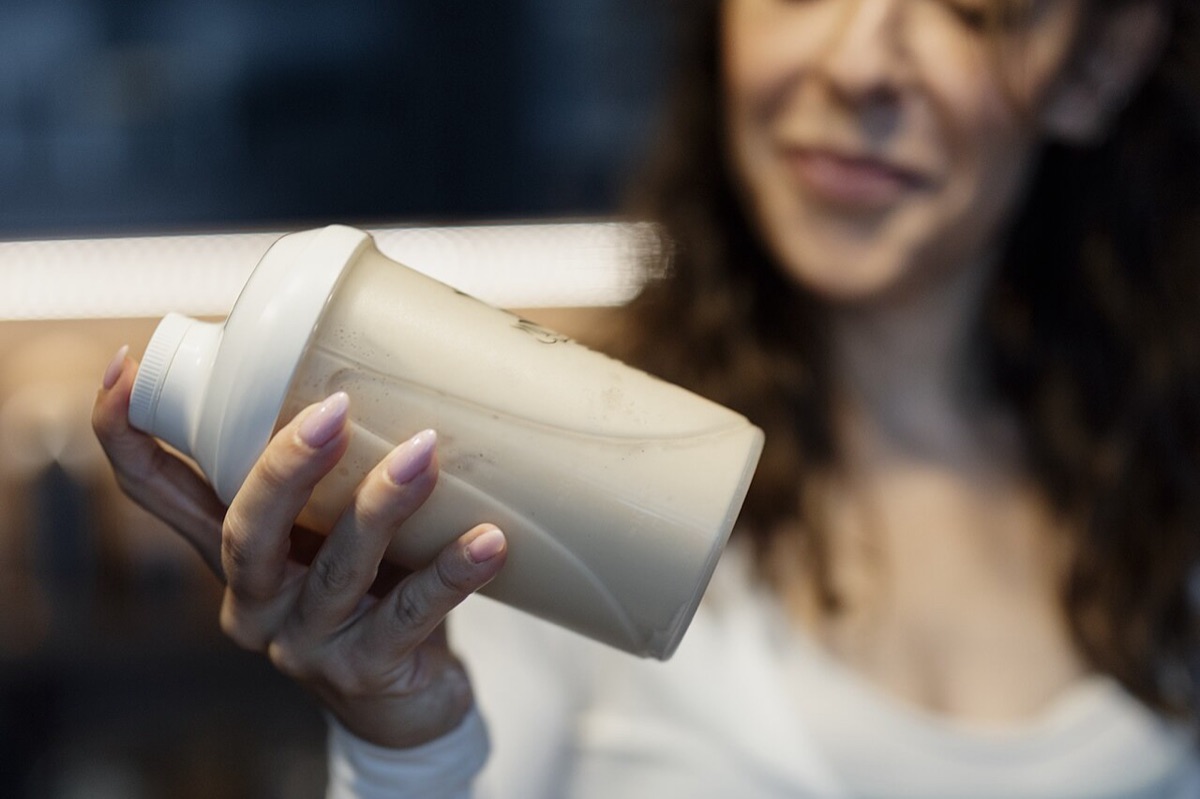
- Mixing a protein shake in a kitchen while preparing to serve a drink (photo)Shixart1985, via Wikimedia Commons · CC BY 2.0 image
General information, not medical advice. Very low calorie diets of around 850 kcal a day are not suitable for everyone, including people who are pregnant or breastfeeding, have type 1 diabetes, take insulin or some other medicines, or have a history of eating disorders, and they can cause side effects such as gallstones. Programmes like this one were run with dietitian and medical supervision; talk to your doctor or a qualified dietitian before trying one.
Analysis by NutroPractic from the sources listed. Written for general readers; it does not replace advice from your own doctor.
Newsfeed for your website
Want this feed on your website?
Add it to any site with one copy-and-paste snippet. No sign-up, and it updates itself every hour.
Start with a virtual consultation
Tell Dr. Triveni what you want to change. You will leave with a clear next step, whether you are in Toronto, London, New York or Chennai.