Food and the planet · October 9, 2026
Swap every spoonful of added sugar for stevia and the climate bill doesn't move. The water bill goes up 11%
A European team took the diets of Dutch adults who eat a lot, removed all 54 grams a day of added sugar on paper, and put stevia and sugar alcohols in its place. The carbon footprint came out exactly the same. What changed was where the emissions came from: fizzy drinks got cleaner, cakes and sweets got dirtier, and the whole diet drank more water.
Most research on sweeteners asks what they do to our bodies. A team from the University of Surrey, the Dutch food-data firm Blonk and partners in the EU-funded SWEET project asked a different question: if a whole diet swapped its added sugar for a low-calorie sweetener, what would happen to the planet? Their answer appeared in the European Journal of Nutrition on 7 October 2026, and it is the first attempt to do the sum across an entire diet rather than for one drink or one yogurt.
They started from the Dutch national food survey of 2019 to 2021 and picked the 143 adults aged 18 to 50 (72 men, 71 women) who ate more than 2,200 kcal a day, an average of 2,866. Using recipe data they estimated 54 grams of added sugar a day, 8% of calories, which the authors themselves think is on the low side. Then every gram was replaced on paper with a stevia extract plus whatever had to fill the space sugar left behind: sorbitol in cakes, biscuits and sweets, plain water in soft drinks, a maltitol syrup where glucose syrup had been, milk in dairy desserts, and stevia alone in the sugar people stir into tea. Each food was then linked to life-cycle data covering farming, processing, transport, packaging, cooking and waste.
The carbon footprint of the sweetener diet was 4.18 kg of CO2-equivalent a day, exactly the same as the sugar diet. Underneath, things moved in opposite directions. Soft drinks got about 16 grams of CO2 a day cleaner, because stevia and water have a smaller footprint than beet sugar. Cakes and sweet biscuits went up by 6.6 grams and sugar and confectionery by 5.1, because sorbitol is made by further processing glucose from wheat starch and costs more to produce than the sugar it replaces. Land use barely changed and nutrient run-off into the sea fell 3%, but water use rose 11%, from about 119 to 133 litres a day per person. Calories fell 5%, from 2,866 to 2,728 a day, and total sugars dropped from 125 to 71 grams.
The team then let a computer adjust both diets as little as possible to meet Dutch nutrient targets, and again to also hit a 2030 food emissions target of 2.04 kg CO2 a day, roughly half of today's figure. Both diets needed almost the same amount of change to get there, mostly fewer sweet snacks, more legumes and nuts and, for the climate goal, less meat. Water use rose when legumes doubled and fell 11 to 15% once meat came down. The authors' reading is that sweeteners neither help nor hurt the climate much, so the case for cutting sugar can rest on health. They are open about the limits: replacing every gram of sugar is a thought experiment, only 42% of foods matched the life-cycle database directly, all sugar was assumed to be beet (cane, about 80% of world supply, has a bigger footprint on most measures), and real products are usually reformulated more cleverly than with one bulking agent. Some authors have industry ties: one works for the ingredients company Cargill, and others declared honoraria or project funds from sweetener and beverage associations.
One diet, two ways to sweeten it
4.18 = 4.18
Daily carbon footprint (kg CO2-equivalent per person) with added sugar and with stevia and sugar alcohols
+11%
Water use of the sweetener diet, about 133 litres a day against 119
54 g
Added sugar a day removed from the diet, 8% of calories by the authors' estimate
−16 g
CO2 a day saved in soft drinks, offset by rises of 6.6 g in cakes and biscuits and 5.1 g in sweets
2,866 → 2,728
Calories a day before and after the swap, a 5% drop
25.8 g
Sorbitol a day needed to fill the space sugar left in solid foods
Figures from the open-access paper in the European Journal of Nutrition (published 7 October 2026), a modelling study using the Dutch National Food Consumption Survey 2019 to 2021 (143 adults aged 18 to 50 eating over 2,200 kcal a day) and life-cycle assessment data. No one changed their diet; both diets are calculated. Funded by the EU Horizon 2020 programme (grant 774293). Declared interests: one author works at Cargill; others received honoraria or project funds from Nestlé, Unilever, the International Sweeteners Association or the American Beverage Association.
- The stevia extract in the model is so sweet that about 4 grams can stand in for the sweetness of a whole kilogram of sugar, which is why something else has to replace the bulk.
- Sorbitol is only about 0.6 times as sweet as sugar, so in the model it needed a little stevia added to taste the same.
- The stevia in the whole-diet swap came to about 18% of the acceptable daily intake for a 75 kg adult, well within limits but enough that the authors say it would need watching.
- The 25.8 g of sorbitol a day is a FODMAP, a type of carbohydrate that the paper says could upset digestion for some 18 to 22 million people in Europe.
- WHO advised in 2023 against using non-sugar sweeteners to control body weight, saying they bring no long-term benefit in body fat for adults or children.
- Environmental impact ramifications of replacing added sugar with non-nutritive sweeteners in a high-calorie Dutch diet: the SWEET projectEuropean Journal of Nutrition, 7 October 2026 · The study (open access); methods, numbers, limits and declared interests in this item come from its full text
- Abstract on PubMed (PMID 42842000)PubMed, US National Library of Medicine · Free abstract and conflict of interest statement
- WHO advises not to use non-sugar sweeteners for weight control in newly released guidelineWorld Health Organization, 15 May 2023 · WHO's position on sweeteners and weight
- Guideline: sugars intake for adults and childrenWorld Health Organization, 2015 · The advice to keep free sugars under 10% of daily energy
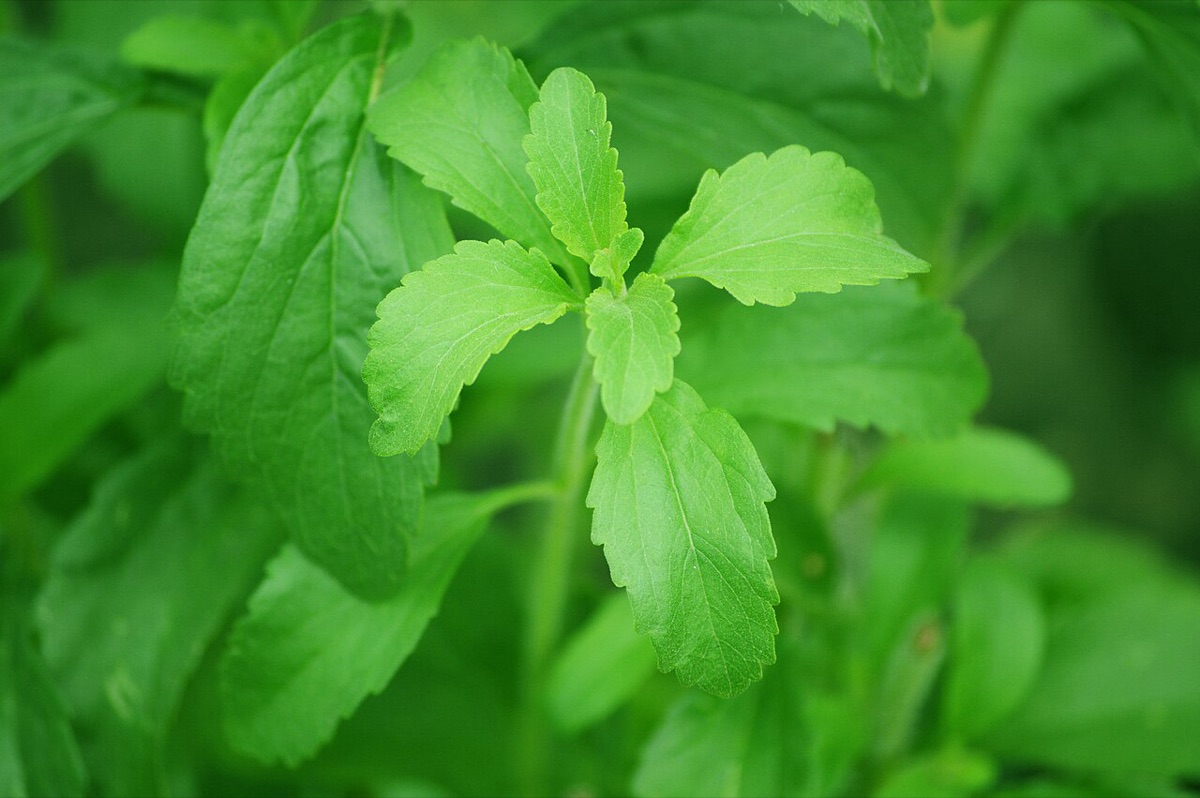
- Stevia plant (photo)Robert Lynch (Flyingbikie), via Wikimedia Commons · CC0 image
General information, not medical advice. This is a modelling study of environmental impact, not a test of anyone's health, and it doesn't say whether sweeteners are good or bad for you. If you are thinking of changing how much sugar or sweetener you eat, especially with diabetes, digestive problems or a weight goal, talk to your doctor or a qualified nutrition professional.
Analysis by NutroPractic from the sources listed. Written for general readers; it does not replace advice from your own doctor.
Newsfeed for your website
Want this feed on your website?
Add it to any site with one copy-and-paste snippet. No sign-up, and it updates itself every hour.
Start with a virtual consultation
Tell Dr. Triveni what you want to change. You will leave with a clear next step, whether you are in Toronto, London, New York or Chennai.