Inherited metabolic disorders · October 21, 2026
Seven teenagers with PKU had lived on about 6 grams of natural protein a day. A year on a newer drug, they were eating 70 grams, and four had stopped their protein formula
Phenylketonuria means a lifelong diet with almost no meat, fish, eggs or dairy, topped up by a special protein drink. Dietitians at a Birmingham children's hospital looked back at seven teenagers who switched to sepiapterin, a drug approved in 2025. Their blood levels stayed under control while their plates filled up. It is a case series of seven, though, and the drug's maker paid the publication fee.
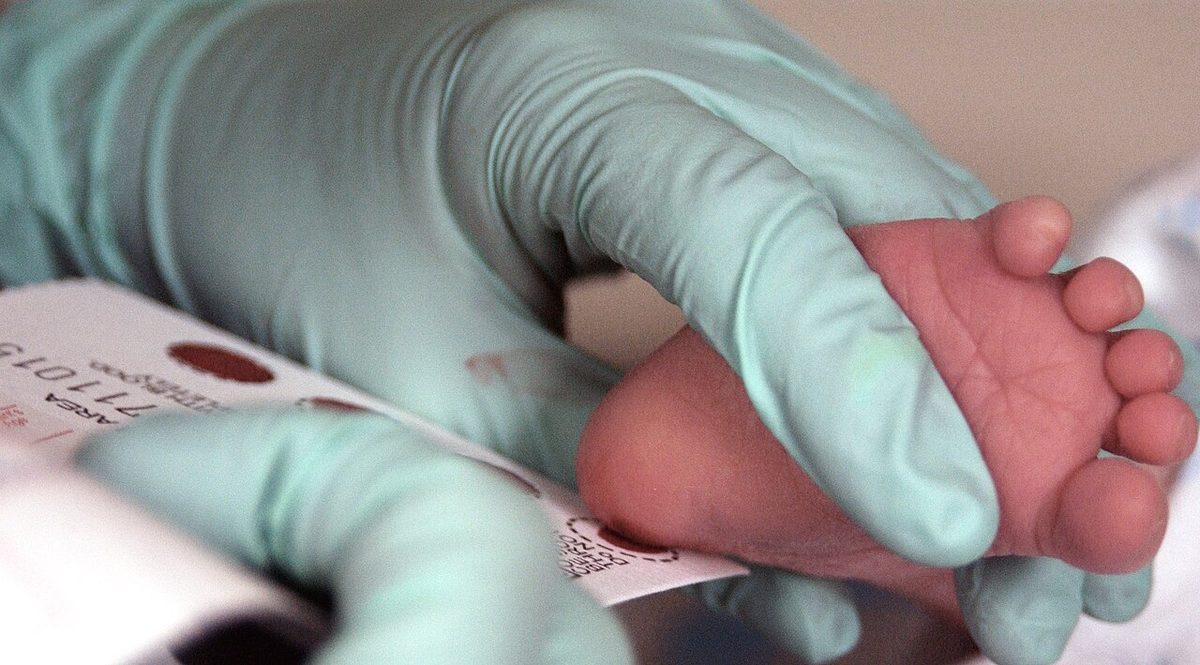
Babies born with phenylketonuria, or PKU, cannot properly break down phenylalanine, an amino acid found in almost every protein. Left untreated it builds up and damages the brain, which is why newborns in many countries have a heel-prick blood test in their first days. The treatment that follows is food: very little meat, fish, eggs, dairy, beans or nuts, special low-protein bread and pasta, and a phenylalanine-free protein drink, the protein substitute, taken several times a day for life. Teenagers find it hardest to keep up, and their blood levels often climb.
A paper published in Nutrients on 15 October looks at what happened when seven teenagers at Birmingham Children's Hospital in England moved to sepiapterin, a once-a-day drug approved in the European Union and the United States in 2025. All seven, five boys and two girls, had been diagnosed through newborn screening and started the drug at a median age of 13. Five had already been taking the older drug sapropterin, which works in only about 30 to 40% of people with PKU, and two had never responded to it and were on diet alone. They had first received sepiapterin in the drug's phase 3 trials and stayed on it afterwards.
The change on their plates was large. On diet alone, the seven ate a median of 6.5 grams of natural protein a day, the protein in ordinary food. Those on sapropterin managed 20 grams. After 12 months on sepiapterin, the median was 70 grams, with every teenager eating more than before. Dietitians raised the allowance step by step, guided by monthly blood tests: the median went from 24 grams after the first month to 70 grams at a year, while the protein substitute fell from a median of 80 grams' worth to none. Four of the seven stopped the drink completely, three of them within eight months. All seven added meat; six added fish and six cheese; five added milk or yoghurt and five eggs.
Blood control did not suffer. The average blood phenylalanine level was 260 µmol/L on sepiapterin, against 303 on diet alone and 321 on sapropterin, and a median of 83% of each teenager's readings were at or below the 360 µmol/L target used in American guidelines, against 68% on diet alone and 66% on sapropterin. Total protein, from food and formula together, came to a median of 90 grams a day, about 1.4 grams per kilogram of body weight. There were no serious side effects and none the team linked to the drug, though colds and glandular fever briefly pushed blood levels up, as illness does in PKU.
One finding the authors flag themselves: weight. At the start, two teenagers were overweight and one had obesity; after the year, three were overweight and two had obesity. With only seven teenagers who were also growing up, nobody can say whether the drug, the new foods or ordinary adolescence was behind it. The authors' point is practical: young people who have never chosen or cooked unrestricted food may need dietitians to help with portions and food choices, not just with adding protein.
The limits are plain. This was a look back through hospital records at seven patients, with no comparison group. The diet-only and sapropterin periods came earlier, when the teenagers were younger, and food intake was measured differently in each period, by a one-day recall before and three-day food diaries on sepiapterin. Their trial data also overlap with the published phase 3 results. Quality of life, school performance and how much easier daily life felt were not measured. PTC Therapeutics, which makes sepiapterin, paid the publication fee and, the paper says, had no other role; several authors have received research, advisory or travel funding from PTC and from makers of PKU formulas. In the AMPLIPHY trial, a separate four-week crossover comparison, sepiapterin lowered blood phenylalanine about 70% more than sapropterin.
Seven teenagers with PKU at one English hospital: diet alone, then sapropterin (five of them), then 12 months of sepiapterin
6.5 → 20 → 70 g
Median natural protein a day: diet alone (7 teens), sapropterin (5), sepiapterin after 12 months (7)
4 of 7
Teenagers who stopped their protein substitute drink completely, three of them within eight months
80 g → 0 g
Median protein from the substitute drink, first month vs 12th month on sepiapterin
303 / 321 / 260
Mean blood phenylalanine in µmol/L: diet alone, sapropterin, sepiapterin
68% / 66% / 83%
Median share of each teen's blood tests at or under the 360 µmol/L target, same three periods
90 g a day
Median total protein on sepiapterin, about 1.4 g per kg of body weight
7 / 6 / 6 / 5
Teens who added meat / fish / cheese / milk or yoghurt (five also added eggs)
3 → 5
Teens who were overweight or had obesity, before vs after the sepiapterin year
Study: Pinto A, Daly A, Vijay S, Evans S, MacDonald A, 'Sepiapterin Enables Liberalisation of Natural Protein Intake While Improving Metabolic Control in Adolescents with Phenylketonuria', Nutrients 2026, 18(20):3376, published 15 October 2026, doi 10.3390/nu18203376 (open access). Retrospective case-record review at Birmingham Children's Hospital, UK, of all seven early-treated adolescents (5 male, 2 female; median age at starting sepiapterin 13, range 12–17) who had taken part in the phase 3 APHENITY and/or AMPLIPHY trials and continued sepiapterin at the licensed 60 mg/kg once a day; five had been on sapropterin at 20 mg/kg/day. Sepiapterin data February 2023 to January 2026. Ranges: natural protein 4.5–15 g (diet alone), 10–25 g (sapropterin), 34–90 g (sepiapterin); total protein on sepiapterin 70–114 g. Blood phenylalanine as mean ± SD: 303 ± 157, 321 ± 136 and 260 ± 116 µmol/L, from dried blood spots over 12 months of each period. Readings at or under 600 µmol/L (the European target): median 96%, 94% and 98%. Diet measured by 24-hour recall before sepiapterin and 3-day records during it. Of the three teens still on protein substitute, one kept the same amount, one reduced it and one needed more for growth. No serious or treatment-related adverse events. Funding: PTC Therapeutics paid the publication fee only; authors declare research, advisory or meeting funding from PTC Therapeutics, BioMarin, Nutricia, Vitaflo and other companies. AMPLIPHY figure from Giżewska et al., Metabolism 2026. Side facts from Wikipedia's Phenylketonuria and Sepiapterin articles.
- PKU was discovered in 1934 by the Norwegian doctor Ivar Asbjørn Følling, after a mother of two children with learning disabilities noticed a strong smell in her son's urine.
- PKU was the first condition picked up by mass newborn screening. Robert Guthrie's blood-spot test arrived in the early 1960s; Ireland began national screening in 1966 and England in 1968.
- The sweetener aspartame is made partly from phenylalanine, so people with PKU must avoid it, which is why diet drinks carry a phenylalanine warning.
- How common PKU is varies widely: about 1 in 10,000 births among white Americans, about 1 in 2,600 in Turkey, and fewer than 1 in 100,000 in Finland and Japan.
- International PKU Day is 28 June, the shared birthday of Robert Guthrie and Horst Bickel, a German doctor who helped develop the first diet treatment for PKU.
- Sepiapterin Enables Liberalisation of Natural Protein Intake While Improving Metabolic Control in Adolescents with PhenylketonuriaNutrients, October 2026 · The paper: full text, open access
- Efficacy and safety of sepiapterin versus sapropterin in patients with phenylketonuria: the AMPLIPHY trialMetabolism, 2026 · The phase 3 head-to-head comparison with sapropterin
- PhenylketonuriaWikipedia · History, screening, aspartame and how common PKU is
- SepiapterinWikipedia · Approval dates in the EU and the US
- Phenylketonuria testingWikimedia Commons · The photo, public domain (U.S. Air Force)
General information, not medical advice. This is a small case series without a comparison group, not a trial. PKU diets must never be relaxed without the specialist metabolic team: any change to medicine, protein allowance or protein substitute needs their guidance and regular blood tests.
Analysis by NutroPractic from the sources listed. Written for general readers; it does not replace advice from your own doctor.
From our articles
Our guides on this subject
Plain-language guides on nutrition and wellness, backed by research.
Everyday eating
Collagen powders for skin and joints: dose, protein quality and what the trials measured
A 10 g scoop gives 9 g protein, but its protein quality score is zero. Here is what 19 skin trials and knee studies measured at 2.5 g to 10 g daily—and what collagen cannot do.
10 Nov 2026
Everyday eating
Protein bars and shakes: what you get per 100 calories
Four current labels range from 6.3 to 20 g protein per 100 kcal. Here is how bars, shakes, eggs, yogurt and lentils compare—and when a supplement actually helps.
6 Nov 2026
Everyday eating
Food label claims decoded: 'no added sugar', 'multigrain', 'natural' and 'high protein'
A no-added-sugar biscuit with only 13% fewer calories. A 7-grain loaf with refined flour listed first. A 'high protein' bar that clears the legal line at 21%. What each claim legally requires in the EU/UK, US and India, with worked reads of real packs.
2 Nov 2026
Newsfeed for your website
Want this feed on your website?
Add it to any site with one copy-and-paste snippet. No sign-up, and it updates itself every hour.
Start with a virtual consultation
Tell Dr. Triveni what you want to change. You will leave with a clear next step, whether you are in Toronto, London, New York or Chennai.