Research methods · October 9, 2026
Two in three Americans who called themselves vegetarian had eaten meat, chicken or fish when asked what they ate the day before
In a US national health survey, 2.2% of adults said they were vegetarian. Then the same people listed everything they had eaten the previous day, and 68% of them named meat, poultry or fish. A new analysis shows what that gap does to studies of vegetarian diets: for one outcome, the apparent effect flipped direction.
Studies of vegetarian diets usually start with a simple question: are you a vegetarian? The answer sorts people into two groups, and everything that follows, from cholesterol to bone density to mood, is compared between them. A paper published in the International Journal of Epidemiology on 6 October 2026, by researchers at Charité in Berlin, the German Federal Institute for Risk Assessment and Boston University, asks how much that first answer can be trusted, and what happens to the results when it can't.
They used the US National Health and Nutrition Examination Survey (NHANES) for 2007 to 2010, which asked adults whether they considered themselves vegetarian and, separately, took two 24-hour dietary recalls in which people listed everything they had eaten and drunk the day before. The study counted a day as vegetarian if it had no meat, poultry or seafood. Of 11,180 adults, 2.2% said they were vegetarian. More than two in three of them (68%) reported meat, poultry or fish on at least one recall day, and 52% on both. Going the other way, 1.6% of self-declared non-vegetarians reported none in their recalls, which is not surprising over a day or two. Measured against the recalls, the vegetarian question had a sensitivity of 32% and a specificity of 98%.
The team then looked at four outcomes linked to vegetarian diets in earlier research: low bone density, high total cholesterol, depression and poor bowel health. They ran each analysis with the self-report, with the recalls, with both combined, and with three statistical corrections for misclassification (a method called probabilistic bias analysis, repeated 100,000 times per scenario). The answers moved around. For depression, self-reported vegetarians had lower odds than everyone else (odds ratio 0.76), but defining vegetarians by the recalls gave higher odds (1.14), and the corrected estimates ranged from 1.09 to 1.49. For low bone density, one correction more than doubled the apparent effect, from 1.11 to 2.16. The mistakes weren't random either: how well the label matched the recalls differed between people with and without each condition, which statisticians call differential misclassification and which can push results in either direction.
None of this says whether a vegetarian diet is good or bad for any of these outcomes, and the authors say so: that wasn't the question. Most of the estimates, before and after correction, had wide intervals that included no effect at all. Two recall days are not a gold standard; someone who eats fish once a week may simply call themselves vegetarian, and the data are more than 15 years old. The point is narrower and useful: 'vegetarian' means different things to different people, and when a study relies on the label alone, its findings may say more about who chooses the label than about what is on the plate. When you next read that vegetarians have more or less of something, it's worth checking how the study decided who counted.
How well 'I'm vegetarian' matched what people ate
11,180
US adults aged 20 and over in NHANES 2007 to 2010 who answered the vegetarian question and gave at least one 24-hour food recall
2.2%
Share who said they were vegetarian
68%
Self-declared vegetarians who reported meat, poultry or fish on at least one of the recall days; 52% did on both
32%
Sensitivity: of people with no meat, poultry or seafood in their recalls, the share who called themselves vegetarian
0.76 vs 1.14
Odds ratio for depression in vegetarians when defined by self-report, and when defined by the food recalls; neither was statistically clear
1.11 to 2.16
Odds ratio for low bone density before and after one of the three misclassification corrections
Figures from the open-access paper in the International Journal of Epidemiology (published 6 October 2026), a secondary analysis of public NHANES data from the 2007-08 and 2009-10 cycles. Odds ratios are adjusted for each outcome's set of confounders and use the survey weights; values above 1 mean higher odds in vegetarians. The authors report no specific funding for the study.
- Self-declared vegetarians in the survey differed from everyone else in ways that also affect health: fewer smoked (10% against 22%), fewer drank heavily (5% against 13%), more had a college education (58% against 46%) and their median waist was 5 cm smaller.
- Most of the meat, poultry and fish reported by self-declared vegetarians turned up in the second recall, not the first.
- A review cited by the authors found that 60% of systematic reviews in nutrition research mention misclassification of what people eat, but only 13% discuss which way it might push the results or by how much.
- Nutrition research was among the fields that least often used quantitative bias analysis, the set of methods this paper applies, according to an earlier review of epidemiology studies.
- The authors published their analysis code with the paper, and NHANES data are free to download, so anyone can re-run the numbers.
- Exposure misclassification of self-reported vegetarian diet and its impact on health outcomesInternational Journal of Epidemiology, 6 October 2026 · The study (open access, CC BY); methods, results and funding in this item come from its full text
- Full text on PubMed Central (PMC13641060)PubMed Central, US National Library of Medicine · Free full text, including the 2x2 tables and the bias-adjusted odds ratios
- PubMed record 42837416PubMed, US National Library of Medicine · Abstract and indexing
- National Health and Nutrition Examination SurveyUS Centers for Disease Control and Prevention, National Center for Health Statistics · The public survey data the study used
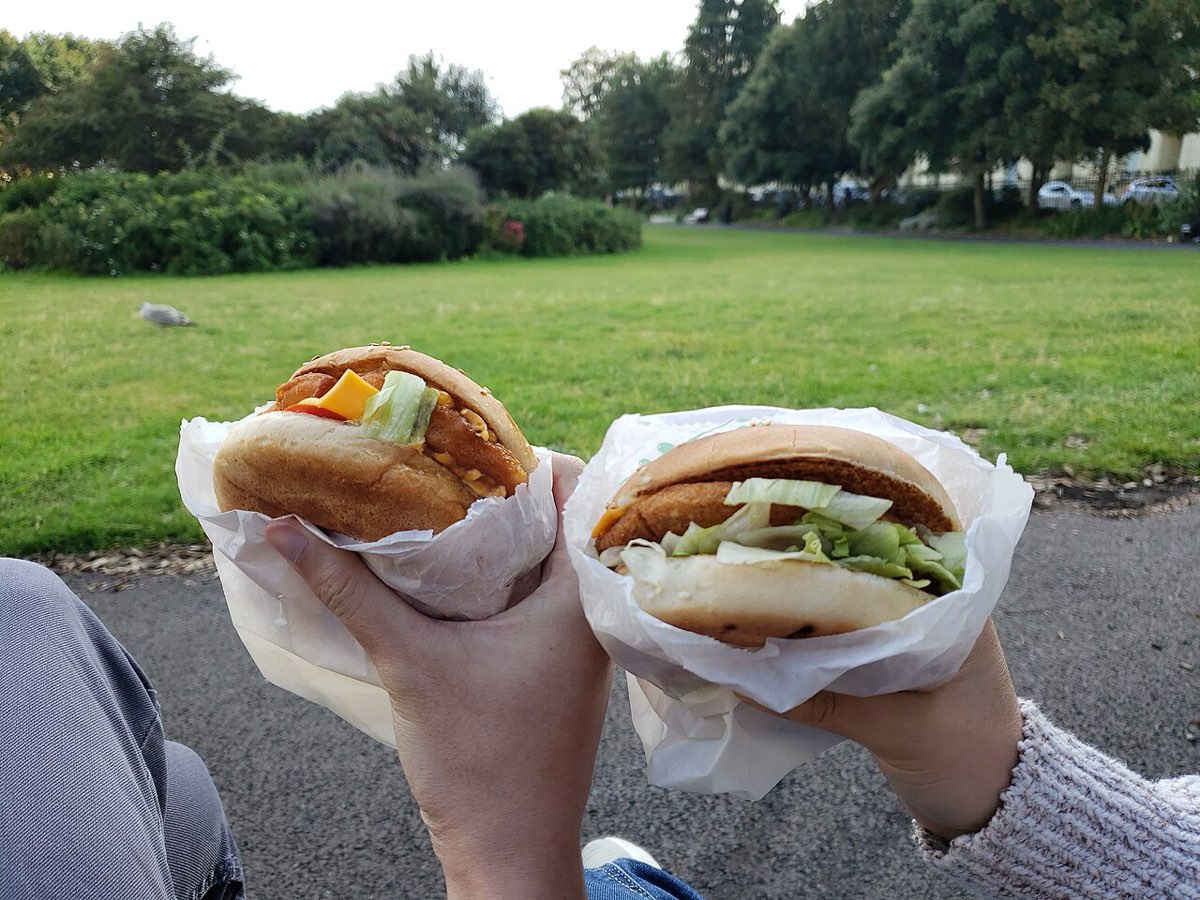
- Chicken cheese burger and Mexican vegetarian burger (photo)Andy Li, via Wikimedia Commons · CC0 image, resized
General information, not medical advice. This study looks at how diet is measured in research; it doesn't show that a vegetarian diet helps or harms bone, cholesterol, mood or bowel health. If you're changing your diet for a health condition, talk to a doctor or a registered dietitian.
Analysis by NutroPractic from the sources listed. Written for general readers; it does not replace advice from your own doctor.
Newsfeed for your website
Want this feed on your website?
Add it to any site with one copy-and-paste snippet. No sign-up, and it updates itself every hour.
Start with a virtual consultation
Tell Dr. Triveni what you want to change. You will leave with a clear next step, whether you are in Toronto, London, New York or Chennai.