Menopause · November 3, 2026
Saltier eating habits came with about 1.5 times the odds of bothersome hot flushes in 3,664 midlife women. Three questions did the sorting
A Korean study followed 3,664 women in their forties for a median of five and a half years. Those who salted their food more had more troublesome hot flushes and night sweats, even after weight and blood pressure were taken into account. The salt was never measured, though, and that matters.
Hot flushes and night sweats are usually put down to hormones, and hormones are certainly most of it. But somewhere between half and three quarters of women get them, some far worse than others, and researchers keep looking for everyday habits that tip the balance. A cohort study published in Nutrients on 31 October looked at one that rarely comes up: how salty a woman eats.
The women came from the Korean Longitudinal Study of Midlife Women, run at a large health screening centre in Seoul. They joined between 2014 and 2018, aged 42 to 52, still having periods or only just starting to see changes, and not on hormone therapy. They were followed with questionnaires every one to two years until July 2024. After exclusions, 3,664 women were analysed. Their average age at the start was 45.6.
Salt was not measured in urine or food diaries. Instead the women answered three short questions: how salty they thought their eating was, whether they added salt or soy sauce to food that was already cooked, and whether they ate fried food with soy sauce. The answers added up to a score from 0 to 36, and the researchers split the women into three groups: 10 or under, 11 to 16, and 17 or over. Hot flushes, night sweats and sweating were scored with a standard menopause questionnaire, and the outcome was whether these were, on average, bothersome. At the start, about 1 in 5 women were already in that range.
Over the follow-up, women in the middle and top salt groups had about 1.5 times the odds of bothersome symptoms compared with the lowest group (odds ratios 1.48 and 1.51). That held after allowing for age, menopausal stage, smoking, exercise, education, body mass index and high blood pressure, and it held when women with high blood pressure were left out. When the salt score from one visit was used to predict symptoms at the next, the top group still stood out (odds ratio 1.64), though the middle group no longer did.
There is a curious detail in the body-fat results. Among women with 35% body fat or more, those in the top salt group had more than twice the odds of bothersome symptoms (2.24). Among leaner women, the odds rose from the lowest to the middle group and then stopped climbing. The authors are careful here: once they corrected for testing several body measures at once, the difference between the two groups was not statistically convincing, so they call it exploratory.
The weak spot is the exposure itself. In the study that first built these three questions, the total score lined up only modestly with sodium in a 24-hour urine sample (a correlation of 0.26). More than 1,100 women were dropped because they skipped the optional salt questions, and over half of those analysed had only one visit. Women who salt their food heavily may also differ in other ways, from processed food to coffee to vegetables, and diet quality was not recorded. The authors call the findings hypothesis-generating, and say only a trial that actually cuts salt could show whether that eases hot flushes. For now, current menopause guidelines don't list salt reduction as a treatment for them.
Salt intake habits and vasomotor symptoms in middle-aged Korean women (Nutrients, 31 October 2026)
3,664
Women aged 42 to 52 at entry, recruited 2014 to 2018 at a Seoul health screening centre and followed to July 2024
5.6 years
Median follow-up among the women who had more than one visit
0 to 36
Salt habit score from three questions; groups were 10 or under, 11 to 16, and 17 or over
1 in 5
Women who already had bothersome hot flushes, night sweats or sweating at the start
1.48 and 1.51
Odds of bothersome symptoms in the middle and top salt groups against the lowest (95% CIs 1.22 to 1.80 and 1.20 to 1.89)
2.24
Odds in the top salt group among women with 35% body fat or more (95% CI 1.46 to 3.46); exploratory
4.10
Odds of bothersome symptoms after menopause compared with before it, from the same model
0.26
How closely the three-question score tracked 24-hour urine sodium in the study that developed it
Figures are from the paper's results, Tables 1 to 3 and limitations. Odds ratios come from mixed-effects models adjusted for age, menopausal stage, smoking, parity, marital status, education, physical activity, BMI, high blood pressure and age at first period, with weights for who stayed in the study. The body-fat interaction had p = 0.032, above the corrected threshold of 0.0167. Salt intake was not measured directly in this cohort; the score describes salting habits, not grams of salt. Both the habits and the symptoms were self-reported. Most participants were well educated women attending health screening, in a country where salt intake is high.
- WHO recommends adults keep sodium under 2,000 mg a day, about 5 g of salt or just under a teaspoon. The global average for adults in 2021 was 4,278 mg, more than double that.
- One of the three questions was about soy sauce. Samples collected across Korea, from homes, canteens and restaurants, averaged 5,827 mg of sodium per 100 g, the paper notes.
- In the same analysis, being past menopause carried about four times the odds of bothersome symptoms compared with being premenopausal, a far bigger factor than salt.
- The symptom questionnaire, MENQOL, scores each of hot flushes, night sweats and sweating from 1 (not had) to 8 (very bothersome). Anything above 2 on average counted as bothersome in this study.
- When the researchers looked only at women who started without bothersome symptoms, the link with new symptoms pointed the same way but was weaker and not clear for the top salt group (hazard ratio 1.23, 95% CI 0.97 to 1.56).
- Association Between Salt Intake Habits and Vasomotor Symptoms According to Adiposity Among Middle-Aged Korean Women: A Longitudinal Cohort StudyNutrients, 31 October 2026 · Open access (CC BY). Methods, Tables 1 to 3, sensitivity analyses and limitations.
- Sodium reduction (fact sheet)World Health Organization · Under 2,000 mg sodium a day recommended; global adult average 4,278 mg in 2021.
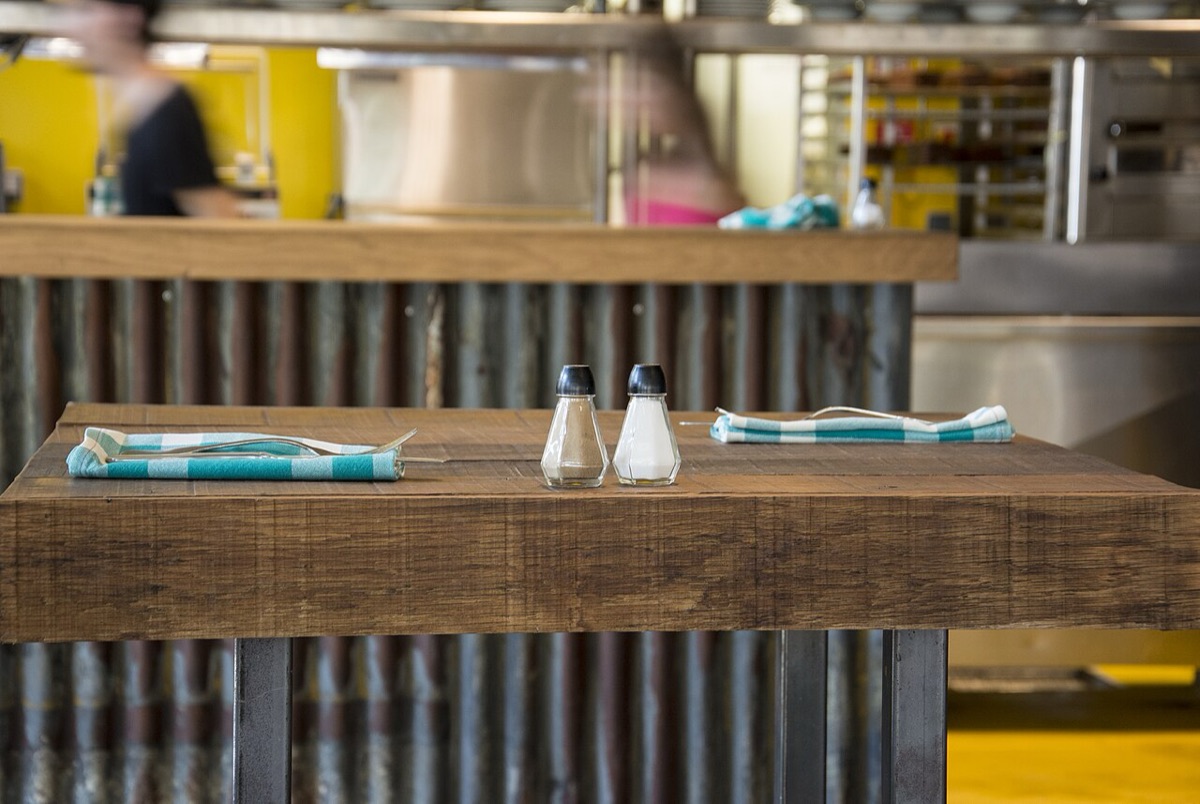
- Salt and pepper on table (Unsplash)Wikimedia Commons · CC0 image by André Robillard.
General information, not medical advice. This observational study shows a link, not that salt causes hot flushes. Anyone with troublesome menopause symptoms, or high blood pressure, should talk to their doctor before changing treatment or diet.
Analysis by NutroPractic from the sources listed. Written for general readers; it does not replace advice from your own doctor.
From our articles
Read, then eat a little better
Plain-language guides on nutrition and wellness, backed by research.
Everyday eating
Food label claims decoded: 'no added sugar', 'multigrain', 'natural' and 'high protein'
A no-added-sugar biscuit with only 13% fewer calories. A 7-grain loaf with refined flour listed first. A 'high protein' bar that clears the legal line at 21%. What each claim legally requires in the EU/UK, US and India, with worked reads of real packs.
2 Nov 2026
Gut health
Probiotic capsules: which ones have trial evidence, what they can do, and when to skip them
Children on antibiotics: 8% got diarrhoea with a probiotic, 19% without. Older hospital patients: 10.8% with, 10.4% without. Which capsules have evidence, what three guidelines say about IBS, what a course costs per case prevented, and who shouldn't take them.
2 Nov 2026
Gut health
Gluten-free without coeliac disease: who actually benefits, and what the blinded gluten challenges found
In blinded trials only 16% of people who said gluten made them ill reacted to gluten rather than placebo, and in Oslo fructans caused more bloating than gluten. Who really needs to avoid it, how to get tested before you stop, how much gluten is in a slice of bread or a roti, and what gluten-free food costs (159% more in the UK) and lacks.
1 Nov 2026
Newsfeed for your website
Want this feed on your website?
Add it to any site with one copy-and-paste snippet. No sign-up, and it updates itself every hour.
Start with a virtual consultation
Tell Dr. Triveni what you want to change. You will leave with a clear next step, whether you are in Toronto, London, New York or Chennai.