Food safety · October 18, 2026
Health inspectors in one Colombian region tested 1,846 ready-to-eat foods over seven years: 4 in 10 broke a hygiene limit, and fresh juices and salads were far more likely to fail than cooked food
Between 2017 and 2023, officials in Meta, a tropical region of eastern Colombia, took samples from restaurants, school kitchens, prisons, nursing homes and street stalls and sent them to the public health lab. A new analysis of all those results finds that dangerous germs were rare, but signs of poor hygiene were everywhere, and they turned up most in the foods nobody cooks.
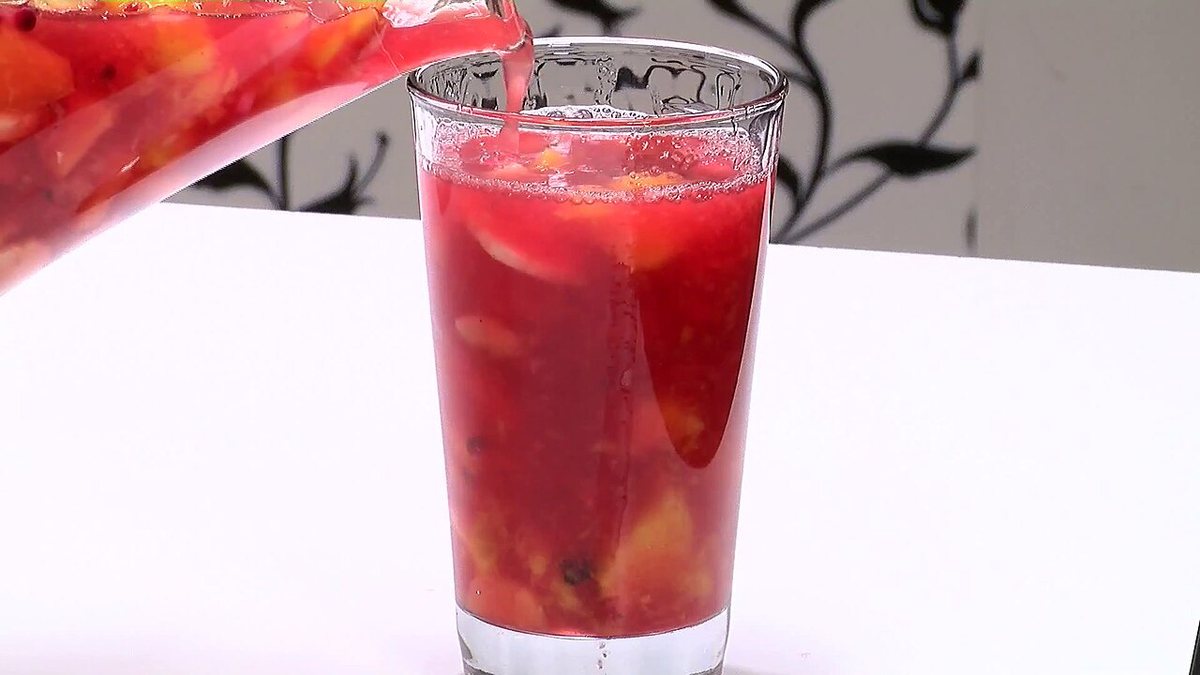
In Colombia, as in many countries, health inspectors turn up unannounced at places that serve food, take a sample of something ready to eat, and send it to a public health laboratory. The lab checks it against the national limits for germs. Most of these results sit in official databases and are never studied as a whole. A team from the Universidad Cooperativa de Colombia and the Meta health department has now done that for seven years of samples from the Meta department, in the Orinoquía plains south-east of Bogotá. Their analysis was published on 5 October 2026 in PLOS Global Public Health.
The lab received 1,868 samples of ready-to-eat food between 2017 and 2023, from 32 towns; 1,846 had a valid result. They came from restaurants (the largest group), cafeterias, food factories, school canteens, childcare centres, prisons, nursing homes, hospitals, supermarkets and a few street vendors and markets. Fresh fruit juice was the single most sampled food (384 samples), followed by salads (305), then meat, rice and empanadas. Packaged factory-made foods were left out.
738 of the samples with a valid result, about 40%, failed at least one limit. But most of those failures were not for disease-causing germs. The commonest problem was total coliforms (29% of samples), a broad group of bacteria that signals poor hygiene, dirty water or cross-contamination. Next came high general bacterial counts (12.7%) and E. coli (12.3%), a sign of faecal contamination. Germs that cause food poisoning directly were rare: Bacillus cereus in 2.2% of samples, coagulase-positive Staphylococcus (the group that includes Staphylococcus aureus) in 1.8%, Salmonella in 3 samples out of 1,846 (0.2%), and Listeria in none.
The type of food mattered far more than anything else. Juices, salads and salpicón (Colombian chopped fruit in juice), which the authors group as raw or highly handled foods, had about 8.4 times the odds of failing compared with cooked foods such as meat, rice, beans and empanadas, after allowing for year, place and type of business. Broths, soups, hot drinks, milk and desserts were no different from cooked food once those factors were taken into account. The reason is simple: cooking kills most bacteria, and a salad or a freshly squeezed juice never gets that step, while passing through several pairs of hands.
Place mattered too, though less. Samples from the small rural and remote towns had about 1.3 times the odds of failing compared with mid-sized towns. Samples taken in 2020, the first pandemic year, when far fewer were collected, had about 1.8 times the odds of failing compared with the other years; the authors could not tell why. Surprisingly, once food type was accounted for, the kind of establishment made no significant difference: restaurants and cafeterias, food factories, and institutions such as schools, prisons and nursing homes all came out much the same.
There are limits to what this data can say. The samples were chosen by an inspection plan, not at random, so they may not represent everything sold in the region, especially in rural areas. The records held nothing about how the food was handled, the water supply or the temperature, so the study can show where failures cluster but not exactly why. And a failed hygiene test is a warning sign, not proof that anyone got ill. Still, the practical message travels well beyond Colombia: in a hot climate, the foods most likely to carry unwanted bacteria are the fresh, uncooked ones, which is where hand-washing, clean water and cold storage count the most.
Germ tests on ready-to-eat food from official inspections, Meta department, Colombia, 2017 to 2023 (1,846 samples with a valid result)
40%
Samples that failed at least one microbiological limit (738 of 1,846)
29.0%
Failed the limit for total coliforms, the most common problem
12.3%
Failed the limit for E. coli, a sign of faecal contamination
3 of 1,846
Samples with Salmonella; Listeria was found in none
8.4×
Odds of failing for juices, salads and salpicón vs cooked foods (adjusted odds ratio, 95% CI 6.6 to 10.7)
1.3×
Odds of failing for samples from rural and remote towns vs mid-sized towns (adjusted)
384
Fresh fruit juice samples, the most tested food
Figures from Montilla Rodríguez LM, Obando Bastidas JA and colleagues, 'Factors associated with microbiological non-compliance in ready-to-eat foods: A seven-year analysis of official food safety surveillance data in a tropical low- and middle-income country', PLOS Global Public Health, published 5 October 2026, doi 10.1371/journal.pgph.0006492 (CC BY 4.0). The paper reports 39.5% non-compliance using all 1,868 samples received as the denominator; 738 of the 1,846 samples with a valid result is 40.0%. Odds ratios come from a multivariable logistic regression adjusted for year, town type, establishment type and food type. Retrospective analysis of inspection samples, which were not chosen at random.
- Coliforms and general bacterial counts are 'indicator' tests: they don't usually make people ill themselves, but they show that food handling, water or storage has slipped, which is why inspectors use them.
- Salpicón in Colombia is not the meat dish of the same name elsewhere: it is chopped fresh fruit served in fruit juice, and the study counted it with juices and salads as a raw food.
- Samples that had not been kept cold on the way to the lab were left out of the study, and every sample was processed within 24 hours of collection.
- Only 113 samples were taken in 2020, the fewest of any year, against 381 in 2022.
- The authors used a widely accepted rule of thumb to work out that 384 samples would have been enough to estimate the failure rate; the official records gave them almost five times as many.
- Factors associated with microbiological non-compliance in ready-to-eat foods: A seven-year analysis of official food safety surveillance data in a tropical low- and middle-income countryPLOS Global Public Health, 5 October 2026 · The study: sample counts, failure rates for each germ, and the adjusted odds ratios
- Food safety fact sheetWorld Health Organization · Background on foodborne disease worldwide and the WHO's five keys to safer food
General information, not medical advice. This study measured hygiene failures in food samples, not illness. If you have severe or lasting vomiting, diarrhoea or fever after eating, see a doctor. When travelling or in hot weather, choosing freshly cooked hot food and washing raw fruit and vegetables in safe water lowers the risk.
Analysis by NutroPractic from the sources listed. Written for general readers; it does not replace advice from your own doctor.
From our articles
Read, then eat a little better
Plain-language guides on nutrition and wellness, backed by research.
Supplements and vitamins
Spermidine from food or capsules: measured milligrams in wheat germ, soybeans and cheese, and what the one year-long trial found
Wheat germ holds about 22 to 34 mg of spermidine per 100 g, matured cheese about 0.12 mg. The only year-long capsule trial used 0.9 mg a day and found no memory benefit. Measured values, worked doses and safety.
22 Nov 2026

Supplements and vitamins
Zinc carnosine for the gut lining: what the two human trials gave, the zinc in each dose, and the copper catch
Zinc carnosine is only about 22.6% zinc, so 75 mg twice a day is roughly 34 mg of zinc a day. Here are the doses and results of the 10-person NSAID permeability trial and the 20-person aspirin pilot, and the copper cautions.
22 Nov 2026

Women's health
Inositol for PCOS: the 40:1 ratio, trial doses, and food milligrams
Why do randomized trials in polycystic ovary syndrome prioritize the 40:1 myo to D-chiro inositol ratio? Here is the science behind the ovarian epimerase paradox, clinical ovulation and insulin metrics, and why cantaloupe cannot replace 4,000 mg trial powder.
21 Nov 2026
Newsfeed for your website
Want this feed on your website?
Add it to any site with one copy-and-paste snippet. No sign-up, and it updates itself every hour.
Start with a virtual consultation
Tell Dr. Triveni what you want to change. You will leave with a clear next step, whether you are in Toronto, London, New York or Chennai.