Eye health · October 27, 2026
Among 2,071 Korean adults with diabetes, those taking a probiotic supplement had about half as much diabetic eye damage. Vitamin C and lutein takers looked similar
A nationwide Korean survey with eye photographs graded by retina specialists, published on 25 October, found diabetic retinopathy in 11% of probiotic users against 21% of everyone else, even after allowing for blood sugar and years with diabetes. The authors are careful: it is a snapshot, other supplements showed similar gaps, and nobody has yet tested probiotics for the eyes in a trial.
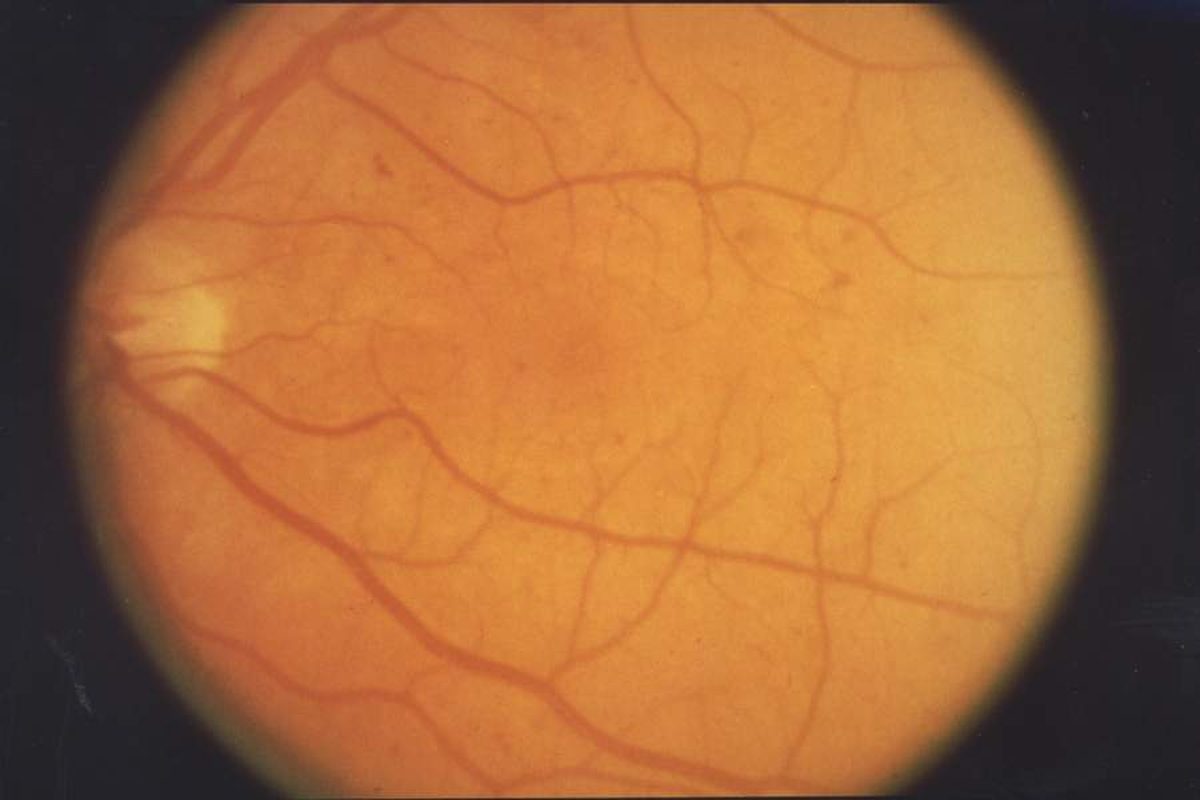
Diabetic retinopathy, damage to the tiny blood vessels at the back of the eye, is the leading cause of preventable blindness in working-age adults. The paper puts the number of people living with it at about 103 million in 2020, heading for 160 million by 2045. Good blood sugar control only partly prevents it, so researchers are looking for other levers. One idea is a 'gut-retina axis': people with diabetic retinopathy tend to have a less diverse gut microbiome, and in diabetic mice, changing the gut bacteria protected the retina. Whether probiotic supplements do anything for human eyes has never been tested in a trial.
Researchers in Korea used the Korea National Health and Nutrition Examination Survey (KNHANES), a nationally representative survey, for 2018 to 2021. It combines photographs of the back of the eye, graded by retinal specialists, with a supplement interview in which dietitians asked people to show each product they took. The study, published on 25 October in the journal Nutrients, looked at 2,071 adults with diabetes, 199 of whom were taking a probiotic supplement. Probiotic use among people with diabetes rose from 4.8% in 2018 to 14.4% in 2020.
Weighted to the national population, 11.0% of probiotic users had diabetic retinopathy, against 21.1% of non-users. After adjusting for age, sex, high blood pressure, smoking, income, years with diabetes and HbA1c, users had a 43% lower prevalence (prevalence ratio 0.57, 95% CI 0.36 to 0.90). Adding weight, insulin use, kidney function, education, alcohol, exercise and fermented food intake barely moved it (0.59). People who had taken probiotics for a year or more had the lowest rate (0.28), and none of the 199 users had sight-threatening retinopathy, against 3.9% of non-users, though that last point rests on very few cases and was not adjusted for anything.
There are strong reasons for caution, and the authors list them. The estimate rests on 27 cases of retinopathy among users. Without the survey's population weights the link weakened and was no longer statistically significant (0.73, 95% CI 0.50 to 1.07). Probiotic users were younger, more often women, smoked less, earned more and had slightly lower HbA1c, a classic 'healthy user' pattern. Vitamin C (0.62) and vitamin A or lutein supplements (0.58) showed gaps of about the same size, and after correcting for testing 11 supplement types none stood out. Strain and dose were unknown, and only three insulin users took probiotics.
So this does not show that a probiotic protects your eyes, and the authors say it needs prospective studies and trials. What it does underline is what already matters: an HbA1c of 8% or more and ten or more years with diabetes were the strongest factors linked to retinopathy in this same survey, each roughly doubling its prevalence. Steady blood sugar, blood pressure control and regular eye checks remain the proven tools.
Probiotic supplement use and diabetic retinopathy, KNHANES 2018-2021 (Nutrients, 25 October 2026)
2,071
Korean adults with diabetes with graded eye photographs and supplement data; 199 took a probiotic
11.0% vs 21.1%
Diabetic retinopathy in probiotic users vs non-users (weighted to the national population)
0.57
Prevalence ratio after adjusting for age, sex, blood pressure, smoking, income, diabetes duration and HbA1c (95% CI 0.36 to 0.90)
0.28
Prevalence ratio for people using probiotics for a year or more (95% CI 0.13 to 0.62; exploratory, 76 users)
0 vs 3.9%
Sight-threatening retinopathy in probiotic users vs non-users (descriptive, not adjusted)
0.73
Prevalence ratio without survey weights (95% CI 0.50 to 1.07), no longer statistically significant
0.62 / 0.58
Similar-sized gaps for vitamin C and vitamin A/lutein supplement users, a sign of a possible 'healthy user' effect
Cross-sectional survey, so it shows an association, not cause and effect; people with eye damage may also buy supplements less. Probiotic strain, dose and viability were unknown, and the prevalence ratio was chosen as the main measure after the first analysis (the pre-set odds ratio was 0.49, 95% CI 0.28 to 0.86). Figures from the open-access paper (CC BY 4.0).
- In Korea, diabetic retinopathy affects about 11 to 16% of adults with diabetes, and sight-threatening retinopathy about 5%, according to earlier survey figures quoted in the paper.
- Diabetic retinopathy often has no symptoms early on, which is why the US National Eye Institute advises people with diabetes to have a comprehensive dilated eye exam at least once a year.
- Probiotics are among the most commonly used dietary supplements in Korea; in this survey, 86% of users took theirs every day.
- The same survey found no link between probiotic use and age-related macular degeneration or other retinal conditions in the general population.
- Across the survey, an HbA1c of 8% or more and having diabetes for 10 years or longer were each linked to roughly double the prevalence of retinopathy.
- Probiotic Supplement Use and Diabetic Retinopathy in Korean Adults with Diabetes: A Nationwide Population-Based StudyNutrients (MDPI) · The study, open access (CC BY 4.0), published 25 October 2026; figures from the full text
- Diabetic retinopathyNational Eye Institute · What diabetic retinopathy is and the advice on yearly dilated eye exams
- Fundus retinopathy EDA03Wikimedia Commons · The image, public domain (National Eye Institute)
General information, not medical advice. Probiotics are not a treatment for diabetic eye disease, and this study cannot show that they prevent it. Don't change your diabetes medicines or skip eye checks because of a supplement; talk to your doctor, eye specialist or a registered dietitian about what is right for you.
Analysis by NutroPractic from the sources listed. Written for general readers; it does not replace advice from your own doctor.
From our articles
Our guides on this subject
Plain-language guides on nutrition and wellness, backed by research.

Gut health
Probiotic capsules: which ones have trial evidence, what they can do, and when to skip them
Children on antibiotics: 8% got diarrhoea with a probiotic, 19% without. Older hospital patients: 10.8% with, 10.4% without. Which capsules have evidence, what three guidelines say about IBS, what a course costs per case prevented, and who shouldn't take them.
2 Nov 2026
Diabetes
Fenugreek, cinnamon and turmeric for blood sugar: what the trials in an Indian kitchen measured
Fenugreek seed at 5-10 g a day lowered HbA1c by about 0.85 points in pooled trials, and in a 3-year Hyderabad study 23% went on to diabetes against 55%. Cinnamon trims fasting glucose by 15-25 mg/dL, but a teaspoon of cassia tops the coumarin limit. Curcumin: about 0.3-0.4 points, and rare liver injury from capsules. Doses in teaspoons, and a fair way to test it at home.
1 Nov 2026

Cardiovascular wellness
Psyllium husk: how much soluble fibre lowers LDL cholesterol and stabilizes post-meal glucose in clinical trials
Viscous soluble fibre forms a thick gel matrix in the small intestine that binds bile acids and blunts post-meal glucose spikes. Across dozens of randomized controlled trials, 7 to 10.2 grams of psyllium daily lowers LDL cholesterol by 6% to 12% without stripping HDL, while reducing postprandial glucose surges by 15% to 25% in metabolic syndrome and type 2 diabetes. Discover the bile acid sequestration mechanism, trial meta-analyses, exact timing before meals, water ratios, and titration protocols to avoid gas and cramping.
13 Nov 2026
Newsfeed for your website
Want this feed on your website?
Add it to any site with one copy-and-paste snippet. No sign-up, and it updates itself every hour.
Start with a virtual consultation
Tell Dr. Triveni what you want to change. You will leave with a clear next step, whether you are in Toronto, London, New York or Chennai.