Maternal health · November 7, 2026
Neither ultra-processed food nor red meat predicted probable postpartum depression in 264 women — and the wide intervals leave room for both harm and benefit
Fifty-two women screened positive 4–6 weeks after birth. Adjusted estimates sat near no association, but a small convenience cohort cannot settle a question this complex.
Researchers followed 264 pregnant women recruited by convenience sampling in Iran in 2022–2023. A food-frequency questionnaire estimated red-meat and ultra-processed-food intake during pregnancy, and probable postpartum depression was assessed with the Edinburgh scale 4–6 weeks after birth.
Fifty-two women, or 19.7%, met the screening threshold. After adjustment, the highest versus lowest red-meat group had an odds ratio of 0.74, with a 95% confidence interval from 0.32 to 1.69. For ultra-processed food, the corresponding odds ratio was 1.01, with an interval from 0.44 to 2.31. Neither trend was statistically clear.
This is more informative than declaring either food protective or harmful, but it is not proof of no relationship. The intervals are wide, diet was self-reported, and probable depression on a screening scale is not the same as a clinical diagnosis. Postpartum mental health also reflects sleep, social support, prior illness, birth experiences and many other factors. The study adds a useful null result while leaving the larger question open.
A null result with substantial uncertainty
264
Pregnant women in the prospective convenience cohort
52
Women with probable postpartum depression at 4–6 weeks, or 19.7%
0.74
Adjusted odds ratio for highest versus lowest red-meat intake; 95% CI 0.32–1.69
1.01
Adjusted odds ratio for highest versus lowest ultra-processed-food intake; 95% CI 0.44–2.31
≥158.83 g/day
Threshold for the highest ultra-processed-food group
Prospective observational cohort, not a feeding trial. Both confidence intervals include no association and remain compatible with meaningfully lower or higher odds. Residual confounding and dietary measurement error are possible.
- The Edinburgh scale is a screening tool; a positive screen should lead to assessment rather than be treated as a diagnosis.
- An odds ratio of 1.0 means equal odds in the compared groups, not that every participant had the same risk.
- Food-frequency questionnaires estimate usual intake but rely on memory and standard portion assumptions.
- Urgent help is appropriate for thoughts of self-harm, harming a baby, severe confusion or rapidly worsening symptoms after birth.
- Maternal consumption of red meat and ultra-processed foods during pregnancy and risk of postpartum depression: a prospective cohort studyScientific Reports, 5 November 2026 · Primary open-access cohort report; sample, outcome timing, intake contrasts and adjusted estimates checked against the article.
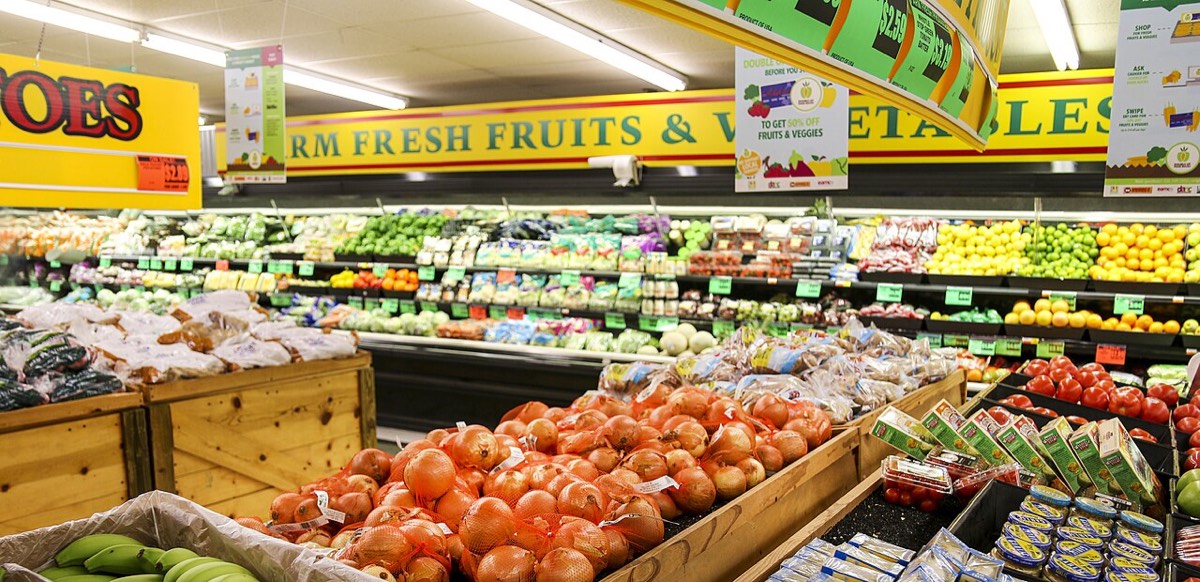
- Fruit section of a grocery storeWikimedia Commons · Photograph by Alabama Extension, CC0; general food-choice illustration only.
General information, not medical advice. Diet is not a substitute for postpartum mental-health assessment or treatment. Anyone worried about depression after birth should contact a qualified clinician; immediate danger needs urgent local help.
Analysis by NutroPractic from the sources listed. Written for general readers; it does not replace advice from your own doctor.
From our articles
Our guides on this subject
Plain-language guides on nutrition and wellness, backed by research.
Nutrition science
Ultra-processed foods: what the evidence says, and a realistic way to eat fewer
Ultra-processed foods now make up more than half of the calories eaten in the US and the UK. What counts as ultra-processed, what a landmark NIH trial and a 2024 BMJ review found, where the science is still uncertain, and simple swaps that don't require cooking everything from scratch.
3 Oct 2026
Everyday eating
Protein bars and shakes: what you get per 100 calories
Four current labels range from 6.3 to 20 g protein per 100 kcal. Here is how bars, shakes, eggs, yogurt and lentils compare—and when a supplement actually helps.
6 Nov 2026
Everyday eating
Instant noodles: the sodium in the whole packet, and what actually reduces it
Three official labels range from 750 to 1,520 mg sodium per packet. Here is the whole-pack arithmetic, what the broth study measured, and how to turn noodles into a more complete meal.
6 Nov 2026
Newsfeed for your website
Want this feed on your website?
Add it to any site with one copy-and-paste snippet. No sign-up, and it updates itself every hour.
Start with a virtual consultation
Tell Dr. Triveni what you want to change. You will leave with a clear next step, whether you are in Toronto, London, New York or Chennai.