Food and medicines · October 27, 2026
Protein and the clock matter most: a new review sorts what really changes how Parkinson's pills work from what is still only theory
A big protein meal can blunt levodopa, the main Parkinson's medicine, and taking it after food instead of before slows it down. A review published on 19 October found the human evidence is strongest for those two things, and much thinner for claims that whole diets, from Mediterranean to ketogenic, change how the drugs work.
Most people with Parkinson's disease end up taking levodopa, a tablet the brain turns into dopamine, the chemical messenger the disease runs short of. It works well, but not evenly. It lasts only about two hours in the blood, it has to be absorbed from the small intestine, and it shares its way into the body and into the brain with amino acids from food. People who have taken it for years often know the result: a dose that seems to do nothing after a big lunch, or an 'off' spell when movement slows or freezes before the next tablet. A review published on 19 October in Frontiers in Nutrition set out to gather what is known about how meals, diets and eating habits change the way Parkinson's medicines work.
The team, led from Shandong Medical and Pharmaceutical University and Xiamen Medical College in China, went through the main drug classes one by one. Levodopa, usually combined with carbidopa or benserazide, has the clearest food links: protein and the timing of meals. Dopamine agonists such as pramipexole and ropinirole don't compete with amino acids, but as tablets they still depend on how fast the stomach empties, while rotigotine, a skin patch, skips the gut. For MAO-B inhibitors the main food point is tyramine, found in aged cheese and some wines, which matters most with older, irreversible drugs of this type. COMT inhibitors mostly matter through the way they stretch out levodopa's effect. For istradefylline, an adenosine-blocking drug, the authors say a link with caffeine, which also blocks adenosine, is possible but not shown.
On levodopa, the authors point to randomised and crossover studies in which a high-protein intake worsened the response to the drug and low-protein or 'protein redistribution' diets, which keep most of the day's protein for the evening meal, improved it in people prone to the effect. The reason is a shared carrier, LAT1, that moves both levodopa and large neutral amino acids from protein across the gut wall and into the brain. Timing matters too: in one study they cite, taking controlled-release levodopa/carbidopa after a meal instead of before delayed its rise in the blood, lowered the amount absorbed over six hours and delayed the start of its effect on movement. Their summary table lists taking levodopa 30 to 60 minutes before meals or about two hours after as a common strategy. Fatty, heavy meals slow stomach emptying and can add to the delay.
Eating behaviour comes into it as well. Dopamine agonists can trigger impulse-control problems, binge eating among them, and large or protein-heavy binges may then upset levodopa absorption. Unplanned fasting or very restrictive eating risks weight loss and malnutrition, which the review says is different from a structured, supervised change to protein. Irregular meal times and frequent snacking make blood levels harder to predict, and the authors suggest a steady daily meal schedule. Other points come from smaller human studies they cite: coffee, fibre and vitamin C have been seen to help levodopa absorption, fresh banana juice reduced it, and a ketogenic diet changed blood levodopa little.
The review is also frank about where the evidence runs out. Claims that whole eating patterns, from Western and Mediterranean to East Asian, African, Latin American and vegetarian diets, change how Parkinson's drugs work rest mostly on studies of disease risk, gut bacteria, inflammation or animals, not on measuring the drugs in patients, and the authors call them hypothesis-generating. Mediterranean-style eating has been linked with better outcomes in Parkinson's, but there is no direct evidence it makes the medicines work better. This is a narrative review, not a systematic one, so the studies were not chosen or graded by a set method. The authors call for studies that measure drug response in patients on specific diets. The work was funded by a Chinese research project, the authors declare no conflicts of interest, and they say an AI tool was used to polish the wording.
Food and Parkinson's medicines: what the review lists for levodopa and the other drug classes (Frontiers in Nutrition, 19 October 2026)
~2 h
Levodopa's half-life in the blood, one reason its effect rises and falls between doses
40–80%
People on levodopa who develop disabling motor complications such as wearing-off and dyskinesia within 5 to 10 years, as cited in the review
30–60 min
Before a meal, or about 2 hours after: the levodopa timing listed in the review's summary table
6 h
Window over which less levodopa was absorbed when a controlled-release tablet was taken after a meal instead of before, in a cited study
5
Drug classes covered: levodopa, dopamine agonists, MAO-B inhibitors, COMT inhibitors and adenosine A2A antagonists
Evening
When most protein is eaten on a protein redistribution diet, to keep daytime levodopa working
Narrative review, not a systematic review or meta-analysis: no new data and no pooled numbers. The figures above are as stated in the review or the studies it cites. The authors rate direct human evidence as strongest for protein amount, protein timing and meal timing with oral levodopa; links between whole dietary patterns and drug response are mostly mechanistic or from animal studies. Open access under CC BY; no conflicts of interest declared.
- Levodopa is a building block of dopamine that can cross into the brain, which dopamine itself can't; carbidopa or benserazide is added to stop it being turned into dopamine too early, in the bloodstream.
- The 'cheese effect' is a sudden rise in blood pressure from tyramine in aged cheese and some wines in people taking older, irreversible MAO inhibitors; the review notes the caution applies mainly to those older drugs.
- Rotigotine is a dopamine agonist given as a skin patch, so it bypasses the gut and is less directly affected by meals.
- Some gut bacteria carry an enzyme, tyrosine decarboxylase, that can turn levodopa into dopamine in the gut before it is absorbed, one of the mechanisms the review discusses.
- Newer ways of giving levodopa, an inhaled form, a gel pumped into the small intestine and an infusion under the skin, avoid some or all of the stomach-emptying problem.
- Effects of eating behavior patterns and dietary habits on the therapeutic efficacy of Parkinson's disease medications: from phenomena, mechanisms to clinical applicationsFrontiers in Nutrition · The review, open access (CC BY), published 19 October 2026; figures from its full text and Tables 1, 3 and 4
- Parkinson's disease: TreatmentNHS · Background on levodopa, dopamine agonists and MAO-B inhibitors
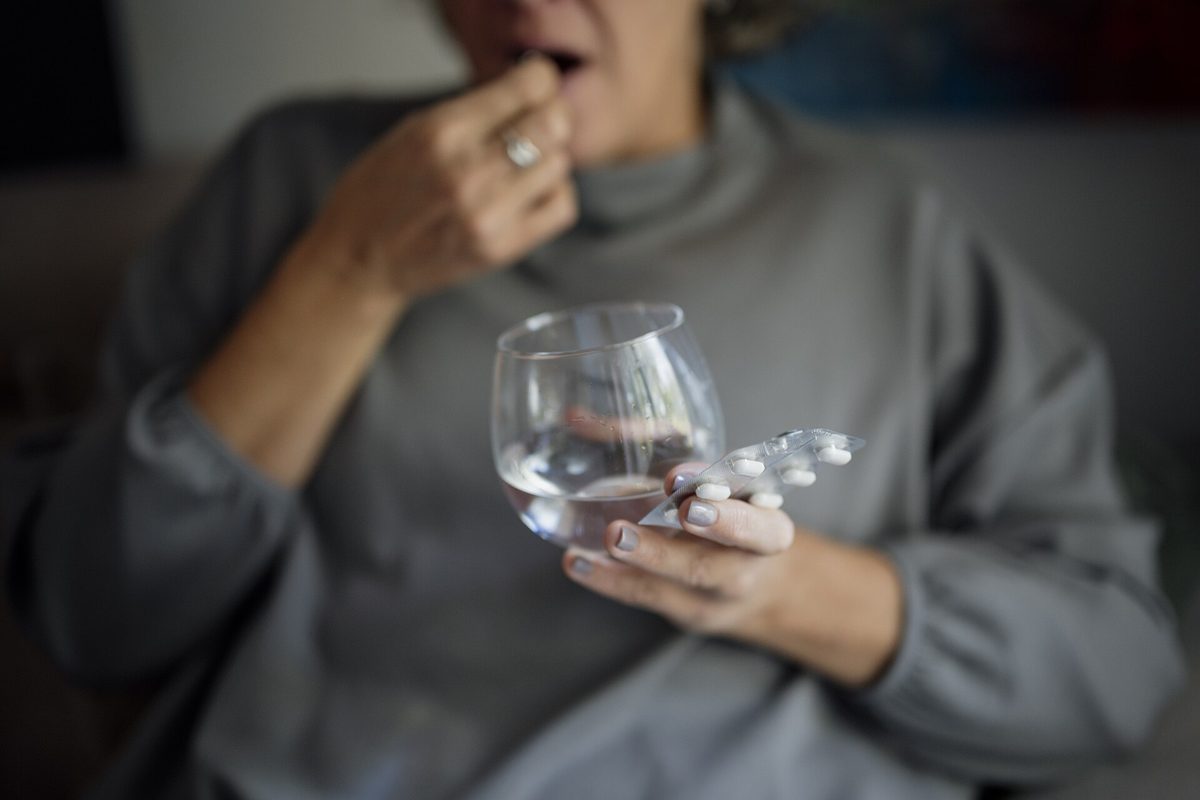
- Person taking medication with a glass of water closeupWikimedia Commons · The image, CC BY 2.0
General information, not medical advice. This review gathers earlier studies and doesn't test any diet itself. Don't change when you take Parkinson's medicines or cut back on protein without talking to your neurologist or Parkinson's nurse first, and ask for a dietitian if meals seem to affect how well your tablets work.
Analysis by NutroPractic from the sources listed. Written for general readers; it does not replace advice from your own doctor.
From our articles
Our guides on this subject
Plain-language guides on nutrition and wellness, backed by research.
Everyday eating
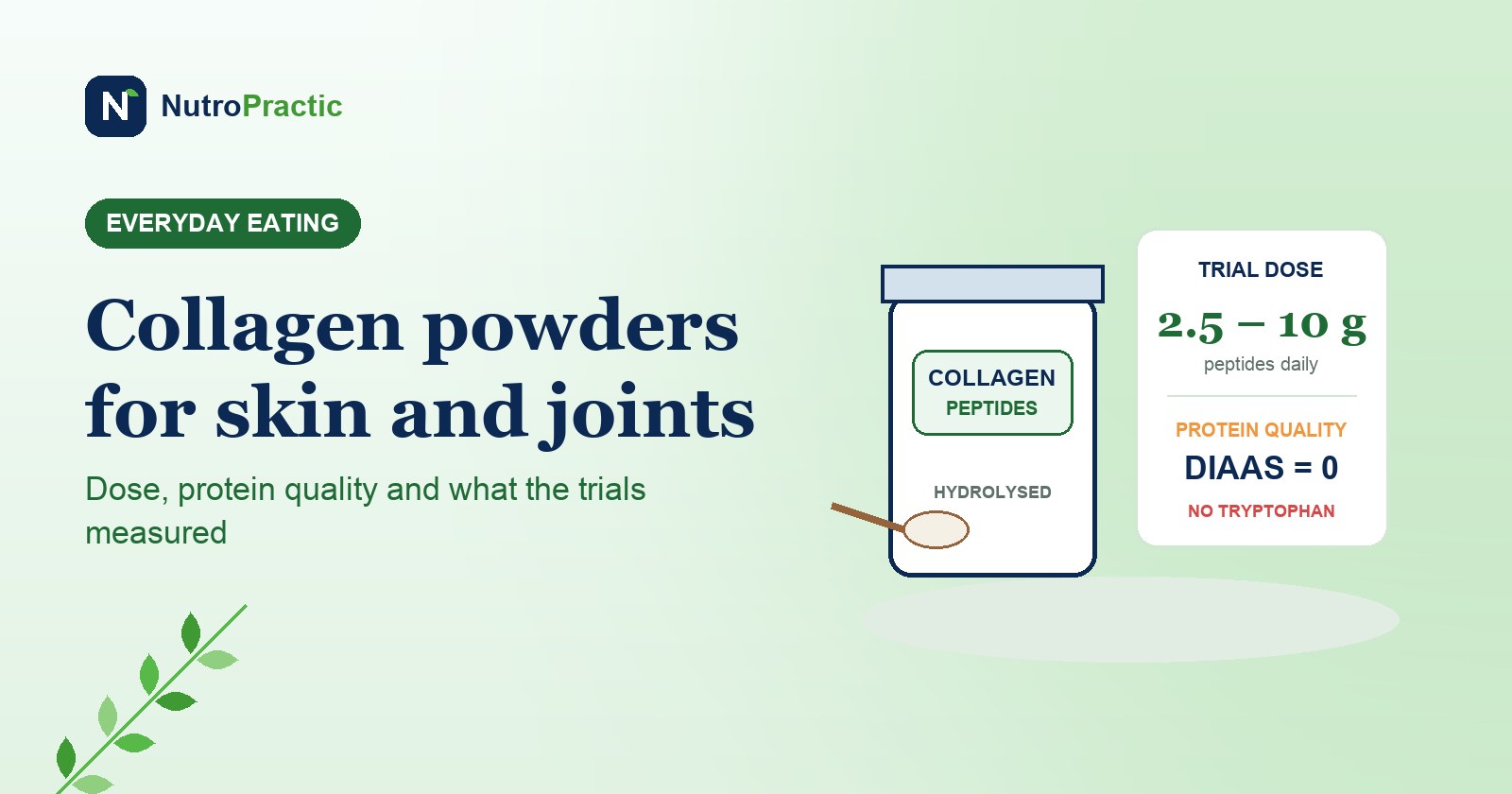
Collagen powders for skin and joints: dose, protein quality and what the trials measured
A 10 g scoop gives 9 g protein, but its protein quality score is zero. Here is what 19 skin trials and knee studies measured at 2.5 g to 10 g daily—and what collagen cannot do.
10 Nov 2026
Everyday eating
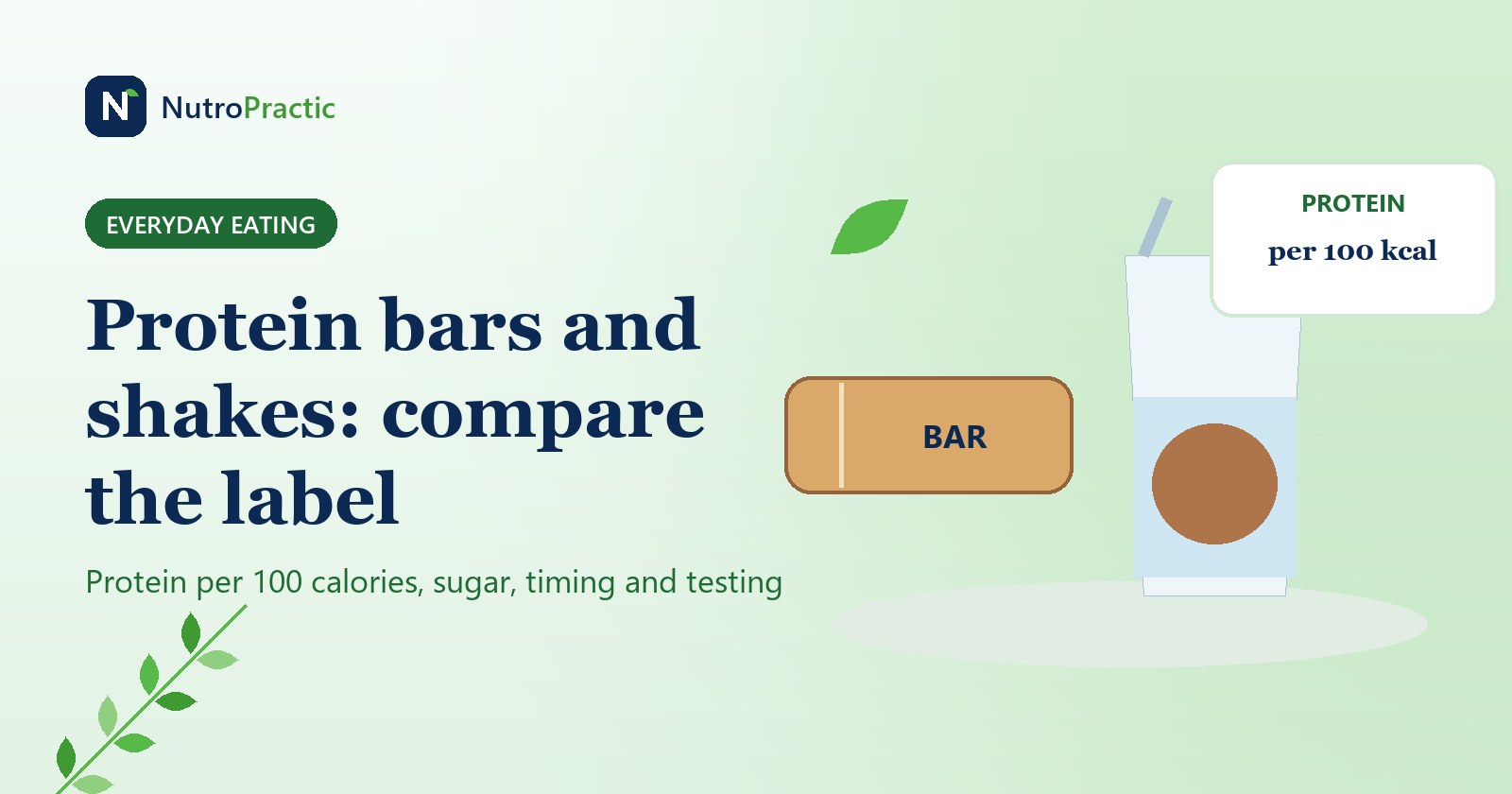
Protein bars and shakes: what you get per 100 calories
Four current labels range from 6.3 to 20 g protein per 100 kcal. Here is how bars, shakes, eggs, yogurt and lentils compare—and when a supplement actually helps.
6 Nov 2026
Everyday eating
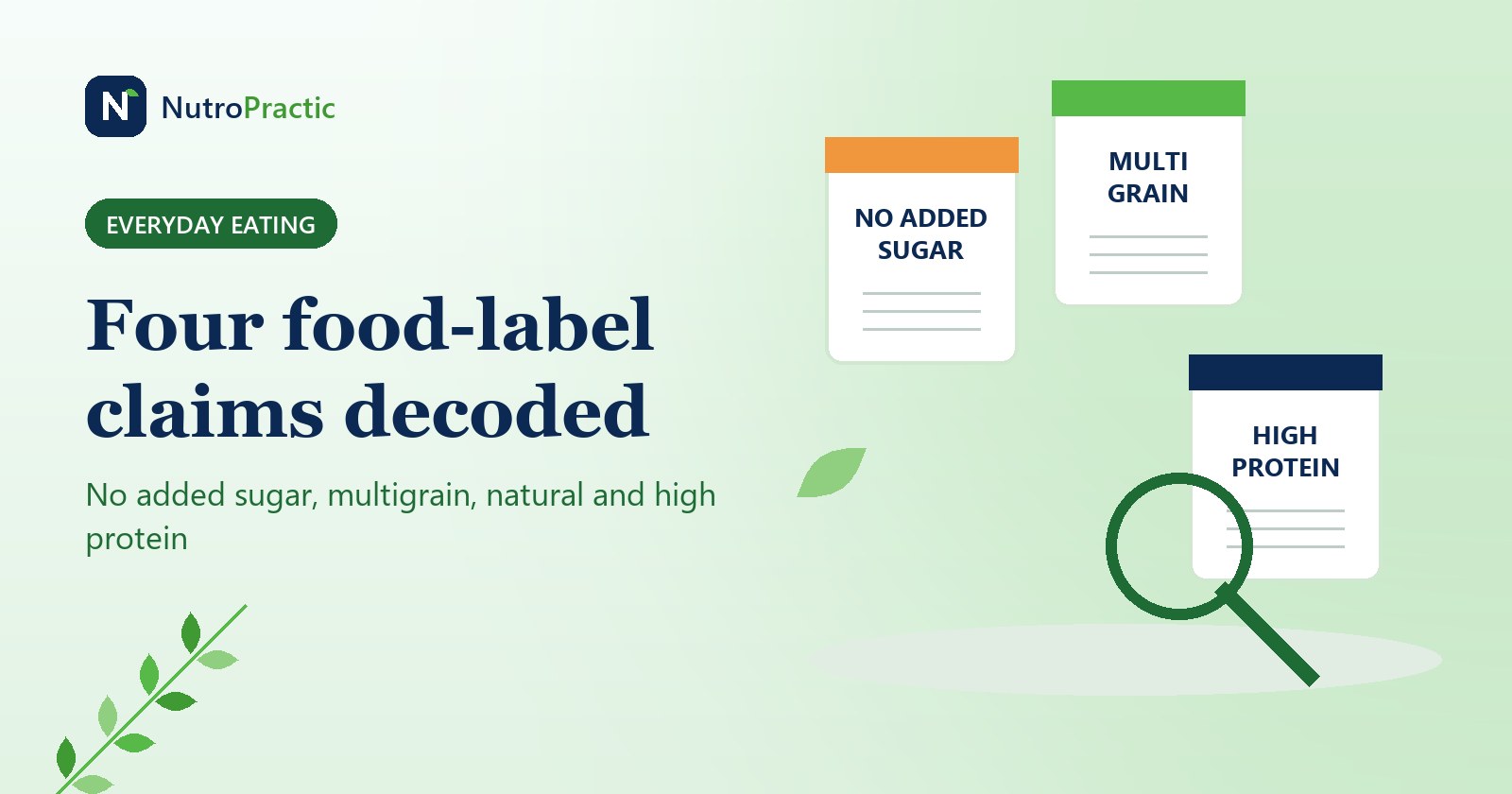
Food label claims decoded: 'no added sugar', 'multigrain', 'natural' and 'high protein'
A no-added-sugar biscuit with only 13% fewer calories. A 7-grain loaf with refined flour listed first. A 'high protein' bar that clears the legal line at 21%. What each claim legally requires in the EU/UK, US and India, with worked reads of real packs.
2 Nov 2026
Newsfeed for your website
Want this feed on your website?
Add it to any site with one copy-and-paste snippet. No sign-up, and it updates itself every hour.
Start with a virtual consultation
Tell Dr. Triveni what you want to change. You will leave with a clear next step, whether you are in Toronto, London, New York or Chennai.