Nutrition education · November 7, 2026
A new 29-question nutrition numeracy test stayed fairly stable on repeat — but its two score scales were only modestly consistent
Expert review was strong and test–retest reliability reached 0.90. Restricted scores and alpha values near 0.6 mean the tool is not ready to rank practitioners.

Nutrition advice routinely requires percentages, unit conversions, portions and risk interpretation. Researchers developed NutriNumerics to assess those skills among registered dietitian nutritionists and dietetics trainees, beginning with 39 questions and using expert content review, participant face review and preliminary reliability testing.
Expert review gave the initial set an average content-validity index of 0.96. Face review retained 38 questions, and repeat testing across the common questions produced an intraclass correlation of 0.88. Further refinement left 29 items: 12 on quantitative literacy and 17 on numeracy. Exploratory test–retest reliability for that set was 0.90, with a wide confidence interval from 0.56 to 0.98.
Stability is not the whole story. Internal-consistency alpha was 0.60 for quantitative literacy and 0.63 for numeracy, and scores did not vary much in the preliminary sample. That may mean the questions cover several distinct skills, the sample was too similar, or the scales need refinement. The authors therefore present a promising draft instrument, not a licensing exam or a basis for judging an individual dietitian.
Strong expert agreement, preliminary measurement evidence
39
Questions in the preliminary item pool
29
Questions retained in the refined instrument
12 + 17
Quantitative-literacy plus numeracy items
0.96
Average expert content-validity index
0.90
Exploratory test–retest intraclass correlation; 95% CI 0.56–0.98
0.60 / 0.63
Internal-consistency alpha for the two scales
Multi-stage instrument-development report. Content validity and repeat stability looked encouraging, while modest internal consistency, restricted scores and a wide reliability interval require testing in larger, more diverse samples.
- Content validity asks whether experts think the questions adequately represent the intended skill area.
- Test–retest reliability asks whether people receive similar scores when the underlying ability should be stable.
- Internal consistency asks whether items behave like parts of one scale; a lower value can also occur when a scale intentionally samples varied skills.
- A reliable test can still measure the wrong thing, so reliability and validity answer different questions.
- Development and preliminary validation of NutriNumerics: assessment of nutrition-related quantitative literacy and numeracy in dieteticsFrontiers in Nutrition, 2 November 2026 · Primary open-access brief report; item counts and validity, internal-consistency and test–retest statistics checked against the article.
- Table saltWikimedia Commons · Photograph by Conall, CC BY 2.0; general quantitative-nutrition illustration only.
General information, not professional credentialing advice. This preliminary instrument should not be used to rank or select an individual practitioner until its validity and reliability are established in larger, diverse samples.
Analysis by NutroPractic from the sources listed. Written for general readers; it does not replace advice from your own doctor.
From our articles
Read, then eat a little better
Plain-language guides on nutrition and wellness, backed by research.
Everyday eating
Protein bars and shakes: what you get per 100 calories
Four current labels range from 6.3 to 20 g protein per 100 kcal. Here is how bars, shakes, eggs, yogurt and lentils compare—and when a supplement actually helps.
6 Nov 2026

Everyday eating
Instant noodles: the sodium in the whole packet, and what actually reduces it
Three official labels range from 750 to 1,520 mg sodium per packet. Here is the whole-pack arithmetic, what the broth study measured, and how to turn noodles into a more complete meal.
6 Nov 2026
Diabetes
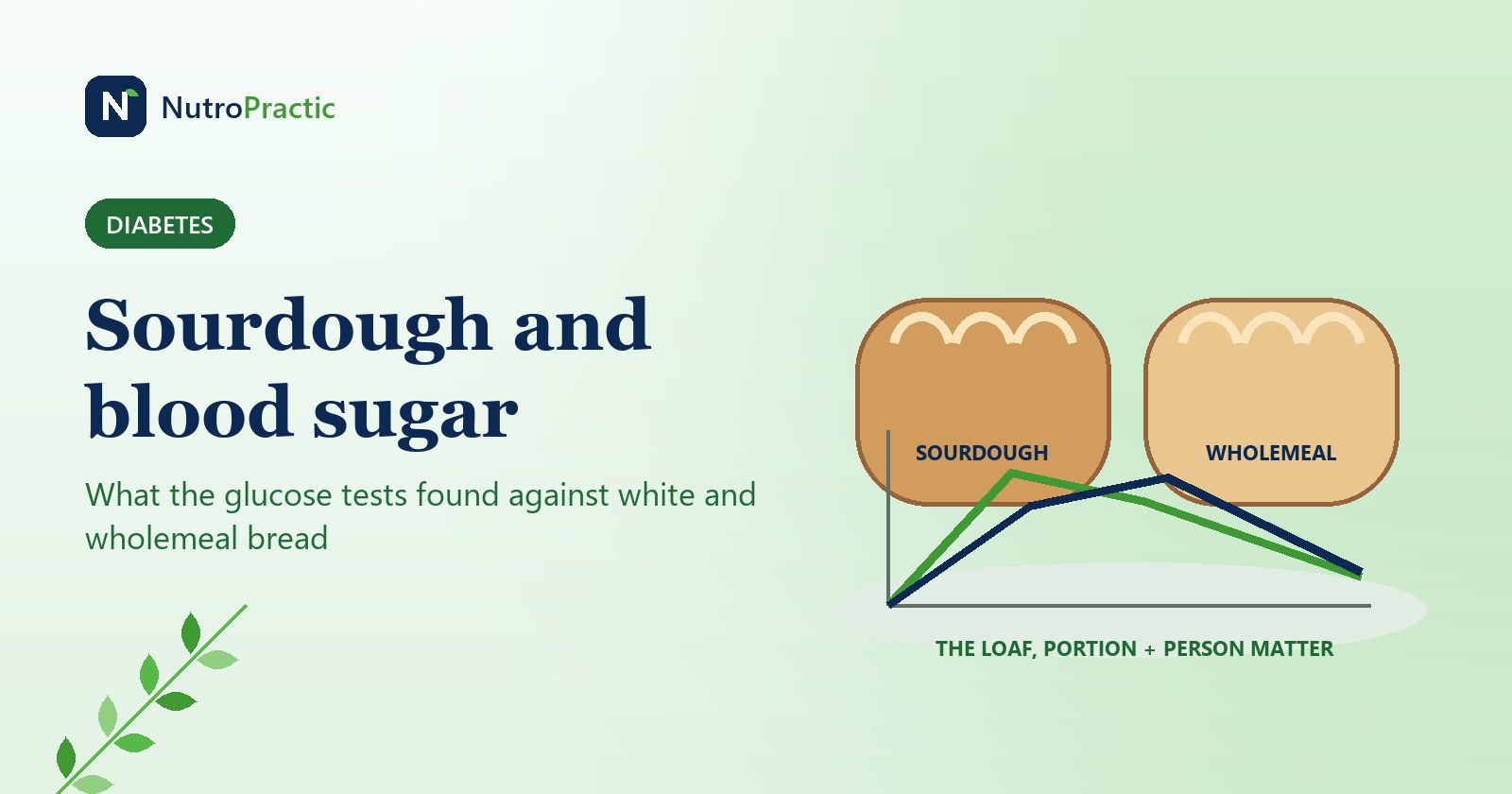
Sourdough and blood sugar: what the glucose tests found against white and wholemeal bread
Sourdough did not beat white bread on average in a 20-person crossover trial, and half responded better to white. A trial-by-trial look at fermentation, flour, portions, GI and how to test your own loaf fairly.
6 Nov 2026
Newsfeed for your website
Want this feed on your website?
Add it to any site with one copy-and-paste snippet. No sign-up, and it updates itself every hour.
Start with a virtual consultation
Tell Dr. Triveni what you want to change. You will leave with a clear next step, whether you are in Toronto, London, New York or Chennai.