Child nutrition · October 7, 2026
A monthly nutrient supplement doubled the odds of measles vaccination in northern Nigeria
A cluster-randomised trial handed out small nutrient supplements for young children at routine vaccine visits. Here is how food became a reason to come back to the clinic.
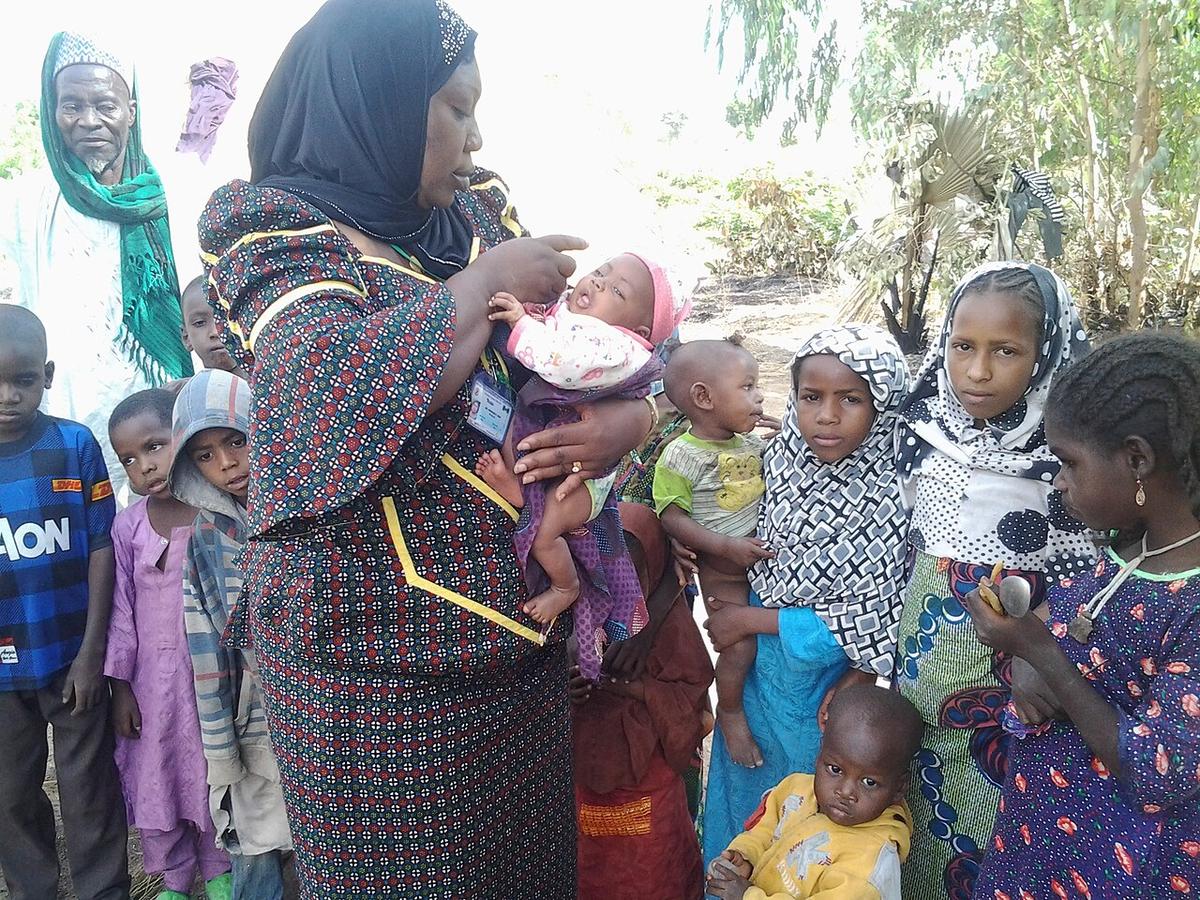
A pragmatic cluster-randomised trial published in Nature Medicine on 2 October 2026 tested a simple idea in northern Nigeria: after a routine immunisation visit, give families a monthly ration of small-quantity lipid-based nutrient supplements (SQ-LNS) for children aged 6 to 23 months, and see whether more children get vaccinated. Twenty areas in two Local Government Areas were randomly assigned to this 'NutriVax' approach or to standard immunisation services.
The main outcome was the first dose of a measles-containing vaccine, verified on the child's vaccination card, among children aged 12 to 23 months. In the final household survey of 1,604 children, the odds of a card-verified measles dose were about twice as high in the NutriVax areas (odds ratio 2.08). Compared with the start of the trial, coverage rose 20.1 percentage points more than in the comparison areas, even though only 48% of children surveyed in NutriVax areas had ever received the supplement.
SQ-LNS are small daily servings of a fortified, energy-rich paste that add essential fatty acids, protein, vitamins and minerals to a young child's usual diet. The trial shows that pairing nutrition support with vaccine visits can raise uptake where malnutrition is common and coverage is low. Whether it works as well elsewhere depends on local services and supply.
NutriVax against standard services
1,604
Children in the final survey
20
Areas randomised
2.08
Odds ratio for a card-verified measles dose
+20.1 pts
Rise in coverage beyond the comparison areas
48%
Children in NutriVax areas who had ever received the supplement
All figures from the abstract on the Nature Medicine page (published 2 October 2026). Odds ratio 95% confidence interval 1.30 to 3.35; coverage gain 95% CI 13.7 to 26.5 points. Trial registration NCT06387511.
- In a cluster-randomised trial whole areas, not individual children, are assigned to each approach, which suits programmes delivered through local clinics.
- Where measles still circulates, the World Health Organization recommends the first dose of measles vaccine at 9 months of age.
- Undernutrition and infections feed each other: a poorly nourished child fights infections less well, and infections make it harder to absorb and keep nutrients.
- Small quantity lipid-based nutritional supplementation and measles vaccination coverage in children aged 6−23 months: a pragmatic cluster-randomized trialNature Medicine, 2 October 2026 · Journal page and abstract: all figures checked here
General information, not medical advice. For your child's vaccines and diet, follow your local immunisation schedule and talk to your paediatrician.
Analysis by NutroPractic from the sources listed. Written for general readers; it does not replace advice from your own doctor.
Newsfeed for your website
Want this feed on your website?
Add it to any site with one copy-and-paste snippet. No sign-up, and it updates itself every hour.
Start with a virtual consultation
Tell Dr. Triveni what you want to change. You will leave with a clear next step, whether you are in Toronto, London, New York or Chennai.