Global health · October 9, 2026
Give families a free month of nutrient sachets at the vaccine clinic, and measles vaccination climbs 20 points
In ten health areas of northern Nigeria, caregivers who brought a baby to the clinic went home with a month's supply of small fortified food sachets, whether or not the child was vaccinated that day. A year later, a randomised trial found card-verified measles coverage had risen 20 percentage points more there than in the ten areas without them.
Vaccines only work if children get to them, and in much of the world the trip to the clinic is the hard part: a long walk, a long wait, a day's work lost. Health programmes have tried text reminders, leaflets and small cash payments, mostly with modest results. A trial published in Nature Medicine on 2 October 2026 tested something more tangible. At the end of the vaccine queue, caregivers were handed a month's supply of small-quantity lipid-based nutrient supplements (SQ-LNS): a 20-gram sachet a day of an energy-dense, vitamin- and mineral-fortified paste that the World Health Organization already recommends for children aged 6 to 23 months in food-insecure places.
The trial ran in Nguru and Karasuwa, two mostly rural districts of Yobe State in north-east Nigeria where armed groups, kidnappings and long distances make health care fragile. Before it began, only about three in ten children aged 12 to 23 months had a measles vaccination recorded on a card, and one in seven young children was acutely malnourished. Twenty health areas, each served by one primary health centre, were split by public lottery, held in Hausa in front of village heads: ten got the sachets alongside routine vaccination (the 'NutriVax' strategy) and ten carried on as usual. Both groups had the same community outreach promoting vaccination and child feeding. The sachets were never conditional: a family that turned down a vaccine still went home with them. Between July 2024 and July 2025, the ten centres handed out 3,753,009 sachets to 19,739 children.
To measure the effect, survey teams visited households in May 2024 and again in May 2025, about 1,600 children each time, and counted only measles doses written on a vaccination card. In the comparison areas, card-verified coverage of the first measles dose rose from 29.9% to 41.2%. In the sachet areas it went from 25.0% to 55.3%. After accounting for the starting point, that is a 20.1 percentage-point bigger rise, and roughly double the odds of a child being vaccinated. The gains spread beyond measles: the third dose of the pentavalent vaccine, the meningitis and yellow fever vaccines, the second measles dose, keeping the vaccination card and receiving vitamin A all improved, and the share of 'zero-dose' children, who had never had a single routine shot, fell sharply. All this happened even though only 48% of the children surveyed in the sachet areas had ever received the supplement.
There are limits. It is one trial in one region, it was open-label (everyone knew which areas had sachets), and a humanitarian organisation helped keep supplies flowing, which a stretched health system might not manage. Families in the sachet areas complained more often about long waits. Even with the boost, card-verified measles coverage reached only 55%, far below the 95% with two doses needed to stop outbreaks, and the authors say the sachets alone won't get there. The effect on children's growth and the cost of the programme will be reported separately. Still, compared with earlier attempts to raise vaccine uptake, the size of the jump is unusual, and it suggests that the most persuasive reason to come back to a clinic may be something useful to take home.
Measles vaccination before and after the sachets
25.0% → 55.3%
Children aged 12 to 23 months with a first measles dose on their card, sachet areas, May 2024 to May 2025
29.9% → 41.2%
The same measure in the comparison areas, which had the same vaccine services and outreach but no sachets
+20.1 points
Extra rise in card-verified measles coverage in the sachet areas after allowing for the starting point (odds ratio 2.08)
−17.0 points
Fall in the share of zero-dose children (no routine vaccine at all, by card or recall) relative to the comparison areas
3,753,009
Sachets handed out to 19,739 children at ten health centres between July 2024 and July 2025
48%
Children surveyed in the sachet areas who had ever received the supplement
Figures from the open-access paper in Nature Medicine (published 2 October 2026), a pragmatic cluster-randomised trial of 20 health areas in Yobe State, Nigeria (ClinicalTrials.gov NCT06387511). Coverage figures come from household surveys of about 1,600 children aged 12 to 23 months at each time point and count only vaccinations written on a card. The study was funded by the Eleanor Crook Foundation and Gavi, the Vaccine Alliance; one author reports a past consulting relationship with a maker of nutrient supplements.
- Measles vaccination is estimated to have prevented about 92 million child deaths over the past 50 years, more than any other vaccine in the World Health Organization's immunisation programme.
- Measles is so contagious that outbreaks stop only when about 95% of children have had two timely doses. In 2023 there were an estimated 10.3 million measles cases worldwide and more than 100,000 deaths.
- Yobe State accounted for 11% of Nigeria's 19,213 confirmed measles cases between January and November 2025.
- An earlier trial in rural Rajasthan, India, found that giving families 1 kg of lentils for each vaccination visit raised full immunisation, one of the few other tests of food as a reason to return to the clinic.
- The most common reason caregivers gave for a child missing vaccines wasn't fear or distrust but the mother's workload, cited by about a quarter of them.
- Small quantity lipid-based nutritional supplementation and measles vaccination coverage in children aged 6-23 months: a pragmatic cluster-randomized trialNature Medicine, 2 October 2026 · The study (open access); design, results, funding and limitations in this item come from its full text
- PubMed record 42827131PubMed, US National Library of Medicine · Abstract and indexing
- NutriVax-Measles trial registration (NCT06387511)ClinicalTrials.gov · Registered protocol and statistical analysis plan
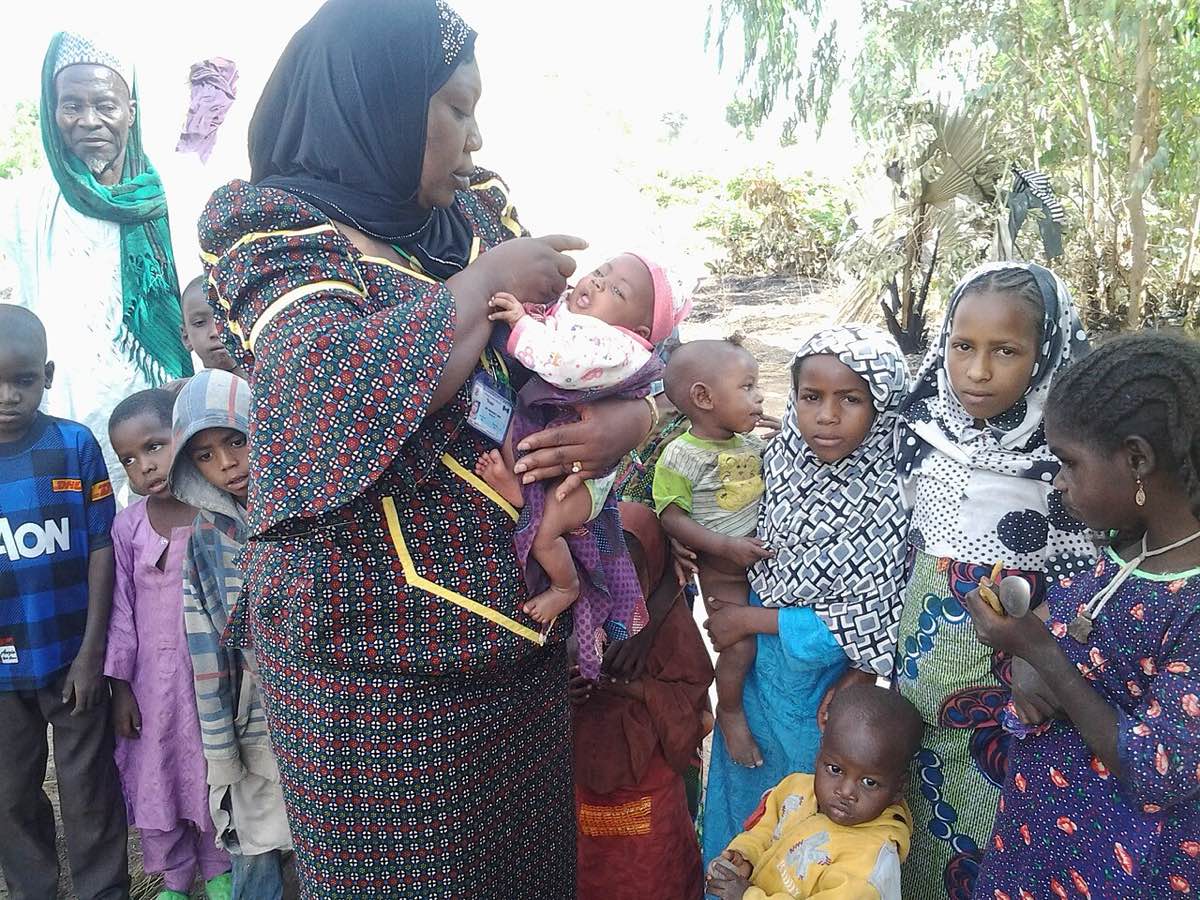
- Polio Vaccination - Nigeria (photo)CDC Global, via Wikimedia Commons · CC BY 2.0 image, resized
General information, not medical advice. This trial tested a way to bring children to routine vaccination in one region of Nigeria; it doesn't show that nutrient supplements protect against measles. Follow your national vaccination schedule, and ask a doctor or nurse about your child's vaccines and diet.
Analysis by NutroPractic from the sources listed. Written for general readers; it does not replace advice from your own doctor.
Newsfeed for your website
Want this feed on your website?
Add it to any site with one copy-and-paste snippet. No sign-up, and it updates itself every hour.
Start with a virtual consultation
Tell Dr. Triveni what you want to change. You will leave with a clear next step, whether you are in Toronto, London, New York or Chennai.