Alcohol · October 19, 2026
Six million till receipts from 85,690 British and Spanish homes: when alcohol-free beer was cheaper, far more households bought it for the first time
Researchers followed barcode-scanned shopping in Great Britain and Spain to see whether price nudges people from regular beer to 0.0% beer. Cheaper alcohol-free beer went with a big jump in first-time buyers; pricier regular beer moved the needle only a little. Here's what the numbers mean, and why the price scale used and the way prices were estimated matter.
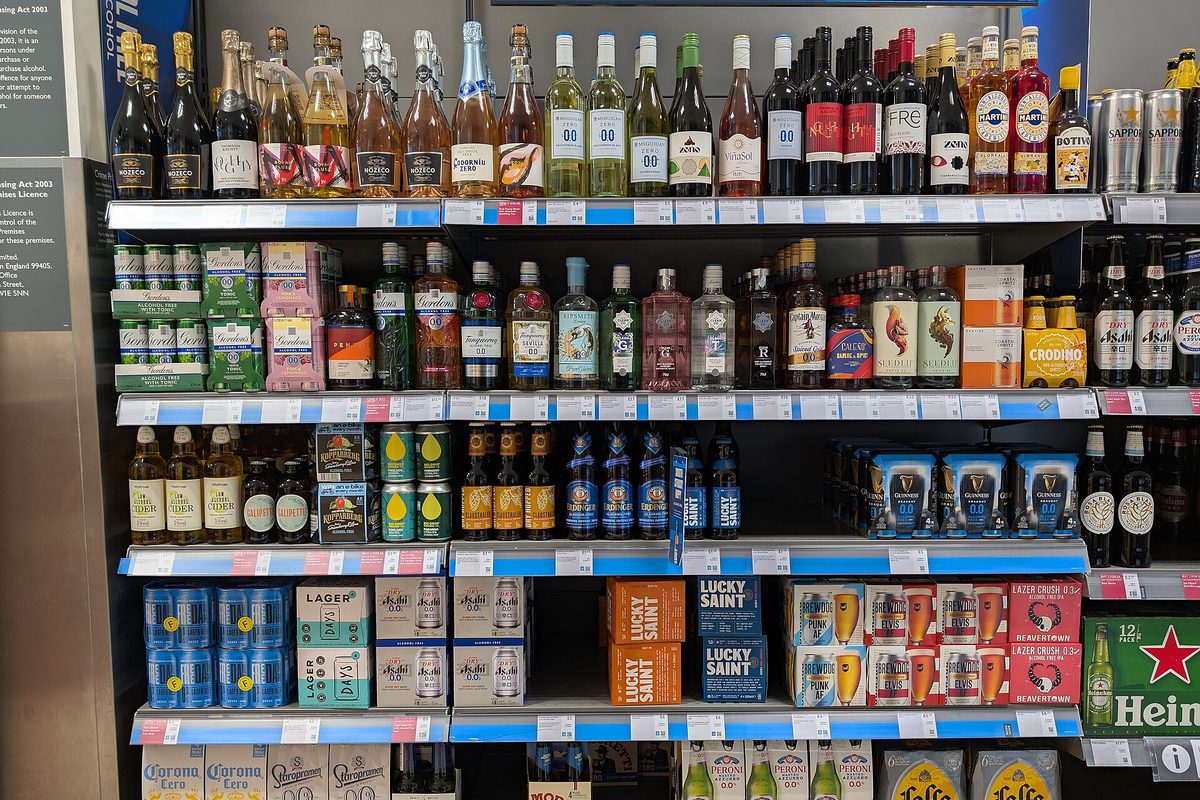
Swapping a regular beer for an alcohol-free one is one of the easier ways to drink less, and the World Health Organization's 2022–2030 alcohol action plan asks producers to shift their ranges towards no- and low-alcohol products. What nobody knew well is how much price matters when a household decides to try alcohol-free beer. A study published on 9 October in the journal Nutrients looked at exactly that, using what people actually bought rather than what they said they would buy.
The researchers, including alcohol-policy specialists Peter Anderson, an independent researcher in Cambridge, and Jürgen Rehm of the Centre for Addiction and Mental Health in Toronto, used Kantar Worldpanel shopping panels, in which households scan the barcode of everything they bring home. They had alcohol purchases from Great Britain for 2015 to 2020 and from Spain for 2017 to early 2022, more than six million purchases in all. They kept the 85,690 households that bought alcohol at least once every three months (68,712 in Britain and 16,978 in Spain) and counted a household as a new alcohol-free beer buyer if its first 0.0% beer came at least 91 days into its alcohol shopping, after at least one regular-strength beer in that time.
Over the study years, 7,509 households (8.8%) bought alcohol-free beer for the first time: 5.2% in Britain and 23.1% in Spain. Lower alcohol-free beer prices went with much higher odds of that first purchase. Moving 10 points down the price scale the authors built was linked to 157% higher odds, which in absolute terms would lift the share of first-time buyers from 8.8% to 19.9%. Dearer regular-strength beer (over 3.5% alcohol) mattered far less: 10 points up its scale raised the odds by 11.3%, from 8.8% to 9.7% of households.
That scale is the key detail. For each country the authors set the cheapest price per litre in their data at 0 and the most expensive at 100, so a 10-point step is a tenth of the whole observed price range, not a 10% cut at the till. Among new buyers, cheaper alcohol-free beer also went with about 8.4% more volume bought. Of the 3,660 new buyers who stayed in the panel for at least three more months, 59% bought alcohol-free beer again. First-time buying was more common in wealthier regions, in higher social grades and in wine-buying households, and the price link was stronger in Britain, a younger market for alcohol-free beer, than in Spain.
The authors are clear that these are associations, not proof that price changes caused the switch. Only new buyers had a real price at the moment of purchase; households that never bought were given the average price paid by alcohol-free beer buyers in their region over the previous three months. The authors write that this lopsided set-up could make shoppers look more price-sensitive than they really are. Promotions, product range and shop availability could also be doing some of the work, the data cover take-home shopping only, not drinks in pubs or bars, and purchases don't show who in the household drank what.
The study received no external funding and the authors declare no competing interests. Kantar provided the raw data free to one author, but was reimbursed by AB InBev for the British data and by Heineken for the Spanish data; the paper says neither brewer nor Kantar had any role in the design, analysis or writing. The authors suggest alcohol taxes charged per gram of alcohol, with nothing on 0.0% products, as one way to make alcohol-free beer cheaper relative to regular beer.
Price and first-time household purchases of alcohol-free beer (0.0%) in Great Britain (2015–2020) and Spain (2017–2022)
85,690
Households that bought alcohol at least every three months, out of 99,621 in the two panels
8.8%
Households that bought alcohol-free beer for the first time (5.2% in Britain, 23.1% in Spain)
+157%
Higher odds of a first purchase for every 10 points lower on the alcohol-free beer price scale (8.8% to 19.9% of households)
+11.3%
Higher odds of a first purchase for every 10 points higher on the regular-beer price scale (8.8% to 9.7%)
+8.4%
More alcohol-free beer bought by new buyers for every 10 points lower on its price scale
59%
Of 3,660 new buyers still in the panel three months later, the share who bought alcohol-free beer again
Study: Anderson Jané B, Sonis A, Rehm J, Anderson P, 'The Association Between Price and Household Purchasing of No-Alcohol Beer in Great Britain and Spain', Nutrients 2026, 18(20), 3310, published 9 October 2026, doi 10.3390/nu18203310, CC BY, read in full on the publisher's site. Data: Kantar Worldpanel take-home purchases, Great Britain 2015–2020 (68,712 of 80,667 households analysed, 4.9 million purchases) and Spain Q2 2017 to Q1 2022 (16,978 of 18,954 households, 1.3 million purchases). No-alcohol beer = 0.0% ABV; regular-strength = over 3.5% ABV. Prices were rescaled per country from 0 (cheapest in sample) to 100 (most expensive) and divided by 10, so one unit is 10 percentage points of the observed price range, not a 10% change in retail price. Logistic regression (binomial, logit) with country, regional wealth, shopper age, social grade, grams of alcohol bought, beer/wine/spirits cluster, COVID confinement and calendar period. Odds of first purchase: 10 points lower no-alcohol beer price +157% (95% CI 148% to 167%); 10 points higher regular beer price +11.3% (10.0% to 12.7%). Sensitivity analyses with 60- or 121-day definitions gave similar results. Volume at first purchase (Gamma GLM): +8.4% (7.3% to 9.6%) per 10 points lower no-alcohol beer price; regular beer price not significantly associated. Non-buyers were assigned regional three-month average prices while new buyers had their actual price; the authors say this asymmetry could overestimate price sensitivity. Purchases are household take-home only. No external funding; Kantar was reimbursed by AB InBev (British data) and Heineken (Spanish data), with no role in the study per the authors.
- Spanish households were more than four times as likely as British ones to start buying alcohol-free beer in this data (23.1% against 5.2%), reflecting how established 0.0% beer already was in Spain.
- The paper cites WHO figures that alcohol causes a little under 300,000 deaths a year in the European Union, with cancer the top cause of those deaths at 29%.
- First-time buying was more common in households that bought less alcohol overall, but among heavier buyers (over 70 g of alcohol per adult a week) a lower alcohol-free beer price was linked to a bigger rise in the odds of trying it.
- During COVID-19 lockdowns, when pubs and bars were shut, new alcohol-free beer buyers bought larger volumes, and the link between a lower price and trying it was about 8.7% stronger.
- The Association Between Price and Household Purchasing of No-Alcohol Beer in Great Britain and SpainNutrients, October 2026 · The study: data, methods, results, limitations, funding and data-cost disclosures
- Global alcohol action plan 2022–2030World Health Organization · The WHO plan that asks producers to substitute higher-alcohol products with no- and low-alcohol ones
General information, not medical advice. This study tracked what households bought, not what people drank, and shows associations rather than cause and effect. Alcohol-free beer can still contain sugar and calories, and some 'low-alcohol' drinks contain small amounts of alcohol, so check labels, especially if you are pregnant, take medicines or need to avoid alcohol completely.
Analysis by NutroPractic from the sources listed. Written for general readers; it does not replace advice from your own doctor.
From our articles
Our guides on this subject
Plain-language guides on nutrition and wellness, backed by research.
Heart health
Triglycerides: what food, alcohol, weight loss and omega-3 actually change
A 5-10% weight loss often lowers triglycerides by about 20-30%, as can 4 g/day of prescription omega-3. Here is what 150, 500 and 1,000 mg/dL mean, which changes have numbers behind them, and when a result needs prompt care.
9 Nov 2026
Women's health
Eating while breastfeeding: extra calories, iodine, caffeine, fish and alcohol, with the actual numbers
Breastfeeding usually adds about 330–400 kcal a day, but the smaller numbers can matter more: 290 mcg iodine, 400 IU vitamin D for baby, 8–12 oz fish a week, and a caffeine total you can actually add up.
6 Nov 2026
Liver health
Fatty liver (MASLD): how much weight loss reverses it, and what coffee and alcohol do
About one adult in three has a fatty liver, and most find out by accident on a scan. Biopsy studies show how much weight loss clears the fat, calms the inflammation and even shrinks scarring. Here are the numbers, what diet and drinks do, the new medicines and the one blood test worth asking for.
30 Oct 2026
Newsfeed for your website
Want this feed on your website?
Add it to any site with one copy-and-paste snippet. No sign-up, and it updates itself every hour.
Start with a virtual consultation
Tell Dr. Triveni what you want to change. You will leave with a clear next step, whether you are in Toronto, London, New York or Chennai.