Glycemic response & food formulation · November 21, 2026
No-added-sugar gelato blunts acute interstitial glucose spikes by over 50% without sensory penalty in crossover trial
In a randomized double-blind crossover trial using continuous glucose monitoring in healthy adults, no-added-sugar gelato formulations reduced peak postprandial glucose increments from 11.26 mg/dL to 4.70 mg/dL compared to conventional recipes, with vegan no-sugar formulations achieving superior overall palatability.
Traditional frozen desserts are characterized by high sucrose and fat contents, delivering rapid postprandial glycemic excursions that challenge metabolic homeostasis. In response to rising consumer demand for functional desserts, food manufacturers have engineered no-added-sugar recipes using bulking fibers and non-nutritive sweeteners across both conventional dairy and plant-based emulsion matrices. However, reformulation often triggers undesirable sensory defects such as icy texture or lingering off-tastes.
To assess whether sugar reformulation successfully tempers glycemic spikes without diminishing consumer enjoyment, Italian sensory scientists and nutritionists conducted a randomized, double-blind, repeated-measures crossover trial in 15 healthy adults. The investigators formulated four standardized hazelnut gelatos combining either dairy or vegan bases with either conventional sucrose or no-added-sugar sweetening systems.
Each participant consumed 100-g portions of each formulation on two separate mornings under strict overnight fasting conditions, completing eight clinical testing sessions. Continuous glucose monitoring (CGM) tracked interstitial glucose trajectories continuously over two hours, while standardized visual analogue scales evaluated palatability, sweetness, flavor liking, and creaminess immediately following consumption.
Linear mixed-effects modeling showed that no-added-sugar gelatos blunted maximum postprandial glucose increments by more than half compared to conventional-sugar gelatos (mean peak increment 4.70 vs 11.26 mg/dL; adjusted difference 6.55 mg/dL, 95% CI: 3.94 to 9.17 mg/dL, p < 0.001). Furthermore, sugar elimination incurred no overall sensory penalty; in fact, the vegan no-added-sugar gelato scored significantly higher in overall palatability than its conventional sugar counterpart, confirming the feasibility of health-aligned confectionery design.
Continuous glucose monitoring and sensory evaluation of 4 hazelnut gelato formulations
4.70 vs 11.26 mg/dL
Peak glucose increment: no-added-sugar vs conventional gelato (p < 0.001)
-6.55 mg/dL
Adjusted reduction in peak glucose excursion with no-sugar recipes
15 adults (8 sessions)
Repeated-measures double-blind crossover trial completing 120 testing visits
Higher palatability
No-added-sugar vegan gelato outperformed conventional vegan gelato
Randomized double-blind crossover trial evaluating continuous interstitial glucose excursions and sensory liking scores.
- Continuous glucose monitors (CGM) measure glucose in interstitial fluid rather than capillary blood, tracking real-time glycemic velocity.
- Hazelnut paste provides unsaturated oleic fatty acids and dietary polyphenols that can moderate gastric emptying rate.
- Sugar in frozen desserts acts not only as a sweetener but as a crucial freezing-point depressant that prevents coarse ice crystal formation.
- Postprandial glycemic excursions, even within normal physiological ranges, generate transient oxidative stress in vascular endothelial cells.
- Postprandial Interstitial Glucose and Sensory Responses to No Added Sugar and Conventional Ice-Cream Formulations with Vegan and Dairy Bases in Healthy Individuals: A Randomized Double-Blind Crossover TrialNutrients / MDPI · Randomized, double-blind crossover clinical trial. Published 18 November 2026.
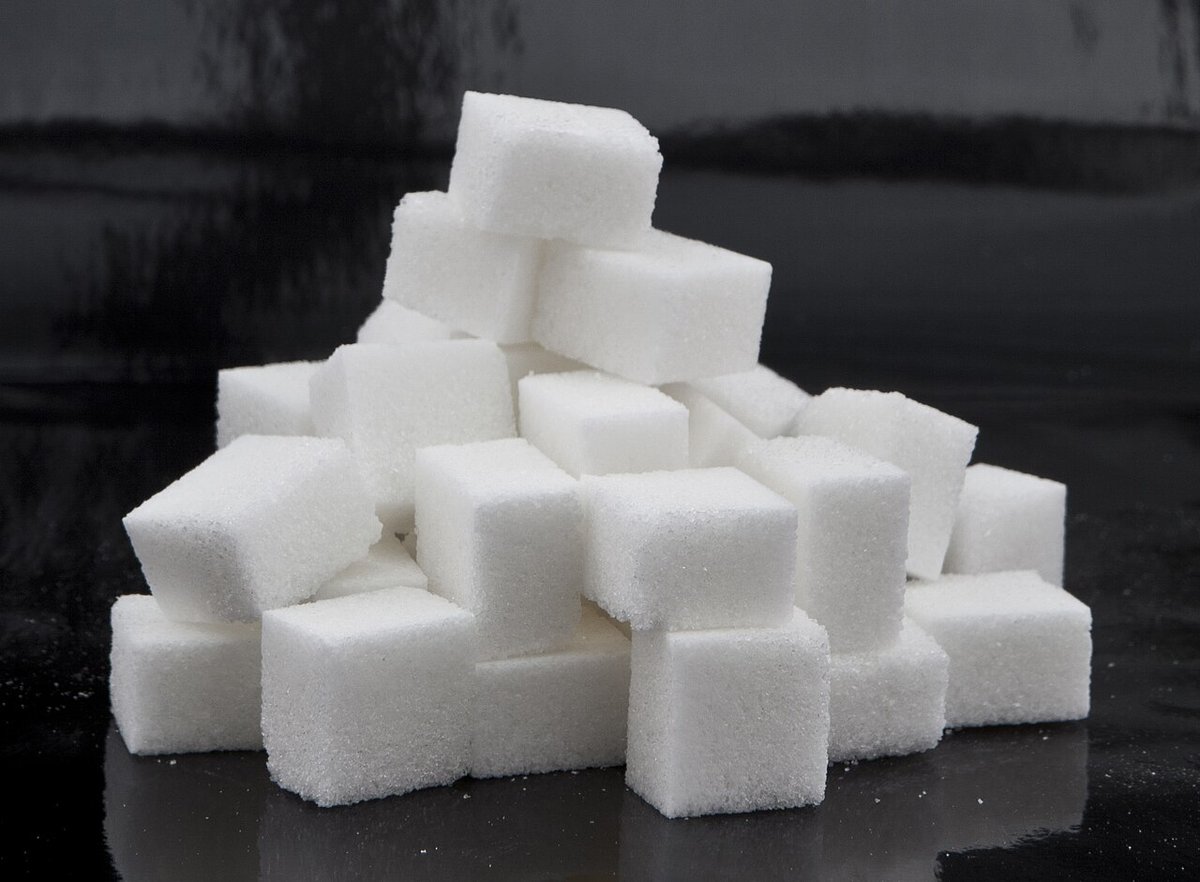
- Sugar CubesWikimedia Commons · Photo by david pacey, CC BY 2.0.
Educational summary of nutritional food science and continuous glucose monitoring research. Individuals managing diabetes should consult their endocrinologist or certified diabetes educator.
Analysis by NutroPractic from the sources listed. Written for general readers; it does not replace advice from your own doctor.
From our articles
Our guides on this subject
Plain-language guides on nutrition and wellness, backed by research.

Medicines and nutrition
CoQ10 and statins: what the muscle symptom trials found, and who might benefit
Statin-associated muscle symptoms lead up to 30% of patients to discontinue life-saving cholesterol therapy. While statins deplete circulating CoQ10 by 16% to 54%, randomized clinical trials show mixed results for myalgia relief. Explore the trials, ubiquinone vs ubiquinol bioavailability, recommended doses, and clinical guideline recommendations.
14 Nov 2026

Women's wellness and nutrition
Creatine for women: cognitive performance, menstrual cycle phases, and bone density beyond muscle building
Creatine is widely stereotyped as a bodybuilding supplement for men, but female physiology tells a very different story. Women exhibit 70% to 80% lower endogenous creatine stores, reduced dietary intake, and cyclical fluctuations in brain creatine kinase across the follicular and luteal phases. Robust clinical trials demonstrate that 3 to 5 grams of daily creatine monohydrate enhances cognitive performance during sleep deprivation, augments clinical response in unipolar depression, preserves femoral neck bone geometry in postmenopausal women, and causes cellular intracellular hydration rather than subcutaneous bloating.
13 Nov 2026

Cardiovascular wellness
Psyllium husk: how much soluble fibre lowers LDL cholesterol and stabilizes post-meal glucose in clinical trials
Viscous soluble fibre forms a thick gel matrix in the small intestine that binds bile acids and blunts post-meal glucose spikes. Across dozens of randomized controlled trials, 7 to 10.2 grams of psyllium daily lowers LDL cholesterol by 6% to 12% without stripping HDL, while reducing postprandial glucose surges by 15% to 25% in metabolic syndrome and type 2 diabetes. Discover the bile acid sequestration mechanism, trial meta-analyses, exact timing before meals, water ratios, and titration protocols to avoid gas and cramping.
13 Nov 2026
Newsfeed for your website
Want this feed on your website?
Add it to any site with one copy-and-paste snippet. No sign-up, and it updates itself every hour.
Start with a virtual consultation
Tell Dr. Triveni what you want to change. You will leave with a clear next step, whether you are in Toronto, London, New York or Chennai.