Cancer · October 18, 2026
Researchers pulled together 21 reviews on diet, lifestyle and womb cancer: healthy habits went with roughly half the risk, but for women already diagnosed the evidence is almost empty
A team in Brisbane and Salt Lake City re-checked everything published on overall diet quality, healthy lifestyle scores and endometrial cancer. The prevention signal holds up, if less firmly than headlines would suggest. What happens after diagnosis is a different story: two small trials, no difference in quality of life, and almost no data on survival.
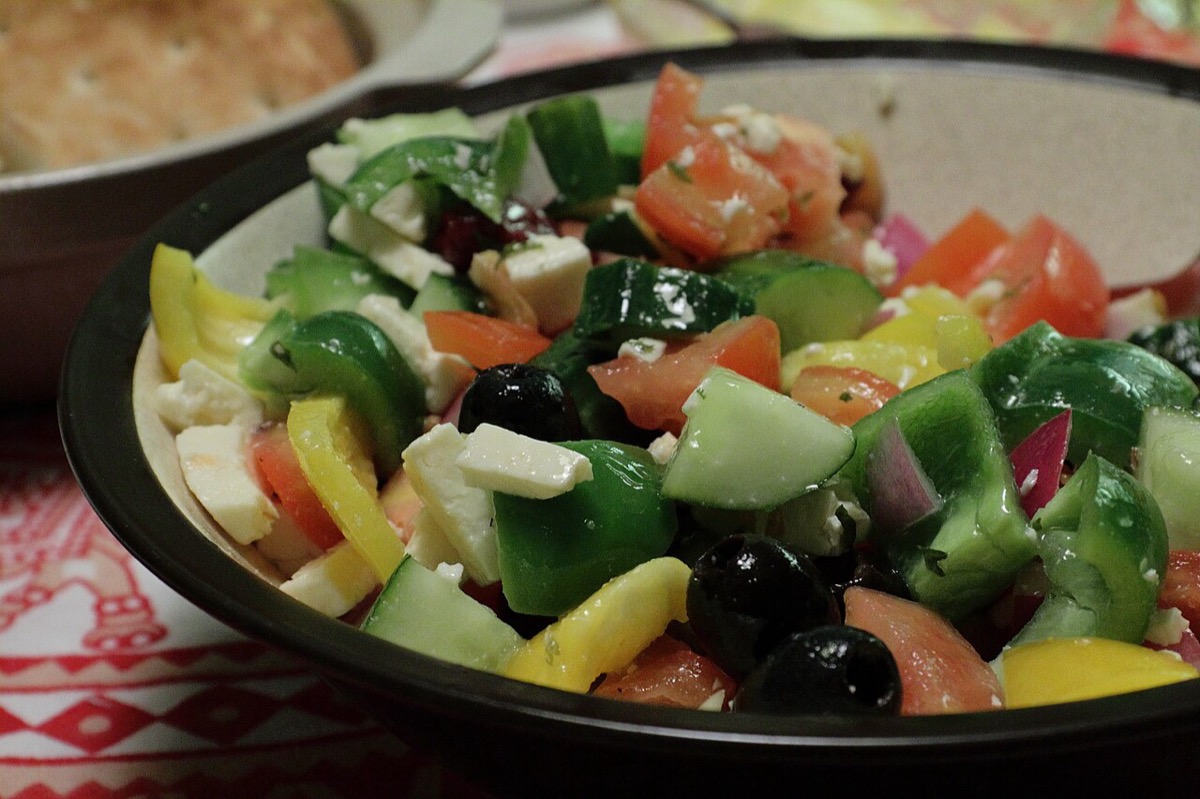
Endometrial cancer, cancer of the lining of the womb, is the sixth most common cancer in women worldwide, and it is most common in wealthy countries. There is no screening test for women without symptoms, so prevention matters. Excess body fat is the best-established risk factor. Single foods and habits have been studied many times, but people don't eat single foods: they follow a pattern. So researchers at the University of Queensland in Brisbane and the University of Utah set out to collect every systematic review that looked at whole diets or combined lifestyle scores, and to grade how strong that evidence really is. Their umbrella review, a review of reviews, was published on 14 October 2026 in PLOS One.
Their search, run up to December 2024 across six databases, turned up 1,652 records. 21 systematic reviews made the cut: nine on diet quality and twelve on lifestyle scores or lifestyle programmes. Because many of those reviews drew on the same original studies, the team re-ran the four main meta-analyses themselves rather than simply adding up conclusions. They also rated each review's methods, and the picture was mixed: ten were of moderate or high quality, eleven low or critically low.
The strongest signal came from lifestyle scores that combine diet, body weight, physical activity and, in some cases, smoking and alcohol. Five large cohort studies, together following 597,047 women of whom 4,548 developed endometrial cancer, all found that women with the healthiest scores had less of it. Pooled, the healthiest group had about 46% lower risk (hazard ratio 0.54). The authors rated this 'suggestive' evidence, class III on a four-step scale, and add two cautions: the studies varied a lot in their results, and the pooled effect was 2.3 times stronger than the one found in the largest single study, so the true effect is probably smaller.
Diet on its own gave weaker results. Women who followed a Mediterranean diet most closely had 29% lower odds of endometrial cancer than those who followed it least, but that came from just two case-control studies (1,708 cases), and the one large prospective cohort that measured the same thing found no significant link. A 'Western' pattern, heavy on red meat, animal fat, sugar and refined grains, went with 20% higher odds in three studies. A 'prudent' pattern of vegetables, fruit and whole grains leaned towards lower odds but wasn't statistically clear. Both diet findings were graded as weak evidence, class IV.
For women who already have endometrial cancer, the review found little to go on. Two small randomised trials of lifestyle programmes, with 120 women between them, showed no difference in overall quality of life, physical or emotional wellbeing, or fatigue at three or six months. On recurrence, survival and heart and metabolic disease, there were too few studies or too few events to say anything; in one trial there was a single case of heart failure. That gap matters, because early-stage endometrial cancer usually has a good outlook (more than 90% of women are alive five years on), and heart and metabolic disease has been reported as possibly the main cause of death among women who have had it.
The take-home is modest but useful. The habits that lower the risk of many other conditions, a mostly plant-based diet, less processed and red meat, a healthy weight and regular activity, also go with less endometrial cancer, mostly through cohort and case-control studies that can show a link but not prove cause. Specific advice for women after diagnosis is still borrowed from the prevention guidelines, and the authors call for longer, larger trials that track what survivors actually care about.
Diet and lifestyle patterns and endometrial cancer: pooled results re-analysed in an umbrella review of 21 systematic reviews
0.54
Hazard ratio for endometrial cancer, healthiest vs least healthy lifestyle score (5 cohorts, 597,047 women, 4,548 cases; 95% CI 0.42 to 0.71)
0.71
Odds ratio, closest vs least close Mediterranean diet (2 case-control studies, 1,708 cases; 95% CI 0.51 to 0.98)
1.20
Odds ratio, highest vs lowest Western dietary pattern (3 studies, 1,448 cases; 95% CI 1.03 to 1.39)
0.89
Odds ratio for a 'prudent' healthy pattern: not statistically significant (95% CI 0.76 to 1.05)
120
Women with endometrial cancer in the two lifestyle trials pooled for quality of life: no significant difference at 3 or 6 months
11 of 21
Included reviews rated low or critically low quality on the AMSTAR 2 checklist
Figures from Al Ramadhani R, Arvin N, Moussa S, Janda M, Playdon MC, Obermair A, 'Dietary and lifestyle quality and endometrial cancer: Incidence and survivorship outcomes, an umbrella review of systematic reviews and meta-analyses', PLOS One 21(10): e0360238, published 14 October 2026, doi 10.1371/journal.pone.0360238 (CC0). Evidence grades: lifestyle score class III (suggestive), Mediterranean and Western diet class IV (weak). Heterogeneity for the lifestyle result was high (I² 86%). All results come from observational studies except the quality-of-life trials, so they show associations, not cause and effect.
- The lifestyle scores in the pooled studies were far from identical: the World Cancer Research Fund score has around 7 parts, the American Cancer Society score around 11, and the Healthy Lifestyle Index around 20, including smoking.
- The authors note that endometrial cancer rates in Mediterranean countries are around a third of those in North America and Europe, though lower obesity there may explain much of that.
- Besides body fat, the World Cancer Research Fund's evidence review links a high dietary glycaemic load to higher endometrial cancer risk, and physical activity and coffee to lower risk.
- An umbrella review sits one level above a meta-analysis: instead of pooling individual studies, it gathers the reviews themselves, checks how much they overlap and grades the strength of each claim.
- Of the 21 reviews, 18 did not report who funded the original studies they included.
- Dietary and lifestyle quality and endometrial cancer: Incidence and survivorship outcomes, an umbrella review of systematic reviews and meta-analysesPLOS One, 14 October 2026 · The study: pooled estimates, evidence grades and review quality ratings
- Endometrial Cancer Prevention (PDQ), patient versionUS National Cancer Institute · Background on known risk and protective factors for endometrial cancer
General information, not medical advice. These are associations from observational studies and do not show that any diet prevents or treats endometrial cancer. See a doctor promptly about bleeding after menopause, bleeding between periods or unusual discharge, and talk to your care team before changing your diet during or after cancer treatment.
Analysis by NutroPractic from the sources listed. Written for general readers; it does not replace advice from your own doctor.
From our articles
Read, then eat a little better
Plain-language guides on nutrition and wellness, backed by research.
Supplements and vitamins
Spermidine from food or capsules: measured milligrams in wheat germ, soybeans and cheese, and what the one year-long trial found
Wheat germ holds about 22 to 34 mg of spermidine per 100 g, matured cheese about 0.12 mg. The only year-long capsule trial used 0.9 mg a day and found no memory benefit. Measured values, worked doses and safety.
22 Nov 2026

Supplements and vitamins
Zinc carnosine for the gut lining: what the two human trials gave, the zinc in each dose, and the copper catch
Zinc carnosine is only about 22.6% zinc, so 75 mg twice a day is roughly 34 mg of zinc a day. Here are the doses and results of the 10-person NSAID permeability trial and the 20-person aspirin pilot, and the copper cautions.
22 Nov 2026

Women's health
Inositol for PCOS: the 40:1 ratio, trial doses, and food milligrams
Why do randomized trials in polycystic ovary syndrome prioritize the 40:1 myo to D-chiro inositol ratio? Here is the science behind the ovarian epimerase paradox, clinical ovulation and insulin metrics, and why cantaloupe cannot replace 4,000 mg trial powder.
21 Nov 2026
Newsfeed for your website
Want this feed on your website?
Add it to any site with one copy-and-paste snippet. No sign-up, and it updates itself every hour.
Start with a virtual consultation
Tell Dr. Triveni what you want to change. You will leave with a clear next step, whether you are in Toronto, London, New York or Chennai.