Maternal-infant nutrition & epigenetic biomarkers · November 21, 2026
Maternal omega-3 levels during pregnancy correlate with infant epigenetic aging biomarkers in Canadian birth cohort
Analyzing 246 mother-infant pairs in the APrON study, researchers discovered that maternal second-trimester EPA and total omega-3 fatty acids were positively associated with infant buccal cell epigenetic age acceleration, while a higher omega-6 to omega-3 ratio showed an inverse association.

Maternal nutrition during gestation plays a foundational role in fetal organogenesis, metabolic programming, and cellular maturation. Long-chain polyunsaturated fatty acids, particularly eicosapentaenoic acid (EPA) and docosahexaenoic acid (DHA), cross the placenta to support membrane fluidity, neural connectivity, and gene regulatory networks. However, whether maternal circulating fatty acid status directly influences early biological maturation markers at the molecular level has remained unexplored.
In a prospective investigation within the Alberta Pregnancy Outcomes and Nutrition (APrON) study in Canada, investigators examined 246 mother-infant dyads to determine how maternal second-trimester serum phospholipid fatty acid profiles relate to infant cellular aging. Infant DNA methylation was profiled from non-invasive buccal epithelial cell (BEC) swabs at three months of age using the Infinium MethylationEPIC BeadChip array.
The researchers calculated infant epigenetic age acceleration (EAA) using the validated Pediatric-Buccal-Epigenetic (PedBE) clock, which computes deviations between methylation-estimated biological age and true chronological age. Utilizing multivariable robust linear regression models adjusted for cell-type proportions and gestational parameters, the team uncovered striking biological correlations.
Maternal relative percentage of EPA was significantly and positively associated with infant PedBE EAA (beta = 1.55, 95% CI: 0.24 to 2.87), as was total maternal omega-3 status (beta = 0.36, 95% CI: 0.02 to 0.70). Conversely, a higher maternal omega-6 to omega-3 ratio displayed a negative association with infant EAA (beta = -0.24, 95% CI: -0.48 to -0.01). While epigenetic acceleration in older adults often signals metabolic wear, during early infancy it may represent accelerated cellular differentiation and neurodevelopmental maturation.
Maternal gestational phospholipid fatty acids and 3-month infant PedBE epigenetic age
246 pairs
Mother-infant dyads evaluated in the Canadian APrON cohort
+1.55 beta
Association of maternal EPA with infant epigenetic age acceleration (p < 0.05)
+0.36 beta
Association of total maternal omega-3 status with infant PedBE EAA
-0.24 beta
Inverse association between maternal omega-6:omega-3 ratio and infant EAA
Observational cohort study using Infinium MethylationEPIC arrays and the PedBE developmental clock on 3-month infant buccal swabs.
- Epigenetic clocks measure DNA methylation across specific cytosine-phosphate-guanine (CpG) sites to estimate biological maturity.
- The PedBE clock was calibrated specifically for pediatric populations using buccal epithelial swabs rather than peripheral blood.
- During the second and third trimesters, fetal accrual of omega-3 fatty acids accelerates rapidly to support brain and retinal development.
- Unlike adults where epigenetic age acceleration reflects biological wear, in infants it may indicate functional developmental readiness.
- Maternal Fatty Acid Status and Infant Epigenetic Aging Biomarkers in Buccal Swabs: Results from the APrON StudyNutrients / MDPI · Prospective mother-infant cohort study. Published 19 November 2026.
- Waiting for an angelWikimedia Commons · Photo by Bich Ngoc Le, CC0 public domain dedication.
Educational summary of developmental nutritional epigenetics. Expecting mothers should discuss prenatal fatty acid supplementation with their obstetrician or registered dietitian.
Analysis by NutroPractic from the sources listed. Written for general readers; it does not replace advice from your own doctor.
From our articles
Our guides on this subject
Plain-language guides on nutrition and wellness, backed by research.
Medicines and nutrition
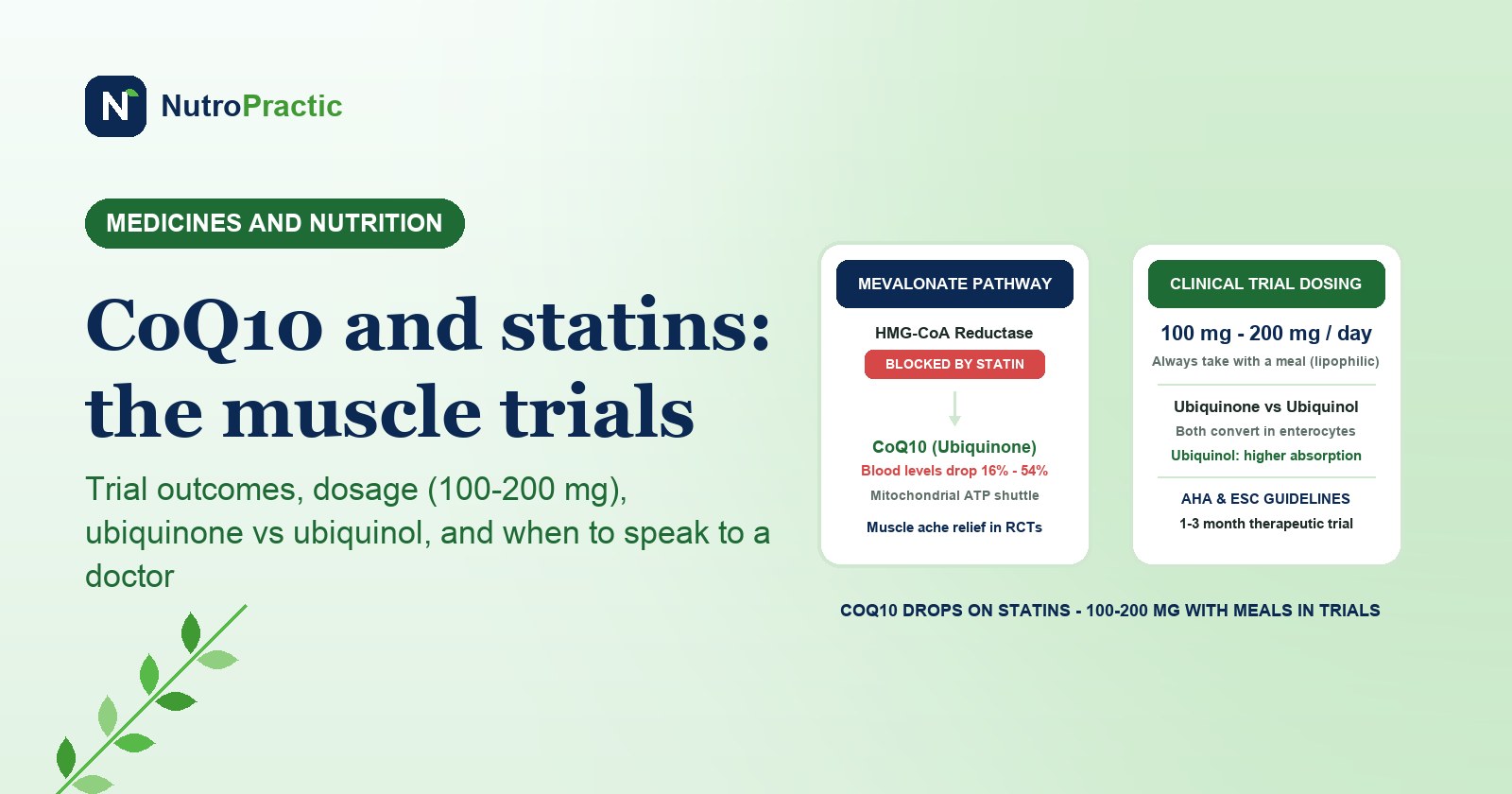
CoQ10 and statins: what the muscle symptom trials found, and who might benefit
Statin-associated muscle symptoms lead up to 30% of patients to discontinue life-saving cholesterol therapy. While statins deplete circulating CoQ10 by 16% to 54%, randomized clinical trials show mixed results for myalgia relief. Explore the trials, ubiquinone vs ubiquinol bioavailability, recommended doses, and clinical guideline recommendations.
14 Nov 2026

Women's wellness and nutrition
Creatine for women: cognitive performance, menstrual cycle phases, and bone density beyond muscle building
Creatine is widely stereotyped as a bodybuilding supplement for men, but female physiology tells a very different story. Women exhibit 70% to 80% lower endogenous creatine stores, reduced dietary intake, and cyclical fluctuations in brain creatine kinase across the follicular and luteal phases. Robust clinical trials demonstrate that 3 to 5 grams of daily creatine monohydrate enhances cognitive performance during sleep deprivation, augments clinical response in unipolar depression, preserves femoral neck bone geometry in postmenopausal women, and causes cellular intracellular hydration rather than subcutaneous bloating.
13 Nov 2026
Heart health
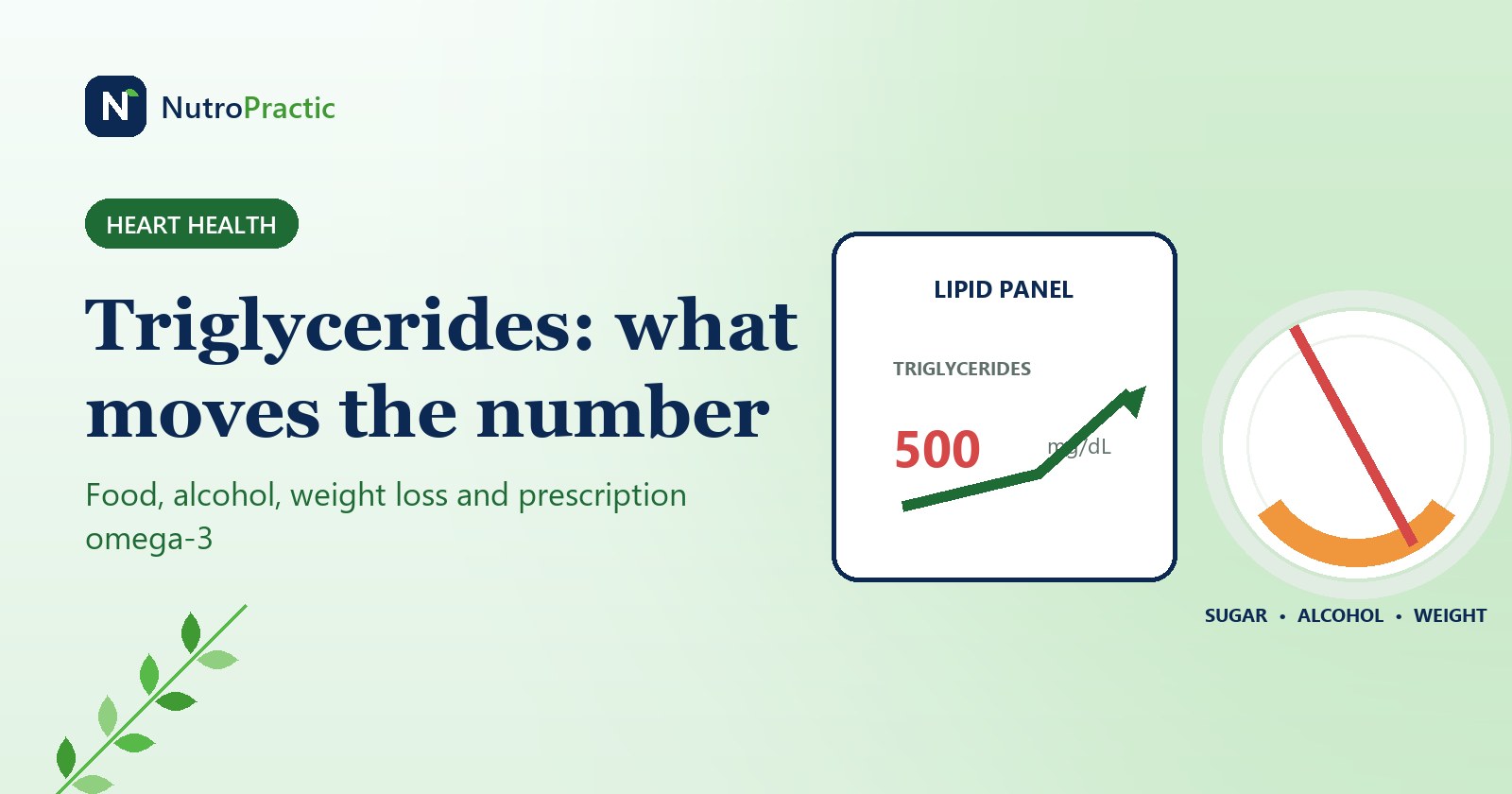
Triglycerides: what food, alcohol, weight loss and omega-3 actually change
A 5-10% weight loss often lowers triglycerides by about 20-30%, as can 4 g/day of prescription omega-3. Here is what 150, 500 and 1,000 mg/dL mean, which changes have numbers behind them, and when a result needs prompt care.
9 Nov 2026
Newsfeed for your website
Want this feed on your website?
Add it to any site with one copy-and-paste snippet. No sign-up, and it updates itself every hour.
Start with a virtual consultation
Tell Dr. Triveni what you want to change. You will leave with a clear next step, whether you are in Toronto, London, New York or Chennai.