Kidney health · October 26, 2026
Kidney patients are often told to cut protein. In 1,861 Koreans followed for nine years, those eating the least, under 0.6 g per kilo, reached dialysis or a transplant more often, not less
A JAMA Network Open study measured protein intake from 24-hour urine rather than food diaries. Almost half of the lowest-protein group went on to kidney failure, against a quarter of the highest, and the gap held after a long list of adjustments. It is an observational study, and the low eaters were sicker to begin with.
For decades, eating less protein has been standard advice for people with chronic kidney disease (CKD). Protein breaks down into waste the kidneys have to clear, and older trials hinted that a low-protein diet might slow the loss of kidney function, so a target of 0.6 to 0.8 g per kilo of body weight a day was long recommended. The worry on the other side is protein-energy wasting, the loss of muscle and body stores that is common in CKD and predicts worse outcomes. A team led from Chonnam National University in Gwangju looked at how both sides played out over years in Korean patients, in a study published in JAMA Network Open on 22 October.
They used KNOW-CKD, a cohort that enrolled patients with CKD stages 1 to 5 (not yet on dialysis) at nine hospitals in South Korea between 2011 and 2016 and followed them to January 2024. Instead of asking people what they ate, the researchers estimated each person's daily protein from the urea nitrogen in a full 24-hour urine collection at the start, scaled to an ideal body weight. Of 2,238 people enrolled, 1,861 had that measurement and follow-up data. Their average age was about 54, and the median follow-up was 9.3 years. They were split into five groups, from under 0.6 g per kilo a day (132 people, averaging 0.49 g) to 1.2 g or more (365 people, averaging 1.49 g).
In the lowest-protein group, 61 of 132 people (46%) reached kidney failure needing dialysis or a transplant, against 93 of 365 (25%) in the highest group. Deaths were 23 (17%) against 33 (9%). Before any adjustment, the lowest group's risk of kidney failure was about 2.3 times that of the highest. After accounting for age, sex, other illnesses, medicines, body mass index, blood pressure and a set of blood and urine tests including kidney function, the gap shrank but stayed: 42% higher for kidney failure and about twice the risk of death, with deaths counted as a competing outcome. Heart attacks, strokes and other major heart events did not differ clearly between groups. The pattern held when the researchers left out people who reached kidney failure in the first year or had signs of malnutrition, and when they matched low and high eaters on kidney stage and protein in the urine.
The study cannot show that eating less protein caused the harm. The low-protein group was sicker at the start: their kidney function (eGFR) averaged 44 against 60, more of them had diabetes as the cause of their kidney disease (34% against 21%), and 38% were at stage 4 or 5 against 19%. Protein was measured once, so changes over nine years were missed, and there were no data on total calories or on whether the protein came from plants or animals. The middle groups did not line up neatly either: those eating 0.6 to 0.8 g and 0.8 to 1.0 g did not differ significantly from the top group, while those eating 1.0 to 1.2 g had a borderline higher risk. All participants were Korean, and the authors argue that people with smaller bodies and less muscle may be hit harder by tight restriction.
The findings sit alongside a shift that has already happened in guidance: the 2024 KDIGO guideline suggests 0.8 g per kilo a day for adults with CKD stages 3 to 5 not on dialysis, the same as the usual daily allowance for healthy adults, rather than going lower. The authors say strict restriction below 0.6 g should be weighed against the risk of wasting and paired with nutritional monitoring, and they call for a more individual approach. It does not mean people with CKD should eat as much protein as they like; it means very low intake deserves a closer look by their kidney team.
Daily protein intake measured from 24-hour urine and outcomes over a median 9.3 years in 1,861 Korean adults with CKD not on dialysis (KNOW-CKD; JAMA Network Open, 22 October 2026)
46% vs 25%
Reached kidney failure (dialysis or transplant): under 0.6 g/kg a day (61 of 132) vs 1.2 g/kg or more (93 of 365)
17% vs 9%
Died during follow-up: lowest vs highest protein group (23 of 132 vs 33 of 365)
1.42
Kidney failure hazard ratio, lowest vs highest group, fully adjusted (95% CI 1.09 to 1.85; unadjusted 2.26)
2.17
Death hazard ratio, lowest vs highest group, fully adjusted (95% CI 1.17 to 4.03)
8.3% vs 5.5%
Major heart events, lowest vs highest group: no clear difference
0.49 vs 1.49 g
Average protein per kilo of ideal body weight a day in the lowest and highest groups
44 vs 60
Average kidney function (eGFR, mL/min/1.73 m²) at the start: the low-protein group began sicker
Prospective cohort (KNOW-CKD), 9 tertiary hospitals in South Korea, enrolment 2011 to 2016, follow-up to 31 January 2024. 2,238 enrolled; 1,861 analysed (346 without a baseline protein estimate, 31 without follow-up dates). Mean age 53.7. Daily protein intake estimated once at baseline from 24-hour urinary urea nitrogen: 6.25 x [urea nitrogen (g/d) + 0.031 x ideal body weight (kg)], divided by ideal body weight at a BMI of 22.5; completeness checked with a creatinine index of at least 0.7. Groups (g/kg/d): under 0.6 (n = 132), 0.6 to under 0.8 (403), 0.8 to under 1.0 (555), 1.0 to under 1.2 (406), 1.2 or more (365, reference). Fine-Gray competing-risk models with death as a competing event. The fully adjusted model (model 4) included age, sex, Charlson index, cause of CKD, smoking, medicines, BMI, systolic blood pressure, haemoglobin, albumin, HDL cholesterol, fasting glucose, vitamin D, hs-CRP, eGFR and urine albumin-to-creatinine ratio. Kidney failure sHRs in model 4: 0.6 to <0.8, 1.23 (0.97 to 1.56); 0.8 to <1.0, 1.16 (0.94 to 1.44); 1.0 to <1.2, 1.28 (1.00 to 1.63, p = 0.049). Propensity-matched (1:2) lowest vs highest: sHR 1.52 (1.11 to 2.08). Results held after excluding kidney failure within 1 year, albumin under 3.5 g/dL or total cholesterol under 115 mg/dL. Baseline, lowest vs highest group: eGFR 44.2 vs 60.2; diabetes as cause of CKD 34.1% vs 20.8%; stage 4 to 5, 37.9% vs 18.6%. No data on total energy intake or protein source; SGLT2 inhibitors not in use at recruitment. Funded by the Korea National Institute of Health, the National Research Foundation of Korea and Chonnam National University Hwasun Hospital; no conflicts reported. Observational: associations, not proof of cause.
- The researchers estimated protein from urine because nitrogen is what sets protein apart from fats and carbohydrates, and most of the nitrogen the body gets rid of leaves as urea in urine; the 6.25 in their formula reflects that protein is roughly 16% nitrogen.
- Doses here are per kilo of ideal body weight, not actual weight. For someone whose ideal weight is 60 kg, 0.6 g per kilo is 36 g of protein a day and 0.8 g per kilo is 48 g.
- The 2024 KDIGO guideline's 0.8 g per kilo a day for CKD stages 3 to 5 is the same figure as the usual recommended daily allowance of protein for healthy adults.
- To check that each 24-hour urine sample was complete, the team compared the creatinine in it with the amount expected for the person's age, weight and height, and treated collections under 70% of that as incomplete.
- Low Daily Protein Intake and Risk of Kidney Failure and Mortality in Chronic Kidney DiseaseJAMA Network Open · The study, published 22 October 2026
- Full text (PMC13691655)PubMed Central · Methods, Tables 1 and 2, sensitivity analyses and limitations
- KDIGO 2024 Clinical Practice Guideline for the Evaluation and Management of Chronic Kidney DiseaseKidney Disease: Improving Global Outcomes (KDIGO) · The guideline the authors cite for 0.8 g/kg a day in CKD stages 3 to 5
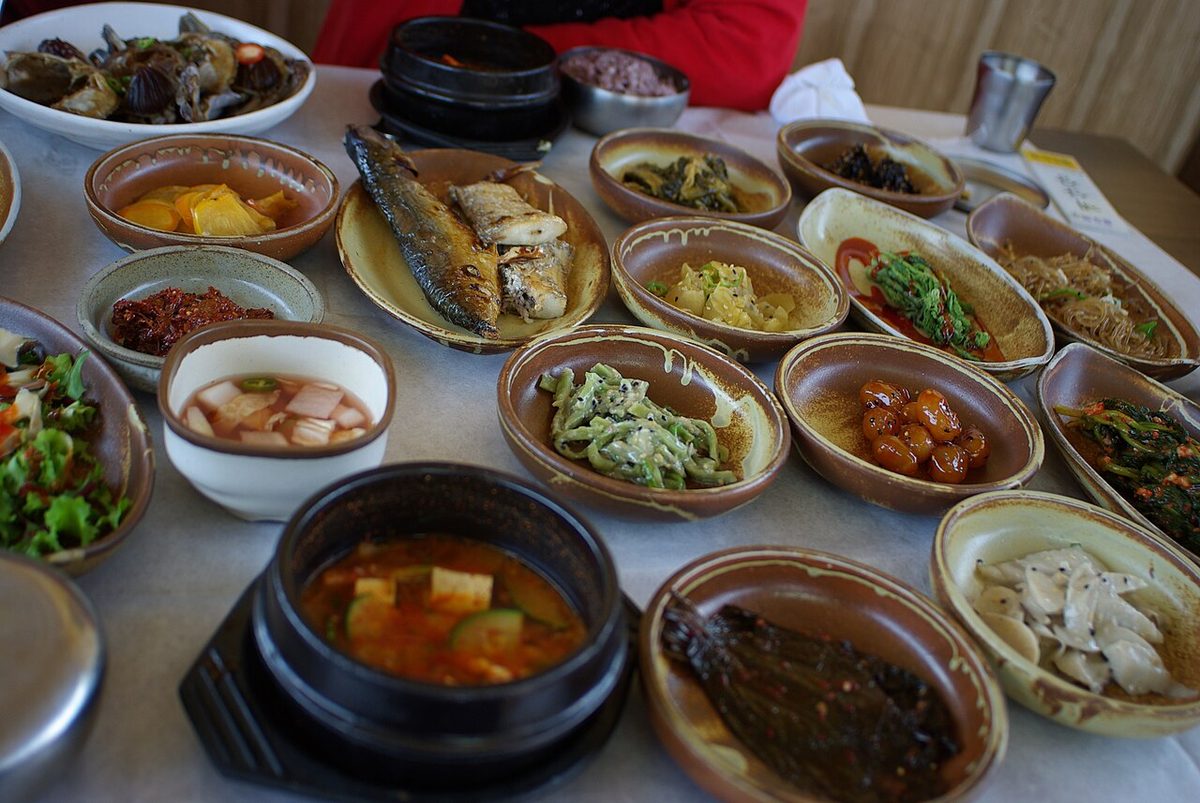
- Korean cuisine - HanjeongsikWikimedia Commons (egg, via Flickr) · The photo, CC BY 2.0
General information, not medical advice. This was an observational study in Korean adults; it shows an association, not that low protein caused kidney failure, and the low-protein group was already sicker at the start. If you have kidney disease, do not change how much protein you eat without talking to your kidney doctor or a renal dietitian: the right amount depends on your stage, other conditions such as diabetes, and whether you are on dialysis.
Analysis by NutroPractic from the sources listed. Written for general readers; it does not replace advice from your own doctor.
From our articles
Our guides on this subject
Plain-language guides on nutrition and wellness, backed by research.
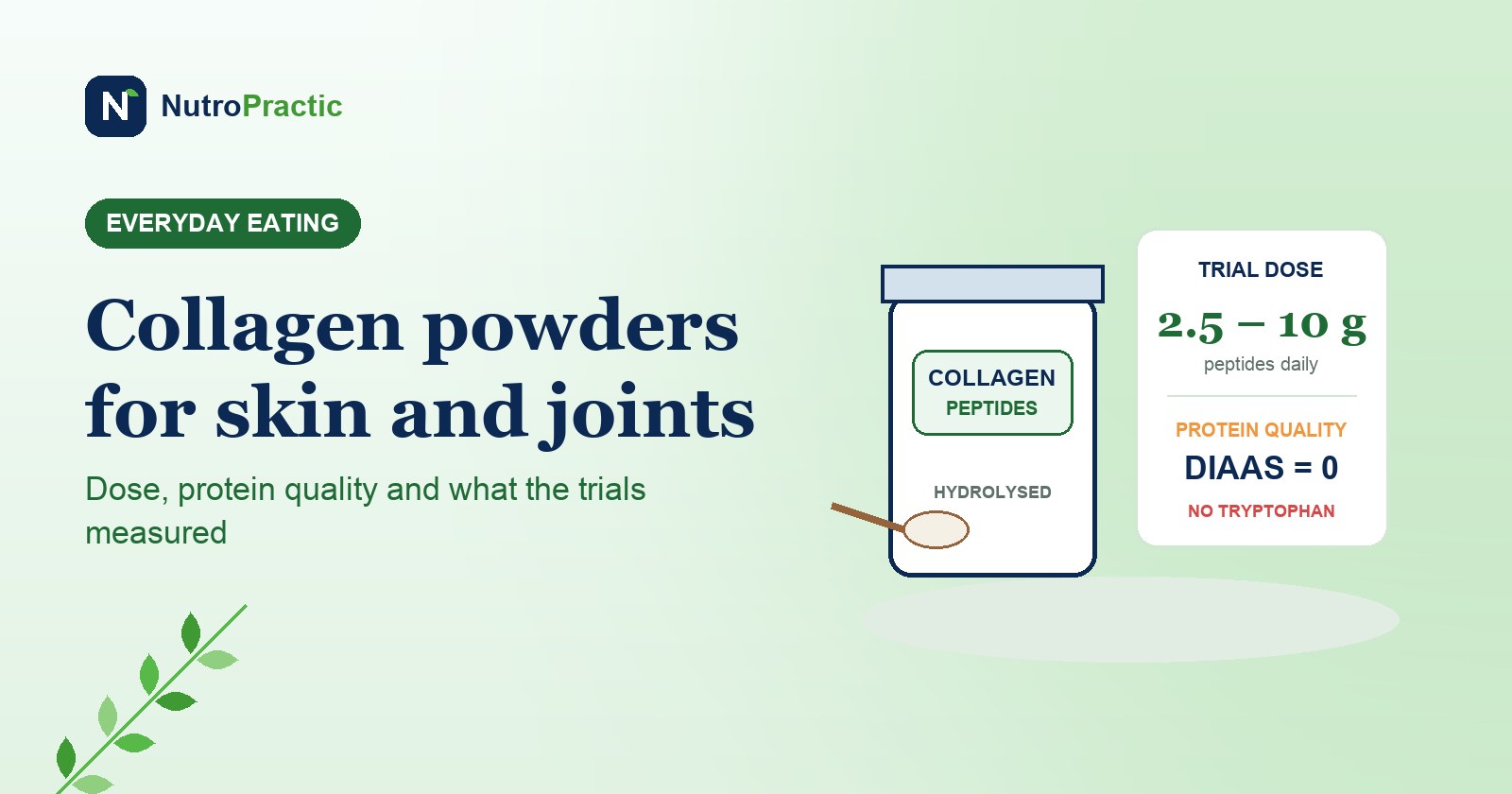
Everyday eating
Collagen powders for skin and joints: dose, protein quality and what the trials measured
A 10 g scoop gives 9 g protein, but its protein quality score is zero. Here is what 19 skin trials and knee studies measured at 2.5 g to 10 g daily—and what collagen cannot do.
10 Nov 2026
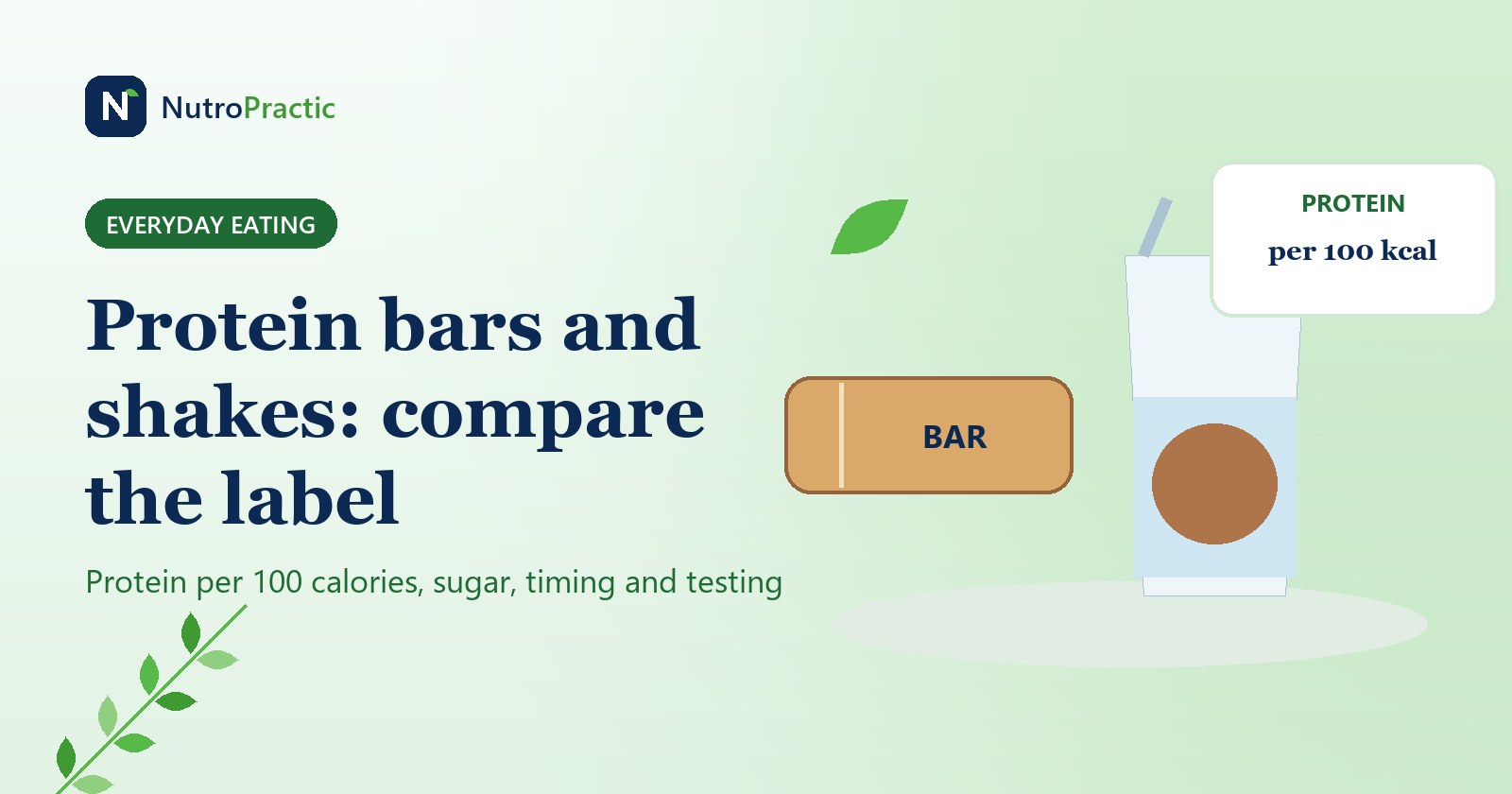
Everyday eating
Protein bars and shakes: what you get per 100 calories
Four current labels range from 6.3 to 20 g protein per 100 kcal. Here is how bars, shakes, eggs, yogurt and lentils compare—and when a supplement actually helps.
6 Nov 2026
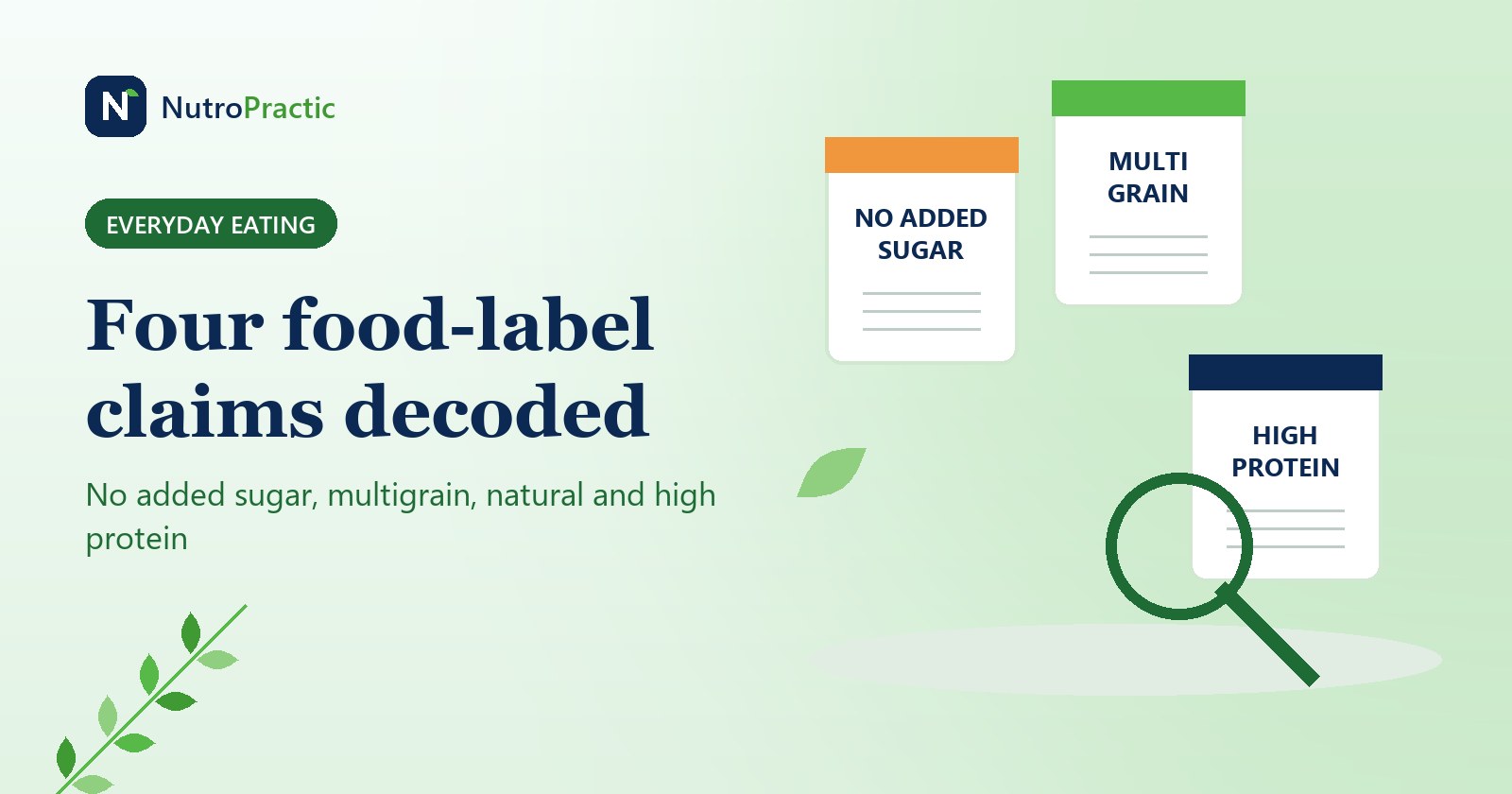
Everyday eating
Food label claims decoded: 'no added sugar', 'multigrain', 'natural' and 'high protein'
A no-added-sugar biscuit with only 13% fewer calories. A 7-grain loaf with refined flour listed first. A 'high protein' bar that clears the legal line at 21%. What each claim legally requires in the EU/UK, US and India, with worked reads of real packs.
2 Nov 2026
Newsfeed for your website
Want this feed on your website?
Add it to any site with one copy-and-paste snippet. No sign-up, and it updates itself every hour.
Start with a virtual consultation
Tell Dr. Triveni what you want to change. You will leave with a clear next step, whether you are in Toronto, London, New York or Chennai.