Kidney health · November 13, 2026
A lower-protein diet preserved one experimental kidney measure in 135 adults—but standard eGFR did not change differently
After six months, renal function reserve fell less with 0.6 than 0.8 grams of protein per kilogram, a finding the authors call hypothesis-generating.
A six-month randomized trial assigned 135 adults with stage 3 or 4 chronic kidney disease to 0.8 or 0.6 grams of protein per kilogram of body weight each day. The study used food records, recalls and urinary urea nitrogen to monitor adherence.
Researchers measured renal function reserve—the rise in measured filtration after a controlled protein load—at the start and end. The reserve percentage changed by −1.34 percentage points in the lower-protein group and −5.06 points in the standard-protein group, a statistically significant between-group difference.
The familiar estimated glomerular filtration rate, or eGFR, did not change differently between groups. That matters because renal function reserve is an investigational physiological measure; it is not yet a routine patient-centred outcome such as dialysis, kidney failure or quality of life.
The trial suggests a mechanism worth testing, not a reason for someone with kidney disease to cut protein alone. Protein needs depend on kidney stage, dialysis, nutrition status and other illnesses, and an overly restrictive diet can contribute to malnutrition.
Stage 3–4 CKD diet trial (5 November 2026)
135
Adults randomized
6 months
Diet intervention
0.6 vs 0.8 g/kg/day
Prescribed protein
−1.34 vs −5.06 points
Change in renal function reserve percentage
No difference
Change in eGFR
Single-centre randomized trial using renal function reserve as its primary endpoint. The result did not show a between-group difference in standard eGFR change.
- Renal function reserve describes how much filtration can rise above its resting level after a stimulus.
- The researchers measured filtration with technetium-99m DTPA before and after a 1 g/kg protein load.
- The lower-protein group's confidence interval for its reserve change included zero, while the comparison between groups was statistically significant.
- People receiving dialysis usually have different protein needs from people with non-dialysis chronic kidney disease.
- Effect of normal protein versus low protein diet on renal function reserve in patients of chronic kidney disease stage 3 and 4Journal of Renal Nutrition / PubMed · Primary randomized trial abstract with prescriptions, reserve estimates and eGFR result. Published 5 November 2026.
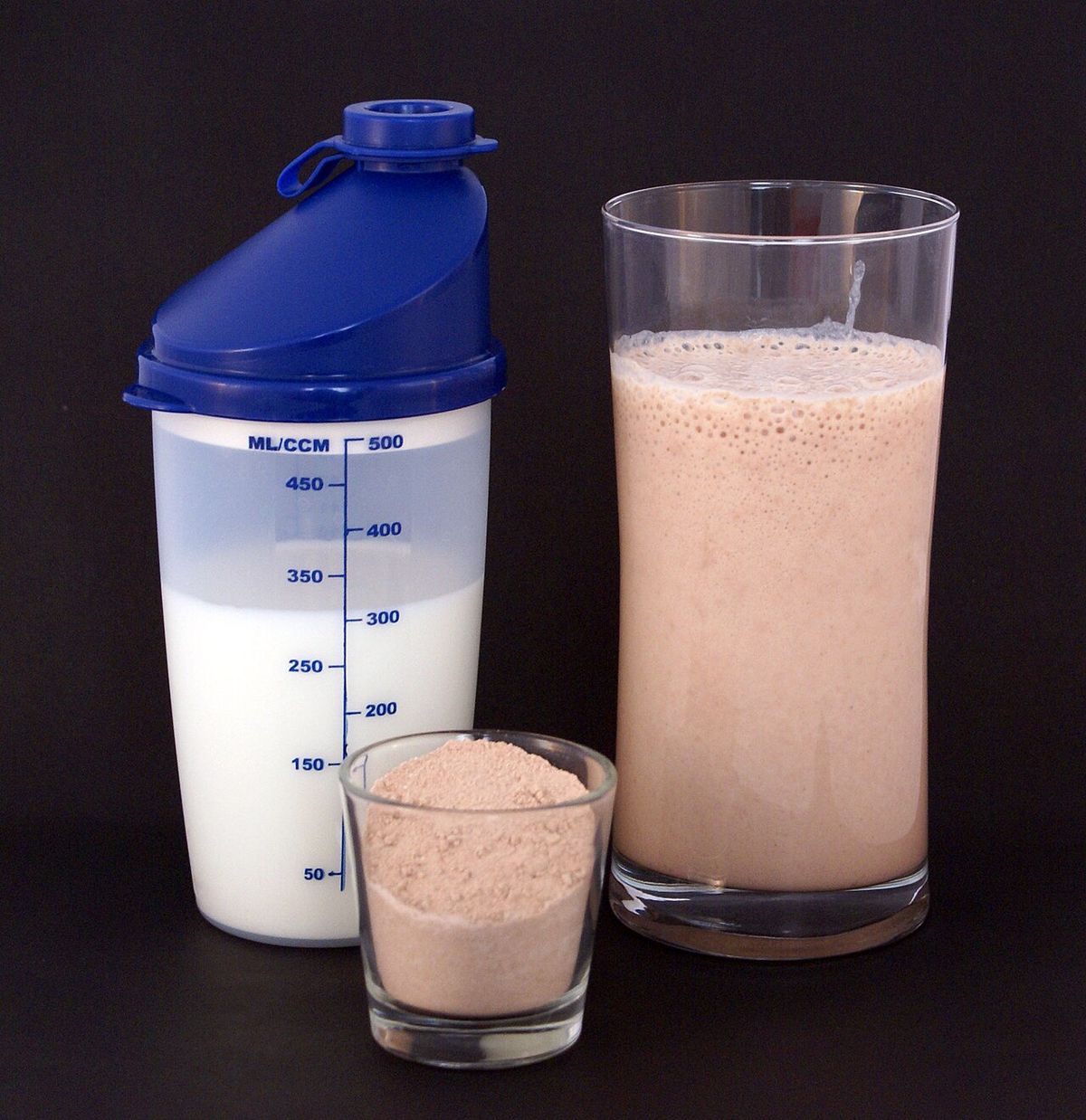
- Protein shakeWikimedia Commons · Sandstein, CC BY 3.0. General protein-intake illustration only.
General information, not a kidney-diet prescription. Anyone with chronic kidney disease should change protein intake only with their nephrology team and a renal dietitian.
Analysis by NutroPractic from the sources listed. Written for general readers; it does not replace advice from your own doctor.
From our articles
Our guides on this subject
Plain-language guides on nutrition and wellness, backed by research.
Everyday eating
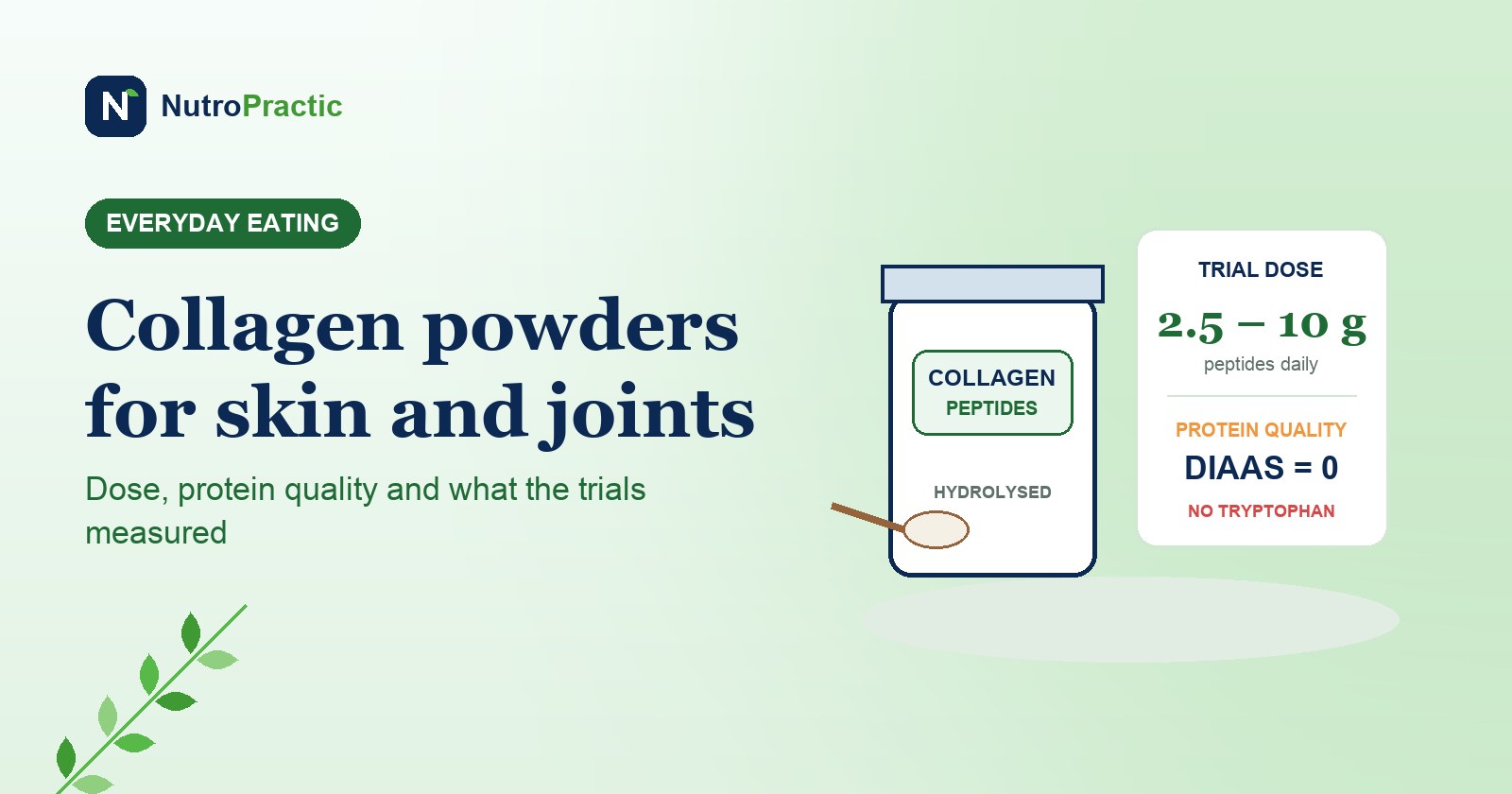
Collagen powders for skin and joints: dose, protein quality and what the trials measured
A 10 g scoop gives 9 g protein, but its protein quality score is zero. Here is what 19 skin trials and knee studies measured at 2.5 g to 10 g daily—and what collagen cannot do.
10 Nov 2026
Everyday eating
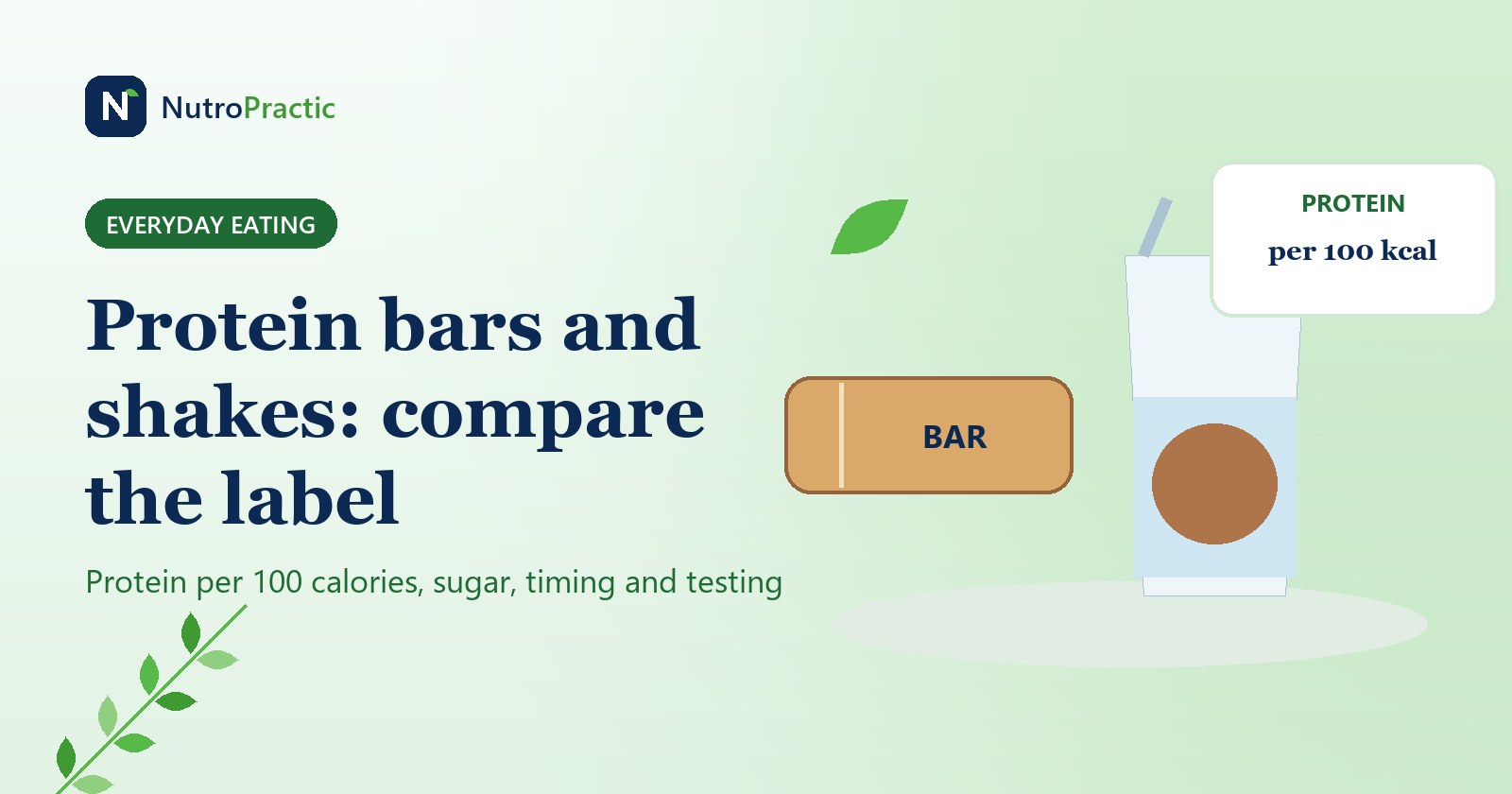
Protein bars and shakes: what you get per 100 calories
Four current labels range from 6.3 to 20 g protein per 100 kcal. Here is how bars, shakes, eggs, yogurt and lentils compare—and when a supplement actually helps.
6 Nov 2026
Everyday eating
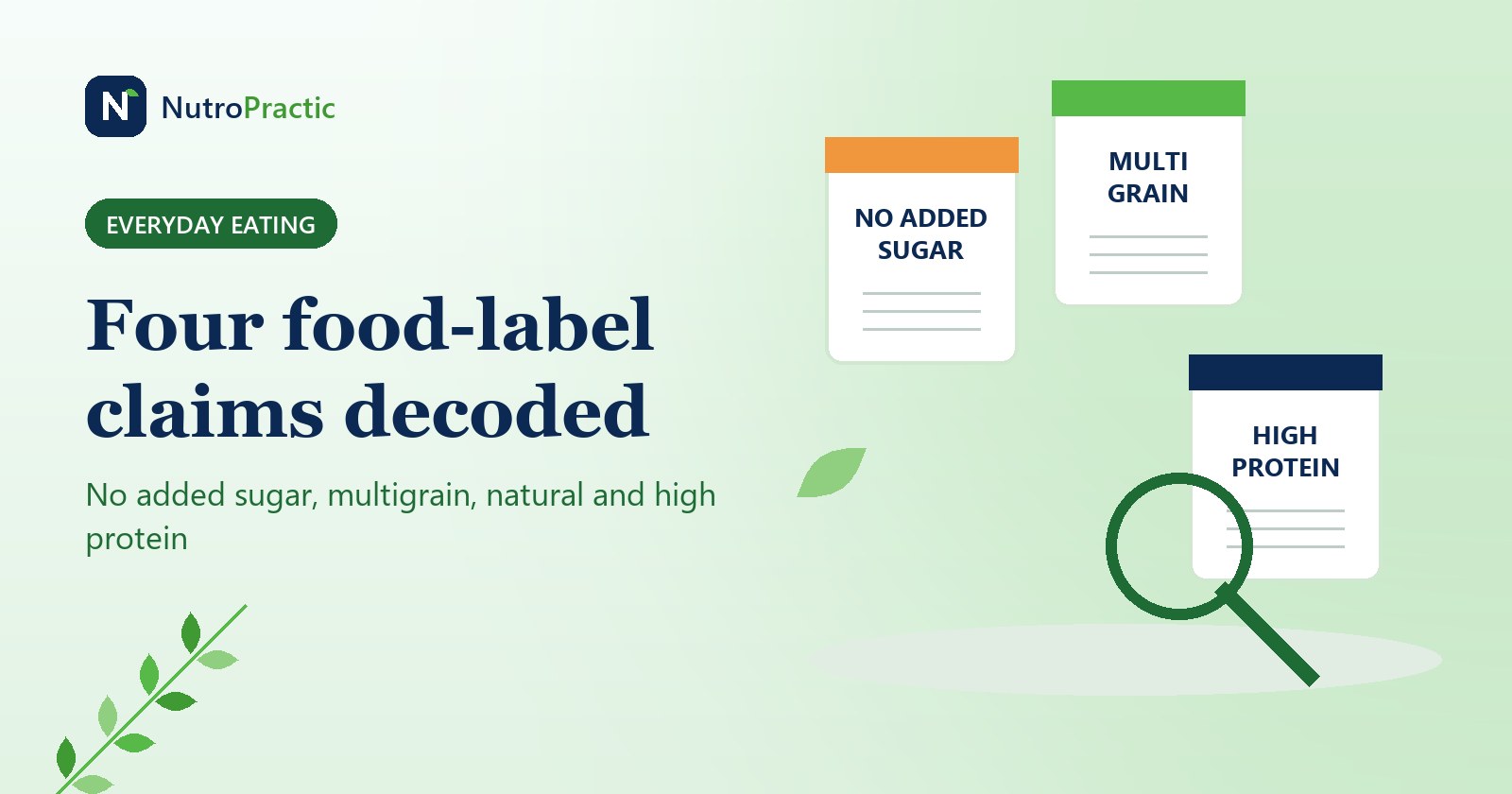
Food label claims decoded: 'no added sugar', 'multigrain', 'natural' and 'high protein'
A no-added-sugar biscuit with only 13% fewer calories. A 7-grain loaf with refined flour listed first. A 'high protein' bar that clears the legal line at 21%. What each claim legally requires in the EU/UK, US and India, with worked reads of real packs.
2 Nov 2026
Newsfeed for your website
Want this feed on your website?
Add it to any site with one copy-and-paste snippet. No sign-up, and it updates itself every hour.
Start with a virtual consultation
Tell Dr. Triveni what you want to change. You will leave with a clear next step, whether you are in Toronto, London, New York or Chennai.