Gut health & clinical nutrition · November 28, 2026
In a 112-adult trial, a low-FODMAP diet beat traditional dietary advice for combined dyspepsia and IBS symptoms, 59.3% vs 32.1%
Adults with both functional dyspepsia and irritable bowel syndrome were randomised to a low-FODMAP diet or traditional advice for 6 weeks. Responses were higher on the low-FODMAP diet.
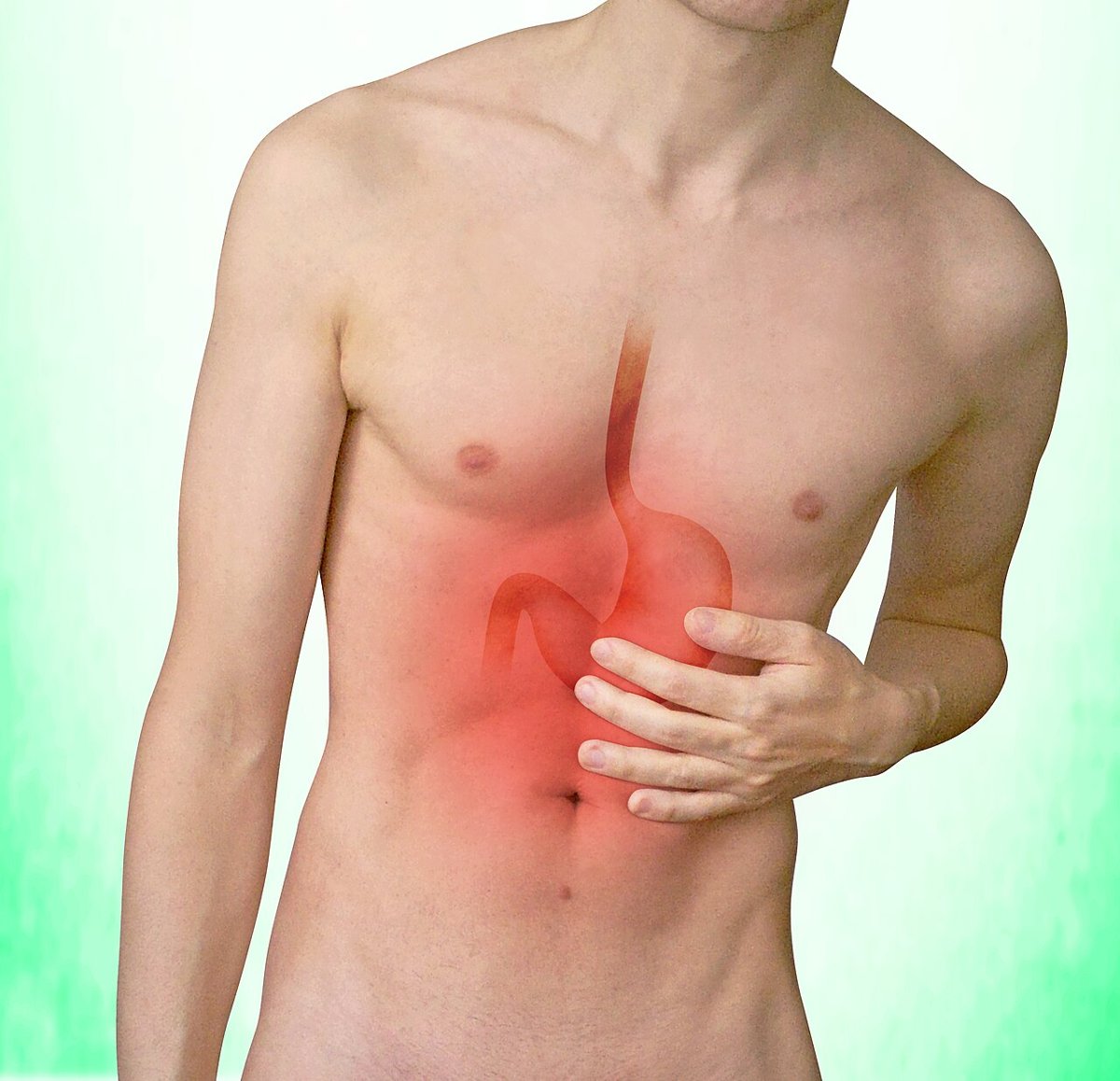
Functional dyspepsia (upset or pain in the upper abdomen after meals) often occurs together with irritable bowel syndrome, and treatment options for people with both are limited. A low-FODMAP diet restricts a group of fermentable carbohydrates; this trial tested it in that overlap group.
In Alimentary Pharmacology & Therapeutics, Khurana, Goyal, Rakhra and colleagues ran a multicentre, assessor-blinded randomised trial in adults meeting Rome IV criteria for both conditions. 112 participants were randomised to a low-FODMAP diet (59) or traditional dietary advice (53) for 6 weeks, with structured dietitian support. A response needed both a 50-point or greater drop in the IBS Symptom Severity Scale and a 30% or greater drop in the dyspepsia symptom score.
The combined response rate was 59.3% with the low-FODMAP diet versus 32.1% with traditional advice (p = 0.005), and symptom and quality-of-life scores favoured the low-FODMAP arm. Among responders, FODMAPs were reintroduced from week 7 to 12; 32 of 35 (91.4%) had symptoms return and were counted as true responders. Postprandial distress subtype and a worse baseline quality-of-life score were exploratory predictors of response.
The trial was small, lasted 6 weeks for the main comparison, and the predictor analysis was exploratory. Low-FODMAP diets are restrictive and are normally followed with a dietitian.
Low-FODMAP diet vs traditional dietary advice, 6 weeks
112
adults randomised (59 low-FODMAP, 53 traditional advice)
59.3% vs 32.1%
combined IBS and dyspepsia response (p = 0.005)
91.4%
of responders (32 of 35) had symptoms return on FODMAP reintroduction
Randomised, assessor-blinded multicentre trial, Alimentary Pharmacology & Therapeutics, 18 Nov 2026. Predictors of response were exploratory.
- FODMAP stands for fermentable oligosaccharides, disaccharides, monosaccharides and polyols.
- In this trial FODMAPs were reintroduced after week 6 to see whether symptoms came back, which helps separate true diet responders from others.
- Efficacy and Predictors of Response to a Low-FODMAP Diet in Patients With Overlap of Functional Dyspepsia and Irritable Bowel Syndrome: A Prospective Multicentre Randomized Clinical TrialAlimentary Pharmacology & Therapeutics, 18 Nov 2026 · Abstract and results.
This article is general information about published research, not medical advice. It does not diagnose, treat or replace care from a qualified health professional. Talk to your doctor before starting a supplement or changing your diet, especially if you are pregnant, have a medical condition or take medicines.
Analysis by NutroPractic from the sources listed. Written for general readers; it does not replace advice from your own doctor.
From our articles
Our guides on this subject
Plain-language guides on nutrition and wellness, backed by research.
Gut health
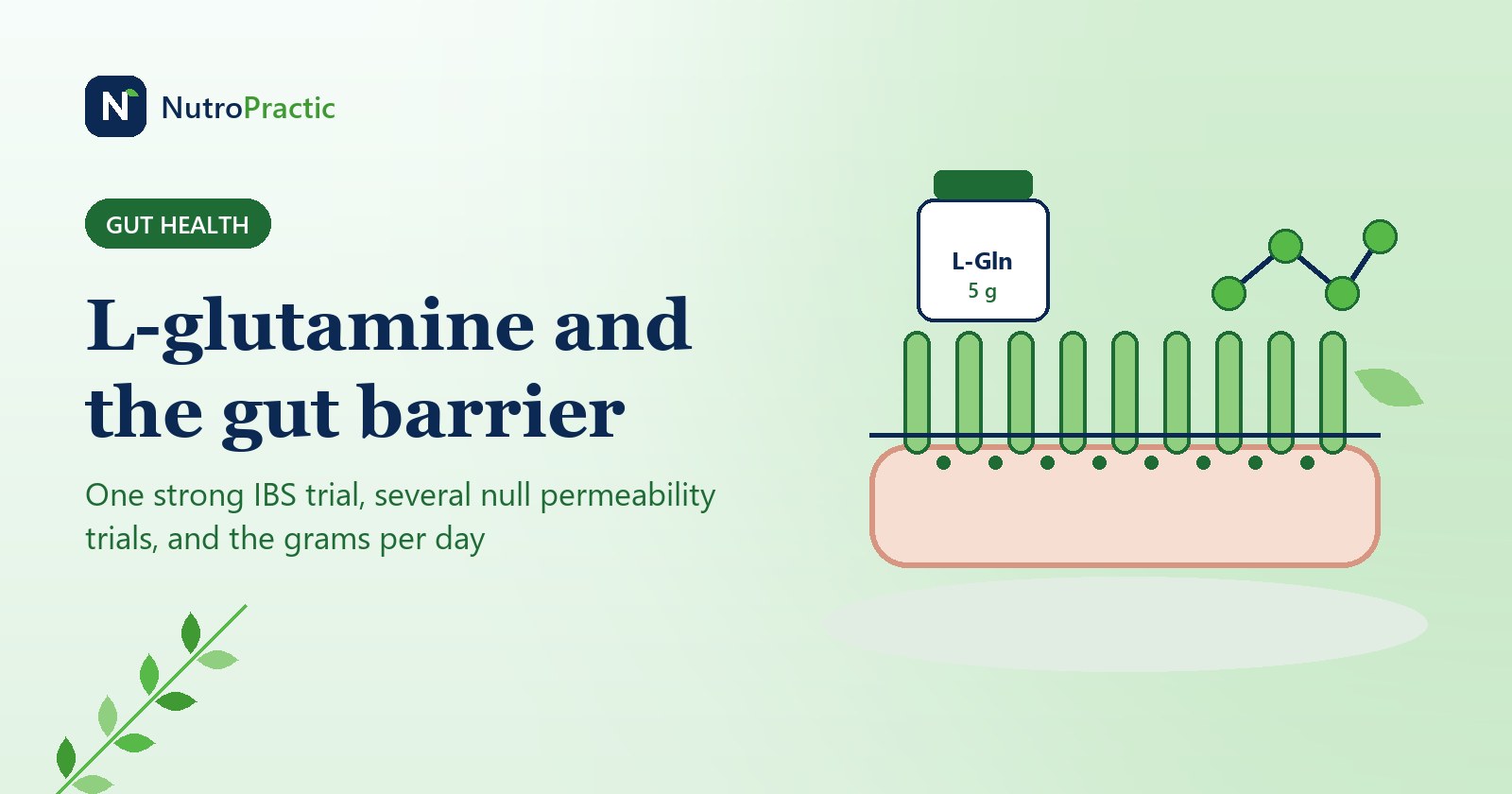
L-glutamine for gut barrier integrity: what the post-infectious IBS and permeability trials measured, and the dose in grams
At 15 g a day, glutamine took 79.6% of post-infection IBS-D patients to a clinical response against 5.8% on placebo. Trials that measured gut permeability directly in Crohn's, pancreatitis and heat stress found no clear benefit, and a 10-trial meta-analysis found none overall. The doses, the 14 g a day safe level, and who might try it.
27 Nov 2026
Women's wellness and nutrition
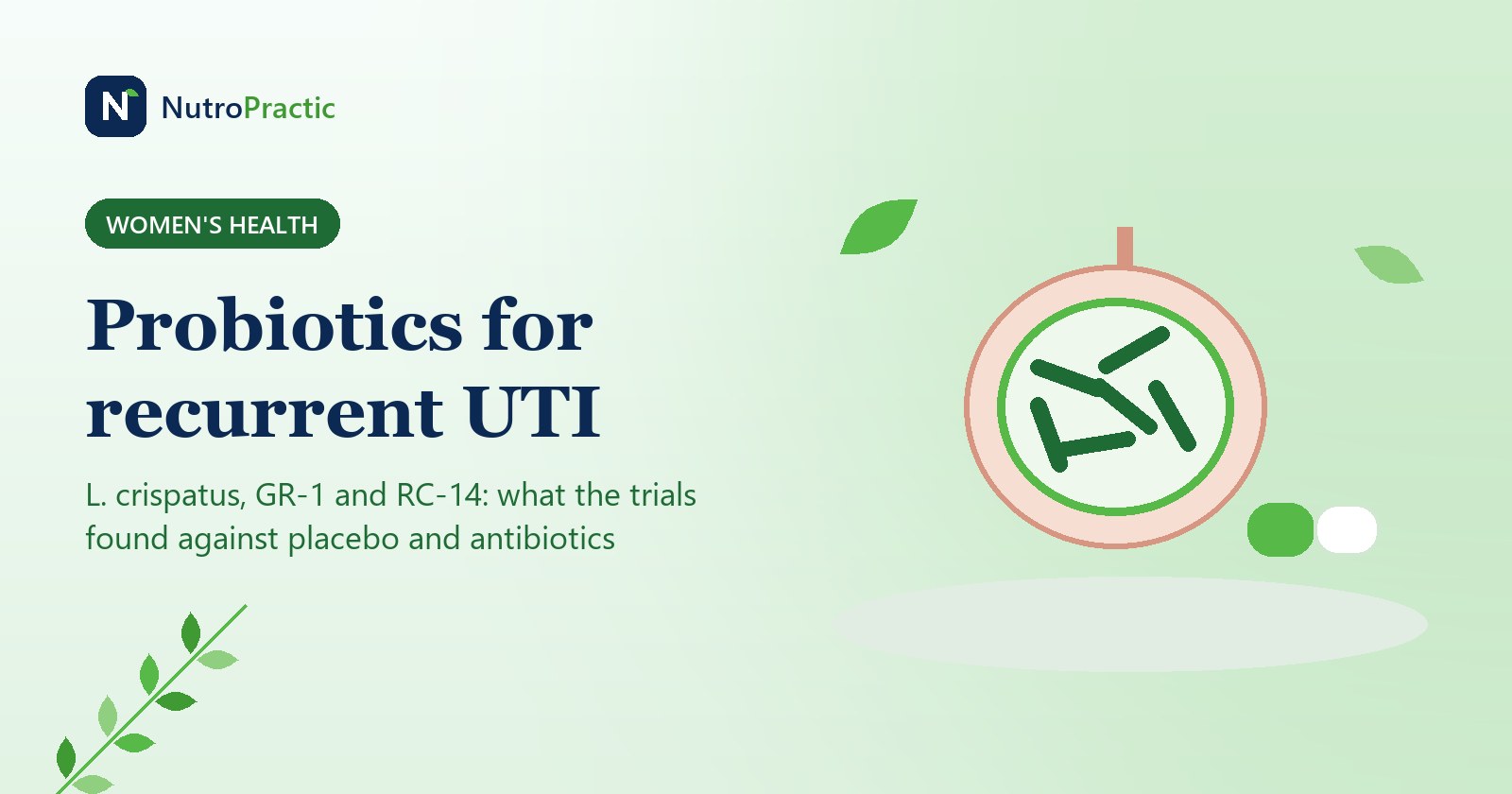
Probiotics for recurrent UTI: what the Lactobacillus trials found strain by strain, and how they compare with antibiotics
Recurrence was 15% vs 27% with a vaginal L. crispatus probiotic (a gap that could be chance), 31.8% vs 70.4% for vaginal plus oral lactobacilli in a 174-woman trial, and oral GR-1 and RC-14 failed to show noninferiority to antibiotics over 12 months. Strains, doses, worked numbers and the resistance trade-off.
26 Nov 2026

Supplements and vitamins
Zinc carnosine for the gut lining: what the two human trials gave, the zinc in each dose, and the copper catch
Zinc carnosine is only about 22.6% zinc, so 75 mg twice a day is roughly 34 mg of zinc a day. Here are the doses and results of the 10-person NSAID permeability trial and the 20-person aspirin pilot, and the copper cautions.
22 Nov 2026
Newsfeed for your website
Want this feed on your website?
Add it to any site with one copy-and-paste snippet. No sign-up, and it updates itself every hour.
Start with a virtual consultation
Tell Dr. Triveni what you want to change. You will leave with a clear next step, whether you are in Toronto, London, New York or Chennai.