Nutritional epidemiology & exercise behavior · November 21, 2026
Starting or maintaining regular exercise increased dietary protein density in a multi-wave longitudinal study
Tracking Chinese adults across three assessment rounds of the China Health and Nutrition Survey, researchers found that transitioning into or sustaining leisure-time exercise was associated with greater subsequent dietary protein density and overall nutritional quality.

Public health guidelines universally encourage physical activity for cardiometabolic prevention, weight maintenance, and functional longevity. However, how individuals spontaneously modify their dietary composition when adopting or maintaining regular exercise in real-world settings remains insufficiently understood. Rather than adhering to tightly controlled laboratory meal plans, free-living adults make complex daily nutritional choices that can either reinforce or attenuate exercise-induced metabolic benefits.
Nutritional epidemiologists hypothesize that engaging in leisure-time physical activity triggers subtle compensatory or health-conscious dietary adjustments. While some individuals increase overall energy intake to match higher expenditure, others shift the composition of their macronutrients toward higher protein density to support muscle recovery and sustained satiety.
To assess long-term dietary adaptations following exercise habit changes, researchers evaluated data from the China Health and Nutrition Survey (CHNS), analyzing adult participants across three consecutive assessment waves. The investigators categorized participants by their longitudinal physical activity transitions—distinguishing non-exercisers, individuals adopting new leisure-time exercise, those relapsing into inactivity, and consistent regular exercisers—while capturing 3-day 24-hour dietary recalls.
The longitudinal analyses demonstrated that adults who initiated leisure-time exercise or maintained consistent exercise habits achieved significantly greater increases in protein density—defined as the proportion of total calories derived from dietary protein—compared to persistently inactive peers. These dietary shifts occurred alongside modest adjustments in total energy intake, indicating that physical activity adoption naturally fosters favorable shifts in dietary macronutrient quality.
Longitudinal exercise transitions and dietary protein density in adult cohorts
3 waves
Consecutive multi-year assessment rounds tracked in the CHNS cohort
+Protein %
Significantly higher protein density among adults adopting regular exercise
3-day 24h
Detailed household and individual dietary recalls per survey wave
Favorable shift
Spontaneous improvement in macronutrient quality without formal dieting
Three-assessment longitudinal study evaluating transitions in leisure-time exercise participation and subsequent macronutrient intake using CHNS data.
- Protein density measures grams of protein relative to total caloric intake (or percentage of energy from protein).
- Higher dietary protein density enhances diet-induced thermogenesis and preserves lean muscle during active living.
- The China Health and Nutrition Survey (CHNS) is an international longitudinal cohort monitoring health and diet transitions across diverse Chinese provinces.
- Engaging in aerobic and resistance exercise enhances insulin sensitivity and promotes amino acid uptake in skeletal muscle.
- Transitions in Leisure-Time Exercise Participation and Subsequent Changes in Energy Intake and Protein Density in Chinese Adults: A Three-Assessment Longitudinal Study Using China Health and Nutrition Survey DataNutrients / MDPI · Three-assessment longitudinal epidemiological study. Published 14 November 2026.
- Ederle Gym Spin Cycle ClassWikimedia Commons · Photo by Pfc. Trinity Carter, US Army, public domain.
Educational summary of nutritional epidemiology and exercise research. Individual exercise regimens and dietary protein targets should be tailored with guidance from a qualified health or fitness professional.
Analysis by NutroPractic from the sources listed. Written for general readers; it does not replace advice from your own doctor.
From our articles
Our guides on this subject
Plain-language guides on nutrition and wellness, backed by research.
Everyday eating
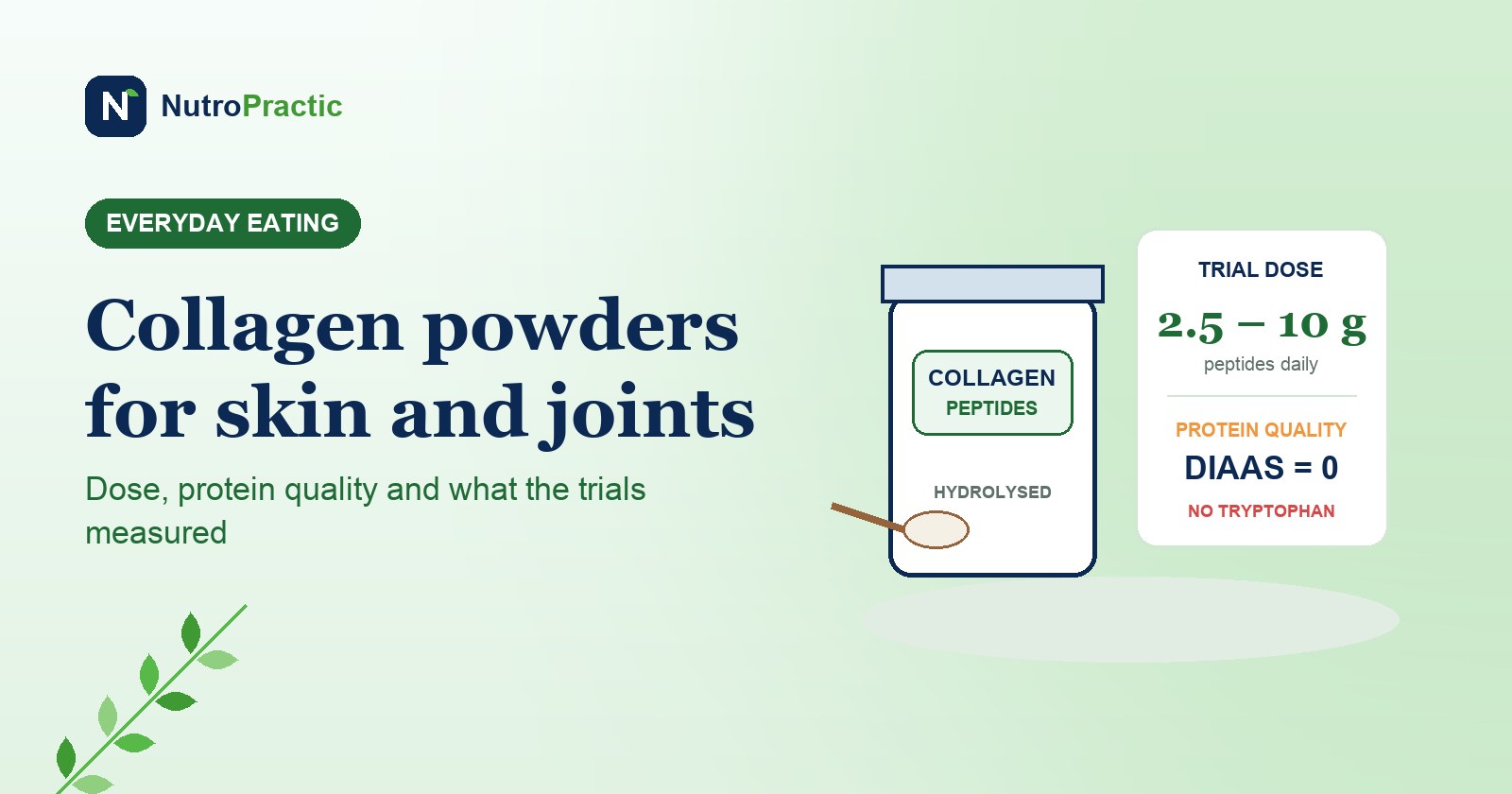
Collagen powders for skin and joints: dose, protein quality and what the trials measured
A 10 g scoop gives 9 g protein, but its protein quality score is zero. Here is what 19 skin trials and knee studies measured at 2.5 g to 10 g daily—and what collagen cannot do.
10 Nov 2026
Everyday eating
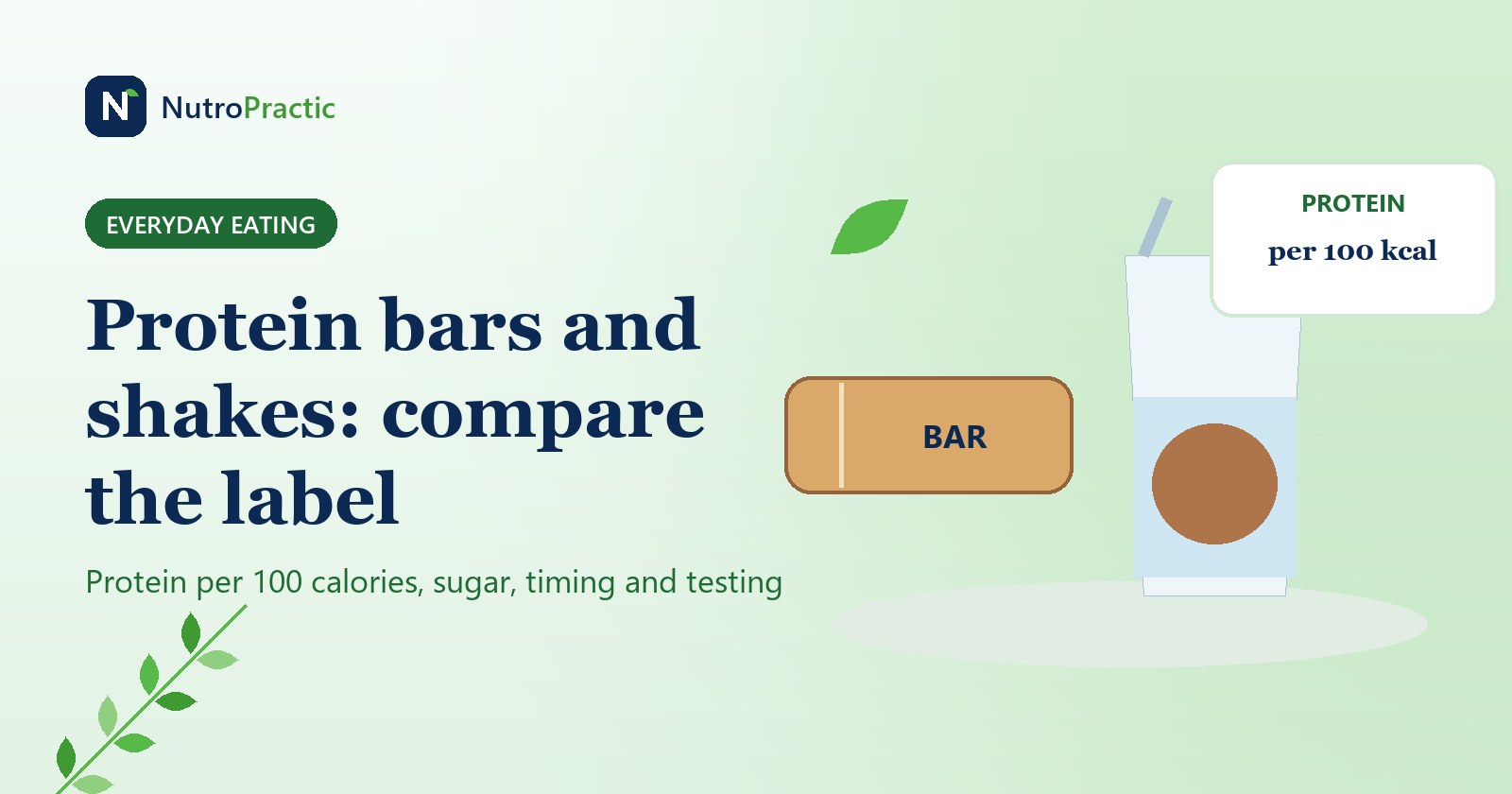
Protein bars and shakes: what you get per 100 calories
Four current labels range from 6.3 to 20 g protein per 100 kcal. Here is how bars, shakes, eggs, yogurt and lentils compare—and when a supplement actually helps.
6 Nov 2026

Everyday eating
Food label claims decoded: 'no added sugar', 'multigrain', 'natural' and 'high protein'
A no-added-sugar biscuit with only 13% fewer calories. A 7-grain loaf with refined flour listed first. A 'high protein' bar that clears the legal line at 21%. What each claim legally requires in the EU/UK, US and India, with worked reads of real packs.
2 Nov 2026
Newsfeed for your website
Want this feed on your website?
Add it to any site with one copy-and-paste snippet. No sign-up, and it updates itself every hour.
Start with a virtual consultation
Tell Dr. Triveni what you want to change. You will leave with a clear next step, whether you are in Toronto, London, New York or Chennai.