Healthy ageing · October 17, 2026
3,033 Australians, body scans across 17 years: the ones who got more calcium from food carried a little more muscle in their arms and legs. Being inactive cost about as much as three years of ageing
Researchers in Geelong measured arm and leg muscle with X-ray scans up to three times per person and looked for what kept it on. Calcium, activity and not smoking all showed up. So did a few results that look backwards at first, like higher LDL cholesterol going with more muscle.
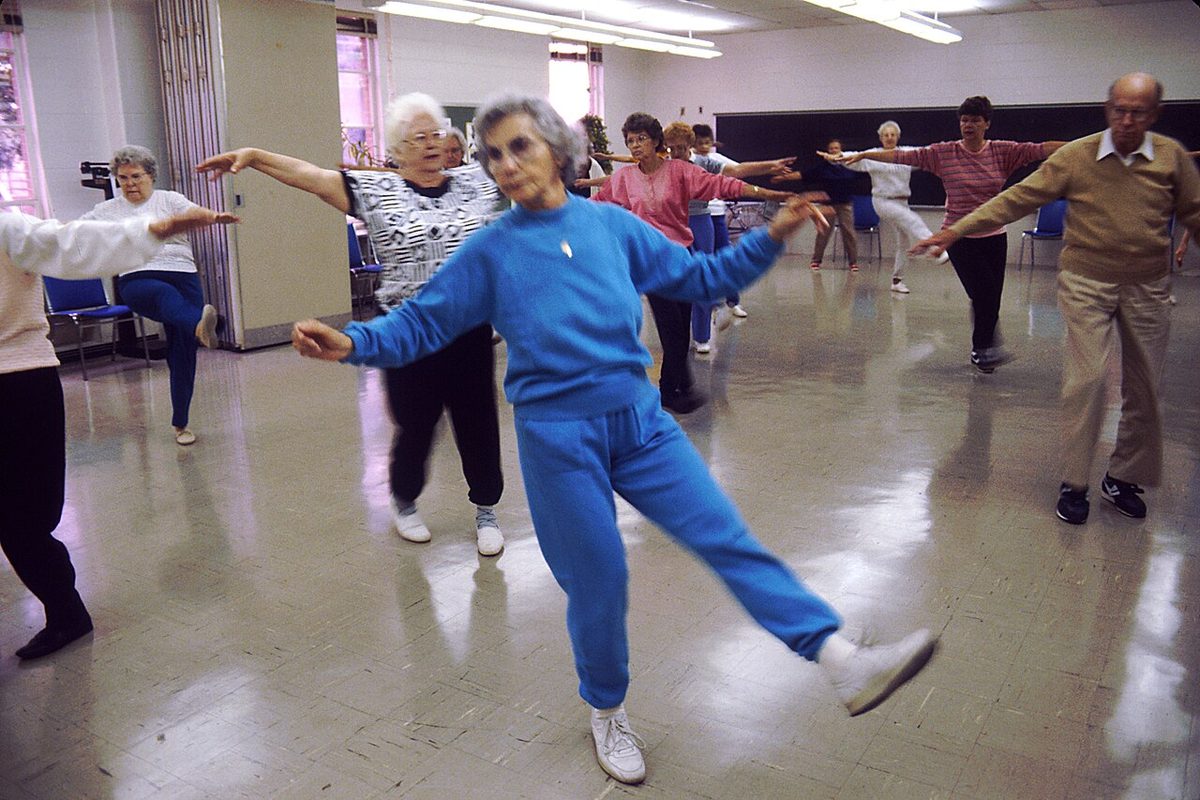
From middle age on, most people slowly lose muscle. In later life that loss, along with falling strength, is called sarcopenia, and it is tied to falls, fractures, frailty and losing independence. The paper behind this item puts its reach at about 10 to 15% of older people worldwide and close to half of those over 80. What helps keep muscle on over the long run is less settled than you might think, because most studies measure people once. A study published on 12 October 2026 in the Australasian Journal on Ageing followed the same people for close to two decades.
The team at Deakin University used the Geelong Osteoporosis Study, which picked adults at random from the electoral roll in the Barwon region of Victoria, south-east Australia: 1,494 women recruited from 1993 to 1997 and 1,539 men from 2001 to 2006, aged 20 to 96. Each had whole-body DXA scans, the low-dose X-ray used for bone density, at up to three visits over a median of 16.7 years. From those scans the researchers took appendicular lean mass, the lean tissue in the arms and legs, which tracks closely with muscle measured by MRI. Diet, smoking, alcohol, activity, illnesses, medicines and blood tests were recorded along the way, and the model let each of them change over time.
Some results were expected. Women had about 8.4 kg less arm and leg lean mass than men. Each year of age at the start meant 0.07 kg less, and lean mass fell by about 0.16 kg a year early in follow-up. People who said they were inactive had 0.48 kg less than active people, about three years' worth of that early decline. Past smokers had 0.24 kg less than people who had never smoked, a stroke went with 0.51 kg less, and people living in better-off areas had 0.33 kg more than those in the more disadvantaged areas.
The food finding was calcium. Each extra gram a day from the diet went with 0.46 kg more arm and leg lean mass, after allowing for everything else in the model. The middle half of participants ate between 0.5 and 1.0 g a day, so going from the bottom to the top of that range lines up with roughly a quarter of a kilo. That is small, but it held when the team swapped body mass index for scanned fat mass (0.42 kg per gram) and when they kept only people who came back for follow-up visits. Calcium is better known for bones, and the authors read this as part of a wider link between bone and muscle health, but the study cannot show calcium itself built any muscle.
A few results look odd until you read the fine print. Higher LDL cholesterol and triglycerides went with more lean mass, and higher HDL, the so-called good cholesterol, with less, once fat mass was allowed for. The authors put this down to body size, since bigger people tend to carry both more fat and more lean tissue, and to statins, which lower cholesterol and can affect muscle but were not included in the main model. Lean mass peaked at a systolic blood pressure of around 140 mmHg, and the inflammation marker CRP made a U shape. None of this means high cholesterol or blood pressure is good for your muscles.
The limits matter. Protein, the nutrient most often discussed for muscle, was not measured, and neither was strength or how well people moved, so this is about muscle quantity, not sarcopenia as doctors now define it. Activity was a rough self-reported category. Of the 3,033 people, 820 died during follow-up and only 1,290 made the last visit, and those who stayed were younger and healthier, which is why lean mass seemed to tick up late in follow-up. Participants were from one region of Australia. It is an observational study, so it shows links, not cause and effect.
What it adds is time. Over nearly 17 years, the people who stayed active, didn't smoke and got a decent amount of calcium from food held on to a little more muscle. Nobody will rebuild their legs with a glass of milk, but the habits that protect bones seem to go along with keeping muscle too.
Geelong Osteoporosis Study, Victoria, Australia: 3,033 randomly selected adults aged 20 to 96, arm and leg lean mass measured by DXA at up to three visits over a median of 16.7 years
3,033
Adults followed (1,494 women, 1,539 men); median age 55 at the start
+0.46 kg
More arm and leg lean mass for each extra gram of dietary calcium a day
0.8 g
Median dietary calcium a day at the start (middle half: 0.5 to 1.0 g)
−0.48 kg
Less lean mass in people who reported being physically inactive
−0.16 kg
Lean mass lost per year of follow-up, early on
−0.51 kg
Less lean mass after a stroke
Figures are from Suleiman, Lotfaliany, Williams, Anderson, West, Stuart and Pasco, 'Long-Term Determinants of Lean Mass in Ageing Adults: A 17-Year Longitudinal Cohort Study With Repeated Measures', Australasian Journal on Ageing 45(4), e70242, doi 10.1111/ajag.70242, published online 12 October 2026 (open access, CC BY 4.0). Estimates come from the BMI-adjusted linear mixed model (Table 2): calcium 0.46 kg per g/day (95% CI 0.25 to 0.67; the abstract gives 0.20 to 0.67), physical inactivity −0.48 (−0.65 to −0.31), follow-up −0.16 per year with a small positive quadratic term, stroke −0.51 (−0.96 to −0.07), past smoking −0.24, high vs low area socio-economic status 0.33. The fat-mass-adjusted model gave calcium 0.42 (0.20 to 0.64). The 'three years' comparison (0.48 / 0.16) and the 'quarter of a kilo' (0.5 g × 0.46 kg) are our arithmetic from these estimates. Observational study: associations only.
- Lean mass from a DXA scan is everything that is not fat or bone, yet it lines up closely with muscle measured by MRI: correlations of 0.94 for the whole body and 0.91 for the leg, according to research the authors cite.
- The women and men in this study were recruited years apart: the women from 1993 to 1997, the men from 2001 to 2006.
- The apparent rise in lean mass after about 15 years of follow-up is not a real comeback. The authors say it reflects survivorship: the people still turning up were younger, healthier and more active at the start.
- Thyroid hormone treatment went with 0.52 kg more lean mass. The authors think treating an under- or overactive thyroid may help keep muscle, but they had no thyroid blood levels to check.
- Only 13% of participants had a CRP reading above 10 mg/L, the level that usually points to an acute infection or injury rather than slow, low-grade inflammation.
- Long-Term Determinants of Lean Mass in Ageing Adults: A 17-Year Longitudinal Cohort Study With Repeated MeasuresAustralasian Journal on Ageing, published online 12 October 2026 (open access, CC BY 4.0) · The study: participants, methods, results and limitations
- PubMed record 42861734PubMed · Abstract and indexing
- Full text on PubMed CentralPMC (PMC13656336) · Open-access full text with the model tables
- Aerobics classWikimedia Commons · Image, public domain, by Bill Branson for the National Cancer Institute
General information, not medical advice. Unexplained weight loss, weakness or frequent falls need a doctor's assessment. Talk to your doctor before taking calcium supplements, especially if you have kidney problems or a history of kidney stones.
Analysis by NutroPractic from the sources listed. Written for general readers; it does not replace advice from your own doctor.
From our articles
Our guides on this subject
Plain-language guides on nutrition and wellness, backed by research.
Women's health
Eating through menopause: what changes for your bones, muscle and heart, and what to put on the plate
Around the final period, bone density at the spine drops by about 2% a year and LDL cholesterol jumps within a year or two. Hot flushes get the attention, but these quieter changes are where food and strength training do the most. Targets for protein, calcium and vitamin D, an honest look at soy, and a week you can start on Monday.
8 Oct 2026
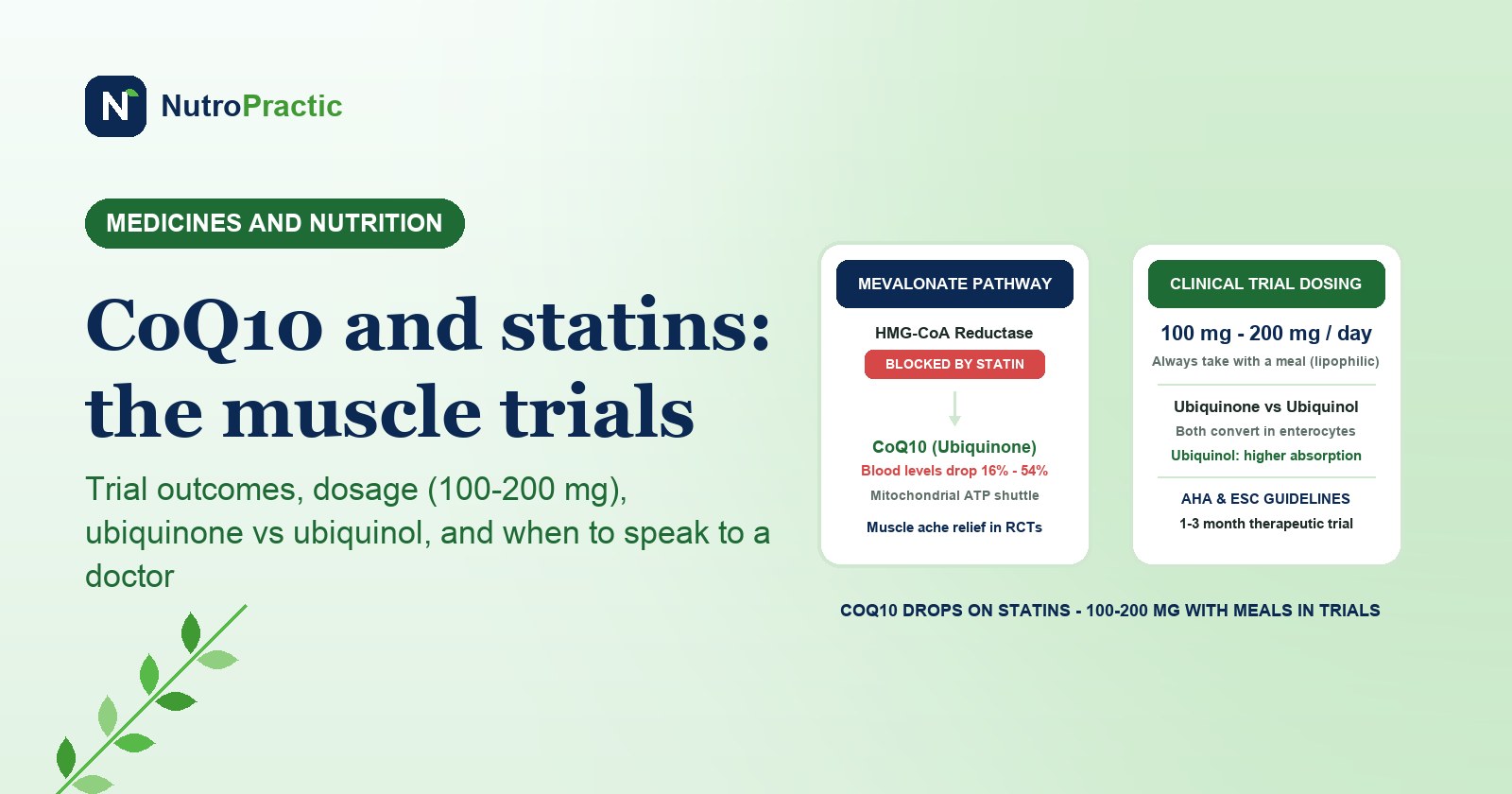
Medicines and nutrition
CoQ10 and statins: what the muscle symptom trials found, and who might benefit
Statin-associated muscle symptoms lead up to 30% of patients to discontinue life-saving cholesterol therapy. While statins deplete circulating CoQ10 by 16% to 54%, randomized clinical trials show mixed results for myalgia relief. Explore the trials, ubiquinone vs ubiquinol bioavailability, recommended doses, and clinical guideline recommendations.
14 Nov 2026

Supplements and vitamins
Zinc carnosine for the gut lining: what the two human trials gave, the zinc in each dose, and the copper catch
Zinc carnosine is only about 22.6% zinc, so 75 mg twice a day is roughly 34 mg of zinc a day. Here are the doses and results of the 10-person NSAID permeability trial and the 20-person aspirin pilot, and the copper cautions.
22 Nov 2026
Newsfeed for your website
Want this feed on your website?
Add it to any site with one copy-and-paste snippet. No sign-up, and it updates itself every hour.
Start with a virtual consultation
Tell Dr. Triveni what you want to change. You will leave with a clear next step, whether you are in Toronto, London, New York or Chennai.