Clinical nutrition · November 10, 2026
After at least four days in hospital, only one in three nutritionally at-risk patients met both energy and protein needs
Across seven Danish hospitals, risk was common, appetite symptoms affected half, and adequate intake ranged from 11.8% to 49.4% by hospital.

Researchers audited adult inpatients who had already spent at least four days in seven public hospitals in Denmark's Capital Region. The same point-prevalence approach was used in September 2023 and 2025. Of 1,302 patients, 800 — 61% — screened as being at nutritional risk.
Among 788 at-risk patients with enough information, 396 met GLIM criteria for disease-related malnutrition. Appetite-related problems such as nausea and vomiting were reported by 343 of 658 with symptom data. Only 33% of at-risk patients reached at least 75% of both estimated energy and protein requirements; the proportion ranged from 11.8% to 49.4% between hospitals.
This is a snapshot, not a trial showing that screening alone prevents complications. Sicker people may eat less and may also be more likely to receive detailed assessment. Still, the large gap between recognizing risk and meeting nutritional needs is clinically important. Hospital food is only one part of the problem: symptoms, procedures, assistance, swallowing, treatment and escalation to supplements or tube feeding can all matter.
Nutrition risk was common; adequate intake was not
1,302
Inpatients across seven hospitals
61%
Screened at nutritional risk
50.3%
At-risk patients meeting GLIM malnutrition criteria
33%
At-risk patients reaching at least 75% of energy and protein needs
11.8–49.4%
Hospital range for adequate intake
Repeated multicentre point-prevalence study. It describes care and intake at two audits but cannot prove which process caused better intake.
- GLIM combines signs such as weight or muscle loss with causes such as low intake, inflammation or disease.
- A person can have a larger body size and still be malnourished.
- Meeting calories but not protein — or protein but not calories — did not count as adequate here.
- Nausea, pain, fasting for procedures and needing help to eat can all reduce hospital intake.
- A regional benchmark of nutritional risk, GLIM-defined malnutrition, and nutrition-related indicators in hospitalized patients: A repeated multicenter point-prevalence studyClinical Nutrition ESPEN, 2 November 2026 · Primary multicentre audit; sample, risk prevalence, GLIM assessment, symptoms, adequacy threshold and hospital range checked against the PubMed abstract.
- Fruits in bowl oranges lime apples (1)Wikimedia Commons · Gerardolagunes; CC0; general nutrition illustration only.
General information, not medical advice. Patients or families worried about weight loss, poor appetite, swallowing or missed meals in hospital should ask the treating team for a nutrition and swallowing assessment.
Analysis by NutroPractic from the sources listed. Written for general readers; it does not replace advice from your own doctor.
From our articles
Our guides on this subject
Plain-language guides on nutrition and wellness, backed by research.
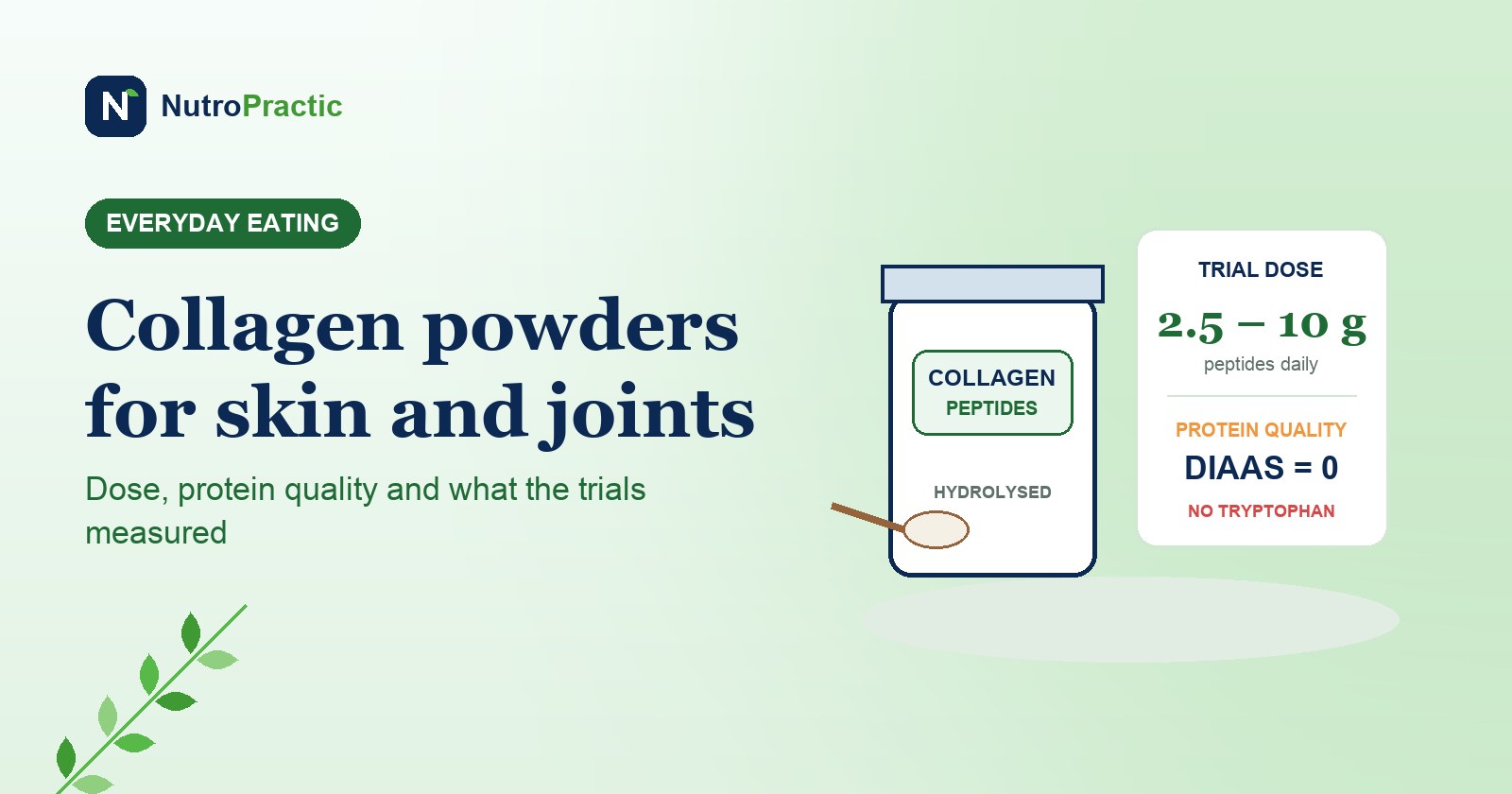
Everyday eating
Collagen powders for skin and joints: dose, protein quality and what the trials measured
A 10 g scoop gives 9 g protein, but its protein quality score is zero. Here is what 19 skin trials and knee studies measured at 2.5 g to 10 g daily—and what collagen cannot do.
10 Nov 2026
Everyday eating
Protein bars and shakes: what you get per 100 calories
Four current labels range from 6.3 to 20 g protein per 100 kcal. Here is how bars, shakes, eggs, yogurt and lentils compare—and when a supplement actually helps.
6 Nov 2026
Everyday eating
Food label claims decoded: 'no added sugar', 'multigrain', 'natural' and 'high protein'
A no-added-sugar biscuit with only 13% fewer calories. A 7-grain loaf with refined flour listed first. A 'high protein' bar that clears the legal line at 21%. What each claim legally requires in the EU/UK, US and India, with worked reads of real packs.
2 Nov 2026
Newsfeed for your website
Want this feed on your website?
Add it to any site with one copy-and-paste snippet. No sign-up, and it updates itself every hour.
Start with a virtual consultation
Tell Dr. Triveni what you want to change. You will leave with a clear next step, whether you are in Toronto, London, New York or Chennai.