Sports nutrition · November 9, 2026
Protein changed the gut more than resistance training in 24 mice — with only six animals in each group
The experiment separated diet from exercise, but its small male-mouse groups cannot settle how much protein a person should eat for training.
Researchers divided 24 male mice into four groups: standard diet, high-protein diet, standard diet plus progressive resistance training, or high protein plus training. That two-by-two design was meant to distinguish what protein changed from what exercise added. Each group contained only six animals.
The high-protein diet was the stronger driver of several physiological and gut-microbiome differences, while resistance training added selected performance and metabolic adaptations. The experiment supports the idea that diet and training can act through partly separate routes rather than producing one uniform 'fitness' response.
Small animal groups are useful for tightly controlled mechanism studies, but they are vulnerable to chance and do not reproduce the varied diets, sexes, ages and training histories of athletes. The paper does not identify an optimal human protein target, compare food sources in people or measure long-term kidney, bone or cardiovascular outcomes.
A controlled but very small animal design
24 mice
All young adult males
4 groups
Diet and resistance training separated
6 per group
Small comparison groups
2 factors
High protein and progressive training
0 athletes
No human performance or safety outcome
Controlled mouse experiment. It can suggest mechanisms but cannot set a protein prescription for athletes or the general public.
- A factorial design tests two factors separately and together within the same experiment.
- Gut-microbiome composition can change with the amount and type of food reaching the colon.
- More protein is not automatically more muscle; training stimulus, total energy and overall diet also matter.
- Human protein needs vary with body size, age, training, health and total energy intake.
- High-protein intake shapes physiological adaptation and gut microbiota in response to resistance trainingLife Sciences, 1 November 2026 · Primary animal study; four-group design, sample size and main diet-versus-training interpretation checked against the journal abstract.
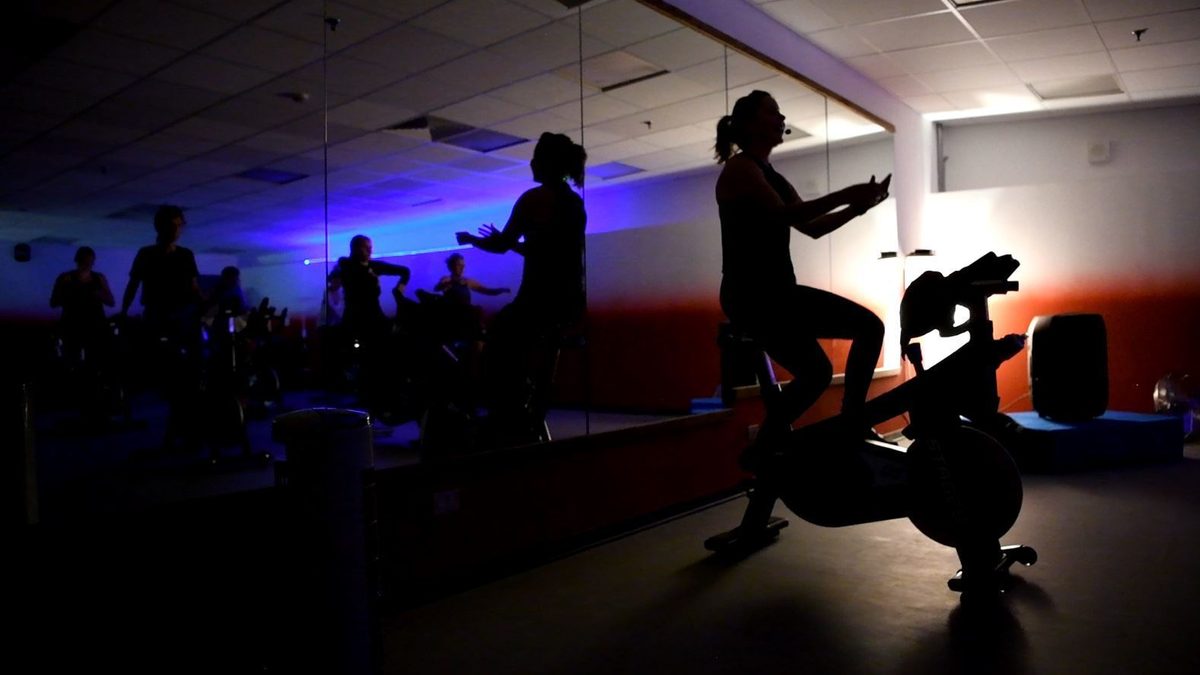
- Ederle Gym Spin Cycle Class Photo 1Wikimedia Commons · Pfc. Trinity Carter, US Army; public domain; general exercise illustration only.
General information, not medical advice. Athletes should base protein intake on established human guidance and individual needs, especially when kidney disease or another medical condition is present.
Analysis by NutroPractic from the sources listed. Written for general readers; it does not replace advice from your own doctor.
From our articles
Our guides on this subject
Plain-language guides on nutrition and wellness, backed by research.
Everyday eating
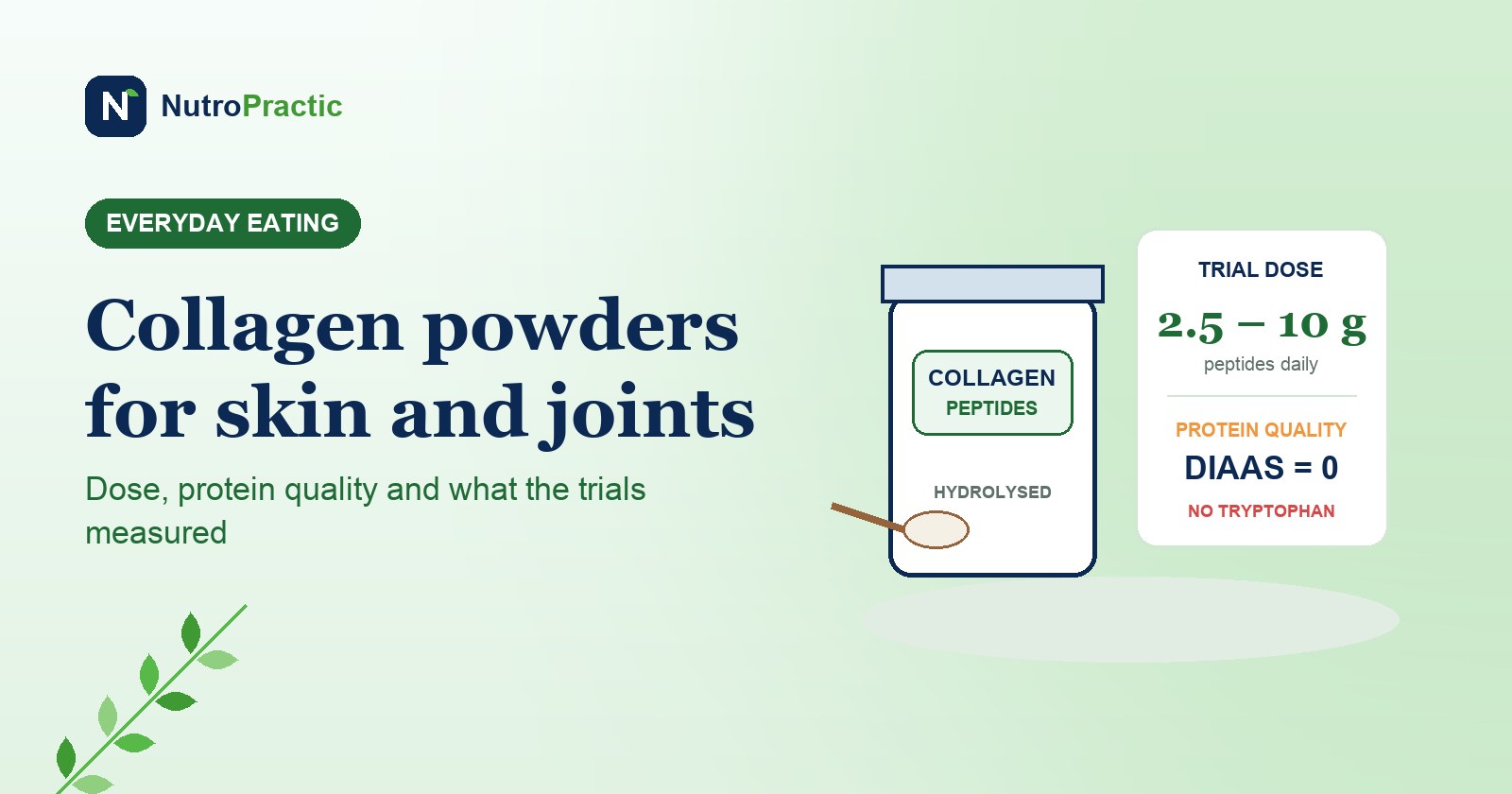
Collagen powders for skin and joints: dose, protein quality and what the trials measured
A 10 g scoop gives 9 g protein, but its protein quality score is zero. Here is what 19 skin trials and knee studies measured at 2.5 g to 10 g daily—and what collagen cannot do.
10 Nov 2026
Everyday eating
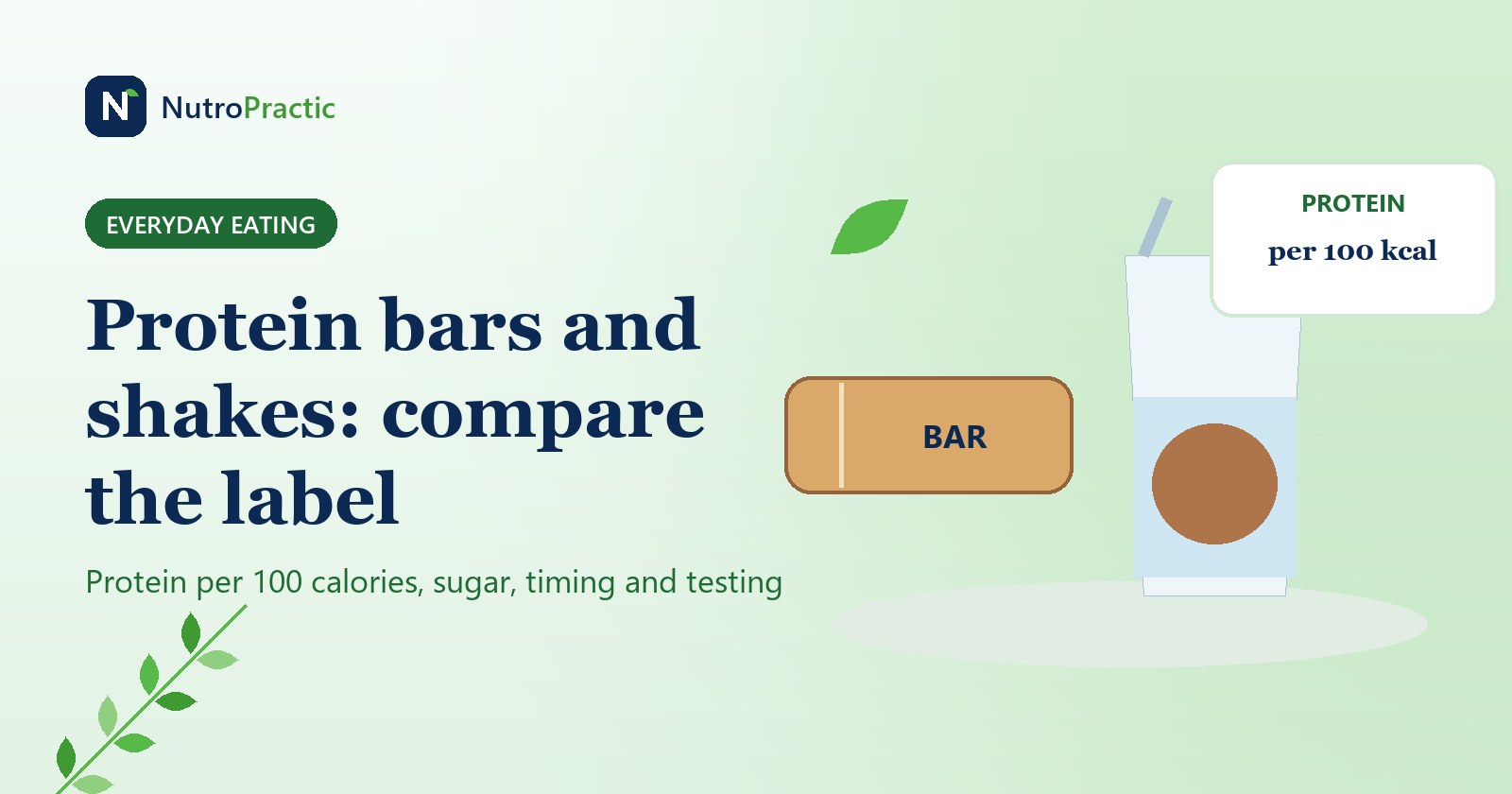
Protein bars and shakes: what you get per 100 calories
Four current labels range from 6.3 to 20 g protein per 100 kcal. Here is how bars, shakes, eggs, yogurt and lentils compare—and when a supplement actually helps.
6 Nov 2026
Everyday eating
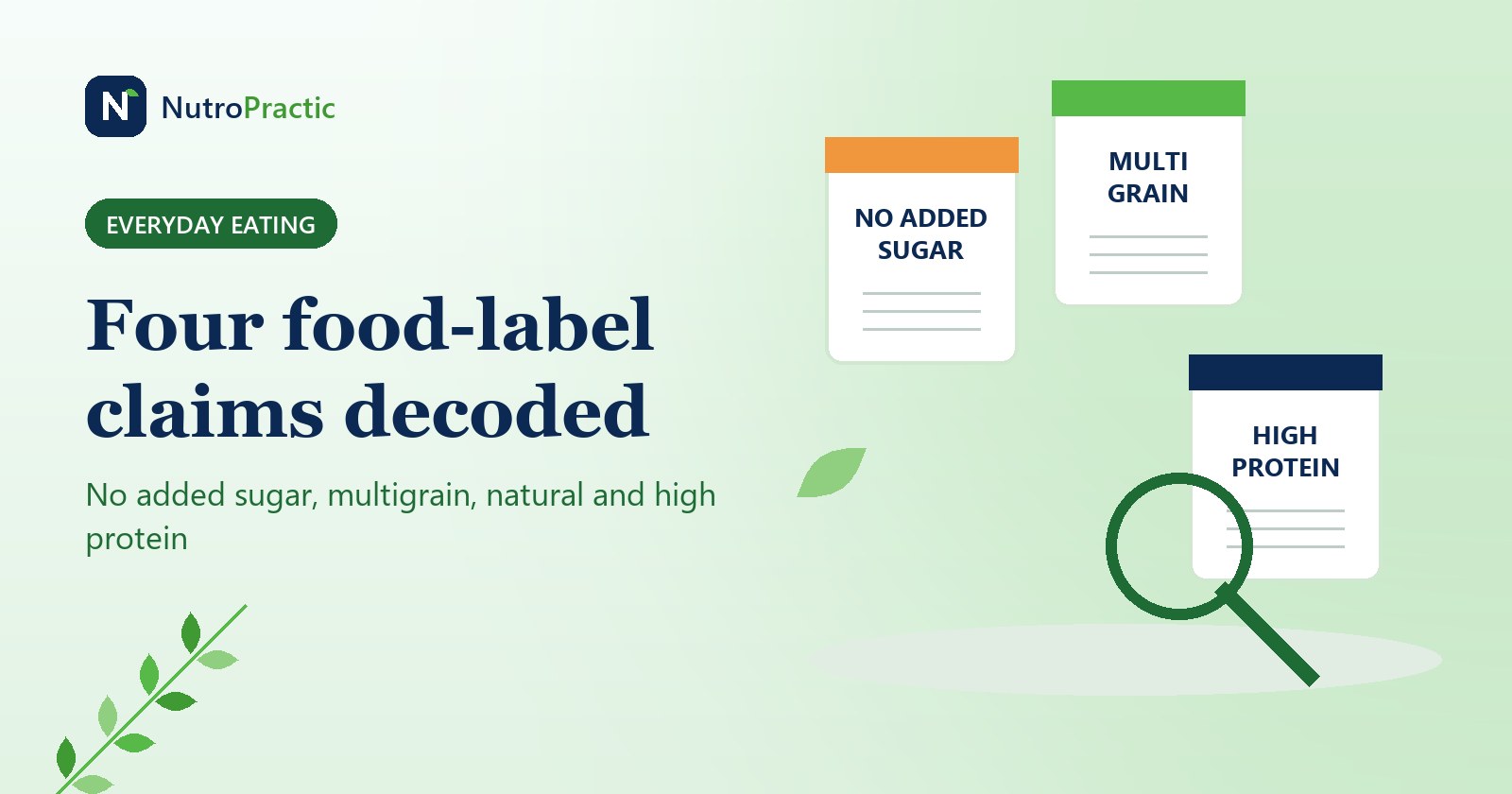
Food label claims decoded: 'no added sugar', 'multigrain', 'natural' and 'high protein'
A no-added-sugar biscuit with only 13% fewer calories. A 7-grain loaf with refined flour listed first. A 'high protein' bar that clears the legal line at 21%. What each claim legally requires in the EU/UK, US and India, with worked reads of real packs.
2 Nov 2026
Newsfeed for your website
Want this feed on your website?
Add it to any site with one copy-and-paste snippet. No sign-up, and it updates itself every hour.
Start with a virtual consultation
Tell Dr. Triveni what you want to change. You will leave with a clear next step, whether you are in Toronto, London, New York or Chennai.