Weight maintenance · October 8, 2026
Coming off a weight-loss jab: people left to usual care regained about 11% of their weight in four months, those given ready meals or a coaching app about 4%
Thirty-nine Texans who had lost weight on semaglutide-type drugs and then stopped were split three ways: their usual care, four months of free home-delivered healthy meals, or a paid-up weight-coaching app. Weight crept back far more slowly with either kind of help. The trial was a small pilot, though, and the group left alone happened to start out different in ways that matter.
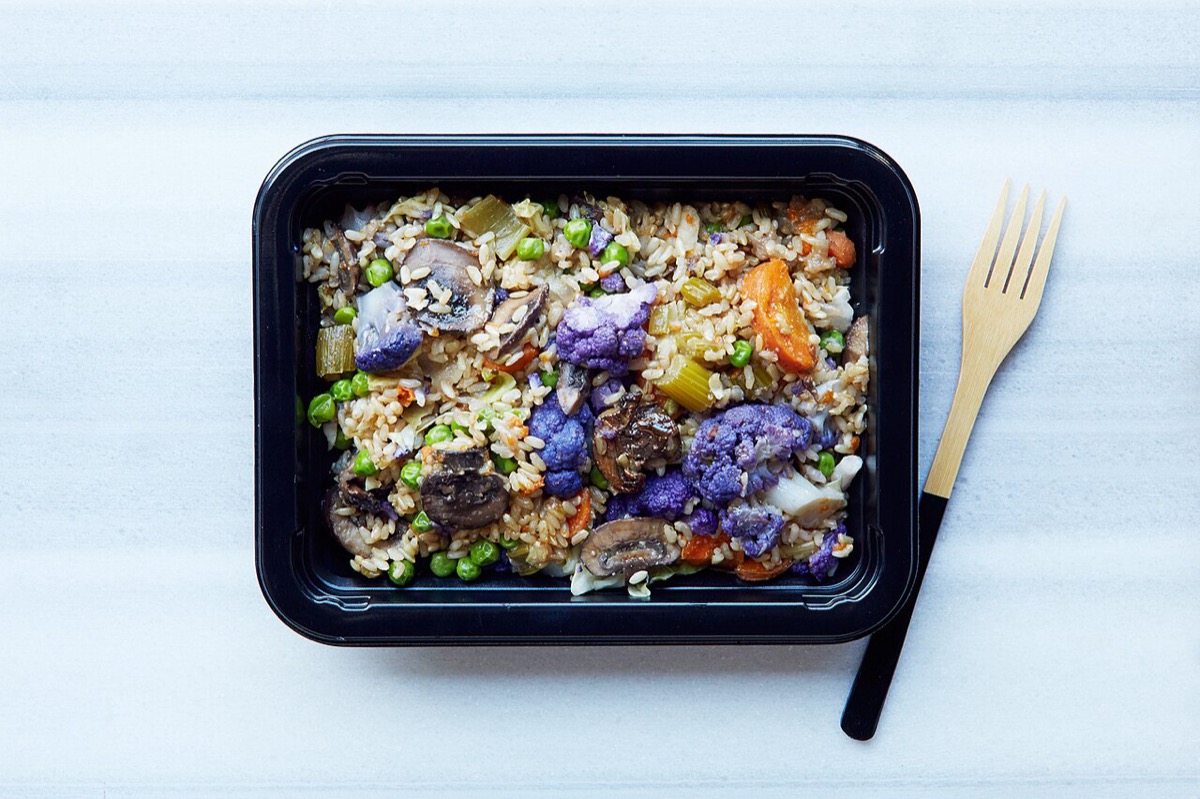
GLP-1 drugs such as semaglutide and tirzepatide help many people lose a fifth of their body weight, but plenty stop taking them, because of cost, lost insurance cover, side effects or simply having reached their goal. Between a fifth and a half of users stop within a year, and the weight tends to come back fast, most steeply in the first three or four months. What should happen in that window has barely been tested. A pilot trial from UT Southwestern in Dallas and Tufts University, published in Obesity Science & Practice on 7 October 2026, is one of the first to try.
Between March 2024 and August 2025 the researchers enrolled 39 adults who had lost more than 10% of their weight on a GLP-1 drug (18% on average) and had stopped within the previous 30 days. Most were women, average age about 50. Fourteen got usual care, whatever their own clinic offered. Thirteen could choose 10 dietitian-designed 'weight wellness' ready meals a week from a menu of more than 70, delivered free to their door for four months; lunches and dinners ran from 160 to 460 kcal. Twelve got a free subscription to Noom, a commercial app that teaches habits for managing hunger, cravings and eating cues and asks for about 15 minutes a day of lessons, food logging and weigh-ins. Everyone was sent a Bluetooth bathroom scale, so weights came straight from home rather than from memory.
Over four months, the model estimated that the usual-care group regained 10.8% of their body weight, close to 3% a month. The meals group regained 3.6% and the app group 3.6%, both about 7 percentage points less than usual care, a difference the trial could be fairly confident about. Nothing else separated the groups: diet-quality scores, how healthy people felt, how well they said they stuck to the plan and how satisfied they were all came out much the same. People on the meals plan ate about eight of their ten meals a week; app users opened it on fewer than three days a week, well short of the daily use asked of them.
This was a feasibility study, not proof. It fell short of its 60-person target, five people had no final weigh-in, and nobody could be blinded to which help they got. The usual-care group was also not like the others: all 14 were women, they were lighter at the start and had lost more on the drug (21% against about 16 to 18%), and people who lose more tend to regain faster. Adjusting for weight lost on the drug and starting weight shrank the gap only a little, but with so few people that cannot settle it. Four months is short, too, and the trial cannot say whether the help keeps working once the meals stop arriving. After this study was finished, the lead author received a grant from Noom for a larger, longer one; the authors say the company had no role in this trial or its report. The take-away for now is modest but practical: the weeks after stopping a GLP-1 drug look like the time to have a plan for food, not to go it alone.
Four months after stopping a GLP-1 drug: usual care vs free ready meals vs a coaching app
39
Adults randomised within 30 days of stopping: 14 usual care, 13 ready meals, 12 app
18%
Average weight lost on the drug before the study began
10.8% vs 3.6% vs 3.6%
Weight regained in four months: usual care vs meals vs app (model estimates)
≈ 7 points
Less regain with meals or the app than usual care (p = 0.006 and 0.007)
2.9% a month
Pace of regain with usual care, against about 0.4–0.6% a month with either kind of help
8 of 10
Ready meals eaten a week on average; the app was used on 2.8 days a week
From the open-access paper in Obesity Science & Practice, published online 7 October 2026 (CC BY-NC-ND 4.0; figures quoted, not adapted). Weights came from home Bluetooth scales and were analysed with a mixed model using everyone with at least one follow-up weigh-in (34 had a final one). Adjusted for weight lost on the drug and starting weight, the gaps were 6.3 points (meals) and 5.8 points (app). Diet quality, perceived health, adherence and satisfaction did not differ between groups. Funded by the US National Institutes of Health and UT Southwestern; the meals and app subscriptions were paid from study funds.
- In the year after people stopped weekly semaglutide in the large STEP 1 trial, they regained about two-thirds of the weight they had lost on it.
- Medically tailored meals were first developed for people with serious diet-related illness such as kidney disease or poorly controlled diabetes; the paper puts a typical plan of 10 meals a week at about $372 a month.
- Losing weight makes the body push back: hunger hormones rise, fullness signals fade and the body burns a little less energy, which is part of why regain is so common after any kind of weight loss.
- The researchers found that recruiting online and by referral worked less well than a clinician personally introducing a patient to the study, one reason the trial ended with 39 people rather than 60.
- The paper cites estimates that only about a fifth of the US population had insurance cover for GLP-1 drugs for weight loss as of 2025.
- Preventing Weight Regain After Glucagon-Like Peptide-1 Therapy Discontinuation: A Pilot Randomized Controlled TrialObesity Science & Practice, 7 October 2026 · Open access; all trial figures in this item
- Full text on PubMed CentralPMC, US National Library of Medicine · Methods, baseline table, results and conflicts of interest
- Trial registration NCT06273163ClinicalTrials.gov · Registered February 2024, before the first participant joined
- Weight regain and cardiometabolic effects after withdrawal of semaglutide: the STEP 1 trial extensionDiabetes, Obesity and Metabolism, 2022 · Regain in the year after stopping semaglutide
- Meal prep food container (photo)Ella Olsson, via Wikimedia Commons · CC BY 2.0 image
General information, not medical advice. Don't stop, start or change a prescribed GLP-1 medicine without talking to the doctor who prescribed it, and plan how you'll manage eating and weight with them before you stop.
Analysis by NutroPractic from the sources listed. Written for general readers; it does not replace advice from your own doctor.
Newsfeed for your website
Want this feed on your website?
Add it to any site with one copy-and-paste snippet. No sign-up, and it updates itself every hour.
Start with a virtual consultation
Tell Dr. Triveni what you want to change. You will leave with a clear next step, whether you are in Toronto, London, New York or Chennai.