Pregnancy · October 28, 2026
In 240 Chinese pregnancies, mothers with gestational diabetes carried about half as much again ferritin in their blood, and higher ferritin went with lower development scores in their babies at one year. The vitamins they expected to matter didn't
A hospital in Chongqing followed 120 women with gestational diabetes and 120 without from early pregnancy to their child's first birthday, measuring vitamin A, vitamin K and ferritin in every trimester. The vitamins were lower in the diabetes group but fell away once other factors were counted. Ferritin held on, though it may be marking inflammation rather than iron, and some of the paper's own numbers don't sit easily together.
Gestational diabetes, high blood sugar that first shows up in pregnancy, has been linked in earlier studies to slightly slower early development in children. A team at the Yongchuan District Maternal and Child Health Care Hospital in Chongqing wanted to know whether three nutrients that travel with it, vitamin A, vitamin K and iron, might be part of the story. Their study was published on 23 October in Frontiers in Nutrition.
Between February 2025 and May 2026 they followed 240 women from 8–12 weeks of pregnancy. All had the standard 75 g glucose drink test at 24–28 weeks; 120 met the criteria for gestational diabetes and 120 did not. Blood was taken in each trimester for retinol (vitamin A), vitamin K and ferritin, the protein that stores iron. At 12 months, developmental paediatricians who didn't know the mothers' results assessed each child with the Gesell Developmental Schedules, which score gross motor, fine motor, language, problem-solving and social skills against Chinese norms. A total under 85 was counted as 'suboptimal', a screening line that includes borderline scores and is not a diagnosis of delay.
The two groups looked different from the start. Mothers with gestational diabetes had lower vitamin A (0.34 against 0.45 µmol/L in the first trimester) and lower vitamin K, and their ferritin was about 50% higher (123 against 77 ng/mL), a gap that held through all three trimesters. On the food questionnaire they reported more calories but less fruit and vegetables (383 against 424 g a day) and less vitamin A and K, while iron intake was the same in both groups. Their children averaged 90.4 on the Gesell total against 95.9, and 72.5% scored under 85 against 31.7%.
When the researchers allowed for the mother's age, weight before pregnancy, schooling, HbA1c, the length of the pregnancy and the baby's sex, vitamins A and K no longer predicted a low score. Ferritin did: each 10 ng/mL more went with 22% higher odds of a score under 85, and the link held when ferritin was corrected for CRP, a marker of inflammation. But it is fragile. With gestational diabetes itself in the model instead of HbA1c, ferritin's link shrank to 1% per 10 ng/mL and was no longer significant, while the diabetes itself still went with scores about 4.5 points lower.
There are more reasons for caution. Ferritin rises with inflammation as well as with iron stores, and the study had no transferrin saturation or hepcidin to tell the two apart, so a high reading here can't be read as 'too much iron'. Women were sorted by diabetes status before the outcomes, which makes this a case-control design that can show links, not causes, in one hospital. And some figures are hard to square: with the diabetes group averaging 90.4 and most children within about 4 points of that, far fewer than 72.5% should fall under 85, and the paper gives 87 children under 85 in one place and 125 in another. A combined 'nutritional risk score' the authors propose also failed to rise in step, with one risk marker showing higher odds than two or three. What the study does fit is the advice already given in gestational diabetes care: eat plenty of vegetables and fruit, keep blood sugar in range, and don't start, stop or change iron tablets on the strength of a ferritin number without your doctor.
Maternal vitamin A, vitamin K and ferritin, gestational diabetes and infant development at 12 months in Chongqing, China (Frontiers in Nutrition, 23 October 2026)
240
Mother–infant pairs, 120 with gestational diabetes and 120 without, enrolled at 8–12 weeks of pregnancy (February 2025 to May 2026)
123 vs 77 ng/mL
Average first-trimester ferritin, gestational diabetes vs no diabetes (third trimester 120 vs 83)
0.34 vs 0.45 µmol/L
Average first-trimester vitamin A (retinol), gestational diabetes vs no diabetes
90.4 vs 95.9
Average Gesell total score of the children at 12 months, gestational diabetes vs no diabetes
72.5% vs 31.7%
Children scoring under 85, the study's screening line (includes borderline scores; not a diagnosis)
+22%
Adjusted odds of a score under 85 for each 10 ng/mL more ferritin (OR 1.22, 95% CI 1.004 to 1.34); vitamins A and K not significant
1.01
Ferritin odds ratio per 10 ng/mL when gestational diabetes replaced HbA1c in the model (95% CI 0.996 to 1.032, not significant)
Prospective case-control study at one hospital. Biomarkers were averaged over the three trimesters for the main models. Logistic models adjusted for maternal age, pre-pregnancy BMI, years of education, gestational age at delivery, infant sex and HbA1c; linear models also for CRP and IL-6. No transferrin saturation, hepcidin or AGP, so ferritin cannot separate iron stores from inflammation. Diet came from one food frequency questionnaire in the first trimester. Some reported figures are inconsistent (the share of children under 85 against the group means and spreads, and 87 vs 125 children under 85). Figures from the open-access full text (CC BY), Tables 1 to 5.
- In this study one high reading on the 75 g glucose test was enough for a diagnosis: fasting 5.1 mmol/L (92 mg/dL) or more, 10.0 (180) or more at one hour, or 8.5 (153) or more at two hours.
- Mothers with gestational diabetes ate about the same iron (17.9 vs 18.2 mg a day), yet their ferritin ran about 50% higher, so the gap wasn't coming from their plates.
- Babies in the gestational diabetes group were lighter at birth here (3,187 vs 3,343 g on average), the opposite of the larger babies usually linked with high blood sugar in pregnancy, possibly because they were also born about half a week earlier.
- Boys had about twice the odds of a score under 85 (OR 1.98), a bigger factor in the model than any of the three nutrients.
- The WHO's 2020 ferritin guideline warns that inflammation pushes ferritin up and can hide iron deficiency, which is why it says ferritin should be read alongside a marker of inflammation.
- Maternal serum retinol, vitamin K, and ferritin profiles during pregnancy, gestational diabetes mellitus, and offspring neurodevelopment: a prospective case-control studyFrontiers in Nutrition · The study, open access (CC BY), published 23 October 2026; Tables 1 to 5 give the diet, biomarker, Gesell and regression figures, and the text after Table 4 the model with gestational diabetes status
- WHO guideline on use of ferritin concentrations to assess iron status in individuals and populationsWorld Health Organization · 2020 guideline on reading ferritin, including the effect of inflammation
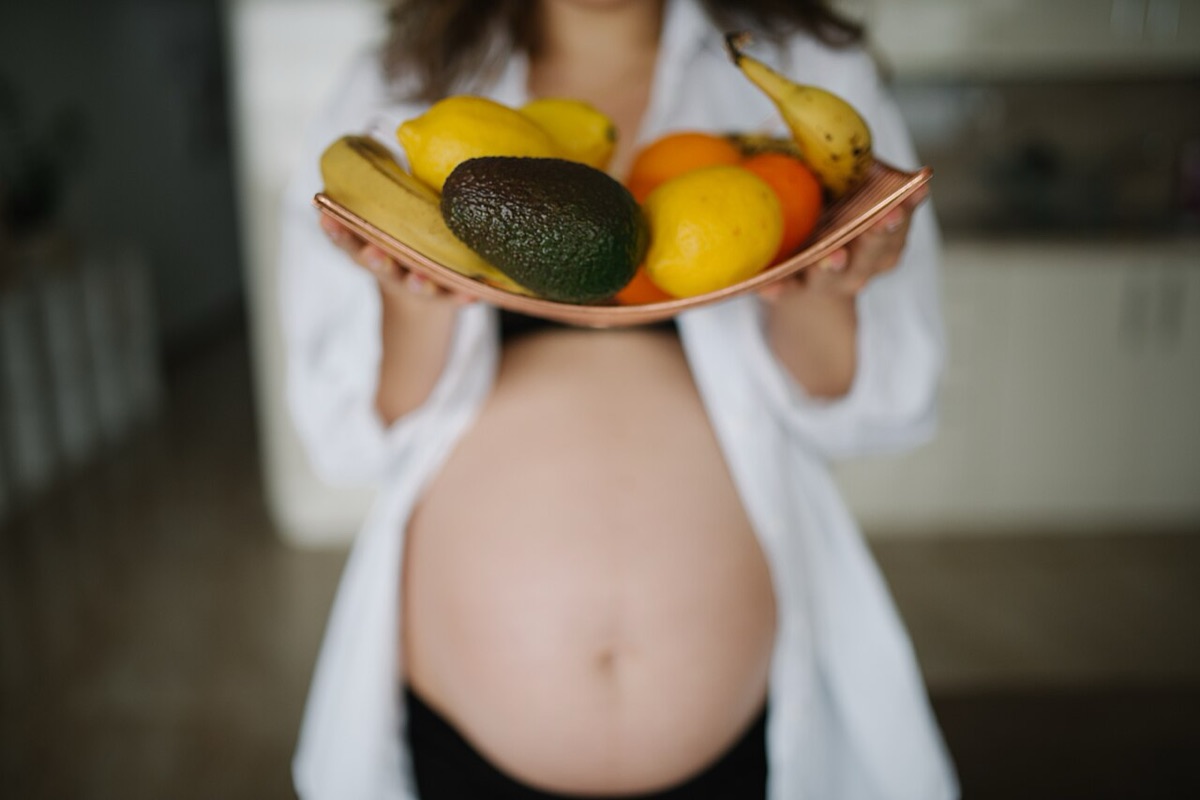
- Pregnant woman holding a plate of fresh fruits in a modern kitchen during daylight hoursWikimedia Commons · The image, CC BY 2.0 (Shixart1985)
General information, not medical advice. This study shows associations in one group of women, not cause and effect, and a single ferritin result can't tell you whether you have too much or too little iron. If you are pregnant or have gestational diabetes, keep to the care plan from your doctor or midwife, and don't start, stop or change iron or vitamin supplements without talking to them or a registered dietitian.
Analysis by NutroPractic from the sources listed. Written for general readers; it does not replace advice from your own doctor.
From our articles
Our guides on this subject
Plain-language guides on nutrition and wellness, backed by research.

Children's nutrition
Feeding a teenage athlete: energy, iron, calcium and the sports drink question
Teenage athletes are growing and training at the same time, and under-eating (REDs) is found in up to 80% of female and 70% of male athletes in studies. A worked energy example for a 15-year-old footballer, protein and carbohydrate targets, iron and calcium in the growth spurt, when sports drinks help and when they are dessert, and the supplements to skip.
20 Oct 2026
Global data
Diabetes, obesity, child malnutrition and hunger, 1980 to 2050: what the numbers show
How diabetes, obesity, child malnutrition and hunger have changed since 1980, with sourced figures and a basic projection to 2050. Click a condition to explore the chart and its facts.
5 Oct 2026

Cardiovascular wellness
Psyllium husk: how much soluble fibre lowers LDL cholesterol and stabilizes post-meal glucose in clinical trials
Viscous soluble fibre forms a thick gel matrix in the small intestine that binds bile acids and blunts post-meal glucose spikes. Across dozens of randomized controlled trials, 7 to 10.2 grams of psyllium daily lowers LDL cholesterol by 6% to 12% without stripping HDL, while reducing postprandial glucose surges by 15% to 25% in metabolic syndrome and type 2 diabetes. Discover the bile acid sequestration mechanism, trial meta-analyses, exact timing before meals, water ratios, and titration protocols to avoid gas and cramping.
13 Nov 2026
Newsfeed for your website
Want this feed on your website?
Add it to any site with one copy-and-paste snippet. No sign-up, and it updates itself every hour.
Start with a virtual consultation
Tell Dr. Triveni what you want to change. You will leave with a clear next step, whether you are in Toronto, London, New York or Chennai.