Inflammation · November 3, 2026
A free fruit smoothie every day for 16 weeks left inflammation where it was. Most people said they drank about four a week
A Norwegian trial handed people in opioid treatment seven bottles of smoothie a week alongside their medication. CRP, white cells and three other markers ended up no different from the group that got nothing extra. The more telling numbers are about who drank what, and who might have shared.
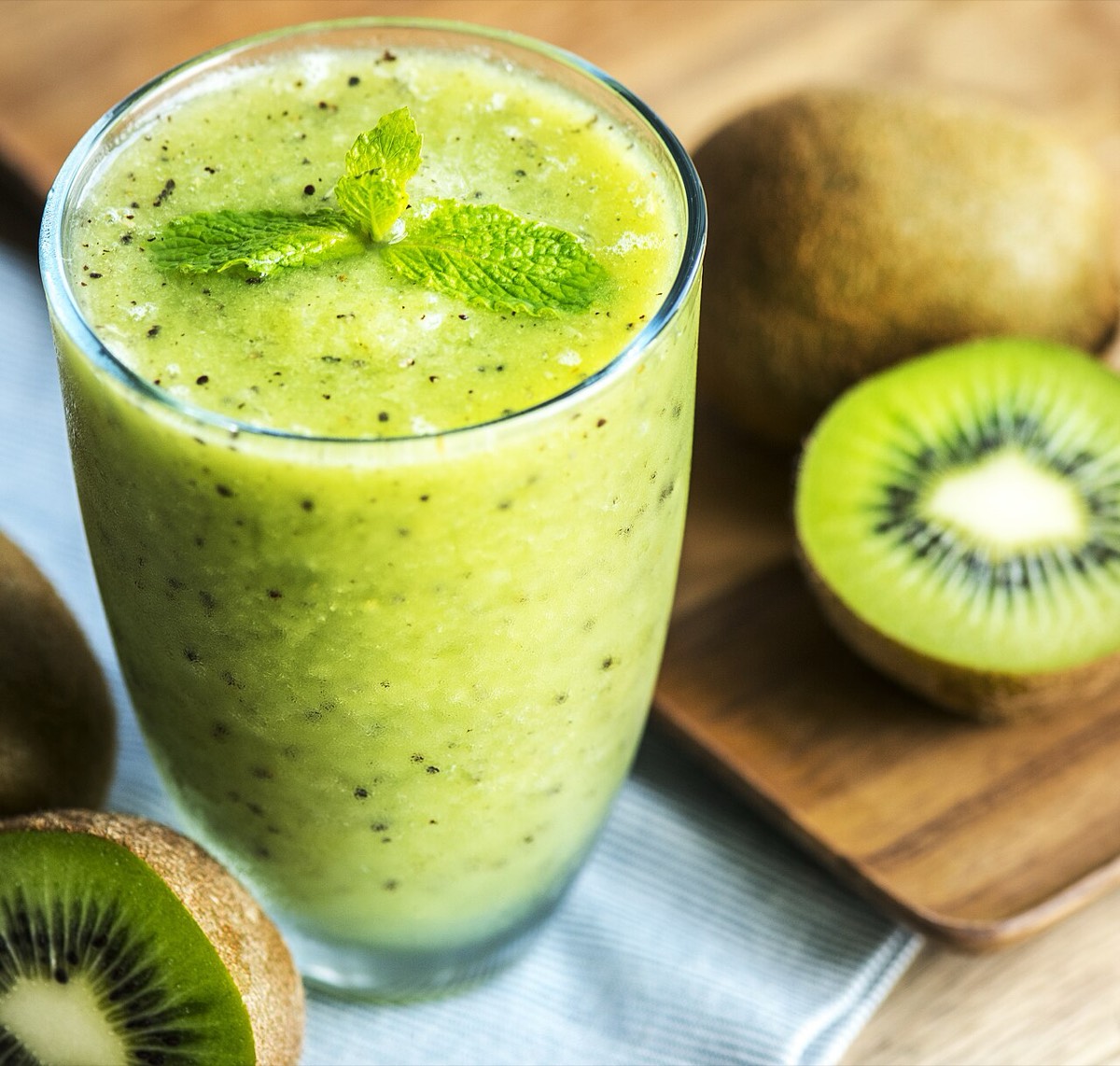
People being treated for opioid dependence tend to eat very little fruit and veg, and their blood often carries signs of long-running inflammation. So a team in western Norway tried the simplest fix they could think of: give them fruit. A randomised trial published in Nutrients on 31 October reports what that did to inflammation. In short, nothing they could measure.
The trial ran at seven opioid agonist treatment clinics in Bergen and Stavanger from April 2022 to October 2023. Everyone taking part was on methadone, buprenorphine or morphine sulphate and said they ate fewer than five portions of fruit and vegetables a day. Most ate far fewer: about 7 in 10 reported under two portions a day. Of 460 people assessed, 319 were randomised. The intervention group was handed seven 250 mL bottles of a commercial fruit smoothie each week, collected at the clinic along with their medication, and asked to drink one a day for 16 weeks. The control group carried on with usual care.
The main measure here was high-sensitivity CRP, a standard blood marker of inflammation, along with white cell counts in 311 people and three signalling proteins (IL-8, IL-1RA and MCP-1) in a subgroup of 76 who gave finger-prick blood spots. CRP rose a little in both groups over the 16 weeks, from a typical 3.5 to 4.0 mg/L with smoothies and from 3.9 to 4.6 without. Comparing the two changes gave a ratio of 0.96, with a 95% confidence interval from 0.77 to 1.21: no clear difference either way. The other four markers told the same story.
Why might a daily smoothie do nothing? The paper offers some plain reasons. Clinics handed out 88% of the planned bottles, but among people who received at least three quarters of them, the self-reported average was 3.9 drunk a week, not seven. Interviews and consumption records hinted that some bottles went to people in the control group, which the authors call intervention leakage. Neither group was blinded, many blood samples weren't taken exactly at the start and end dates, and much of the cytokine data fell below the lab's detection limit.
There's also the question of size. The trial had a 72% chance of spotting a 40% drop in CRP and a 51% chance for a 50% drop in IL-8, so a modest effect could have slipped through. And these are secondary results: the trial was built around psychological distress, reported separately in 2025.
What stands out most is how high the inflammation markers stayed in everyone, in a group where at least half drank alcohol and about a third used stimulants every week. One bottle of smoothie a day, even when it is drunk, is up against a lot. The authors' own conclusion is that future work should look at other ways of improving how people in opioid treatment eat, rather than expecting a single added food to shift inflammation on its own.
Fruit smoothie supplementation and inflammatory biomarkers in opioid agonist therapy (Nutrients, 31 October 2026)
319
People in opioid agonist treatment randomised at seven clinics in Bergen and Stavanger, Norway, 2022 to 2023: 195 to smoothies, 124 to usual care
250 mL a day
Commercial fruit smoothie offered for 16 weeks, seven bottles a week collected with medication at the clinic
88%
Share of the planned smoothie bottles actually handed out to the intervention group
3.9 a week
Average smoothies drunk weekly (self-reported) by those who received at least 75% of their bottles
3.5 → 4.0 vs 3.9 → 4.6
Typical CRP in mg/L (geometric mean) at the start and end, smoothie group against usual care
0.96
Ratio of CRP change between groups (95% CI 0.77 to 1.21): no clear difference
70% vs 73%
Smoothie and control participants eating fewer than two portions of fruit and vegetables a day at the start
72%
The trial's power to detect a 40% fall in CRP; 51% for a 50% fall in IL-8
Figures are from the paper's methods, Tables 1 and 2 and its discussion. CRP and white cells were analysed in 311 people (187 and 124); IL-8, IL-1RA and MCP-1 only in a dried blood spot subgroup of 76 (49 and 27). Values are geometric means, a kind of typical value suited to skewed blood results. The 3.9 a week figure is self-reported and covers only people who received at least 75% of their bottles. Allocation was 5:3 rather than the planned 1:1 after a coding error in the randomisation program was found. Participants knew which group they were in. These are secondary outcomes of a trial built around psychological distress.
- A CRP above 3 mg/L falls in the higher cardiovascular risk band set out by the American Heart Association and the US CDC in 2003. Both groups' typical values sat above that line from start to finish.
- In the UK's 5 A Day advice, juice and smoothies count as one portion at most, however much you drink, and the NHS suggests keeping them to 150 mL a day in total. The trial's bottles held 250 mL.
- The trial's 5:3 split between smoothie and control groups wasn't the plan. It started as 1:1 and was changed after a coding error turned up in the randomisation program.
- The three signalling proteins were measured from dried spots of finger-prick blood. The authors note that IL-8 reads higher in dried blood spots than in plasma in earlier work, possibly because red blood cells carry it.
- The smoothies were four ordinary shop-bought varieties, bought through a regular supplier with no money or help from the maker. Participants could pick which ones they wanted.
- Fruit Smoothie Supplementation and Inflammatory Biomarkers in Individuals Receiving Opioid Agonist Therapy: A Multicenter Randomized Controlled TrialNutrients, 31 October 2026 · Open access (CC BY). Design, participants, Tables 1 and 2, adherence, power and limitations.
- FruktBAR trial registration (NCT05229770)ClinicalTrials.gov · Registered 8 February 2022.
- 5 A Day: what counts?NHS · Juice and smoothies count once a day; 150 mL combined limit.
- Kiwi SmoothieWikimedia Commons · CC0 image by rawpixel.com.
General information, not medical advice. Anyone in treatment for opioid dependence should talk to their clinic about diet and health. This trial tested one added drink in one group of people and does not show what other changes to eating might do.
Analysis by NutroPractic from the sources listed. Written for general readers; it does not replace advice from your own doctor.
From our articles
Read, then eat a little better
Plain-language guides on nutrition and wellness, backed by research.
Everyday eating
Food label claims decoded: 'no added sugar', 'multigrain', 'natural' and 'high protein'
A no-added-sugar biscuit with only 13% fewer calories. A 7-grain loaf with refined flour listed first. A 'high protein' bar that clears the legal line at 21%. What each claim legally requires in the EU/UK, US and India, with worked reads of real packs.
2 Nov 2026
Gut health
Probiotic capsules: which ones have trial evidence, what they can do, and when to skip them
Children on antibiotics: 8% got diarrhoea with a probiotic, 19% without. Older hospital patients: 10.8% with, 10.4% without. Which capsules have evidence, what three guidelines say about IBS, what a course costs per case prevented, and who shouldn't take them.
2 Nov 2026
Gut health
Gluten-free without coeliac disease: who actually benefits, and what the blinded gluten challenges found
In blinded trials only 16% of people who said gluten made them ill reacted to gluten rather than placebo, and in Oslo fructans caused more bloating than gluten. Who really needs to avoid it, how to get tested before you stop, how much gluten is in a slice of bread or a roti, and what gluten-free food costs (159% more in the UK) and lacks.
1 Nov 2026
Newsfeed for your website
Want this feed on your website?
Add it to any site with one copy-and-paste snippet. No sign-up, and it updates itself every hour.
Start with a virtual consultation
Tell Dr. Triveni what you want to change. You will leave with a clear next step, whether you are in Toronto, London, New York or Chennai.