Food labels · November 3, 2026
Only 14% of parents chose the yogurt with no added sugar or sweetener. With two front-of-pack labels, 60% did
A label for sugar alone doubled the number, and a second label for sweeteners doubled it again. It's a striking result from 2,896 US parents, but it was an online exercise, and it measures what a label can persuade people to do, not what's better for a child.
Show American parents four yogurts with nothing extra on the front of the pack, ask them to pick one for their child, and 14% go for the one with no added sugars and no non-sugar sweeteners. Add a front label flagging added sugar and it's 29%. Add a second label flagging sweeteners and it's 60%. That's the headline from a randomised online experiment published ahead of print in the American Journal of Preventive Medicine on 22 October, by researchers at George Washington University and the universities of North Carolina and Washington.
The setup was simple. In November 2024, 2,896 parents of children aged 2 to 12 took an online survey and were randomly split into three groups: no front labels (990 parents), an added sugar label (949), or labels for both added sugars and sweeteners (957). Each parent saw four fruit drinks and four yogurts in random order. In each set, one product had neither added sugars nor sweeteners, one had added sugars, one had sweeteners, and one had both.
Look at the two steps separately and the interesting part appears. For yogurt, the sugar label moved the plain choice up 15 points, and adding the sweetener label moved it another 31. For fruit drinks the steps were 7 points and then 19. The design suggests one reason, though this is our reading and not a finding we can check. With a sugar label alone, the product sweetened only with non-sugar sweeteners carries no label, just like the plain one. To a parent scanning the front of the pack, the two look equally clean. The abstract doesn't say where the parents who left the sugary options went, so we can't tell how many moved to the sweetened product.
The labels changed what parents believed as well as what they picked. Asked which product was healthiest, 33% of parents in the no-label group named the yogurt without added sugars or sweeteners, 49% with the sugar label and 76% with both. Fruit drinks went 37%, 46% and 70%. Those figures always ran ahead of the choices. Across the three yogurt groups, 16 to 20 points more parents called that yogurt healthiest than chose it. These are group totals, so they don't track individuals, but they fit something most parents already know: the one you think is healthiest isn't always the one you put in the basket.
Now the limits, and they're big ones. This was a screen, not a shop. Nobody spent money, no child had a say, and nobody ate anything. The choice was also tidy in a way a real chiller isn't, with four options set up as a perfect comparison and the labels in plain view of people who knew they were in a survey. So 60% is what the labels did in that setting. It isn't a forecast of supermarket sales, and it says nothing about children's diets or health, which the study didn't measure. Parents who saw the sweetener label also rated sweetener-containing products as less healthy and said they were less likely to buy them, but those are intentions rather than purchases.
The most telling detail may be a change of words. When this work appeared as a preprint in May 2025, its summary called the winning products unsweetened and said the labels may support healthier choices. The published version calls them products without added sugars or sweeteners, and says potentially healthier. The percentages we compared are the same in both. That's a sensible edit, since a drink with nothing added can still contain sugar from its own ingredients, and we don't know from the abstract how these products compared on other nutrients.
It also matters because a warning's pull isn't a measure of the risk behind it. The World Health Organization's 2023 guideline recommends against using non-sugar sweeteners for weight control or to reduce disease risk, but it rates that advice as conditional, partly because the links to disease might be explained by who uses them and how. It doesn't apply to people with diabetes. So this experiment shows that a label can steer parents away from sweeteners. Whether that's a good swap for a particular child is a separate question, and one the experiment can't answer. A child with diabetes, in particular, shouldn't have their food or drink changed on the strength of it without their care team.
Could these labels reach real packs? In the US, not as things stand. The FDA's front-of-package box, proposed in January 2025, would rate saturated fat, sodium and added sugars as low, medium or high, and we found no final rule when we checked for this piece. FDA's description of it doesn't mention sweeteners, so a pack sweetened only with them could pass under the sugar line, which is the gap this experiment tested. Mexico already requires a warning reading contains sweeteners, not recommended for children. Until something similar exists elsewhere, the back of the pack is where to look. Sweeteners such as sucralose, aspartame or stevia appear in the ingredient list, even when the front says nothing about them.
Effects of front-of-package labels for added sugars and non-sugar sweeteners on parents' selections for their children: a randomized experiment (American Journal of Preventive Medicine, 2026)
2,896
US parents of children aged 2 to 12, randomised online in November 2024
14% / 29% / 60%
Chose the yogurt with no added sugars or sweeteners: no label, sugar label, both labels
32% / 39% / 58%
Chose the fruit drink with no added sugars or sweeteners: no label, sugar label, both labels
33% / 49% / 76%
Named that yogurt as the healthiest: no label, sugar label, both labels
37% / 46% / 70%
Named that fruit drink as the healthiest: no label, sugar label, both labels
+46 points
Gain for the yogurt from no label to both labels (our arithmetic). The fruit drink gained 26 points
0
Real purchases or health outcomes measured. These were choices in an online survey
We worked from the journal's published abstract and the abstract of the May 2025 preprint. We couldn't get the full paper, so the exact label wording, participant make-up, how parents who left the sugary options split between the other products, and confidence intervals aren't given here. Differences between the both-labels group and each other group were reported at p < 0.001. The point differences are our arithmetic. Funding was a grant from Healthy Eating Research. The first author declares consulting work for Spindrift Beverage Co. and on behalf of Abbott, and the other authors declare no conflicts.
- With four options, picking blindly would land on any one product 25% of the time. So the 14% who chose the yogurt with nothing added, with no labels on show, were below that mark (our arithmetic).
- An earlier study of nine focus groups with 66 US parents found they viewed a sweetener label favourably but disliked the term diet sweeteners.
- WHO's guideline doesn't count low-calorie sugars and sugar alcohols as non-sugar sweeteners, and it doesn't cover toothpaste, skin cream or medicines that contain them.
- A registered trial now recruiting aims for about 1,068 parents in Brazil. It compares no sweetener label, a label modelled on Mexico's warning and one using the magnifying glass symbol Brazil already uses for other nutrients.
- The survey ran in November 2024, and the results first appeared as a preprint in May 2025, about 17 months before the journal version.
- Effects of front-of-package labels for added sugars and non-sugar sweeteners on parents' selections for their children: a randomized experimentAmerican Journal of Preventive Medicine, online 22 October 2026 · The paper's DOI. We read the published abstract, with funding and competing interests.
- Effects of front-of-package labels for added sugars and non-sugar sweeteners (NSS) on parents' perceptions and selections of foods and beverages for their children: a randomized experimentmedRxiv preprint, May 2025 · The earlier version, not peer reviewed. We compared its abstract with the published one.
- Front-of-Package Nutrition LabelingUS Food and Drug Administration · The proposed box: saturated fat, sodium and added sugars rated low, medium or high.
- Food Labeling: Front-of-Package Nutrition InformationFederal Register, 16 January 2025 · The proposed rule.
- Front-of-package warning labelsGlobal Food Research Program, UNC Chapel Hill · Mexico's warning: contains sweeteners, not recommended for children.
- WHO advises not to use non-sugar sweeteners for weight control in newly released guidelinePAHO/WHO, 15 May 2023 · The conditional recommendation and who it excludes.
- Perceptions of non-sugar sweeteners and non-sugar sweetener front-of-package labels among parents in the United States: a qualitative studyJournal of the Academy of Nutrition and Dietetics, 2025 · The focus groups with 66 parents.
- NSS Grocery Store Brazil (NCT07249008)ClinicalTrials.gov · The trial now recruiting, with its three label groups.
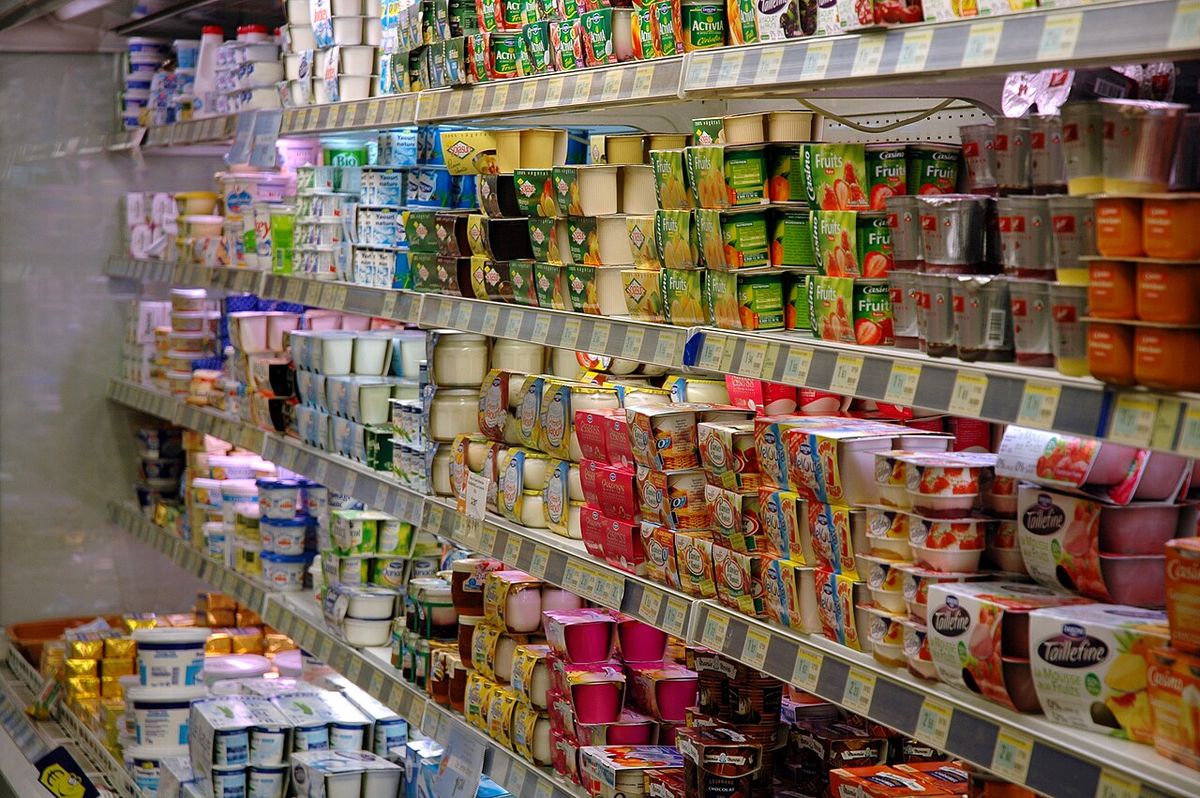
- Yoghurts and desserts, Casino supermarket, Chamonix-Mont-Blanc, 2007Wikimedia Commons · CC0 photo by DimiTalen.
General information, not medical advice. This experiment measured parents' choices in an online survey, not children's health. If you're unsure about sugars or sweeteners in your child's diet, especially if your child has diabetes, talk to their doctor or a registered dietitian.
Analysis by NutroPractic from the sources listed. Written for general readers; it does not replace advice from your own doctor.
From our articles
Our guides on this subject
Plain-language guides on nutrition and wellness, backed by research.
Everyday eating
Food label claims decoded: 'no added sugar', 'multigrain', 'natural' and 'high protein'
A no-added-sugar biscuit with only 13% fewer calories. A 7-grain loaf with refined flour listed first. A 'high protein' bar that clears the legal line at 21%. What each claim legally requires in the EU/UK, US and India, with worked reads of real packs.
2 Nov 2026
Nutrition science
Sweeteners after the WHO advice: aspartame, stevia, erythritol and what the 2023 decisions meant
In 2023 the WHO advised against using sweeteners to control weight, and its cancer agency called aspartame 'possibly carcinogenic' a few weeks later. Neither means your diet drink is dangerous, and neither means it helps. What the reviews found, how much is allowed, why erythritol is the one to watch, and what to do if you have diabetes or simply want less sugar.
18 Oct 2026
Gut health
Probiotic capsules: which ones have trial evidence, what they can do, and when to skip them
Children on antibiotics: 8% got diarrhoea with a probiotic, 19% without. Older hospital patients: 10.8% with, 10.4% without. Which capsules have evidence, what three guidelines say about IBS, what a course costs per case prevented, and who shouldn't take them.
2 Nov 2026
Newsfeed for your website
Want this feed on your website?
Add it to any site with one copy-and-paste snippet. No sign-up, and it updates itself every hour.
Start with a virtual consultation
Tell Dr. Triveni what you want to change. You will leave with a clear next step, whether you are in Toronto, London, New York or Chennai.